


Ferdinand
-
Posts
12213 -
Joined
-
Last visited
-
Days Won
41
Everything posted by Ferdinand
-
How many rads etc? The last time I looked at a powerflush (admittedly paying someone to do it) the extra to replace the pipes and rads was small enough that I just had the whole thing redone. But that was only a 6 rad system. Ferdinand
-
I think house or bungalow is relevant here.
-
I think an alternative MOE is only required above 1st Floor Level in a loft room. IMO it would be sensible to have one, however.
-
Further thought - shared ownership? What are the implications? The landowner could keep say 15-20% of the house, plus a pre-emptive right to First Option to buy the 80% at unencumbered market valuation should the builder choose to sell - written so as to be in perpetuity. Would that need to be applied both ways under Scottish Law? Ferdinand
-

Unglazed porcelain tiles as kitchen splashback
Ferdinand replied to vivienz's topic in Wall Tiles & Tiling
Get a cook so it is an S.E.P. ? -
Good result.
-
Unglazed porcelain tiles as kitchen splashback
Ferdinand replied to vivienz's topic in Wall Tiles & Tiling
In the little brown bungalow I used a black 600x600 black porcelain floor tile as my splash back behind the hob. All the sheds demanded that their tiles be sealed, but I eventually found one place that did not mandate that. But it was from a smaller trade supplier so they could just be less hot on the guidance. Any chance of finding a glazed version? Ferdinand -
Here be dragons imo. Regardless of good intentions, IMO they need some good and experienced legal advice. Long residential leaseholds in Scotland (iirc more than 175 years with 100 left to run) were converted to freehold, with the previous LL having certain compensation rights based on capitalisation of rent. This was about 3-4 years ago. Back in 2004 leases had been limited to 175 years. Now I believe a commercial lease is limited to 175 years, and a residential lease to 20 years, under legislation from 1974 or so. https://www.out-law.com/topics/property/investment-/conversion-of-long-leases-to-outright-ownership-in-scotland/ They need to know how their proposed agreement would work out under these new laws, and what terms would be imputed into the agreement .. I am not even sure whether such a lease is legally possible.Or it could come crashing down if their agreement is unenforcible. A buyback or pay later agreement on the freehold may be the way, but I have no idea how that relates to land and rental law etc. The laws are new enough that the outfall may not be clear yet - I think they have common law, do they not, so it could evolve. In English property law it can take decades to knock the rough corners off whatever Parliament serves up in the higher courts.; sometimes they serve up a Dog’s Breakfast. The intention of the Scottish government aiui was to abolish and make impossible long residential leases due to history of feudal tenure, political baggage etc. I have my concerns about the inflexibility of that, but it may just not be possible to do what you want. Can they manage it like whatever the arrangements are for Tenements in Scottish cities? Take advice. Ferdinand
-
Welcome. It may be a good plan to pause when watertight and evaluate what you have spent / was too expensive, and what you have left to spend on fit / floor / finishes. Then you are in a position to know what you have left to do and can aim to trim the actual budget you need. There are usually ways to reduce costs quite substantially. Ferdinand
-
Unglazed porcelain tiles as kitchen splashback
Ferdinand replied to vivienz's topic in Wall Tiles & Tiling
I would ask them about cleaning, and also about whether the surface will absorb things like grease - though that is presumably well away. I guess that if necessary you could coat them with something really robust; someone will know what if necessary. -
Mud mud glorious mud.
Ferdinand replied to Russell griffiths's topic in General Self Build & DIY Discussion
My previous experience with a long drive in the country says you have 3 or 4 years to build it before that all vanishes into or under a layer of mud. Long enough, I hope ! -
@lizzie, is this a good point to introduce that well known bird Anas fulvigula, the Mottled Duck, as a suitable mood and texture board for this putative fence painted in Ducks Back? Its back has an undertone of greyish, and a dominant colour of brown and a patch of bright, inky blue. Really quite fetching. Credit: Macaulay Library. If the top coat flakes, you will get an attractive, naturalistic, pattern. Ferdinand

-
Financing Self Build In Parents Garden
Ferdinand replied to Johnny Jekyll's topic in Self Build Mortgages
Early to bed, Early to rise, Makes a man .... oops. (Did not work for me, either) -
Financing Self Build In Parents Garden
Ferdinand replied to Johnny Jekyll's topic in Self Build Mortgages
Welcome to the forum, Johnny. Lots of good thoughts above. I assume you are self-managing the build. I take it that is an estimating service rather than an online calculator? Mine are - 1 - On finance, I would be attracted by either avoiding a self-build mortgage all together, or getting it in place relatively soon (though not necessarily drawn down, unless just a small amount to lock it in) bearing in mind where interest rates may going. Also timing and sequencing is critical to cost-effectiveness, especially early on - eg what you put in the planning application affects what you can put in your VAT reclaim later, and if you arrange the site 'water supply' to be a hose from your parents' outside tap then you can probably control when Council Tax starts on the new build. 2 - Take your time and pay attention to building your infrastructure for the project, including Physical - eg Secure Storage and Site Office. Where will it be? One option is to build a double garage as storage and site office at your parents' before you start under Permitted Development. That takes it out of your PP but also takes it out of potential VAT reclaim. Financial - Things like Trade Accounts. Support - you need some sort of "sanity space" for you and your partner/family. eg are you happy staying with your family for 4 years if the project takes that long? Could be an argument for keeping the flat for now, or perhaps building an extra reception room on your parents' place first so that there is space there to retire for peace and quiet. Lots of detaill to sweat ? . Ferdinand -
I think that is the wrong answer ?, particularly as your 2 years in the howling Scottish salt-laden eviscerating gales is equivalent to about 10 in the gentle Shires of the South. In a minute you'll tell us you used the same paint !
-
I can't really comment on this one, as my preferred approach to painted fences is "don't, without a really good reason".
-
Somebody else may know how easy it is to paint on top of that ... the docs for Ducksback say it has a "Wax-enriched formula", which (to me) implies a possible difficulty in overpainting, which perhaps suggests taking careful advice and perhaps a test patch or even a different shade of the same stuff. Ferdinand
-
Welcome to the forum @zoe61. I think the biggest saving was to do with finding a cost-effective solution for @recoveringacademic's piles. IIRC a brief aside from a professional site-treatment specialist in an email hinted at an alternative treatment for said piles. See this post and others either side in the blog. The takeaways are REALLY sweat the detail of what you *are* told, and research the adjacent stuff you have not been told. Ferdinand
-
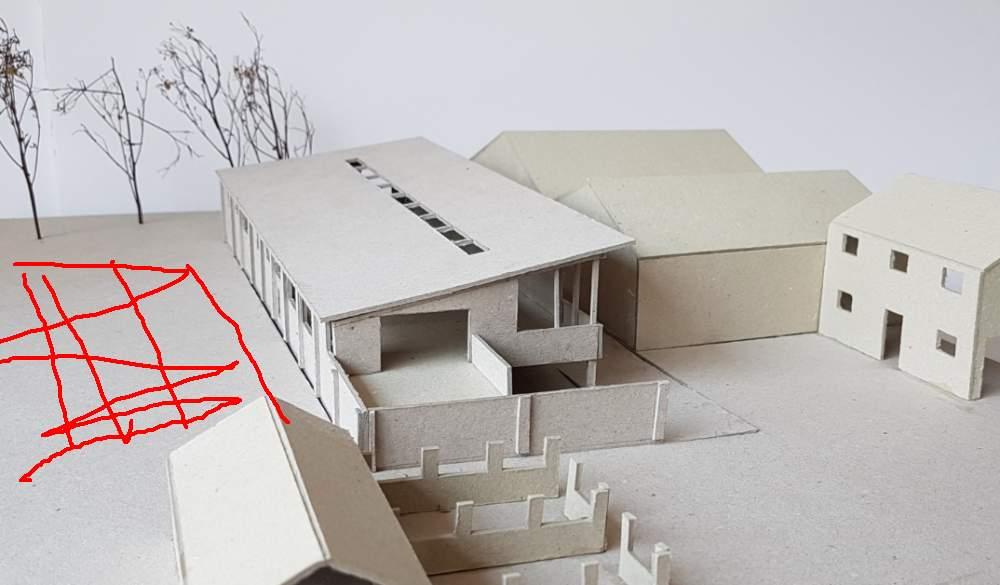
Wouldn't that be to spray with gold paint and bequeathe to Blue Peter as an example of excellence ! I was asking more about ground level, as marked, which I hope is part of the plot for this conversion (even if you own the whole farm) - if not boundary disputes may rear their heads in a generation. I think that I can't comment more without knowing more, which it might not be suitable to post. And then there are the intricacies of Part Q ?, which I will avoid: F
-
On the design - what is your plot shape. Is there any scope for inside/outside living (eg Franch Doors) on the more attractive North side? I do not see that in the model, or perhaps I missed it. Ferdinand
-
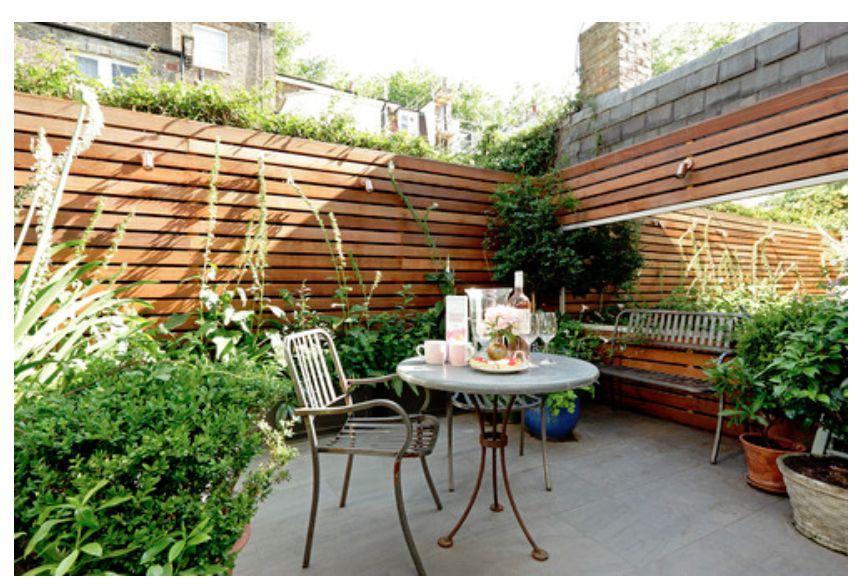
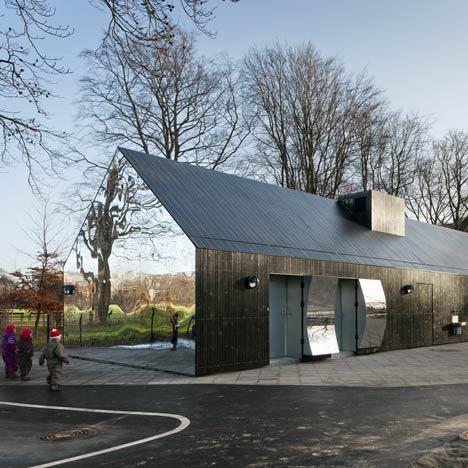
Welcome to the forum. An exciting project. Could you do something interesting with the Barn opposite, like paint it in camouflage or a mural of the landscape behind, or put some mirror-type strips on it with climbers in between? Or even something that will break up the shape? Lots of possibilities, perhaps also using lighting from your side. I think I would consider something to break up the monolithic block of ugly, and also something to make people coming in look beyond the wall and imagine that it is not there. This is interesting - put a fence in front that reads like a garden then other side, then a mirror reflecting your side to pretend it is there. You could make it look like another house, or the landscape beyond the end of the alley beyond your house for visitors looking at an acute angle, who then see an image of the side of your house as they walk forward. There are probably lots of good ideas you can borrow from tight urban designs, or other places, for your outside environment too. Here's another I like. >The long rooflight running east-west (see model3.png) is to allow light into what might otherwise be a dark central corridor, and allow borrowed light into the north facing rooms via internal clerestory windows off the corridor. Grand Designs last week had one of those that worked spectacularly well by being aligned carefully with the internal spaces of the room. F
-
Estate Car to carry house doors inside, flat
Ferdinand replied to Ferdinand's topic in General Self Build & DIY Discussion
Well, at last. I am told the EU having now sorted out their new diesel economy tests, I can expect delivery at the end of October. F -
The problem with that proposal is that your neighbour could plant a row of Lleylandii or Eucalyptus ! Is this one reason why Bishops (apostrophe - how many Bishops?) Avenue is loved by foreign Potentates? I always think of it as one of only a few areas close to Central London where relatively basic helicopters can get in and avoid the safety-over-urban-areas problems, plus the restricted zones around Heathrow etc. Ferdinand
-
My Advice for Self-Builders
Ferdinand replied to Red2000's topic in General Self Build & DIY Discussion
I partly think of architects as being like an iceberg where the bit you do not see is the 7 years of training, and the hundreds of houses and buildings that they have studied, which ideally informs what they in theory do for the self-builder. if we do not have one one (in whatever form for however much of the project) then we have to put in the time to develop those bits of the iceberg that we need ourselves. F -
Sounds good. Just check that you have enough left over for minor repairs - eg if the shower overflows or the loo pipe leaks or the little darlings wee on it and for some reason you do not find out for a couple of days (have I mis-estimated the age of the little darlings?). I imagine a big repair would be replace-in-toto. Ferdinand


