Ferdinand
-
Posts
12213 -
Joined
-
Last visited
-
Days Won
41
Everything posted by Ferdinand
-

Small dreams - looking for house layout advice.
Ferdinand replied to simplepimple's topic in New House & Self Build Design
THanks for that. I don't think the proposal is that suitable for the site, and you could potentially do quite a lot better, so I will come back with some ideas to give a different viewpoint .. hopefully by tomorrow. I would say that the existing proposed plan looks to be as inoffensive as possible in order to get through PP easily. An example of something imo not very good is that as it stands you essentially have no all day outdoor space which is both sunny and private. Another is that the route from your car into the house with your shopping is a very long way in the rain. (PS Is that bathroom to standards for accessibility ... doesn't it require a 1500 diameter circle as circulation space, in addition to all the bathroom gubbins?) Ferdinand -
Outrageous in Gloucester
Ferdinand replied to Ferdinand's topic in General Self Build & DIY Discussion
It is well concealed. I have visited twice, and I have not caught him in Lederhosen playing Wagner on an Oompah. -
Small dreams - looking for house layout advice.
Ferdinand replied to simplepimple's topic in New House & Self Build Design
Is this the design that came with the plot, or the one that you have had architect designed? And which area of the country are you in ie which County? Ferdinand -
I would say that if someone wanted to do that or similar, then use the "quadrant trunking" - though it probably meets a different need. https://www.tlc-direct.co.uk/Products/DL2D22QSW.html?source=adwords&ad_position=&ad_id=315107931576 Also arguably a bodge, but at least no one will drill holes in it. Ferdinand
-
I've been giggling for the last 10 minutes at an item I missed from last year. A Twitter conversation: It's genuine: https://www.gloucestershirelive.co.uk/news/gloucester-news/nazi-uniforms-gloucester-allo-allo-1955653 Ferdinand (I don't think that counts as politics)
-
Can you back it into a container, and put heat on there? (Suspect they may all be full of essential equipment and stores.) (On a smaller scale I have just brought all my bird feeders into the Utility to unfreeze and restock.) F
-
I think it is this one. ?
-
If you want a practical solution, it is a trip to Wickes for some bags of sand. If you need your sand to be moist, potentially a hose from the hot tap.
-
Mortar and pestle?
-
Probably wait for warmer weather. Or accept that you will need another tonne in future, and have a different, warm, tonne delivered. Or go get some bags of sand from Wickes.
-
Need help to visualise roof construction
Ferdinand replied to wozza's topic in Roofing, Tiling & Slating
Agree with @Russell griffiths on this point. Surely that will be a large number of "bloody great holes" ! (Personally I think that recessed spotlights are the spawn of the devil; I have about 70 installed by the previous owner, and the lecky will charge you One Point for wiring each one.) In my view Occam says use either multispot fittings or the more modern LED panels. Plus perhaps spend the recessed spotlght money on a feature light fitting for the hall, an artwork, or whisky. Ferdinand -
How to build - so many options
Ferdinand commented on Sue B's blog entry in 5 (2 adults, 3 dogs) go building in Dorset
Pat pat, good blog ! Best of luck. >We have no experience of actual building work but let's face it, how hard can it be ? - famous last words. There exists a rabbit hole down which - at some point - you will discover that you have fallen ! A bit of extra info for Durisol virgins who just surf-on-in: 1 - I think Durisol (and the other one) give stronger concrete structures than you may have implied, as done properly the sloppy concrete infiltrates the matrix of the block. 2 - Durisol is cut with a normal power saw (no guarantee on blade life time ?) Credit: http://endeavourcentre.org/2012/06/a-finished-durisol-block-foundation/olympus-digital-camera-29/ -
650 to 3000sq ft in the Greenbelt. Pat on the back for me.
Ferdinand replied to Big Jimbo's topic in Introduce Yourself
One possibility could be if local or national policy changed in a way which affects your plot negatively. -
I Tananarive cross the fee survey for 2017 in the Architects' Journal. It may be useful for some. YOu can register for free, or put the link into Google and surf in from there and it will give you the whole thing. https://www.architectsjournal.co.uk/news/aj-fees-survey-2017-how-much-are-you-charging/10020125.article If you find a later one, please add it here. Ferdinand
- 2 replies
-
- 1
-

-
- architects journal
- architect fee
- (and 2 more)
-
Best simple ideas and concepts to design in to new build
Ferdinand replied to albert's topic in New House & Self Build Design
It is a good thing to run off a n facing porch or conservatory which can be used as a dog or cat space for overnight or if your cats are not winter outdoor hardy. Can also save you £££££££ on a passive cat flap if outside the emvelope. F -
Comfort cooling MVHR
Ferdinand replied to AliG's topic in Mechanical Ventilation with Heat Recovery (MVHR)
Ask them about how many versions of their integral blinds have been gone through in the last decade. ANy why ! -
Comfort cooling MVHR
Ferdinand replied to AliG's topic in Mechanical Ventilation with Heat Recovery (MVHR)
It sounds that Internorm need to be selected on the basis of visits to intallations that have been in place for as long as possible. Ferdinand -
Comfort cooling MVHR
Ferdinand replied to AliG's topic in Mechanical Ventilation with Heat Recovery (MVHR)
JUst as a 'data point' this is a approx 1m overhang over south facing full height windows that has been in place since 1970. This photo was taken in October 2018 and the overhang is clearly blocking the sun at this time, which must be in the late morning period of the day as that wall with the shadow line faces East. The experience here is that high sun is kept out which helps with overheating in summer, but low sun penetrates, as designed back then. Last summer there were overheating issues at the height of the summer, but the room has 2 roof lights on the back which can be opened for thru ventilation. The house has a PIV fan fitted as the fabric was upgraded to be better insulated and more airtight, without imo sufficient thought to the ventilation, and the T remarked on the difference. For a passivehaus or near-passive with the higher spec designed to operate more precisely, I think I would not rely just on this, and would want to know what I like and do some calcs, and design in something with significant extra capacity to manage the potential issue. That might be provision for blinds, or for later fitting of an auto pending skylight for stack ventilation. But it would need more precise consideration. Ferdinand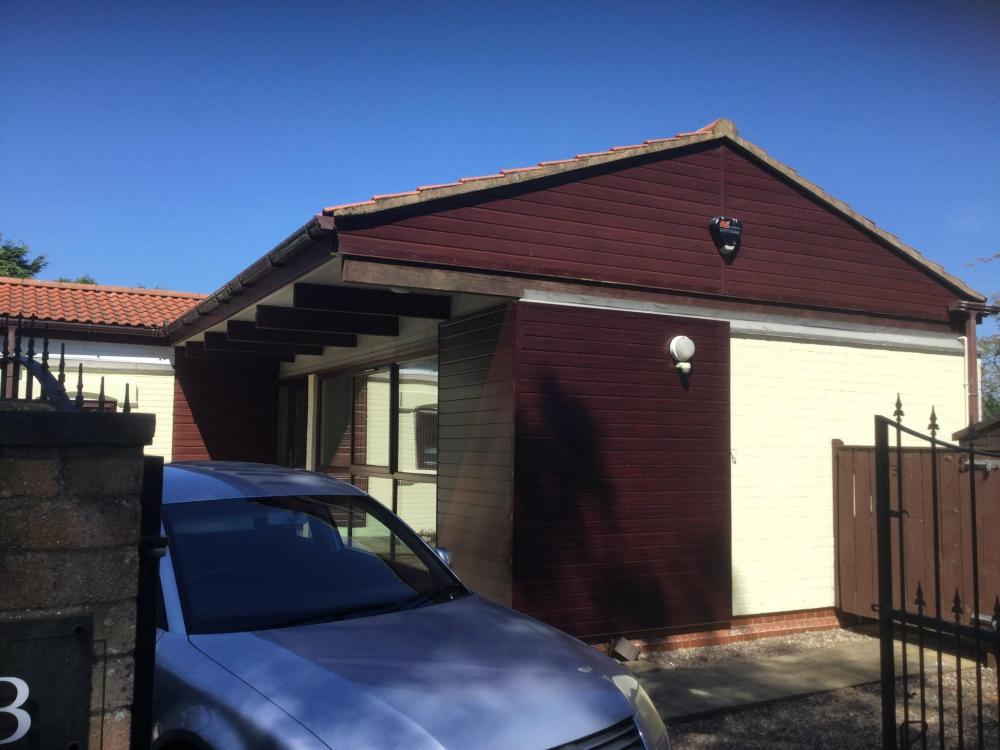
-
Instead of putting PIR in the cavity why don't we put it on the inside
Ferdinand replied to AliG's topic in Brick & Block
All useful, thanks. In my setup suggested above I would probably think about 2 layers of PIR on the inside with the lower on taped, so that the membrane is on the inside of say 50mm of PIR and therefore warm (may need a calculation), or indeed one could put some insulation on the outside with a rain screen, but that extra complication would defeat the whole point. My current restoration approach has been to dry line and insulate, usually with 50mm PIR, put a membrane inside the insulation under traditional pb, then install a background ventilation system to manage the internal humidity in case there are any problems. So Traditional Drylining with belt and braces. (Add: I have done this mainly on solid walled 1910-ish properties; when I have done the calls on cavity walled properties say 1960-70 it has not been cost effective to do the dry lining as cavity injection plus other efficiency measures reduces bills such that the dry lining then becomes unviable.) F -
Instead of putting PIR in the cavity why don't we put it on the inside
Ferdinand replied to AliG's topic in Brick & Block
Fairly random thoughts on this. In my continued thought experiments in search of an inexpensive high spec way to build a rentable bungalow, we considered another factor when thinking about block built walls with Built to exactly fit 8x4 sheets of insulation. We liked the insulation on the outside because it meant that it would be safe from damage ... even if a T is deliberately trying to wreck a breezeblock and plaster skim wall, it is relatively easy to repair, and things such as picture hooks are less troublesome, with less rigorous instruction needed. But the equation is different in a home. THat prompts the thought - Can your proposal be done using either thicker PIR-backed-IPB glued to the wall, perhaps with a counter-orientated layer beneath? PErhaps the lower layer could be taped for airtightness? FOr rally thick iPB, one could even use EWI type mechanical fixings if desired. In a home environment you can be surer that the surface is not damaged e.g. Surface fixings and if needed physical fixings are now available that take heavy weights from PB. In my most recent refurb and ran all my rewiring and plumbing under a floating floor inside the thermal envelope using short vertical chases, and it seems to have worked Ok so far. So a lack of service void in the walls is potentially manageable. I think in principle that is one way the Americans do it, but they use cable duct on the surface. For areas with heavy attachment needs, they could be studded or frame-and-fermacell-ed. Or we could go for the new age disabled / old people / short people friendly kitchens where wall cupboards are simply abolished. I would say that could be made to work, but certain compromises would be needed. Ferdinand -
Comfort cooling MVHR
Ferdinand replied to AliG's topic in Mechanical Ventilation with Heat Recovery (MVHR)
Good point. It emphasises homework-in-advance and designing out problems. When you are doing a new build an extra 3.5k may look relatively small compared to the £xxx,xxx you have spent overall even if being careful, but it is still two months of salary after tax at average wage. OrI had a month in Australia for about that incl. Bus Class, or more practically that is roughly what I paid full central heating or replacement double glazing including doors for the Little Brown Bungalow. Ferdinand -
Comfort cooling MVHR
Ferdinand replied to AliG's topic in Mechanical Ventilation with Heat Recovery (MVHR)
That sounds ... er ... expensive. Does that mean it is 4 panes of glass? Checking I see that they have at least two versions. https://www.internorm.com/uk-en/products/sun-protection/ (Pity the kid who puts a ball through that). F -
What type of boarding above rafters
Ferdinand replied to Moonshine's topic in Roofing, Tiling & Slating
... -
Built in barbecue VAT
Ferdinand replied to AliG's topic in Self Build VAT, Community Infrastructure Levy (CIL), S106 & Tax
IS it identified in tire landscaping scheme? (Is that relevant?) -
Underlay for engineered wood flooring
Ferdinand replied to MJNewton's topic in Wood & Laminate Flooring
I am a fan of floating, but I put my services underneath the floating round the edges of the room. For floating floor I draw 2 lessons 1 Do not skimp on underlay, and think about your required bounciness, 2 The only floor known to me that will relay is Quick Step uniclic. Others may agree or not. I have done several of these floor, but they were all laminate. And they murder saw blades. Ferdinand