


Marvin
-
Posts
2389 -
Joined
-
Last visited
-
Days Won
3
Everything posted by Marvin
-
Hi @Jenki No. But will do in the next few days (at least start it....) M
-
Either that or the moisture is coming out of the wall...
-
This info relates to a DIY rainwater harvesting system, not a commercial system, and therefore the water must not be drunk! You should be careful using rainwater not to mix it with mains (Potable) Water as it is not suitable to drink and you could poison your house supply! To be clear birds poo on your roof and then it rains. However there are ways to elevate the problem in a DIY system so there is no smell or colour problems but it still cannot be drunk! You should not use the recycled rainwater for cooking, bathing or showering. SHMBO will not allow it to be used for clothes washing either. The main uses are for garden watering and toilets, and some people use it for car washing and some for clothes washing (we do not have enough storage). How much rainwater are you going to use on loos? Rough estimates suggest that you use about 70 litres a day flushing loos for 2 people. That's about 25m3 a year. More people more flushes more water... How much rainwater are you going to use in your garden? Well that's a good question and trying to work that out is basically a waste of your time because when its raining you won't need to water the garden. Is it going to rain when you need it is the impossible question to answer. so we used a pessimistic view. Our calculation about storage volume went like this: The averages on the isle of Wight where we are suggest typically 4 rainy days in each month from April through to September, however the actual events over a year are much more uneven. In 2 months, it was assumed no rain for 6 weeks: So 2 people 70 litres a day for a 6 week drought = about 3000 litres or 3 cubic meters. and Garden 200 litres a day for a 6 week drought = about 4200 litres or 4.2 cubic meters. (This was based on 200 drippers supplying plants (no lawns) 0.5 litres a day each) Total requirement about 8m3 Well, we don't have room to store that amount of rainwater so for us it came down to what we did have room for which was about 4.5 cubic meters. If we had the room I would have gone for 10 cubic meters. So this is what our loo water looks like after 4 years: No smell, no clogging up valves no discolouration. and the garden: Yes we run out of rain water, and have a backup from the mains. Based on the volume of water used and the cost of, our DIY installation, we will not save money doing this for many years, however it will reduce our bills going forward for as long as it works and we prefer to use rainwater on the garden. Good luck M
-
Your so fussy! Is this better? Quite Baroque...
-
https://www.amazon.co.uk/Outdoor-Fountain-Feature-Polyresin-Decoration/dp/B09BB621BS/ref=asc_df_B09BB621BS/?tag=googshopuk-21&linkCode=df0&hvadid=589182628452&hvpos=&hvnetw=g&hvrand=8692473759659060502&hvpone=&hvptwo=&hvqmt=&hvdev=m&hvdvcmdl=&hvlocint=&hvlocphy=9045701&hvtargid=pla-1651674527463&psc=1 No pipes, no mess looks great.

-
That sounds just like my bungalow's timber frame....
-

Can you first fix for A/C just in case it's needed in future?
Marvin replied to cbk's topic in Other Heating Systems
Hi @cbk Our bungalow can overheat when the outside temperature is over about 11C. We have fairly good AIM and APE (Airtightness, Insulation, MVHR, and ASHP, PV and EV) AIM work well together as a set as do APE. What we have found so far: When using ASHP for cooling: Radiators get condensation when the incoming water is below about 18C in a hot room. Because both valves are at the bottom of the radiarors the cold water ran along the bottom leaving the top warm. The buffer tank needed to be extra insulated to avoid condensation. Condensation dripped off the spinal end of the gate valve when not insulated. In fact everything had to be super insulated when running at 10C in 25C air. I understand that UFH cannot be run much below 18C due to condensation. Some one will clarify as we do not have it. We also have MVHR in the bungalow and the loft gets over 40C at present. We have two main inlet pipes ( air into the rooms) from the MVHR box with a water coil in each, which then split so the air feeds all the required rooms. The coils are fed cold (when required hot) water from the ASHP via the buffer. From these we achieve about 19C air when 28 outside with 10C water when circulating the internal air temp as much as possible. We are trying to install fans to the loft which work when the temperature is over 25 in the loft and expel the air out the building at about ridge height. The bungalow ridge runs north/south leaving gables (and almost all the widows) east and west which have serious solar gain. We have also purchased a 1kw air conditioner a few days ago which we duct to make the heated air go out of a window and I aim to duct the cooler air in from under the suspended floor eventually. (To avoid upsetting the MVHR). As @JohnMo says you could use fan coil units but the set up will need to include the management of condensation water. (As we have in the loft). Good luck. M -
I read on one of the reports that I went through, months back, that the main cause of fires in PV setups in the UK was incorrectly fitted isolators. I assumed it was to do with the box poor fixing choices allowing water in but now I'm not so sure.
-
After a lot of testing the conclusion is that the pipes out to our radiators which run in the loft heat up and are heating up the buffer tank water. There was no significant loss of temperature in the hot water tank over night and the increase in temperature in the buffer tank was greatly reduced. The radiator pipes are all under at least 300mm of fluffy and thick pipe insulation. This brings me to the problem of the hot roof in summer. I have added another roof vent at the ridge/gable end of the roof to get more airflow. I noted a couple of days ago that the loft was 15C hotter than the air temperature outside. I'm thinking of setting up a fan on the loft end of the vent with a thermostatic relay to come on when over 25C..... Can't see why not.. M
-
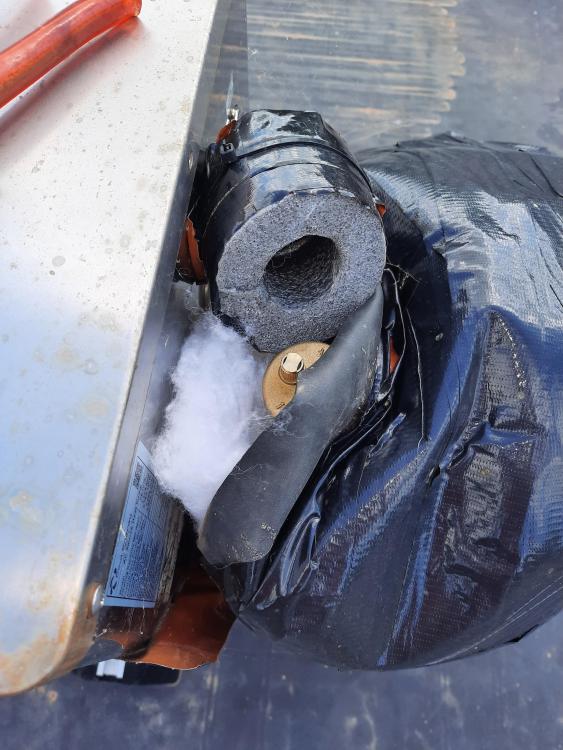
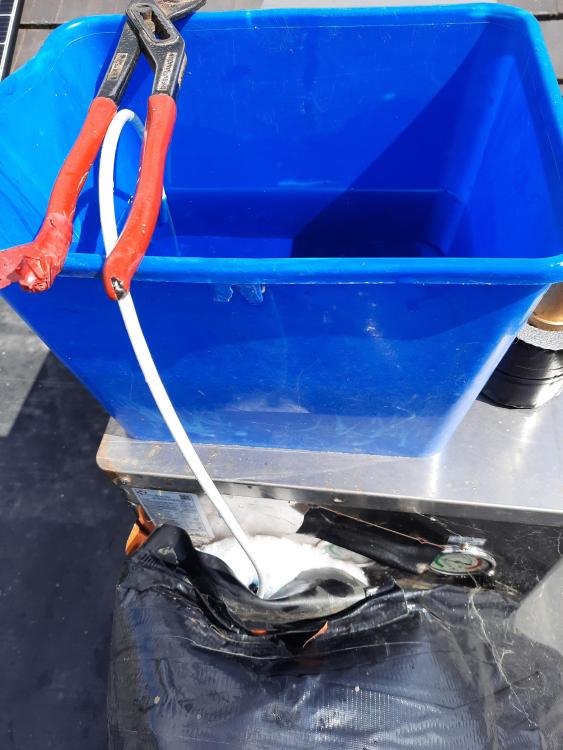
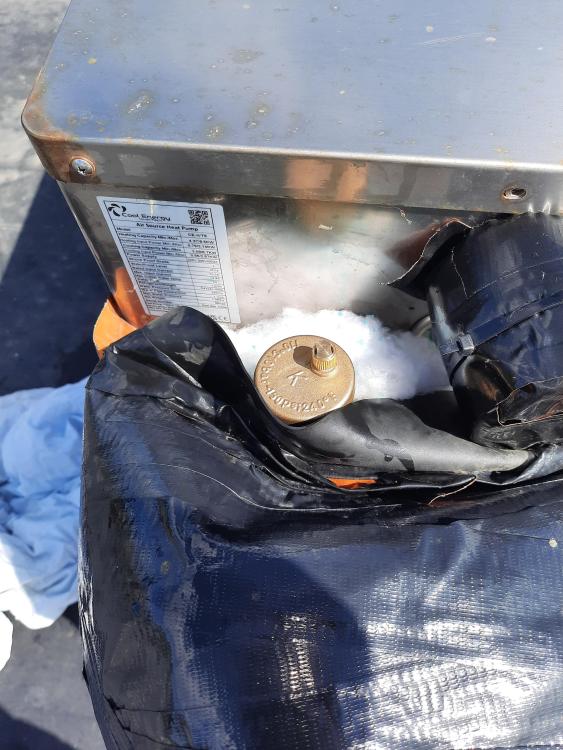
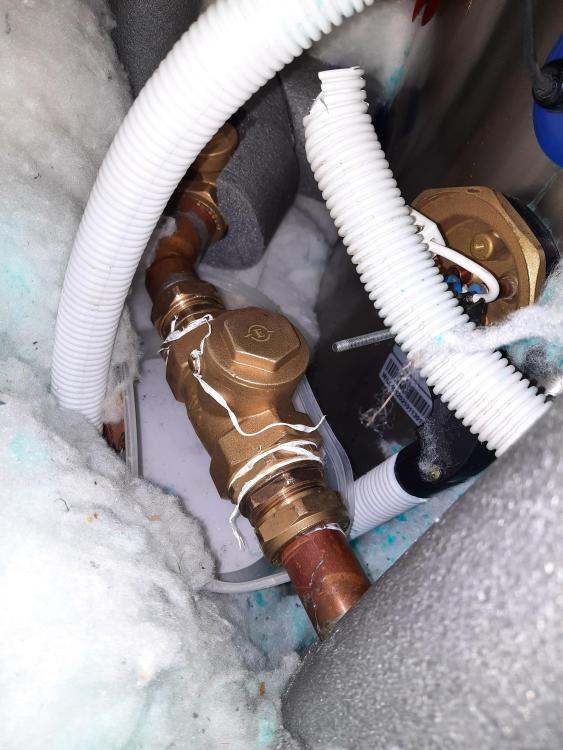
Yes the primary pipes outside the thermal envelope are well insulated. Removing the bleed valve cover. Refilling after removing bleed valve. Valve replaced. However after testing the new valve I found some of the thread joins leaked. I shut everything off to sort this out. I undid the brass fitting a few turns and added 3 miles of PTFE and did them up again. Pressure tested and passed this time. Well the filling is done! Now to test the cooling..
-
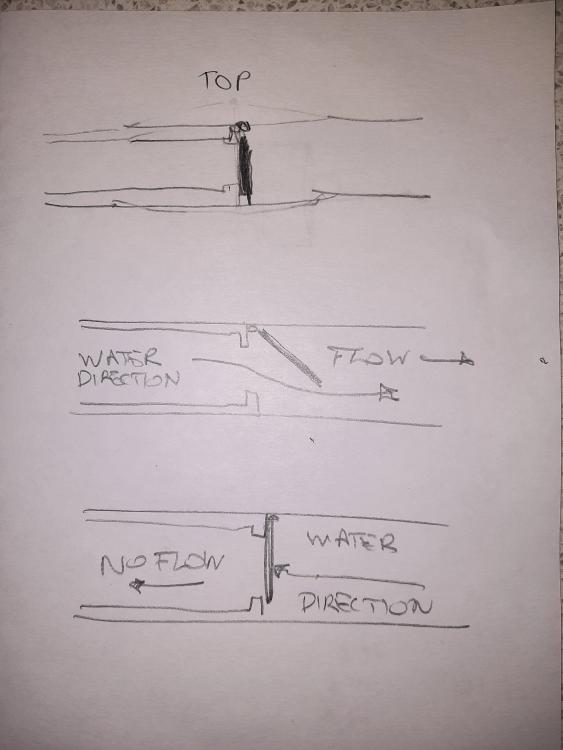
Well I don't know everything, but I think it's because the flap inside the fitting hangs down.
-
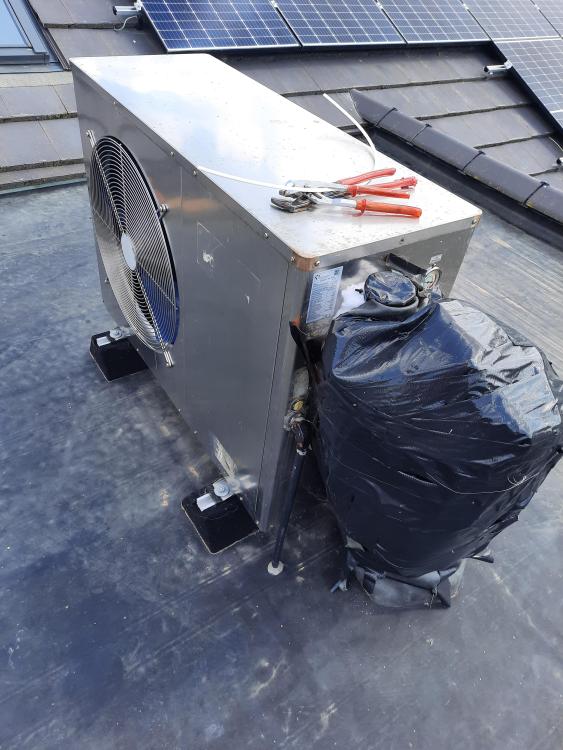
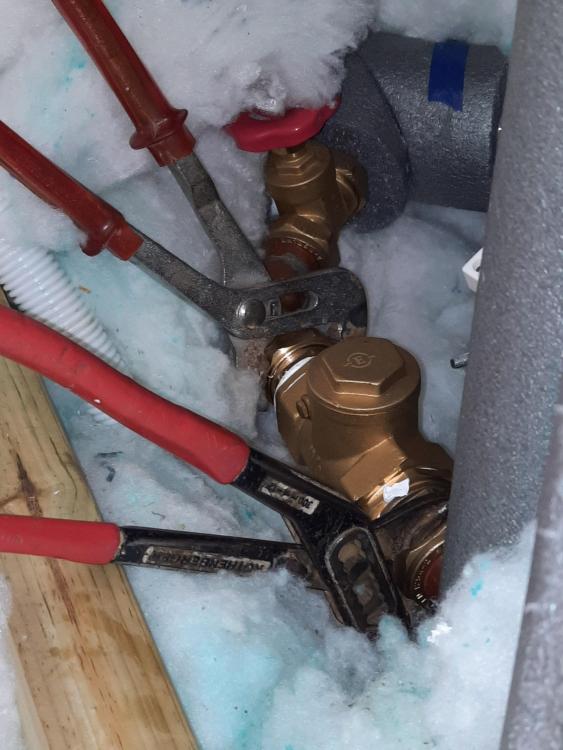
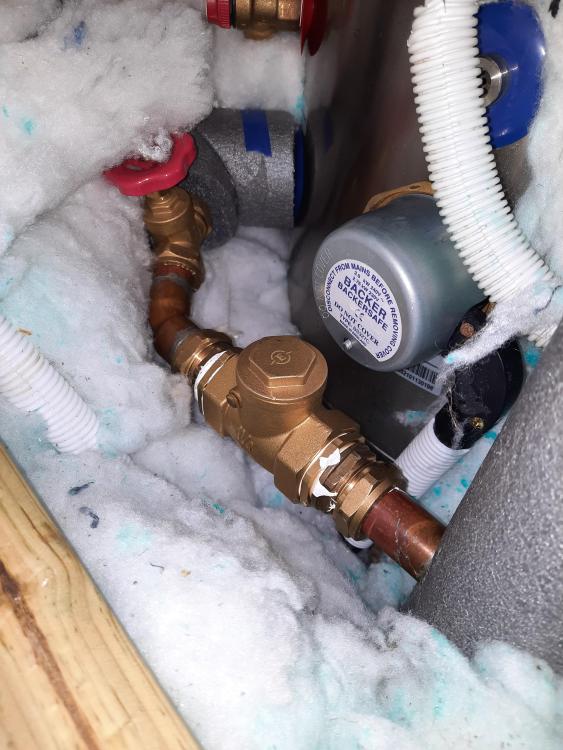
With the anti gravity valve fitted... Now it’s time to refill the system. With the ASHP unit the highest point this means filling from on the flat roof...
- 28 replies
-
- 1
-

-
- ashp
- hot water and cooling
- (and 1 more)
-
I think that is part of the problem because of the large bore of the pipe and the height f the buffer tank above the hot water tank.
-
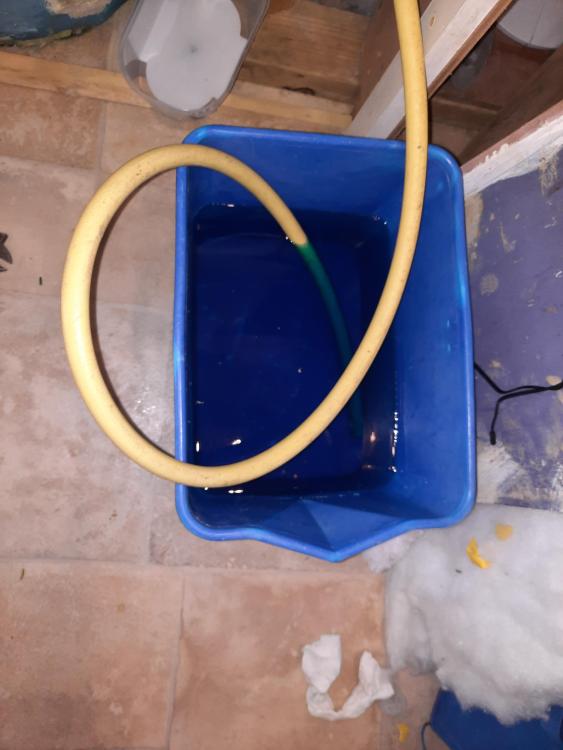
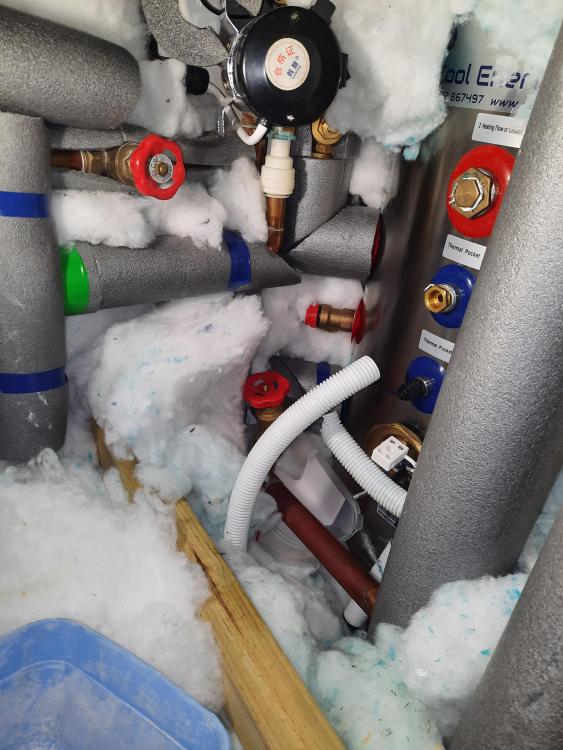
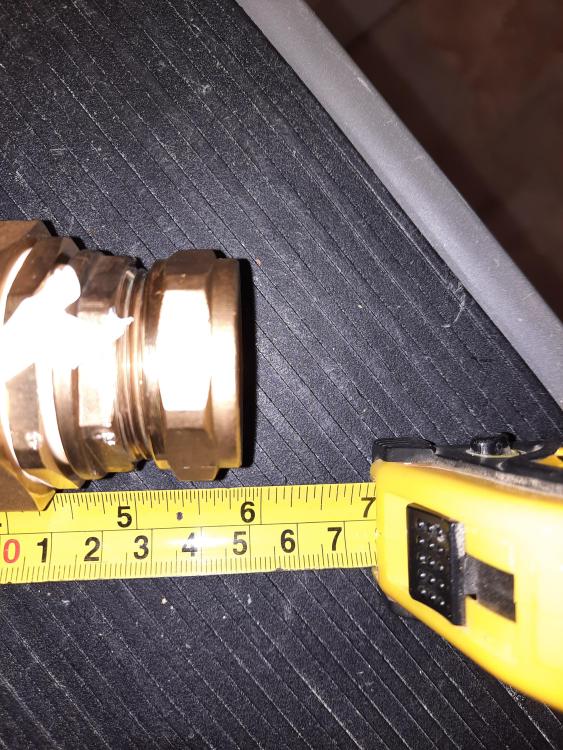
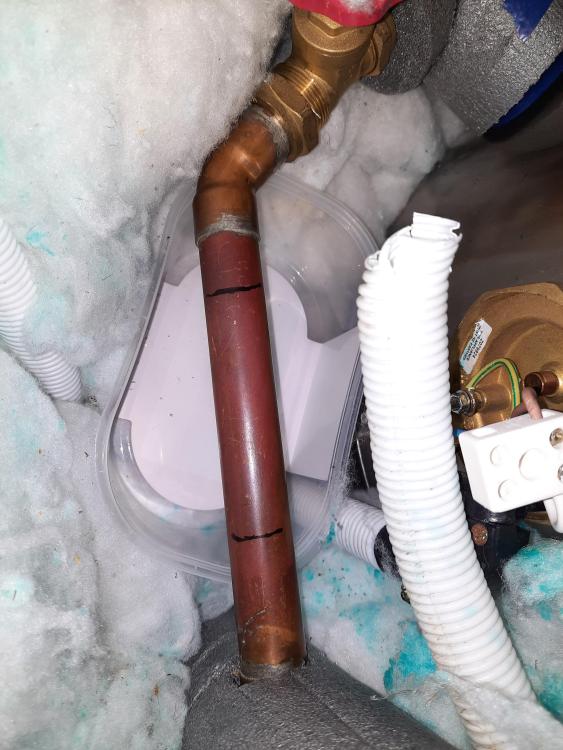
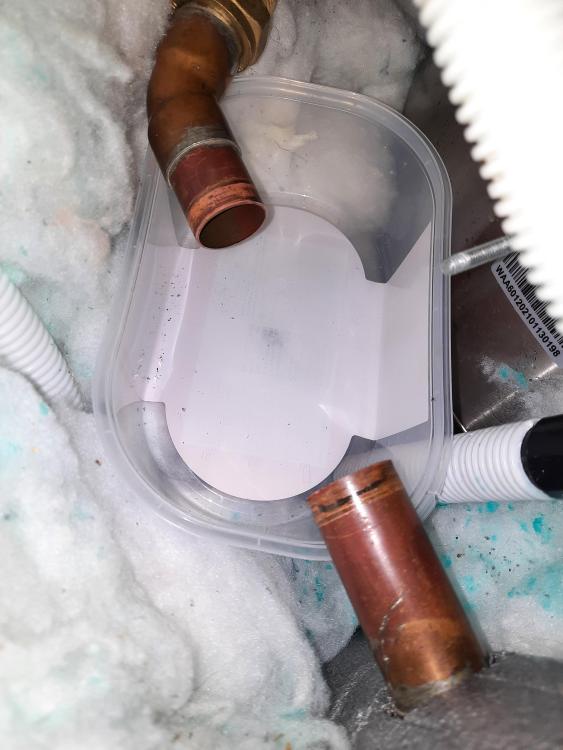
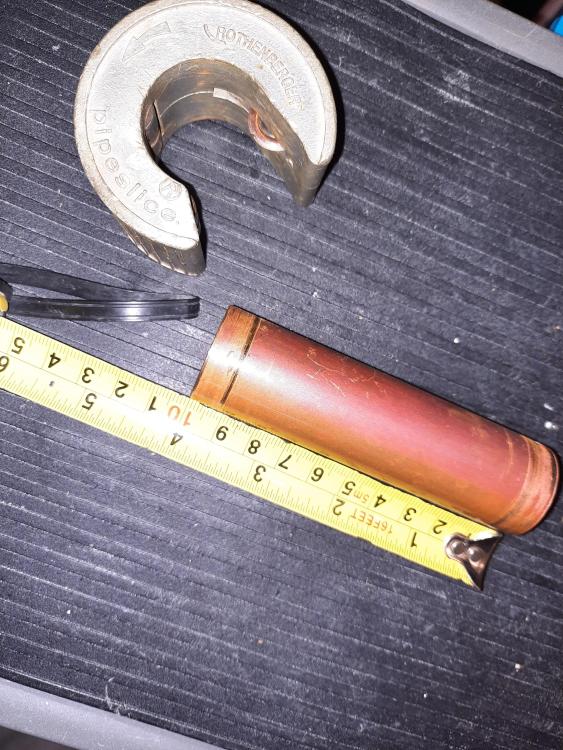
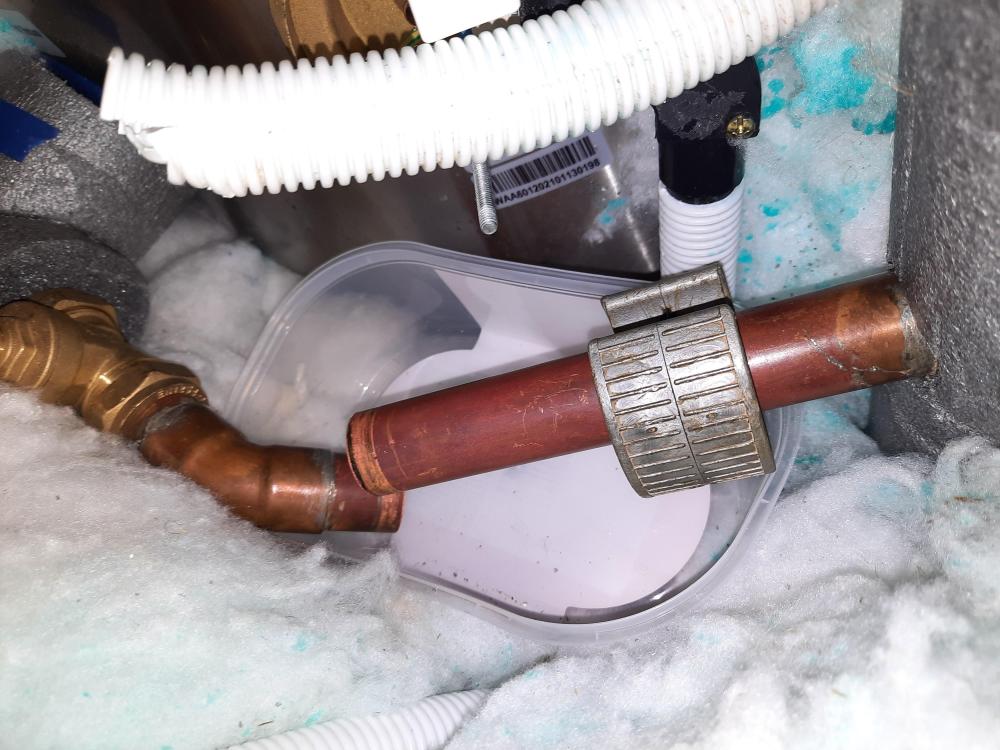
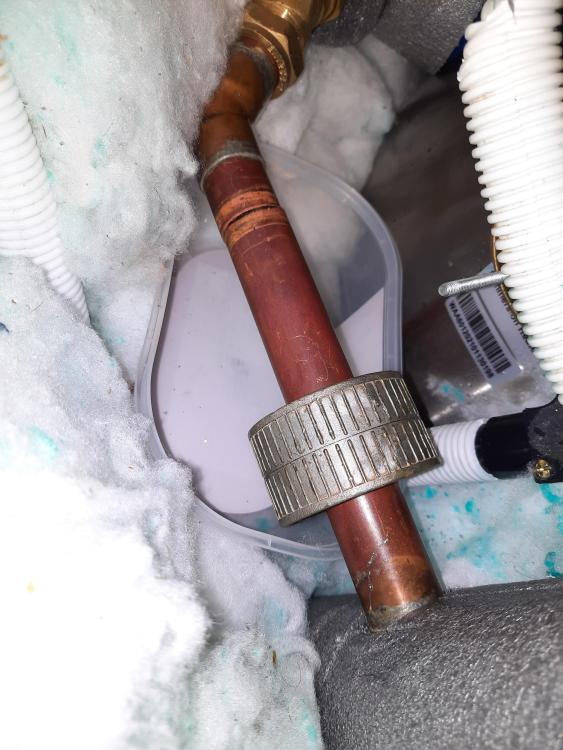
Because I had already put in a load of gate valves I only need to drain about half s bucket from the primary circuit. However the straight piece of pipe after the buffer tank valve is only 185mm long. Not a lot of room.... The valve is just about short enough to fit. Minus the ends of the pipe that slot in I need to cut out 100mm but at least 25mm from any fitting. Here we go.... Rough marks Cut one end Making sure that the piece is 100mm as calculated,cut the other end. Pray that it is right because unlike 15mm or to some degree 22mm pipe, 28mm is very unforgiving if you cut the length or angle wrong! Phew!
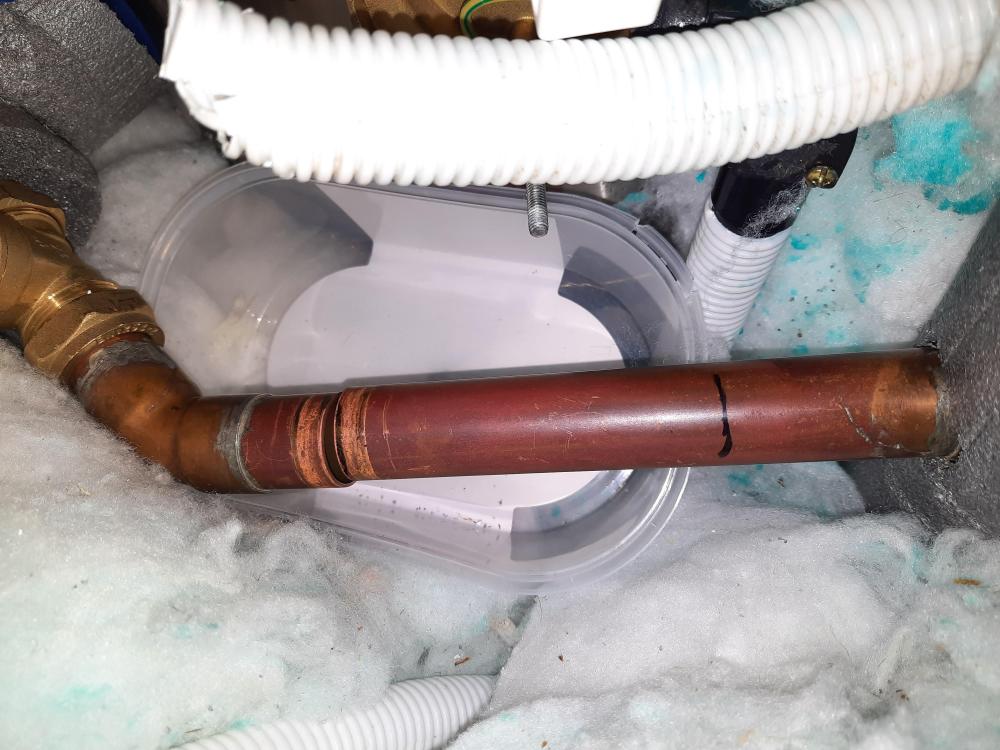
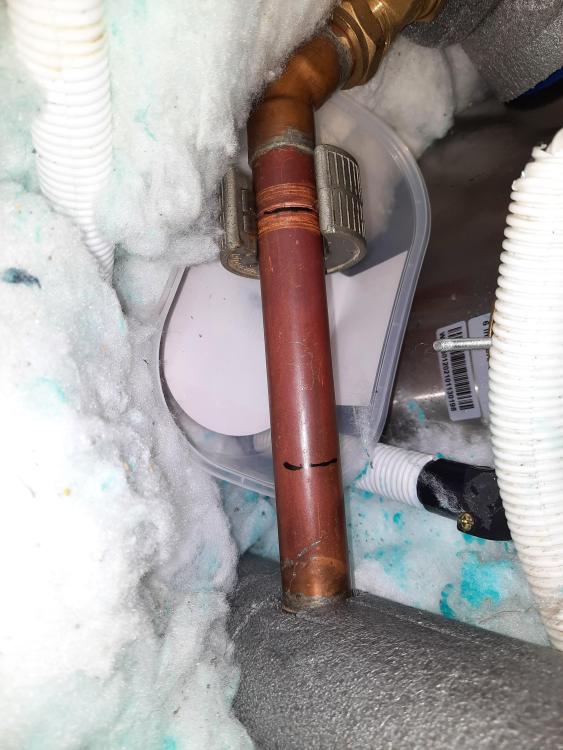
-
Reducing Energy Bills - How goes it?
Marvin replied to Ferdinand's topic in General Self Build & DIY Discussion
Depends how far you have to 🚗 to work. -
Decided to fit an anti gravity valve.... this will be fun! Must put it in facing the right direction....
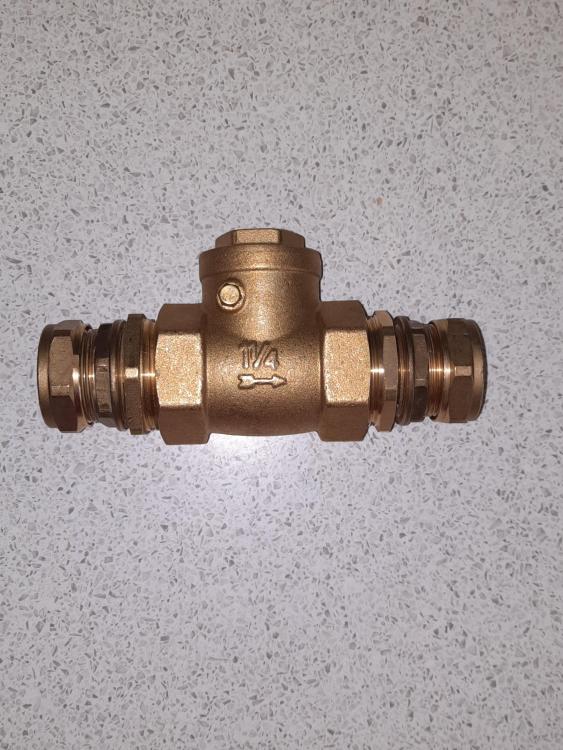
- 28 replies
-
- 1
-
-
- ashp
- hot water and cooling
- (and 1 more)
-
Thanks for the replies. I think I will have to do some controlled experiments to find out how long the buffer takes to warm back up after being cooled. Because the buffer tank is subject to being used for cooling it has a minimum of 200mm fluffy around the outside of the buffer tank to avoid the risk of condensation. ( electrics protected). So the rise in the buffer temperature could be happening over a long period of time. Secondly, the emitter secondary circuits run through the loft, and while there is 400mm of fluffy, I wonder if that contributes to the temp changes.
-
Hi @JohnMo What's the return temp to the heat pump when in DHW heating mode? I will have to test to find out what the temp is. Is the return path heating the buffer as it flows back to the ASHP? That's what I am wondering. M
-
All stainless steel!
-
Its that time of year (and getting hotter) when we require both hot water and cooling from our ASHP. Hot water works fine, cooling works fine, however, today the buffer tank was 36C although it had not been heated for weeks. This suggests to me that the heat from the hot water tank is migrating to the buffer tank. This also coincides with my thoughts about what may be happening on cool nights in winter when the bungalow heating doesn't come on over night and the hot water tank seems to lose a lot of its heat. ( it would be reasonable to loose a couple of kW's from the hot water and it be enough to warm the bungalow on a cool night) The primary pipework is all 28mm and very insulated. The primary pipework only goes to the hot water tank and the buffer tank. The emitters are on a secondary circuit circulating through the buffer tank. The 3 port valve only has no mid position, so either supplying the buffer or the hot water, not both. Three port valve working correctly. The top of the ASHP is about 1.4 meters above the top of the buffer tank. The top of the buffer tank is about 0.7 meters above the top of the hot water tank. A circuit of the longest part of the primary pipework is about 11 meters. So, my thoughts are: Can a 900mm long 28 mm copper pipe full of static water carry 2kW of heat from the hot water tank to the buffer tank (noting that the port valve would stop the possibility of the water circulating through the pipe) within 8 hours? If this is not the case what is happening. If this is the case what safe options can I use to stop this. Your thoughts please. Thank you. Marvin
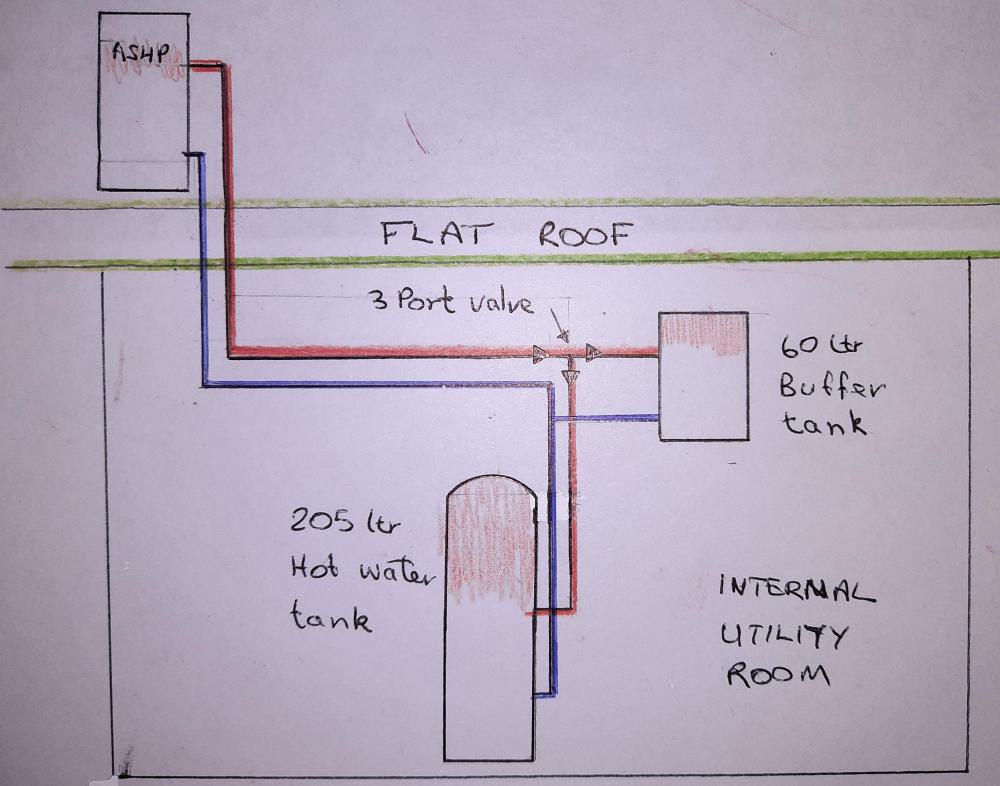
-
I thought every house in Greece was built passively?
-
Hi @Ian79 Yes lantern walls needs insulating. Yes fascia area needs insulating. You need to achieve a thermal resistance all around your habital space. If you can find a route where you can go from the inside to the outside without going through the appropriate amount of thermal resistance, that route will become warmer in the summer and colder in the winter. As you say, these will become cold spots and some can cause condensation issues, espically high up areas where warmer and potentially moister air can hit a cold surface. (Have seen this with uninsulated loft hatches) As to what type of insulation, it depends what standard of thermal resistance is supposed to be achieved. Remember that 200mm of wool has about the same resistance as 100mm of rigid PIR. Good luck. M
-
Heating / cooling for brick built garden office
Marvin replied to Spreadsheetman's topic in Air Source Heat Pumps (ASHP)
Hi @Spreadsheetman @Conor has picked up an important point about insulation which hopefully you will only have to buy once and it will not need servicing, it will keep you warmer in the winter and cooler in the summer. @Nickfromwales has commented before on this sort of thing. Sometimes insulating well can avoid having to buy a big / complicated heating system. One of our bedrooms will use about 300w to heat when it's -8C outside. I produce about 70 watts working at the desk so not much left. Good luck M -
Hi @horace Further thoughts on the ASHP side: We had an existing bottled gas boiler serving the central heating and hot water system before we installed the ASHP. The ASHP is most efficient when the temperature difference between the outside air and the temperature to be achieved in the water coming out of the ASHP have the smallest difference. This seems odd because you would assume energy in equals energy out but this is not so with an ASHP! With 1kW of power you can produce anywhere between 1.5 and 5 times the heat that you would with a 1kW electric fire. With the above in mind you can see there is a great saving to be made, if you can run the central heating water temperature, as close to the outside temperature as possible. We tested the ASHP setup for our home over the last winter and found for us we are better heating 24 hours a day. We turn down the temp about 3 degrees over night. The outside temperature seems usually coldest just before the dawn so we do not heat the hot water then. However, the lower the temperature of the water in your radiator, the less heat the radiator emits. So to produce the same amount of heat required in any given space, if the radiator usually runs at full blast on a traditional boiler ouput temperature of say 60C, to make an ASHP the most economical you may need a larger radiator. The calculating of the radiator sizes is usually carried out during the heat loss survey. When renovating our home I did not believe that the MVHR would save as much heat in the winter as it actually does and so all our radiators were already 50% bigger than required. Good luck M
-
How does your garden grow?
Marvin replied to recoveringbuilder's topic in Landscaping, Decking & Patios
there are about 20,000 varieties available Looks like a recent variegated one as the flowers are bigger than the original and bi-coloured.



