


Marvin
-
Posts
2389 -
Joined
-
Last visited
-
Days Won
3
Everything posted by Marvin
-
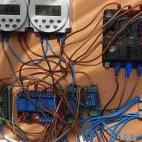
Try again.... Having analysed the historical data output form the PHOTOVOLTAIC GEOGRAPHICAL INFORMATION SYSTEM for my PV setup in the winter of 2019-2020 the results show me that even in January 2020 we would fail to use about 75kWh produced by the PV, even after taking into account all manipulations we could possibly do (except wasting power) like only washing, heavy cooking, washing, tumble drying, and topping up every rechargeable battery we have (about 12kWh) on sunny days. Doing all this we still expect to buy in about 200kWh in January. In order to keep our bills down we are installing night storage heater and converting the energy supply to come from excess PV during the day producing "Day Storage Heaters". Looking at the raw data (the PGIS broken down into hourly records over a year and weather broken down to half hour records) its easy to conclude that the days in winter when sunny with a clear sky give rise to high PV generation and cold nights. We are low tech here and will be using CT clamps and relays to engineer the charging control. I am testing out a different way, but won't comment until tested. Just to say the storage heaters will only be using a resistive and not an inductive load. There are multiple issues regarding output control which will be addressed at the time.
-
Having analysed the historical data output form the PHOTOVOLTAIC GEOGRAPHICAL INFORMATION SYSTEM for my PV setup in the winter of 2019-2020 the results show me that even in January I would fail to use about 75kWh of PV, even after taking into account all mernipulations
-
The regulator on top of your gas meter reduces the pressure of the supply to your house. If I remember correctly the regulator reduces the pressure of the gas coming into your home down to about 25 mbar from about 75mbar. It's very unlikely that this is anything to do with the problem. More likely is the resistance to the flow of the gas due to the length and internal diameter of the pipe to the garage. You could easily find out the pressure of the gas but not the flow rate. You could use @Temps suggested calculator, but sadly the only way to be sure is to run an appliance on the other end. Can't really open a gas pipe and measure the flow with nothing on the end and expect to live very long....
-
 Tricky to do on a bungalow like ours.
 -
I think your right about the efficiency of the machine, but I'm not sure about the whole system efficency due to the location of the equipment and ducting. I have adjusted my expectation after testing the actual air inlet temperature and comparing it to the calculated air temperature. Individual results will be greatly dependant on if the MVHR and any ductwork is inside or outside of the thermal envelope.
-
True. Using the data over the year 2020 we had an average temperature of 12.1 centergrade here. The average temperature in the home was 21C (19 for about 8 hours over night and 22 the rest of the day. We would require about 1157 Watts to heat up the same amount of air taken directly from outside, as apposed to, the 231 Watts of heating required and 32 Watts to run the MVHR. So a saving of about 926 Watts an hour. 926 Watts by 24 hours by 365 days is 8111 kWh a year! Note: In this example both ways of calculating do not take into account heat produced in the building, from people, heat all electrical appliances or solar gain. Estimating these brings the difference between air inside to air outside to only about 4.1C and the saving down to about 2000kWh a year for us. FYI our home is about 105m2 on plan! In my humble opinion, you have to have some really really poor MVHR design for the running of the MVHR to cost more than the saving on heating.
-
Except for the wind chill effect on the external temperature of the building...
-
What a crock of ......t! I don't know where to begin! Sap man may be right that SAP calcs are about as good as EPC calculations and assumptions (don't get me started about EPC's) but as efficient as opening a window? That's utter bollix. Hi @ruggers In my world, when you open a window to let air in you let other air out, Our home tends not to expand like a balloon. In doing so the temperature of the air going out is replaced with the temperature of the air coming in. So when we open a window on a very cold winter's day, the outside air at, say, 5C replaces the warm air in our home. However on the same day the air supply from outside via our MVHR is usually around 20C. This sounds like a small thing but when the maths is done over 24 hours and 365 day a year its a lot! If the outside temperature at our home is -1C we will use about half a kWh replacing the temprature of the air using the MVHR in an hour. If instead we opened windows and replaced the air in the house at the same rate as the MVHR we would use about 2.5kWh an hour. Our MVHR uses 25 to 33 Watts an hour. I am completely satisfied that using an MVHR helps to keep our home at a more stable temperature (resisting both hot and cold outside temperatures) and saves us energy and saves us money. Its the gift that keeps on giving... Good luck with your project M
-
+1
-
@pocster?
-
What options are they saying are acceptable?
-
Where is the kWh price heading in 2022?
Marvin replied to epsilonGreedy's topic in General Self Build & DIY Discussion
Hi @kommando Interesting article. My take on the situation is that gas prices will go down but peoples available money to spend on the basics will go a lot lower causing energy to still be a high proportion of income. Time will tell. -
Where is the kWh price heading in 2022?
Marvin replied to epsilonGreedy's topic in General Self Build & DIY Discussion
This is mad thinking. -
Planning permission refused due to replacement of historical gate
Marvin replied to wils77's topic in Planning Permission
or move the gate 5 meters down the drive (if practical) so when a vehicle is waiting to enter its not causing an obstruction. Depends on the road category as to if this thinking applies. Good luck M -
Where is the kWh price heading in 2022?
Marvin replied to epsilonGreedy's topic in General Self Build & DIY Discussion
No. They think we're desperate. You'll have to decide the answer to that one yourself. -
Where is the kWh price heading in 2022?
Marvin replied to epsilonGreedy's topic in General Self Build & DIY Discussion
Yup! Avoiding the rocket science answers is almost always the best approach. -
Where is the kWh price heading in 2022?
Marvin replied to epsilonGreedy's topic in General Self Build & DIY Discussion
Having theories is a good way to develop solutions to problems. Using the common sense approach is often a good way to check your sanity. and @joe90 comment above is just that! -
Having read up on the LuxPower Squirrel POD inverter system I would suggest that you work out how much more storage you have on your wish list and see if it will all fit near the consumer unit in the cupboard or aim for the garage ensuring you have a suitable ampage 240v cable to carry your expected peak demand, over the distance between CU and POD inverter and installed in a fashion suitable for the ampage. I'm sure you know concrete is used for massing in a building. If the cupboard gets hot and the concrete walls warm up it will take ages to cool down. My inverter manual says do not touch it can get hot.... Probably best to speak to supplier about what you hope to put in cupboard and ask about overheating.
-
IMHO I cannot see materials becoming cheaper in the next 2 years, and so we are installing everything we can now. But this does not mean I am right just my opinion. Time will tell. What your motovation to build and your financial position are will influence others opinions.
-
In our case, extended CT cable with Cat 5.
-
If running at low voltage like my 12v DC system, the nearer the panels to the storage the better because of the voltage drop. Also installed large cable between, batteries and pure sine wave inverter and kept them as close as possible. As soon as you convert to 240 AC normal cable rules apply. The 150ish DC volt system I upgraded to 6mm cables as I expect to benefit from thisforthenext 20 years. I think the distances around your inverter is because it can become hot. So again best not in a cupboard.
-
ridge tiles Does this make sense?
Marvin replied to Confused123's topic in Roofing, Tiling & Slating
Hi @Confused123 when looking at the photos I notice that the board on the side of the flat roof is exposed more than it was suggesting that the flat roof has be raised at the ridge end. -
PV+EV+House+MVHR+ASHP+hot water: Last 60 days total power purchase cost: Mains power used: 318.75kWh @ 24.0762p/kWh plus VAT £80.58 Standing charge: 60 days @ 22.9524 plus VAT £14.46 (Average 4000miles a year) Additional EV charge purchased away from home 42kWh @ 0.52p/kWh inc VAT £21.84 60 days of PV power (Material supply cost etc divided by 7 years no including my labour) inc VAT@ 1.56 £93.55 Total for 60 days: £210.43 or £3.51 a day
-
Lots of weight from the top set of purlins that seem to be unsupported within the required distances, this would weigh the roof down? https://www.derbyshiredales.gov.uk/images/documents/B/BC Guidance Note Purlin and Rafter Sizes.pdf
-
Worth getting an understanding of what the surveyor considers the rectifying works would entail in the worst case scenario. Then you have an understanding of the risks you would be taking on.... Drains problem: CCTV survey £200? Then you will know better the extent of the problem your facing Drains fix along side of house: Lined ? Inspection of foundations? Possible underpin of side wall?

