


Marvin
-
Posts
2389 -
Joined
-
Last visited
-
Days Won
3
Everything posted by Marvin
-
That's a challenge. We just have a gap under the doors. Light reducing is possible but sound as well I haven't heard of. How much free air do you need?
-
Rainwater Harvesting Experiences (2022 Edition)
Marvin replied to BristolBuild2020's topic in Rainwater, Guttering & SuDS
Hi @BristolBuild2020 The rain water runs through a catch pit into a big storage tank underground, and is pumped up to the sand filter before draining from their into the cleaner water storage barrels, ready to be pumped for use on the garden or loos. This may help: https://forum.buildhub.org.uk/blogs/blog/69-rainwater-harvesting/ Marvin -
What energy rating is your HW cylinder?
Marvin replied to Adsibob's topic in Boilers & Hot Water Tanks
HI @Tom I think your quite right, and my tank is only very hot at the top, but then I am using a top down immersion and/or the mid level water coil, however, the example I was thinking of was using PV generated power in the winter when there is little or less power. +1 with @joe90 above, we only set the tank on about 45°C when using the ASHP and only exceed this with excess PV power, which sometimes means if the next day there is little PV power we do not need to buy in power to heat the tank using the ASHP. This works for us, but we have super lagged the tank.... -
Rainwater Harvesting Experiences (2022 Edition)
Marvin replied to BristolBuild2020's topic in Rainwater, Guttering & SuDS
Yes to overcome the dry months you need a store the size of a swimming pool. The system here is a DIY one and only for loos and garden watering. We use a sand filter to clean the water which once its used for a few days runs clear. We only store about 4m3 in various tanks. -
Battery Storage - Nearly 2 months in
Marvin commented on MikeGrahamT21's blog entry in Back on the self-build waggon...
Further update from us... Average daily purchase from the grid this year is presently about 7kWh with an expected 3100kWh purchased by the end of the year meaning an average of about 8.5kWh purchased a day.(heavily skewed toward the winter demand) Comparing our daily PV power and power usage, and using the PVGIS information over several winters, there are days in the 6 months, October to March, when a lot of power would be sent to the grid even though we are buying it in from the grid every day. In February I just calculated that I will supply the grid with 80kWh unless I do something about it.... Now working on separating low peak power items in the house from the grid to be supplied by battery power. There is no way I can support the peak demands of things like cookers or electric showers, however the MVHR, Fridge and Fridge freezer, lights, the ASHP and auxiliary controls seem doable. This will need to be supported by a completely off grid system used solely at this stage to convert to battery recharging and inverting to AC, however an additional source of power is expected to be attempted next year. Peak demand for all items is 5kW. Daily usage when all up and running is expected to be 20kWh, 1.3kW most of the time. Battery charging rate needs to be 6kW. So thinking about sourcing inverter and batteries. Any suggestions? Marvin -
That's not a kitchen, that's a corridor.
-
Looks like my mother's kitchen. About 1800mm across, so 600 counter and say 300 breakfast bar leaves what about a 900mm gap? If it was me I would do the kitchen without the breakfast bar and then see how it works out for you. Either way I think it's too long. Mum had a short draw under the bar for cutlery. Good luck M
-
Newbie question about how power is supplied from grid if using solar
Marvin replied to Danny42's topic in Photovoltaics (PV)
Complicated. I think clear questions need to be asked... AFAIK (as far as I know): Grid tied inverters monitor the grid. If the grid has a power cut the inverter will stop working / producing power/ doing anything. You will need an inverter that will decide to charge your batteries (with programmed parameters) otherwise what will decide where the power goes? So another question is If a hybrid inverter is connected to the grid, PV and batteries, will the inverter continue to work if the grid goes down? Anyone in the know? -
Advice for new solar+battery install for a newbie
Marvin replied to Jason213's topic in Photovoltaics (PV)
Put as many panels up as possible is my advice. Knowing that you will be above the permitted export allowance you will have to apply to the DNO (distribution network operator ) for their permission. (DNO Survey: will the local mains cables take the load/supply. will the substation take these changes, will the supply cables to your home take these changes and so on) Last fee I was charged was £300+vat for the SURVEY and about two to 3 month for reply. The survey can state that other works will need to be carried out to achieve your installation. Read the small print on the application about what your agreeing to pay for by submitting the application! The application has to be done BEFORE the installation is commenced. I would suggest before any decisions are made (you buy all the gear and they say the infrastructure changes will cost you £10k for example). Be aware that battery storage before the inverter will not make a difference to your exporting capability. Battery storage after the inverter will, and will need to be added to the amount your are proposing to export (as far as I understand) Calculations for the DNO will be based on the maximum that the Inverter will export (not on the amount of PV on the roof etc) and calculated on 'after Inverter battery supply'. (As above, if I have this right). If you don't do this all at the same time, you will then need to apply for the increase in potential upgrade later. (you could go for just the permitted now but the inverter would be too small in the future....) Check battery for power volume to output. One of my 100amp 12v batteries can only supply about 40% of it's capacity before damaging the battery. So I need 2.5 times the storage of what I want to use. Other battery types will have a higher capacity to supply but will cost more... Depending on the inverter you can install more PV panels than the invert will export. Ours is limited to 6000W but you can install almost 8000W Hope this helps M -
Quite possibly, but some people are reducing this reliance by installing a "so called greener heat pump" and using a lot of power form the PV, and are charging an EV from the PV where possible, hopefully reducing their Fossil Fuel Footprint.... not possible from a gas boiler. Not that its all plain sailing: Only recently understood about needing the fluids in the compressor in our ASHP warmed up for 12 hours on a cold day before "firing-up" the heating / hot water. How that will work if the main power has been off on a freezing day I have no idea.... It never ends....
-
Advice for new solar+battery install for a newbie
Marvin replied to Jason213's topic in Photovoltaics (PV)
Hi @jason213 This may help with your battery calculations... Based on your home with 10kW system this is December 2020's calculated daily production using the PVGIS. Note the variance over the days: (assumptions: GU32 10kW, roof angle 40 deg, Azimuth -22, system loss 5%) 24,017 4,442 1,515 4,119 11,816 16,774 3,285 28,062 8,637 1,278 8,262 18,298 1,967 2,024 11,259 2,634 11,027 1,282 11,197 19,542 3,870 5,990 3,988 27,743 28,824 2,816 23,547 2,730 12,745 21,850 15,055 Total for December. 340,593kWh Of course this is just December 2020. Other Decembers can vary widely from year to year. Good luck M -
Paladin Churchill radiator,
Marvin replied to centralLondonJOHN's topic in Central Heating (Radiators)
Hi @centralLondonJOHN This lot may help you..... I assume the radiator comes in 2 halves, so you only now have half the weight problem.... I would be asking for a detailed description and photo of said special tool so you can decide if you need to purchase one or not. I would also be asking for full installation instructions prior to order to ensure it will fit through the building openings, that the floor is tough enough and that you have the correct end fitting (Function and form). Is there level access or will the radiator have to go up or down a floor. Control of such a heavy item down or up a flight of stairs can be quite dangerous and can cause serious damage with loss of control. Do you have level access off the public pathway to sit the 2 pallets? Usually, these days, a central heating system has a filter prior to the boiler so all the water is filtered. For example: https://www.screwfix.com/p/adey-cp1-03-00022-01-2-magnetic-filtration-22mm/49961 -
Beginner insulation questions - Getting jobs done in the right order
Marvin replied to Gill's topic in Heat Insulation
Hi @Gill It worth considering all the AIM and APE elements before making decisions. That is Airtightness, Insulation, Mechanical Ventilation with Heat Recovery, and Air Source Heat Pump, Photovoltaics and Electric Vehicle. Some of these will not work properly without the others: A MVHR will not work properly without Airtightness. An Air Source Heat Pump will have to compensate for the lack of Airtightness and/or Insulation to the degree that the benefits become questionable, especially during winter, without them. An ASHP uses electricity and Photovoltaics can supply a little during winter and a lot during summer when cooling can be a problem and an ASHP can supply cooling. PV can supply a little to an Electric Vehicle during winter and plenty during summer if your vehicle is at home during sunny days. So if finances cause you to have to consider only a few in my humble opinion AIM first and go APE later. (but prepare the property for the APE works as much as you can). Best of Luck Marvin -
+1 to the 3 above.
-
How exposed to wind is the building? Need to define banging - not only in sound but also time between bangs, time of bangs, what the conditions are outside when it happens. Have seen roofing felt not fixed, under tiling, flapping in the night when the wind is in a particular direction....
-
Grundfos UPS2 speed selector not working
Marvin replied to DannyG's topic in Central Heating (Radiators)
Hi @ dannyg A little water will come out. If its spinning put the cap back in. Pump working. If you get a lot of bubbles from the hole then air in pump. Next thing to check would be the set up you have re port valves and then messing with rads. What's your result?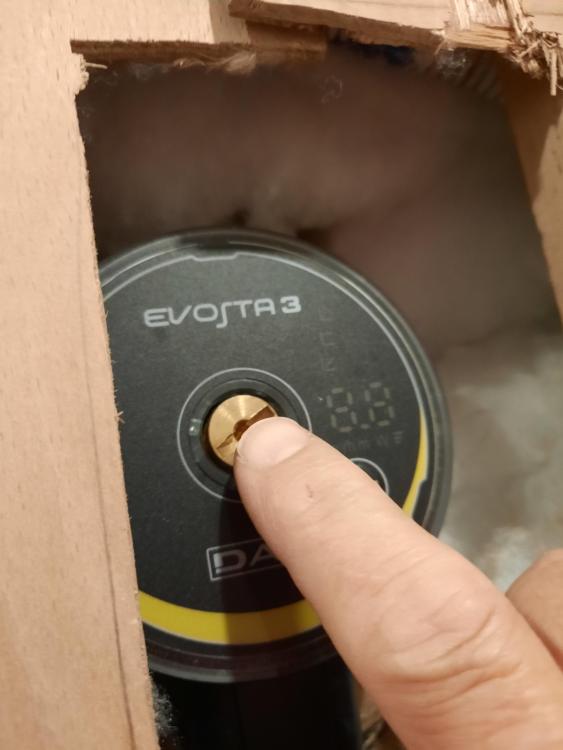
-
Grundfos UPS2 speed selector not working
Marvin replied to DannyG's topic in Central Heating (Radiators)
Remove centre cap with flat screwdriver observe if inside is going round. -
Do we need planning permission to replace this?
Marvin replied to CotswoldDoItUpper's topic in Planning Permission
Search for proof that it has been there for years and years. Don't take it down unless you don't care about replacing it or not. The act of applying is not that onerous. Familiarise yourself with what you need to provide what is required by your council. @markc has a good point about the pictures. However dimensions are important too. if you feel that the greenhouse lowers the roadside appeal with your neighbours properties then take further photos showing the street facing your home. Here's a good start to guide you as to what the planning department will want: https://www.stroud.gov.uk/environment/planning-and-building-control/apply-for-planning-permission/pre-application-advice-and-enquiries In my humble opinion, the feeling I have is that permission would not be given for several reasons and that the way I would approach is by giving rise to visual improvement which means not only replacing the greenhouse but also by having the external finishes exactly the same as the front of the rest of the building. I don't think you can be made to take it down because of how long it's been there and I'm sure others here will confirm this point. Good luck Marvin -
Hi Christian We applied for a 5.12kW installation as it was connected to the grid. Discussing with the DNO, they told me they considered the amount I needed permission for was the maximum the Inverter could export: 6kW (In our case no AC battery supply). They were not concerned as to how many panels were connected, just the maximum the inverter could export. Furthermore, the inverter technical info says I can connect up to 7.9kW of PV but it will still only export a maximum of 6kW. That's like saying your car has an MOT, but you haven't got a driving licence: suitable to use connected to the grid but no permission. Good luck M
-
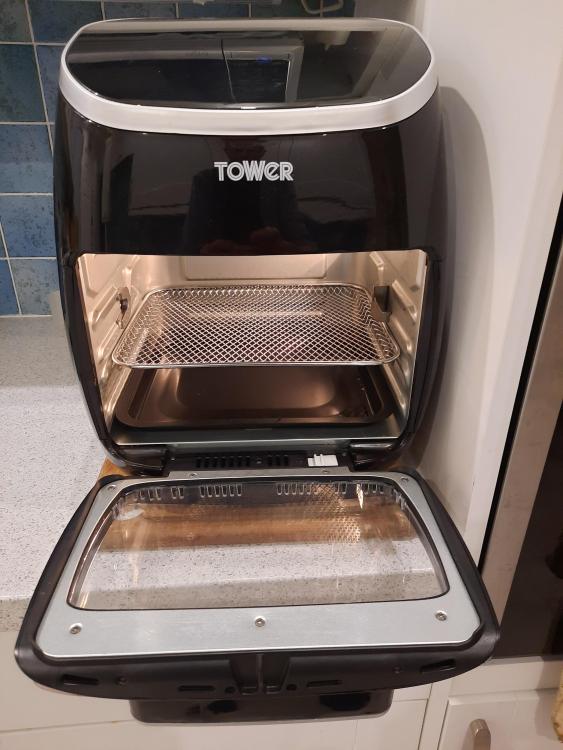
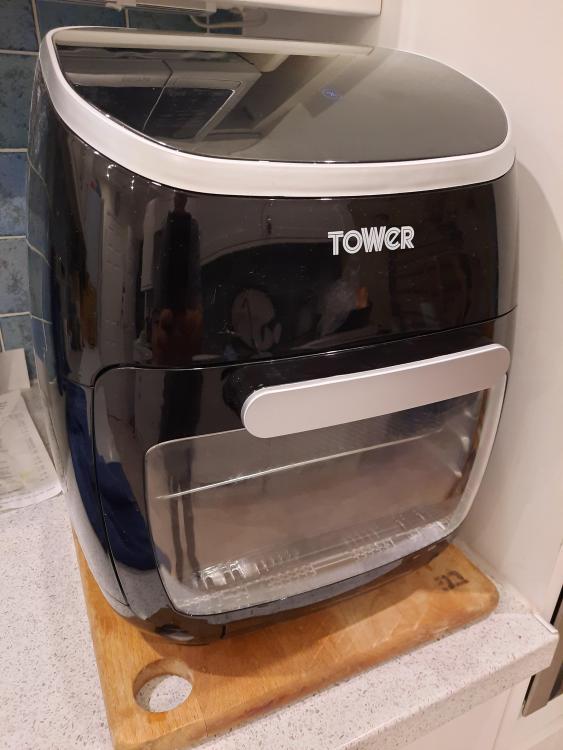
Roast for 2 today: Better than a single bin one which we have also had. Big enough for small cake tin. Lovely chips. 3 racks included. Very small amount of cleaning of drip tray. Heats up and blows the heat about: 60W when just blowing, 2000W when heating. Uses about 1.5kWh for a cake and dinner for 2 about 1kWh. Different to using an oven and takes experimenting with to get right. SWMBO well happy.
-
Local Electricity Bill... or fight to improve SEG
Marvin replied to Benguela's topic in Photovoltaics (PV)
Hi @Benguela Nice idea. I am in favour of local power production and storage. However, no chance. Too many boring reasons why it won't work. Better off using up as much as you can, and giving away as little as possible. Good luck Marvin -
Air Source Heat Pump - general question
Marvin replied to 0llie's topic in Air Source Heat Pumps (ASHP)
Ours is a 4.3kW. Perhaps it is related to compressor design? -
Air Source Heat Pump - general question
Marvin replied to 0llie's topic in Air Source Heat Pumps (ASHP)
Hi @ProDave To all ASHP owners! I do not know if your ASHP is the same as mine but it seems that all ASHP compressors have a 'use warm oil' requirement..... Know this: The manufacturer of my ASHP kindly responded to my enquiry regarding starting the ASHP back up after the ASHP being off for a long time. The ASHP compressor has oil in it, which needs to be warm to avoid excessive wear due to the oil's viscosity. It is recommended to put the ASHP on standby for at least 12 hours before firing up if the outside temperature is 6°C or below to give time for the oil to warm. Completely turning off and on the ASHP came up as a discussion because of the amount of power used in standby mode. Good luck. Marvin -
Air Source Heat Pump - general question
Marvin replied to 0llie's topic in Air Source Heat Pumps (ASHP)
Making some enquiries... -
Air Source Heat Pump - general question
Marvin replied to 0llie's topic in Air Source Heat Pumps (ASHP)
From manual. Is this what you mean: First boot-strap or starting up again after being shut down for a long time, stop, ensure power is on ahead and heating at least 12 hours for crankcase (local loop temperature is zero). Water pump starts up first, fan starts up, and then compressor starts up and begins regular operation. Actually, I wonder what the sentences do mean!



