saveasteading
-
Posts
10890 -
Joined
-
Last visited
-
Days Won
93
Everything posted by saveasteading
-
Garage electric roller door installation, plumb level issues
saveasteading replied to owen83's topic in Introduce Yourself
A string with a nut tied on the end. More certainty than with a laser, and works in full daylight. Also doesn't require a surface to shine onto. -
From bitter experience.... I fitted a very robust and highly articulated tv mount and all was good until.. The aerial lead was tugged while I was swivelling the tv. It could have pulled out of the tv terminal or out of the wall, but no, it snapped the tv terminal off. It is a complex box and an expensive repair. The exceptionally helpful tv supplier decided that it had perhaps been broken on delivery and replaced it. Moral, the tv aerial cable has to be supported and yet fully extendable in all possible directions. Play around with it a lot before fixing.
-
Garage electric roller door installation, plumb level issues
saveasteading replied to owen83's topic in Introduce Yourself
It is essential that the top of the door is horizontal, otherwise it will twist in use and gradually distort. Also that the runners are parallel all the way down (in the width of the door), or it will stick. Not lining up with the walls is unimportant. Once it is up and running, you might need draught strips and/or a waterproof seal at the bottom. -
Help ... can anybody recommend a good joinery company?
saveasteading replied to hendriQ's topic in General Joinery
certain of these just ask for a letterhead and money. I am very experienced in finding and choosing new contractors and still find it difficult when in a new area. You can't really tell how it is going to go, so I treat them with total respect, but am actually suspicious for quite a long time. Hence our policy was always to retain trusted companies, for many years usually, unless they let us down. Of course the trade you want in a hurry is likely to be fully occupied already, and you end up with the aspirational ones, or chancers. Bad luck. I would just say that I don't recall ever getting a good tradesman from the recommendations of a merchant. Ask at the local BM by all means, but beware. Do you by any chance have a 'Nextdoor' community in your area? You can ask for recommendations on there. https://nextdoor.co.uk/ -
Rcd tripping regularly
saveasteading replied to saveasteading's topic in Consumer Units, RCDs, MCBOs
Got the kit today. There aren't any Piranha fittings in Kent apparently, at SF anyway, but I think i can retrofit it. So banjo method for now. I looked at 2 boxes that had 3 holes on one side, so they can be at the bottom. One was massive, so I got the dearer one which is Schneider. I will report back if there is progress or problems. Currently enjoying the thought that there won't be a power cut while that circuit is off. -
What floor area? Best get learning some trades and professions, and especially building science, and site management. A main contractor who is also PM can be taking 30% on top of the nett costs. You could keep that but be taking on risk. Every contractor has margins and overheads. sometimes a series of workers/subby/bigger subby/main contractor can be adding margins on margins on margins. Also on top of materials. And it is fair as they have costs and risks. Mostly though the current stage is crucial for costs. Avoid anything out of the ordinary, and building more than you need. No, really mostly, after thought, is that it seems that you aren't experienced in construction. Therefore beware of all the surprises that are yet to come, of designers who tell you what you want to hear, and of gimmicks. allow between 10% and 20% for unknowns, and gradually design them out. I think we are starting from : 'forget about masonry'. I have a rule of thumb for early advice to clients, that whether built as single or 2 storey, the useful floor area cost is much the same. Thus use 2 storey where land is scarce and single where you can. IF the ground is good, and some more IFs that are site specific.
-
ICF Foundation Details - Thresholds
saveasteading replied to Jenki's topic in Insulated Concrete Formwork (ICF)
That's best for several reasons. Simpler to pour or form the screed against a board which closes off the door opening. allows the screed to shrink without sticking in the door. Thresholds detail and tweaking levels later. Doors are always a nuisance. -
ICF Foundation Details - Thresholds
saveasteading replied to Jenki's topic in Insulated Concrete Formwork (ICF)
Needs a detailed cross section drawing. Surely the manufacturers have approved details? -
ICF Foundation Details - Thresholds
saveasteading replied to Jenki's topic in Insulated Concrete Formwork (ICF)
Steel fibres expensive, plastic fibres cheap. Our local SE (we were obliged to use one) was unaware of the product. Worked nicely. -
ICF Foundation Details - Thresholds
saveasteading replied to Jenki's topic in Insulated Concrete Formwork (ICF)
Consider drilling and gluing rods into the rock. You might as well make use of it. Gus will confirm if this is stupid or genius. The holes in the membrane will be of no consequence if the concrete is well laid. I'm surprised. The timber will be local (Moray perhaps?) or even from Muir of Ord. Ours was from James Jones at Forres, via a merchant. We got better prices for insulation and timber from the local BM than from any national or web supplier. I am biased towards timber because things fit together, you can always get another bit, and adjustment of dimensions is easy. On the rock and then on the membrane to stop stones punching through. When we researched, 150 PIR was much the same U value and cost as 300 EPS. Depends on your construction of course. Higher is good for the view and allowing the moorland runoff to run harmlessly past. Not so handy when making ramps to the door. You appear to have about 400mm of MOT 1. you don't need any other than to level off over the rock. Anywhere else I would suggest recycled stone as being much better value and environmentally. Stone may be cheaper for you, but MOT1 perhaps excessive....watch out for surprisingly big stones in it. -
Rcd tripping regularly
saveasteading replied to saveasteading's topic in Consumer Units, RCDs, MCBOs
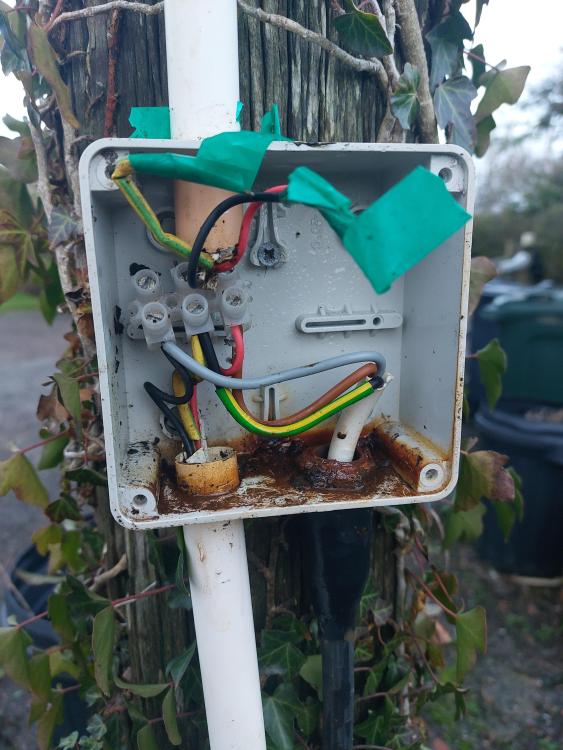
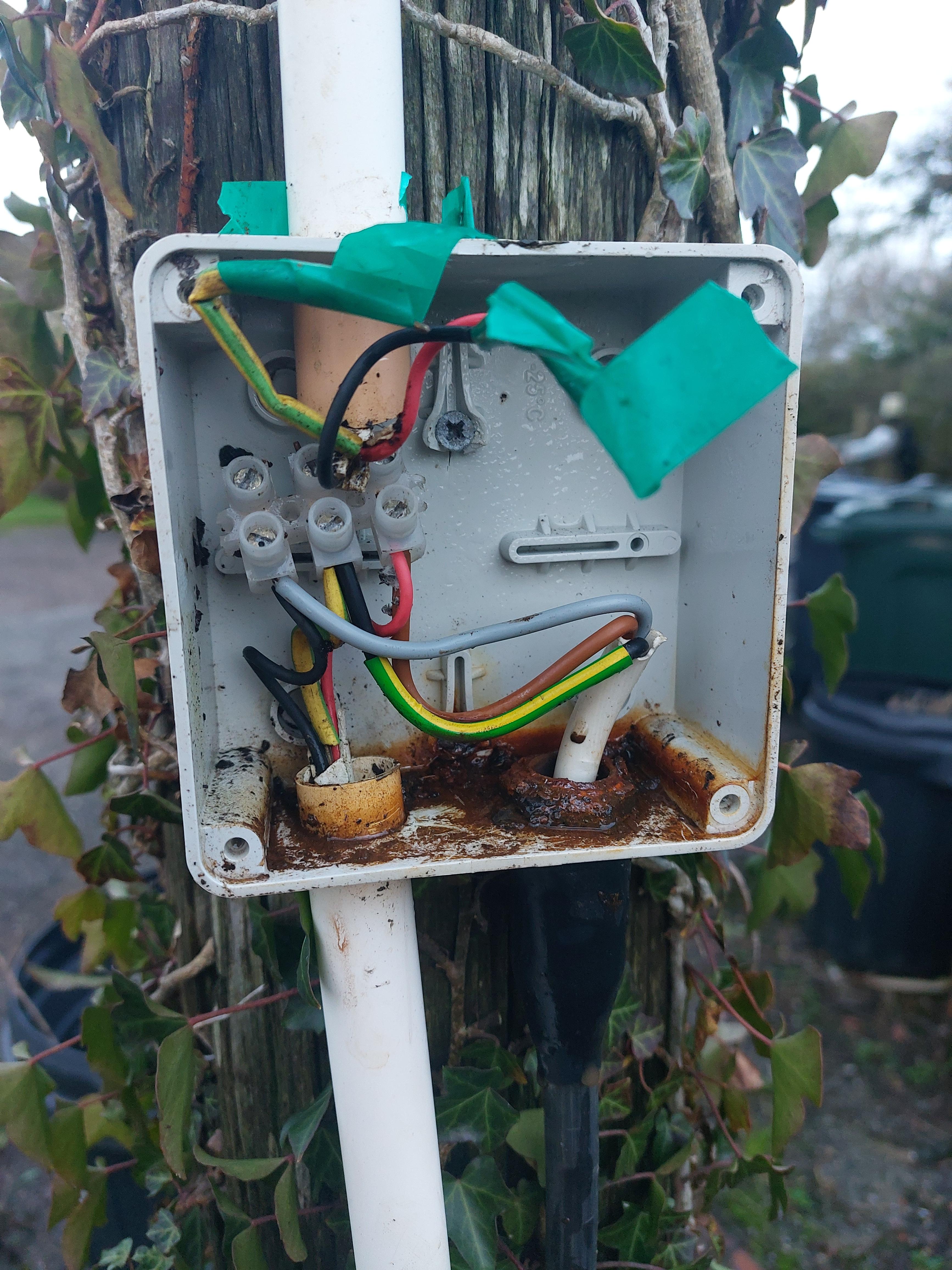
Been youtubing and reread the whole post . I didn't know about the principle of a gland connection, and can now see that it makes a solid connection to the box. I don't think there is a banjo at all on the existing assembly. Difficult to believe they didn't use brass. If someone could explain why the banjo, or alternative earthing nut, is a good thing then I'd be very interested. I can see why it is sensible on a metal box, but in plastic? doesn't a simple connection strip do enough? I will fix an earthing nut though, and then link it to the junction block. Does the earth from the swa still need connecting? All 3 cables through the bottom, if they fit, using a box which has 3 openings, and the one in screwfix includes terminals (SF 13096) Or a Schneider version, which is a bit smaller (SF 61100). Plus I will need some conduit to lead the light cable underneath. Thanks for the help. Stuff I didn't need to know, until now. -
Rcd tripping regularly
saveasteading replied to saveasteading's topic in Consumer Units, RCDs, MCBOs
Understood But he won't will he! When the swa goes in, then yes. -
Practical experience of ceiling acoustic performance sought
saveasteading replied to dnb's topic in Plastering & Rendering
It will be good. Normal but quality carpet underlay might suffice rather than anything fancy, unless upstairs is a music room or dance studio. The fancy acoustic underlays are more important for separating flats, classrooms etc, where foot traffic in outdoor shoes may be a big problem. I would poss use 2 layers normal plasterboard rather than 1 of soundbloc. same sort of cost and probably better results due to overlapping joints. -
Connecting soil stack to the existing sewer
saveasteading replied to pilgrim's topic in Waste & Sewerage
Unless Suffolk is different, the ground will be saturated and water will seep in from all around. It doesn't look a lot. I agree to leave that lovely old pipework in place, unless it looks damaged. Put shingle round and over it. -
Rcd tripping regularly
saveasteading replied to saveasteading's topic in Consumer Units, RCDs, MCBOs
I will get the crossed welding rods into action, to trace the cable, if that still works for me. -
Rcd tripping regularly
saveasteading replied to saveasteading's topic in Consumer Units, RCDs, MCBOs
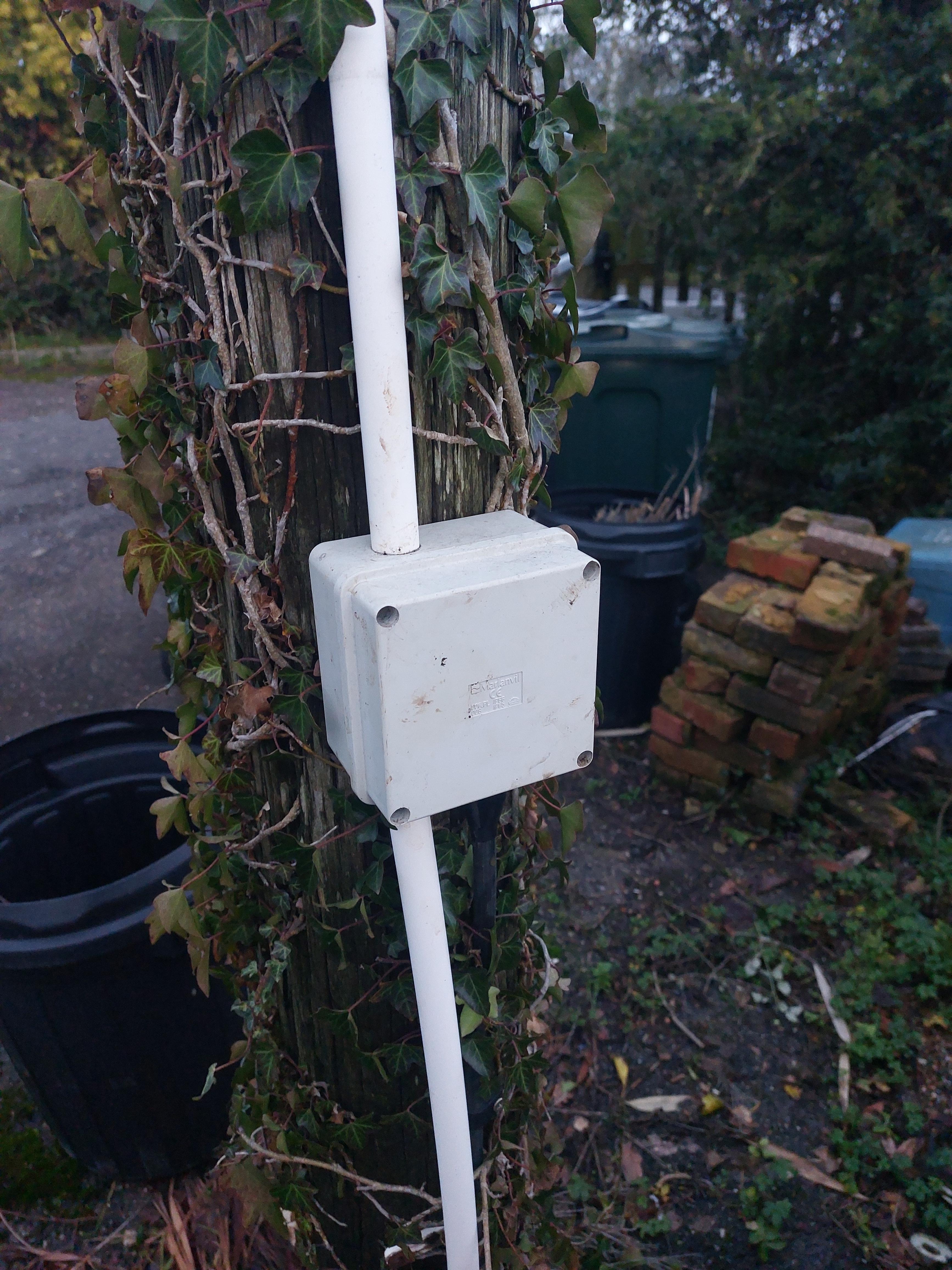
Thanks. Got to get the gate working (one day left open and a white van drove in with some 'surplus furniture' to sell. Obv a proper electrician won't touch it. Come some decent weather I will try to find the cable and the route. It is possibly swa to close by. Then trench and lay it myself as necessary. For now, I will replace with a new box, with glands, fitted in flexi from below as Onoff suggested. Is replacing the swa gland reasonably straight forward? Should there be something better than the 'banjo' internally? Wago do something tidy, an external box including connectors, , but our electrician doesn't llke them, and maybe you don't. Does the earth of the swa get connected through? Onoff implies not. -
Rcd tripping regularly
saveasteading replied to saveasteading's topic in Consumer Units, RCDs, MCBOs
Yes. currently turned off. Apart from this cable there is one outside light on the circuit, on the house wall. It has never been a problem and never will be as it is under a big roof oversail and facing north. To replace the underground cable I would, for simplicity of route, take it to the primary fuse box as in the very first photo. then hand over to a proper sparky to connect. -
Cost comparisons - Aluminimum Clad Windows
saveasteading replied to DavidG's topic in Windows & Glazing
Should? A main contractor needs a price to plug in early, and then can adjust when quotes come in. So I would use between £350/m2 for upvc and £550/m2 for ali, based on recent quotes, and it would be very close. That will be out of date. I will work out our recent ones at some stage. -
Cost comparisons - Aluminimum Clad Windows
saveasteading replied to DavidG's topic in Windows & Glazing
With my Estimator's hat, I would want a full S and F price from a window installer. Just buying the windows, of course supply only, but not £700 surely? -
Rcd tripping regularly
saveasteading replied to saveasteading's topic in Consumer Units, RCDs, MCBOs
Bottom left and top were the original feed to the light from long before we bought it. The trunking was already there, and cut for the box installation. It comes from somewhere in the house (switch at front door) , then under the garden about 20m. I have not investigated if and where it might change to swa. It must be quite deep as I haven't yet cut through it when gardening. The box and the bottom right armoured cable were put in by the gate installer. -
Practical experience of ceiling acoustic performance sought
saveasteading replied to dnb's topic in Plastering & Rendering
Just remember that the White Book and its equivalents give lab tests which are unreasonably optimistic. It is easy set up a small panel then test only the middle of it. In real life there are edges and interfaces. I was advised by an acoustician always to allow the 'next up' (about 3dB) if it was a fundamental requirement., esp if going to be tested. Double boarding provides overlaps at joints, and easier cutting to edges (and fewer flanking issues). -
Rcd tripping regularly
saveasteading replied to saveasteading's topic in Consumer Units, RCDs, MCBOs
Nice simple idea. Yes. Should it not be? Do you think they have joined a domestic cable to the armoured, in that sleeve? And why the screw connection? -
Don't assume they or SF are the best price for anything. Convenience (and sometimes stocks) yes. If you do get a tower, you will recognise that it is a good balance of sturdiness and weight, There is a lot of aluminium therein.
-
Rcd tripping regularly
saveasteading replied to saveasteading's topic in Consumer Units, RCDs, MCBOs
-
Rcd tripping regularly
saveasteading replied to saveasteading's topic in Consumer Units, RCDs, MCBOs
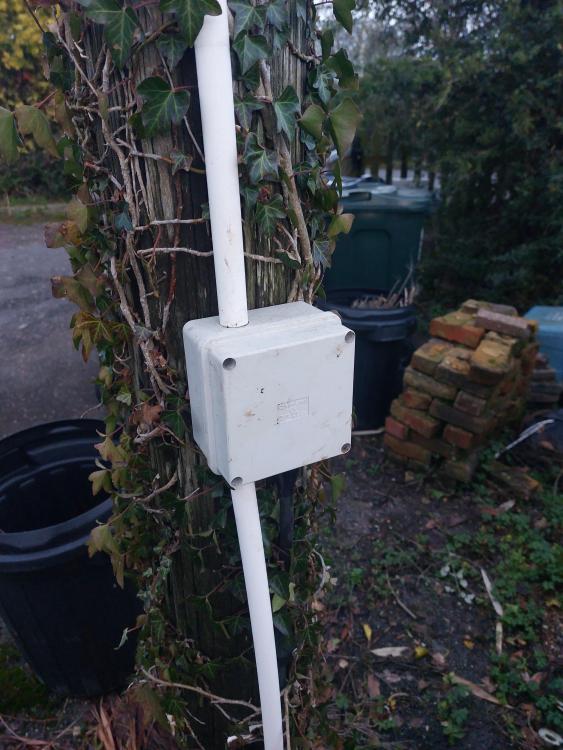
Pics.