
saveasteading
-
Posts
10890 -
Joined
-
Last visited
-
Days Won
93
Everything posted by saveasteading
-
There are slates from Spain that are good value, but also concrete tiles that look reasonably like slate, and much cheaper. (double size, so good coverage). I had a tour of the local merchant and saw all this stuff. The quality and price vary a lot It seems that most new rural houses in slate areas are getting the concrete option, even though the planning drawings say slate. Be cheeky and look at planning submissions in your area, and what materials they show. The advanced search can include terms such as barn. For now you only have to describe the materials to the planner. But you want both to get permission and also to avoid committing to an expensive solution. One thing I read in design guidance was that planners hate render that has dummy stonework (also of render) at features.
-
 But not into your courtyard. As above, I suggest that the design premise is wrong. The house has disturbed the natural flow of groundwater, but that can be resolved by diverting it around the house, rather than fountaining up in your courtyard. Just keep it out of the structure, and it will flow round it and back onto its original route. The flow will slow down too, because the natural water table will return. As my coloured lines attached.: the tanking should be a complete enclosure. (Not with a hole in it) Red Line. The same principle as not putting a hole in the bottom of a swimming pool. It can just be very local around the sump, the purpose of which would only be to catch rain falling in the courtyard, plus any from downpipes (which could and should be taken elsewhere). The water from the neighbouring acres simply stays where it is and dissipates where it always used to. You can possibly still do this, although it depends whether the tanking was just to the house or the whole structure...which it looks to be. It would be a permanent solution. The purple line of your drain can remain, simply moving water around so it can find a new course along the rock. If you must pump the groundwater then this can be another sump, outside the red line. That's my last shout on this, unless you want to consider this any further. PM me if necessary as I may turn this topic off. If your revised drainage doesn't work, it will be because of the sheer quantity of water, and then you can try my proposal. But time is passing, and liability is gradually passing entirely to you, although you appear to be taking full blame anyway, for reasons I don't understand. I can see that the designers might want to claim that you didn't understand the concept, or built it wrongly, and that they weren't Project Managers. Perhaps a risk of breaking the project down too much. But there is a fundamental duty from them, and when there are unusual circumstances and is high risk, the duty extends to ensuring that it is understood and carried out. Good luck with it anyway. Pump away.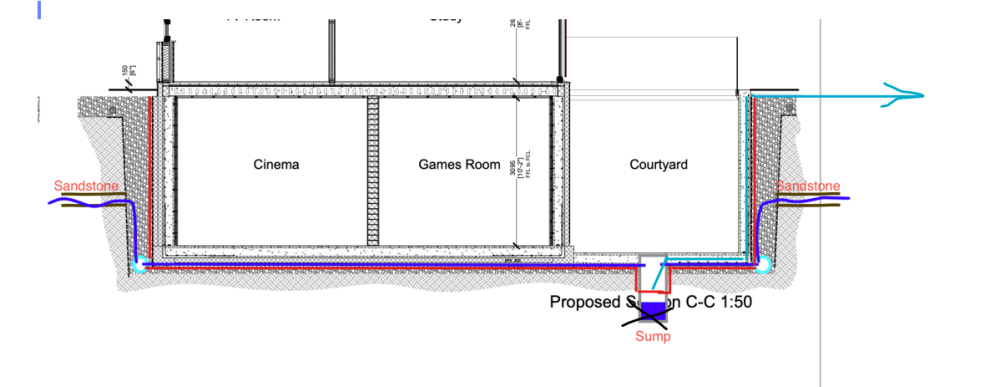
-
No. I don't see why you think you are responsible. Or maybe I do. The Architect has chosen to build a basement, extending outdoors. It should be completely waterproof from below and the sides.. Presumably (please!) the walls and foundation are designed to keep water out, as a basement with completely integrated waterproof structure (like a swimming pool o reservoir, but inside out. Then the SE has made it work structurally. Then someone has decided to dewater the flooded tank using a pump, of another's choosing. I dont think so..Perhaps the reality is that they didn't think it through and thought that the pump is needed to dewater the patio, not the whole site. And didn't think of the water getting in through the patio doors. Back to basics.: this should not need a big pump, which by default is dewatering the entire area, except to take out direct rainwater landing in the patio. This could have been achieved if the sump was also sealed below*, and only the water from rain landing in the patio area. If I was a cynical person, I'd be thinking that the architect has told you it is your problem, not their responsibility. Hence you are going along with it, spending more and perhaps not resolving the fundamental design error. I won't nag any more, as perhaps there are other reasons we don't know about. You seem determined not to trouble your designers, and to take all the cost and disturbance yourself. And perhaps have an unsellable house. This can be sorted by someone else if you want. To me the design is wrong, it is the architect's responsibility and they should sort it. I would write to them, and also the SE if they were engaged by you rather the Architect. AND I would ask my insurer (and /or mortgager) to look into it as a claim....They have the resources and clout to get this sorted at someone else's expense. btw I showed your sketch to my wife, an accountant. She said immediately that the design was wrong and the designer should resolve. The easy solution may be this * .Break out sump, and rebuild with integrated waterproof barrier beneath, fully linked to the house tanking. divert the land drains away from the patio....whoever's idea was that?
-
Hence the house and courtyard should all be considered a basement....an inverse swimming pool. Then there is no need for a pump of any sort. This might be a fundamental design error, which would cost an awful lot to retrofix. So if it is your own work, sorry, and you cant be expected to know everything.. If by a professional then get them back.....or your insurers should be doing that for you.
-
Council officers tend not to be vindictive. Assume they are being fair, but don't know the circumstances. Don't pay anything but do write, politely, and reasonably and urgently. Old fashioned copy in the post with recorded delivery. First: you don't believe that there is any tax to pay. Explain the timescale of your ownership, at what stages and why it was uninhabitable, esp roof off. and that you are happy to discuss further and look forward to hearing from them....and meanwhile are not paying anything.
-
OK. drawings very useful. I should emphasise that I have not reviewed the previous 6 pages, so please excuse if this is already covered, and tell me. You have a basement which should be watertight....a complex and precise construction. You don't then make a hole in the bottom of it to allow water into the house, then pump it out again. The perimeter drainage needs to go away from the house. then there shouldn't be any need for sump or pump. If the building has been designed for you then the designer should be resolving this....or the contractor.
-
From my experience of pumps, the pipe at full flow with a strong pump is in danger of destroying the manhole it sits in...a powerful jet. 'at a fair whack' doesn't sound like manhole destroying force. Also, I suggest wait and see....the groundwater may have been building up, and your pump may be reducing it to natural levels, and will then slow down. Yes, you may be dewatering the whole area, which is another issue for another day perhaps.
-
Allow 10% for unknowns at this stage. Why not draw up what you fancy as the next stage, then put it on here for suggestions?
-
Just to answer your question, but demonstrate that this is not your priority. Complete guess £20/m2 difference on the slope area.....with average steel spec and average slate spec. But they could cost the same if comparing standing seam metal with lower grade slate.....but even then this is one of approximately umpteen variables. You won't be best pleased if we suggest £3,000 / m2 for your project and it ends up below your expectations, or more expensive. Or that cost is too high and you cancel unnecessariy. As Buzz and Bozza suggest.....you go first. area? budget? diy or contractor? architect? plus ground flat or sloping ground conditions mains available?
-
It shows that some neighbours have official 'crossovers', but I can't see if you do, and next-door doesn't, but then has no drive and doesn't need one. These need permission form the council and have to be put in by an approved contractor, the reasons being that it is altering the highway construction, and that footpaths are not built strong enough for vehicles. They are very likely to approve but it is fairly costly.
-
That looks fun in the snow and ice. I think, but have not checked, that you can do this without permission. But you must use permeable material so that it does not cause any extra water flow. There may just be some rules attached to your house, by covenant or planning policy, to forbid anything behind the house, so check your details. This is the right thing to do anyway, Your current drive would not be allowed if applied for now, because it allows rain to run onto the road. A polite word with your neighbour may avoid panic on their part, and any fuss. The photos don't show, but is there a proper crossover, with special kerbs down to road level? If not, the arguments above are not correct, and a crossover permission is the first thing.
-
I'm new here....big refub planned for 23...
saveasteading replied to wardie9025's topic in Introduce Yourself
Welcome. Just start asking. The heading is important so that you get the right attention. -
Welfare facilities under CDM
saveasteading replied to Post and beam's topic in Project & Site Management
We don't want to be sued by big companies, or local authorities, or approvals agencies. What are you / others doing re fire cover? Excluding risk in your contracts? -
If i was contacted with this question I'd be giving the same answers, free, on the phone. If it really is a caravan, not a house in disguise, then prop on slabs or baulks. If it moves, it can be adjusted. If not really a caravan, then it is has to be as a proper submission, or I decline to be involved.
-
Good points. But my point is that the rain from any new build should all stay on site. A harvester is one factor but permeable paving, soakaways, barrels and ponds are grossly underused.
-
Welfare facilities under CDM
saveasteading replied to Post and beam's topic in Project & Site Management
I reckon that the insurer sees no extra risk to them in you doing both SE and PD. Perhaps the risk is reduced, with an interface gone. I remember 20 years ago paying £20,000 a year for PI as contractor/pd/ 10% designer. Then that halved as insurers entered the lucrative market. Mostly I think they assume they will fight and avoid any claim. Now it has rocketed because many insurers have dropped PI, due to Grenfell. Re fire design, the bco used to accept good reasoning and risk assessments, but now wants everything to be exactly as proven fire tests. I can see why, but a dodgy test was one of the issues with Grenfell. -
For a caravan?
-
I am very serious about rainwater use and and drainage, yet would hesitate to specify a RWH on my own property, let alone someone else's. Done it, would do it again ...but If you are off mains then of course this changes everything. If on mains water...use it throughout. RWH is done for plaudits more than for saving money and measurably helping the environment. Payback in money or carbon can be proven either way....but hassle is not measured, and neither is the nice feeling for doing 'a good thing'. I am more inclined to put in lots of barrels for garden and car-wash use, and a pond to create wildlife, stop rain-water going to the sewage system or add to floods. I can see the attraction of a RWH, and I was very pleased with ours...until the pump broke down, and then again. Also it was an office so toilet use was high and potable use low. Potable water cost £30 per annum, and also caused much reduced sewage rates. I hadn't thought that through when answering earlier. For a house I would say that it would be money and carbon negative...ie not helping the world. But something to tell the friends, and a private store of water in times of drought. If awards are going...then this is something that panels understand (worked for me) whereas barrels and soakaways and ponds leave them unimpressed. Do ask your plumber the extra cost for the parallel system to flush toilets. I am not against RWH...just experienced and interested. I am assuming that your interest is environmental rather than on cost. What are you doing environmentally re drainage? No/ minimal rain to the sewage system or streams should be your target.
-
If it is to sit on the metal jack legs alone, then they put a very concentrated load down. They will indent , or even break into, the surface you describe. But spread by blocks or timber baulks it should be fine. Bigger 'caravans' have bigger jack legs. presumably more of them too. Tell us more and we can answer better.
-
I've put in 2 in business premises. Both had pump failures. That aside the payback was 7 years based on water savings. Except that there are electric running costs, unmeasured, and the duplicate plumbing cost was never split out. Drains longer too? So 10 years, and I think that is exceptional. The roof was 700m2 and all fed to the 10m3 tank. How are you going to fill with 7.5m3 of rain? I don't know your project but say 150m2 of roof all going to the tank. It will fill with 50mm of rain, so no problem on the west coast, but not so good on east. BTW both tanks now redundant as owners/ tenants won't fix the pumps
-
That is £167. Must be very good indeed. I guess for a big space or multi-person toilet you might need it.
-
and a larger duct all the way?
-
There is a recognised construction of osb over the trusses, then vapour barrier, then battens then the metal. That is from Cladco, ready coloured 'slate grey', but there are many suppliers. Then yes, screwed to the battens. It will all be discussed on BH already, I'd think.
-
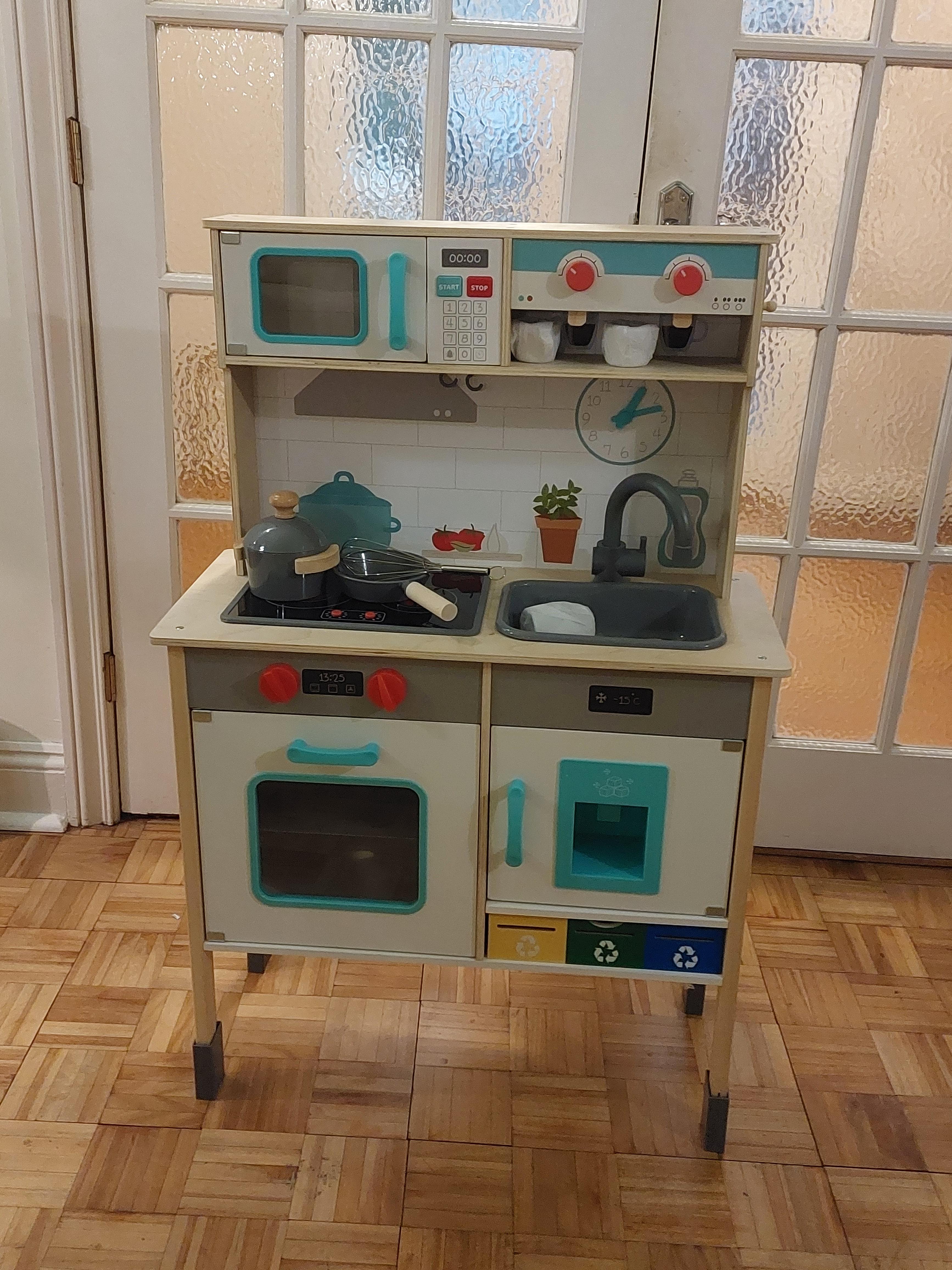
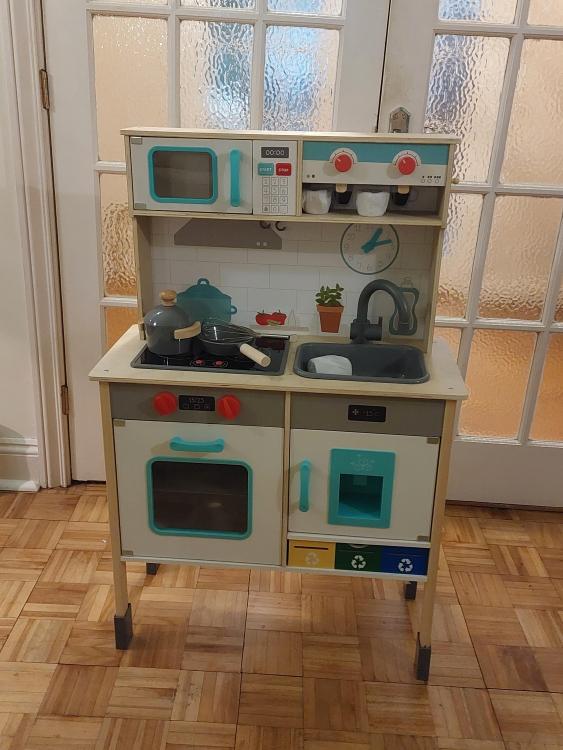
I built a whole kit kitchen since Christmas. Small but still took 3 hours. It's very good, apart from needing lots of screws from my tin...and the instructions make ikea look good. d.
-
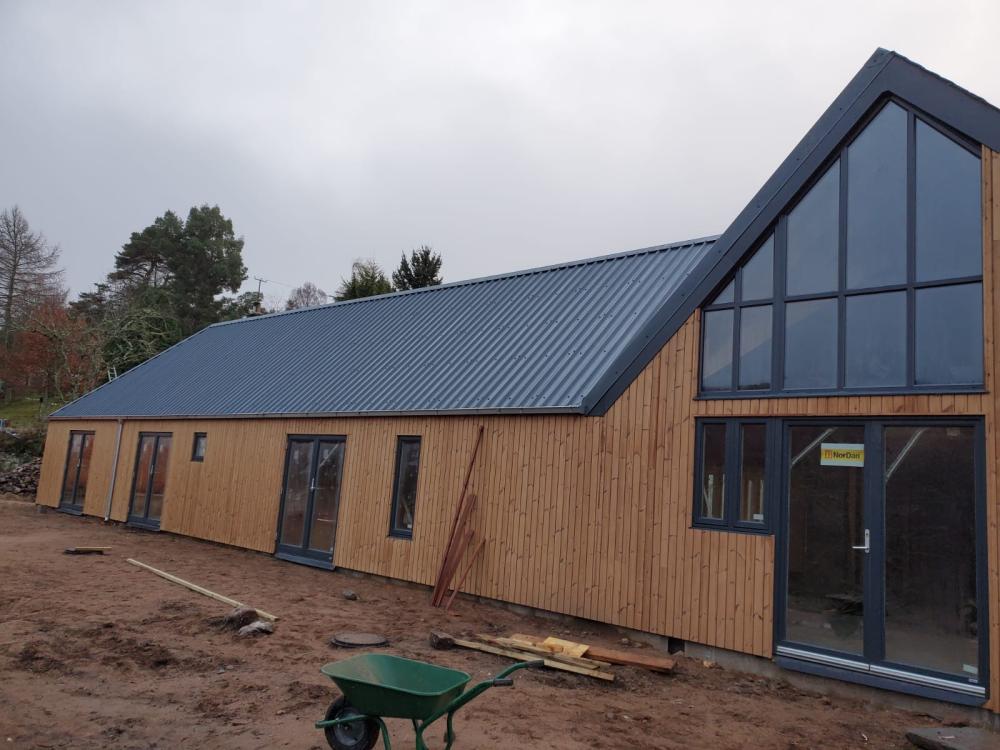
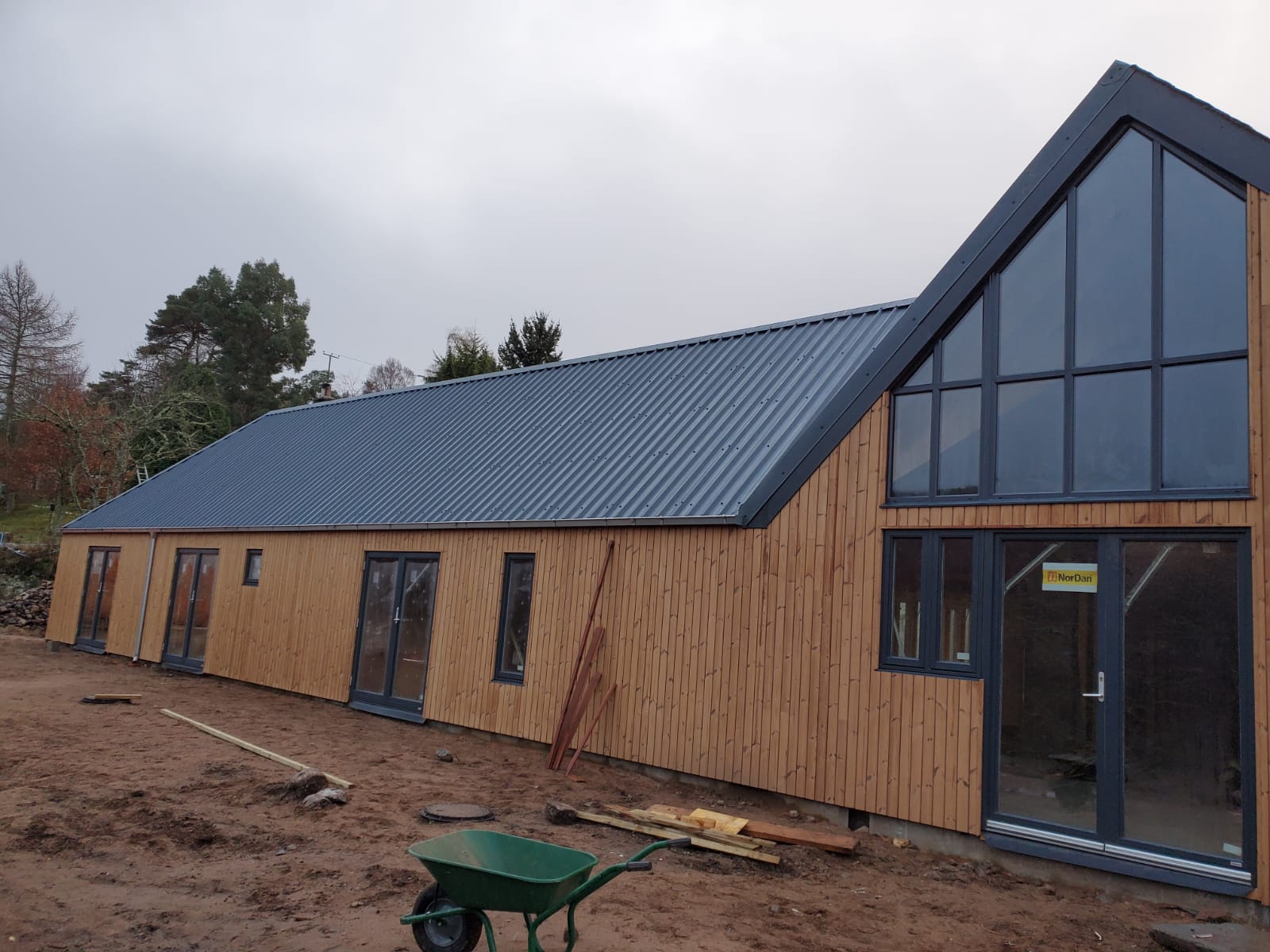
Many are. We have used it on our replacement section, and very pleased with how it looks. Some architects will prefer zinc or secret fix aluminum, but it isn't their money. Some prefer the corrugated look, but that seems unnecessarily rustic in most cases.