markocosic
-
Posts
979 -
Joined
-
Last visited
-
Days Won
1
Everything posted by markocosic
-
DHW, Gas boiler - cylinder or combi
markocosic replied to JohnMo's topic in Boilers & Hot Water Tanks
So when are you trying this out for me @Radian😉 Potentially useful resource if interested - also some debate about alternatives: https://gathering.tweakers.net/forum/list_messages/1941248 UK market will get interesting if they *actually* ban gas and get slightly more imaginative than like for like replacement of boilers with monoblocs. -
DHW, Gas boiler - cylinder or combi
markocosic replied to JohnMo's topic in Boilers & Hot Water Tanks
These were the other solution that makes some sense: https://www.ebay.co.uk/itm/224649548830 I'd prefer the water water unit chilling a ufh loop though. Cop of an air source heat pumps feeding that ufh loop with top-up heat at 25c will be huge in the shoulder season so not materially worse than air source units there. -
DHW, Gas boiler - cylinder or combi
markocosic replied to JohnMo's topic in Boilers & Hot Water Tanks
Not if the slab itself is heat pumped. The alternative; for much of the year except winter; in houses larger than shoeboxes where space heat kWh per dhw kWh is decent; is an exhaust air heat pump. See the manual in the tesy link for the various operating modes of the air units. -
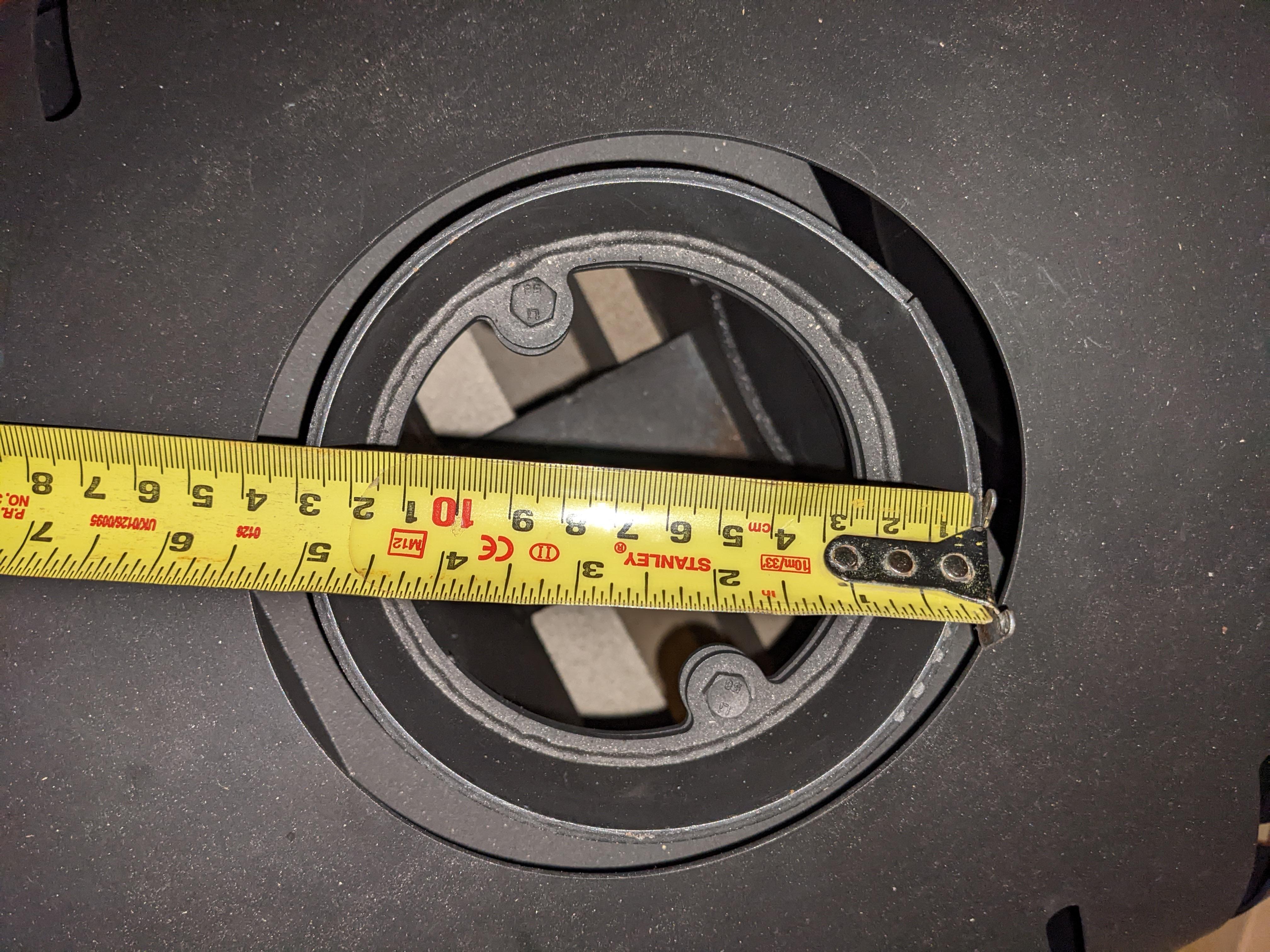
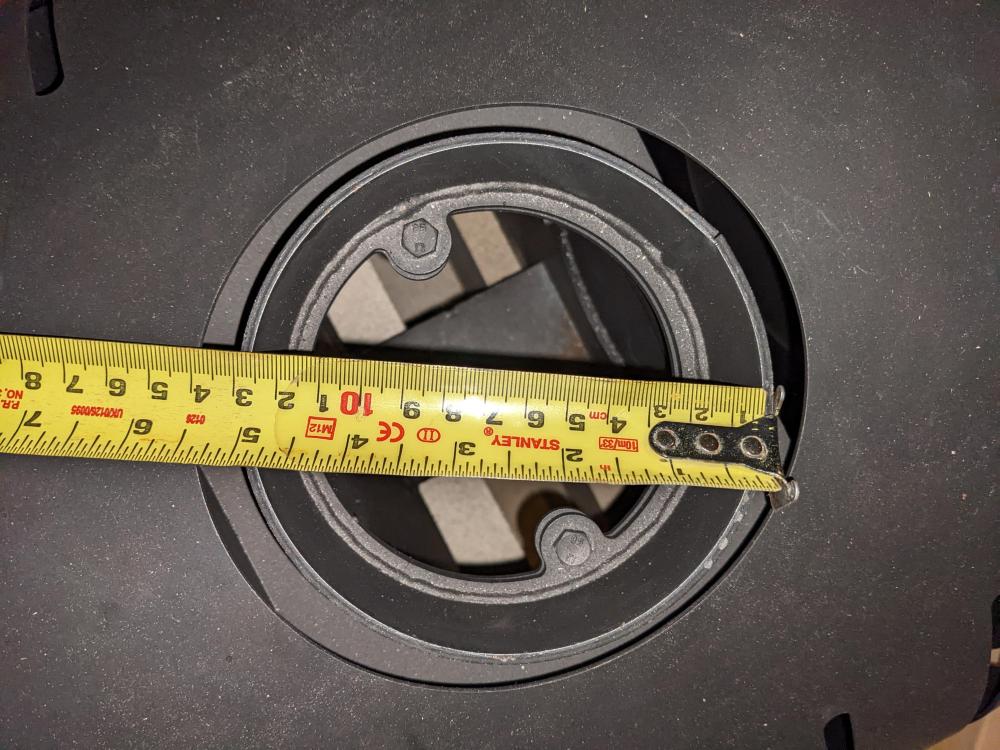
This is the stove connection. Manual says "130 mm" flue" is required. In practice it is approx 129 mm OD / 123 mm ID: How would we go from this to "130 mm" twinwall: https://www.sauresta.com/en/lower-cower-npnp/104 Do we need something like a "120 to 130 mm increaser" and sealing material? (i.e. 130 mm twinwall is 130 mm OD for the liner) https://www.sauresta.com/en/increaser/78 Or is "130 mm" twinwall more like 120 mm OD for the liner? I can ask supplier but language barrier for me / weekend etc.
-
DHW, Gas boiler - cylinder or combi
markocosic replied to JohnMo's topic in Boilers & Hot Water Tanks
It's french but not a daft solution -
DHW, Gas boiler - cylinder or combi
markocosic replied to JohnMo's topic in Boilers & Hot Water Tanks
https://www.tesy.co.uk/heat-pump https://www.vaillant.co.uk/for-installers/products/arostor-domestic-hot-water-heat-pump-58880.html Or perhaps more relevant to houses with a wet heating system: https://www.auer.fr/en/products/heat-pump-water-heaters/edel-water-heat-pump-water-heater/ They need to be PV divertable though so that either the compressor only runs when there's ~300W+ available or it is inverter driven and can run when there's very little excess available etc. One for @Radian next week perhaps! 😉 -
DHW, Gas boiler - cylinder or combi
markocosic replied to JohnMo's topic in Boilers & Hot Water Tanks
You can; but that's then a cylinder not a combi 😉 Conventional cylinders work well for high hot water loads in houses with high heat loads where the significant losses from the primary pipework and the cylinder itself are "useful" space heat most of the year and small compared to the overall use. There an energy saving trust study kicking about somewhere that yielded heat input: output efficiency of 30-70% for most cylinders. Reduce that further to compensate for gas boiler inefficiency. Increase it if for part of the year that heat is useful. Combis were more like 70-80% efficient overall. Best imo will be this kind of thing; but executed well with integrated pv divert via heat pump etc https://www.ariston.com/en-me/products/heat-pump-water-heaters/domestic/ https://www.ariston.com/en-me/products/heat-pump-water-heaters/domestic/nuos-plus-uae/ -
DHW, Gas boiler - cylinder or combi
markocosic replied to JohnMo's topic in Boilers & Hot Water Tanks
Combis materially more efficient than boiler plus cylinder due to standing losers; especially where usage is low and/or most usage is long drawoffs and heat lost from cylinder and pipework isn't useful space heat. Can't run PV into a combi though. I'm waiting for heat pump cylinders to come of age (be available at sensible cost) in the UK. Where a dedicated heat pump heats the cylinder instead of a dumb immersion. Common as much stateside. -
Those examples you show are almost certainly shadow gapped boards @BartW Butted up soaking wet boards (in winter) will probably be 5mm mm gaps (uneven ones at that) in summer. Butted up in this weather will buckle and be a right state come winter. You need overlap and the option for the wood to move. That black against plain larch looks sharp @Thorfun
-
Local example of lighter but still dark shadow gap - I think shadows are stronger if you're using greys

-
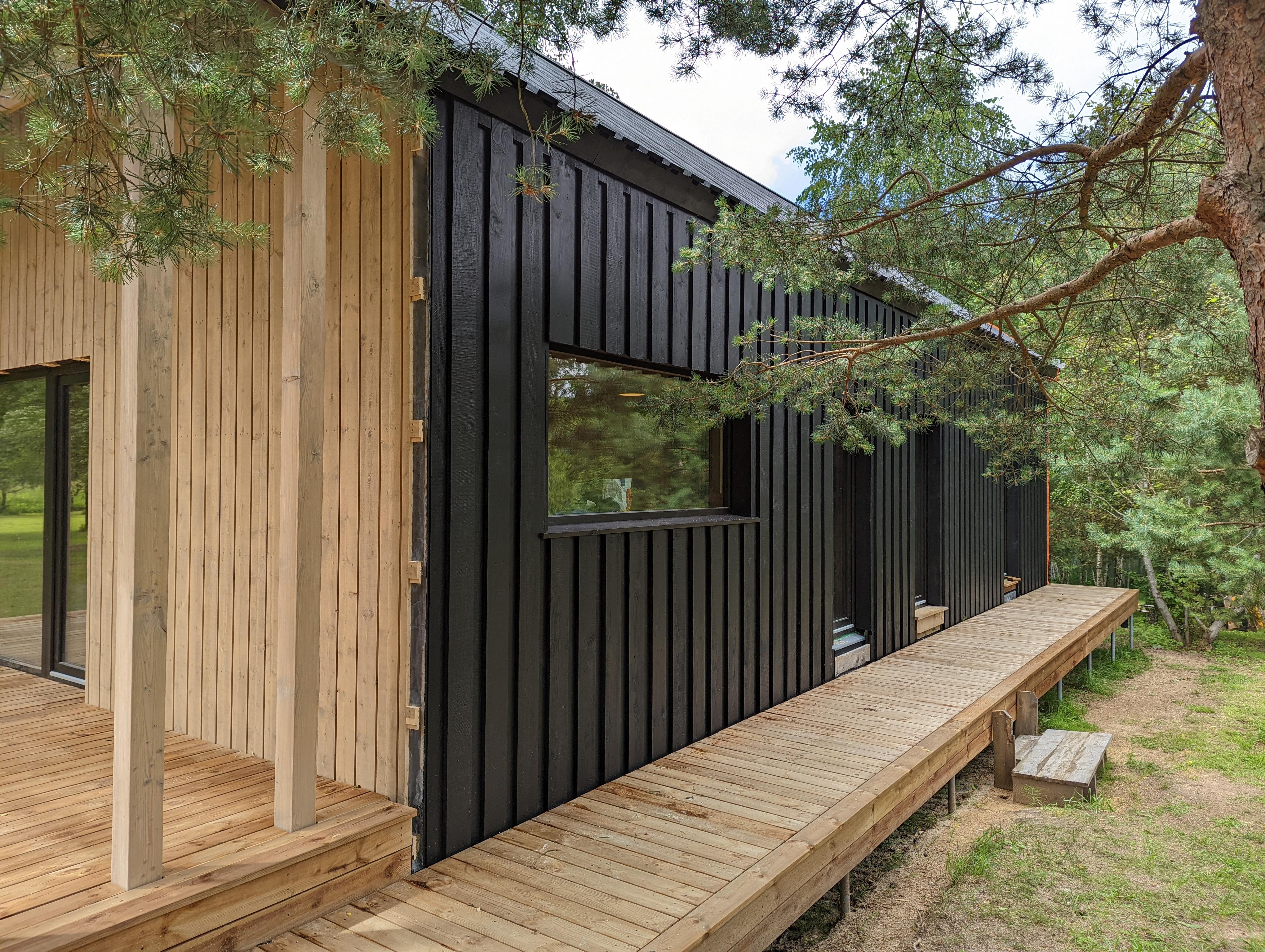
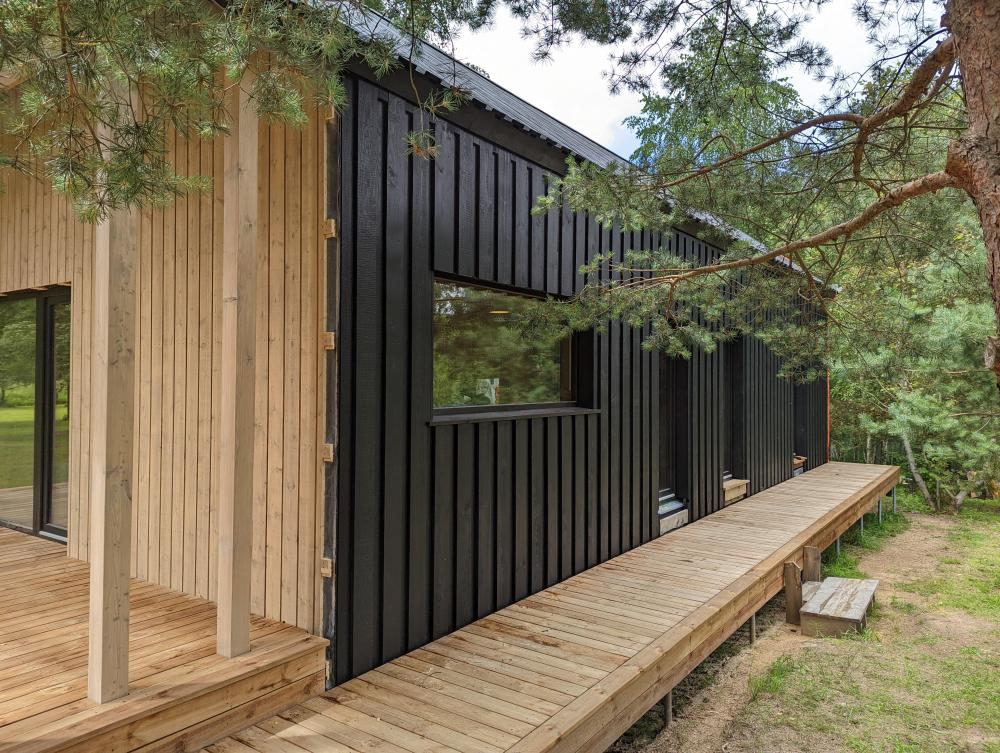
Subject close to my heart! What you have won't work. UV will kill it. I'll dig out some local samples from the Baltic coast... Insects will too in time IMO though this is debatated and depends on location and appetite of insects etc. If you wanted to have open rainscreen cladding then you're going to need something insect and UV proof under it IMO. You can't throw a non breathable membrane (e.g. EPDM) over the top of what you have without there being a ventilated rainscreen behind that non breathable membrane. When we looked at the UV proof and breathable membranes these cost a lot of limbs. They were the only option that let you "just throw a layer on" without materially changing the design though. I'd also consider: Shadow gap - though in pure black I don't think this is as effective as in lighter colours at creating shadows. Board on board - create deeper shadow gaps by putting your boards on top of.some other boards such that the gaps are full depth (e.g. decking board type deep) but there's still closure behind them. Board on tin - Use black wriggly tin / corrugated steel on top of your battens and fix through this into the battens. There world still be a ventilation gap behind this to let the house breathe...and it would look like there's nothing stuck immediately behind the boards...and it'd be black unlike your battens...and prevent insects uv and rain getting to your membrane. Gunned nails or self drilling wood screws will go through tin. We ended up using board on board and shadow gap to get the look that she wanted:
-
Fan Coil Units for use with a (cooling) ASHP
markocosic replied to ProDave's topic in Air Source Heat Pumps (ASHP)
Probably needs parallel plumbing for pressure drop reasons -
Paint. It's what you have behind the rainscreen already UV proof? If not think again...
-
Typically led != Joule bucket Led pulses for import (typically 1000 per kWh) Led goes solid when meter decides that there's zero load (try flipping main breaker) with some switch on and switch off delay Led may also go solid on export but that isn't a given. Not safe to assume that led = 3600J Probably not safe to assume that joules bucket is 3600J either Buy a secondary CT meter that reports live data on demand rather than faffing with LEDs?
-
Roof access / safe trimming of wooden eaves
markocosic replied to markocosic's topic in Roofing, Tiling & Slating
Here's how the first eave cut turned out in the end for what it's worth: Tried a 150 mm circ saw; ended up settling in a 190 mm circ saw as the larger foot / bed rode over the gaps more easily. Measured from ridge, 2.5m straight edge fixed...to roof with screws, the run along that in a couple of goes with the circ saw atop a ladder. Nowhere near as much of a pain as I had imagined. (measuring is more of a pain that cutting, and painting cut ends more of a pain than either of those) -
Can I use my Slinky trench for septic drainage?
markocosic replied to Dunny1234's topic in Ground Source Heat Pumps (GSHP)
Disturbed and backfilled ground doesn't drain as freely as undisturbed ground. Compensate with extra area and you're ok. Frozen ground doesn't drain well at all. You shouldn't be freezing the grind but it's a possibility. I regret listening to the sewer men sand not burying the gshp loops under the to soak away from the sewage plant. Mostly said to avoid getting involved I think. -
Thanks for the stainless teachings! Attic fans not uncommon in some southern US states. Good searching fodder there on costs and benefits / consequences.
-
Hybrid inverter for small in roof 2kw array - help please!
markocosic replied to Timmyk's topic in Photovoltaics (PV)
Why do that that rather than displacing gas fired electricity generation elsewhere @Nickfromwales? Your cost to parity for the export tariff Vs gas as it stands. -
Valiant Ecotech Plus 637 - Error F76
markocosic replied to steveoelliott's topic in Boilers & Hot Water Tanks
Checked if it is cheaper to buy another boiler for cash rather than at full list (less £450) from Vaillant? I should think a new HX would deem it a write off. The fact or took a while to finally "blow" suggests old age death of fuse rather than overheat IMO. -
Do I need VCL, Vapour Barrier or nothing
markocosic replied to MortarThePoint's topic in Damp & DPCs
It's a waste of time attempting to seal backboxes etc. Put the airtight layer behind them. The amount of moisture carried through a small air hole in a backbox etc into the roof will vastly exceed the moisture going through the plasterboard itself. Pressure will be highest in the attic too. -
Do I need VCL, Vapour Barrier or nothing
markocosic replied to MortarThePoint's topic in Damp & DPCs
There's no reason to install polythene (air and vapour barrier) unless you're needing to stop vapour getting into an assembly that absolutely isn't able to dry itself. Use a breathable air barrier as your airtightness layer. Plasterboard is pretty worthless thanks to all the holes through it. Easier to stick up a breathable "tent" that's airtight and line that with plasterboard for structural integrity so to speak. We had a local plasterer come to quote for dry lining and either taping or skimming our seasonal cabin build over here. "Are you going to heat the building all year round?" was the first question he asked on the phone; followed by "So you will want to use moisture rated plasterboard everywhere?" as a confirmation type question and was horrified at "No" as an answer. When he arrived on site and saw OSB as the (vapour open) air barrier instead of the usual polythene it was a case of "Oh thank christ for that" or words to that effect. "You're not trapping the moisture." [between the (vapour retarding) paint and the (vapour closed) polythene in a building where there isn't always a strong drying force (from reducing winter humidity by heating it all year round) to suck that moisture back through the paint] If there weren't howling gales through most buildings I think we'd start to see fun as people air conditioned UK builds and moisture backed up against the polythene on the structural side or tiles / wallpapers / vinyl type paints on the interior side of the plasterboard... -
Sewage treatment plant - air blower electricity costs
markocosic replied to David Essex's topic in Waste & Sewerage
In hindsight I'd probably soakaway the grey water and go composting for a toilet in an occasional use building. 15 on / 45 off is fine thus far for us fwiw. Will try 15 / 105 next whilst unoccupied. -
Is that dirt or corrosion on the top cover of the monobloc? Thermosyphon can happen within a single pipe btw; it doesn't need the flow pipe to be open from cylinder to buffer though that would definitely help matters!
-
Thermosyphon up the return pipe
-
Valiant Ecotech Plus 637 - Error F76
markocosic replied to steveoelliott's topic in Boilers & Hot Water Tanks
HX with air in it leading to higher flue temps. HX with crud in it leading to higher flue temps. Thermal fuse breaking down internally and going "normal" (closed circuit) when cooling down again. Not uncommon with age and operating at high temperatures. Google polish forums etc where these are repaired. Can you power limit the boiler? If the HX is clogged that'll drop flue gas temps at the expense of hot water reheat output and the time it takes rather than hot water final temperature. Reheating a stolen cold tank probably had the boiler firing harder for longer and triggered the fault. Else if you're sure HX is clear find a scrap boiler to nick the (normally closed) sensor out of? (I don't think it's available separately)