
ProDave
-
Posts
30679 -
Joined
-
Last visited
-
Days Won
424
Everything posted by ProDave
-

Extractor Fan or Single Room MVHR?
ProDave replied to Onoff's topic in Bathrooms, Ensuites & Wetrooms
My top tip. Do NOT fit an accessible fan isolator in a rental. I have known tenants turn them off because they are noisy then complain about the condensation. I do not believe they are legally necessary (I have asked several times for someone to point me to the reg that says you must fit one and nobody has) but if you really feel you need to fit one, put it up in the loft close to that loft hatch. Check how air will get into the room to replace what is extracted, you may need to plane a bit off the bottom of the door for instance. -
Need a close up picture. That window cill should have a drip bead built in, I wonder if the drip bead is too close to the render.
-
It would be normal practice here to get a surveyor to survey the property before buying. to my untrained eye that looks like a very shallow slab that has had soil washed out from underneath it.
-
A lot will depend on your expectations and tolerance to lack of comfort, cold etc. We have done plenty of camping, including long distance backpacking, caravanning etc and are used to cramped, cold, etc. So the static 'van was okay. I did fit a WBS in ours after the first month and realised the appetite of the gas fire that was built into it. If your better half is only used to nice spacious warm hotel rooms, they might regard a static as slumming it. A self build will test you in all sorts of ways, and I would say the discomfort of a static is one of the more minor tests that will come your way.
-
What is the other side of the fence? Is the land the other side of the fence lower. i.e. is the row of concrete blocks by the fence acting as a supporting wall that has failed and it is all slipping down to the lower ground?
-
I would say to your planning officer, show me where it says 5M in your guidance or I will let you refuse it and I will appeal.
-
Let it be refused and appeal.
-
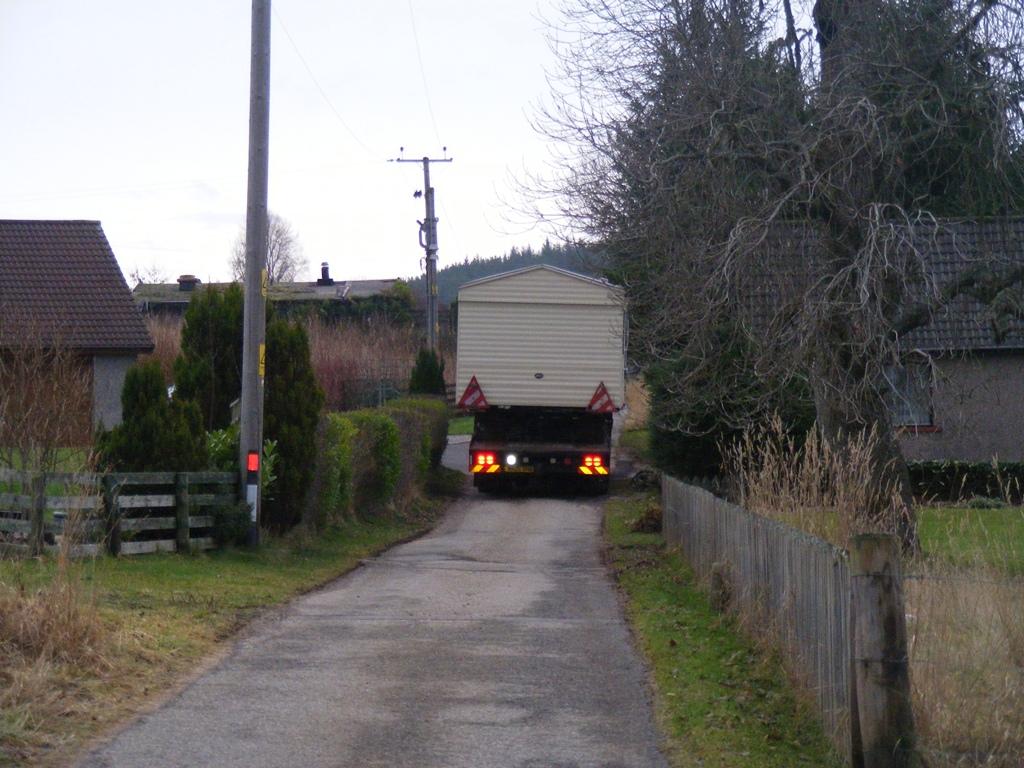
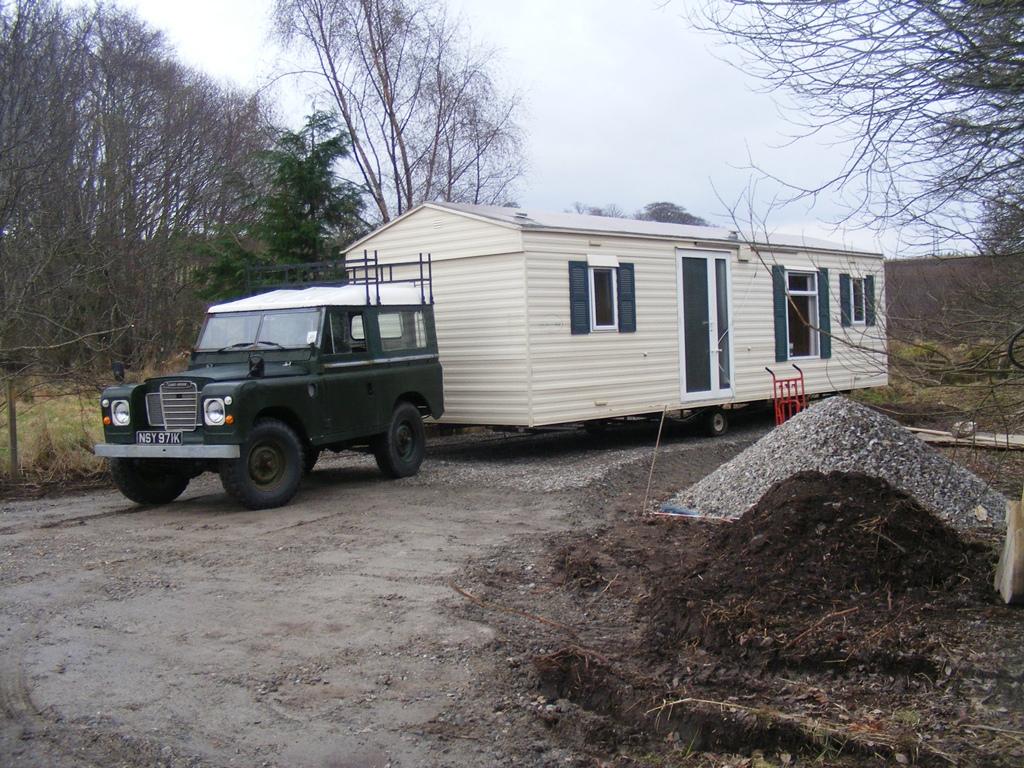
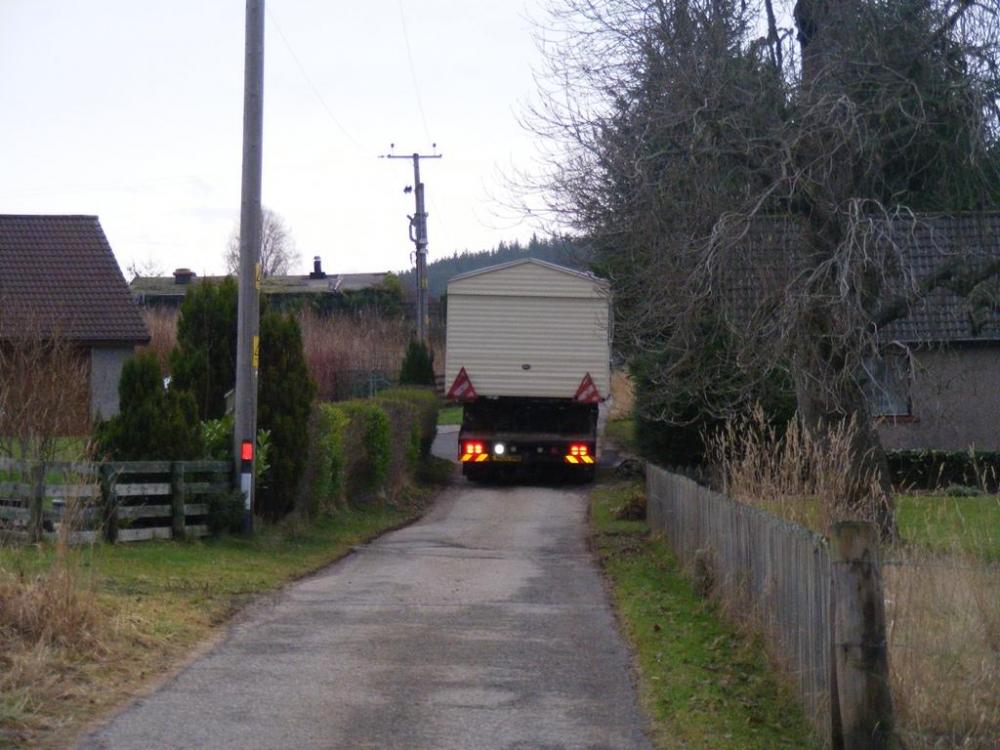
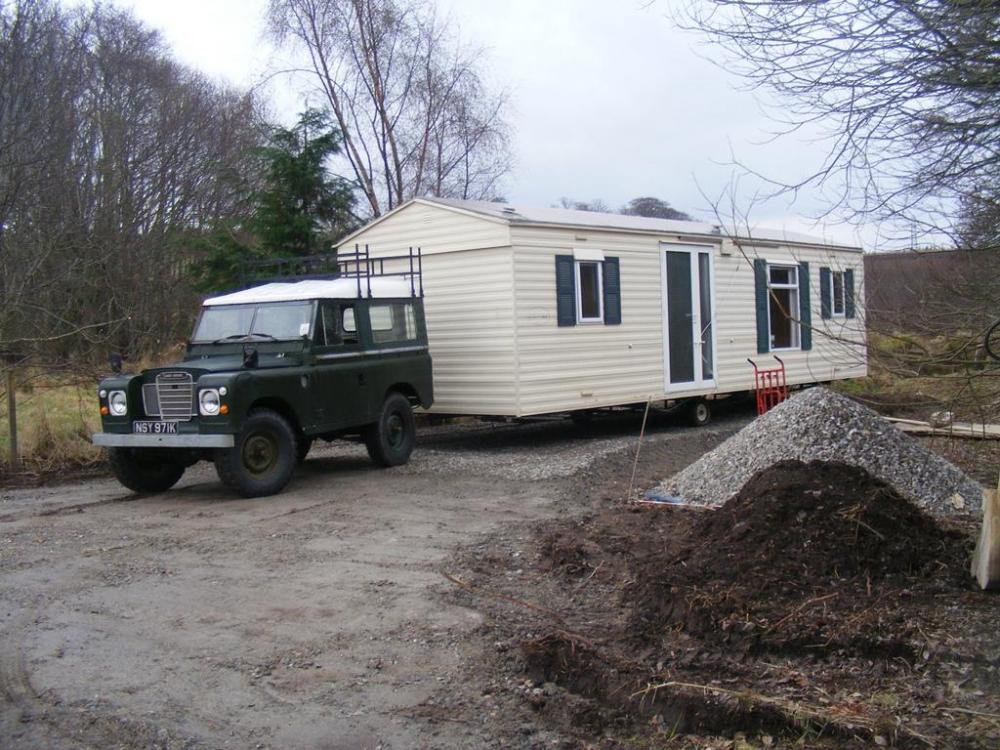
In tight situations like that, they tow the 'van on it's own wheels through your gate with something like a Landrover, and winch it up onto the lorry on the road or somewhere else with enough room. When we had ours delivered the delivery person was not very helpful, and just unloaded it onto the road, I had to use my own Landrover to position it on site.
-
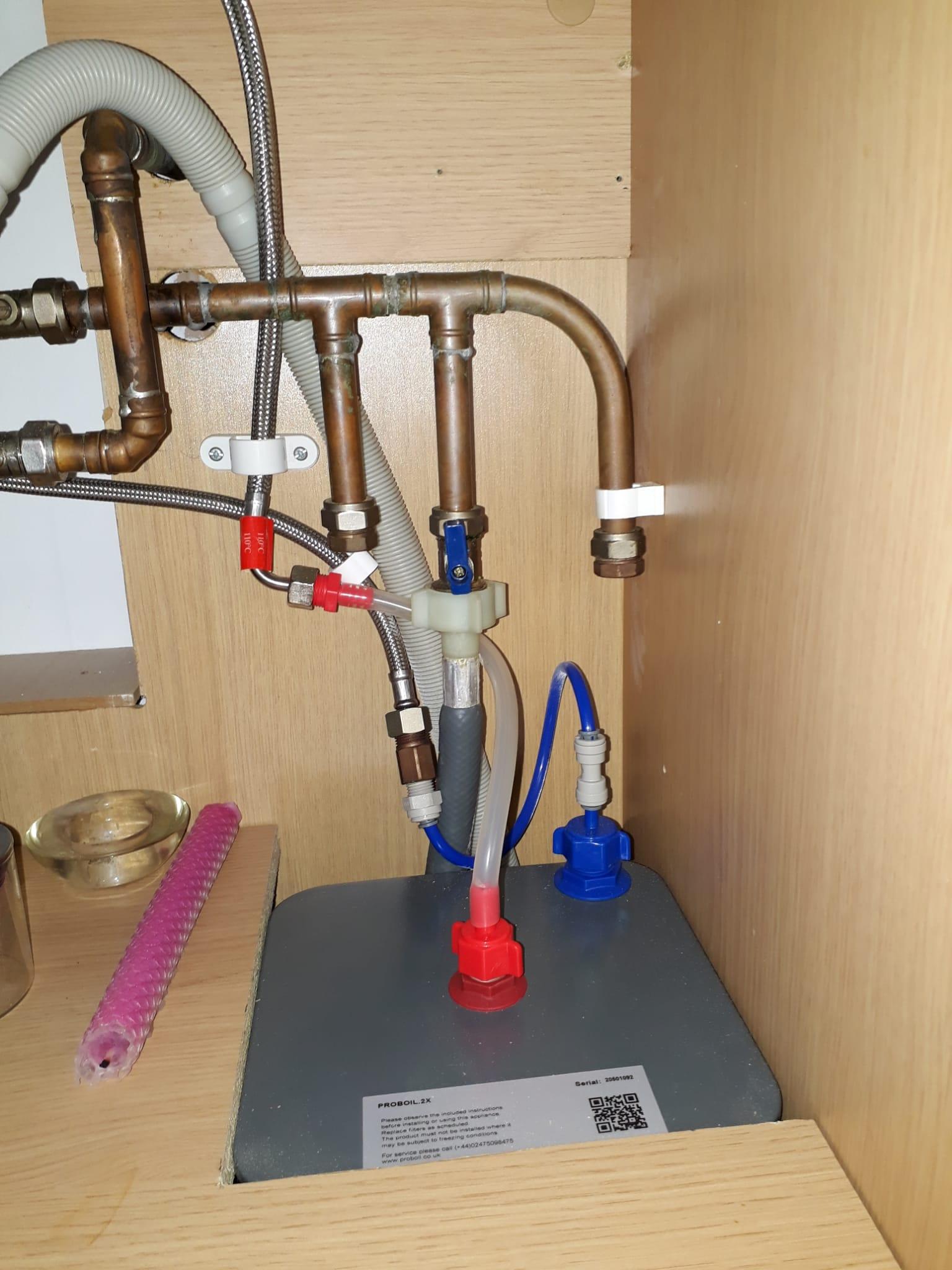
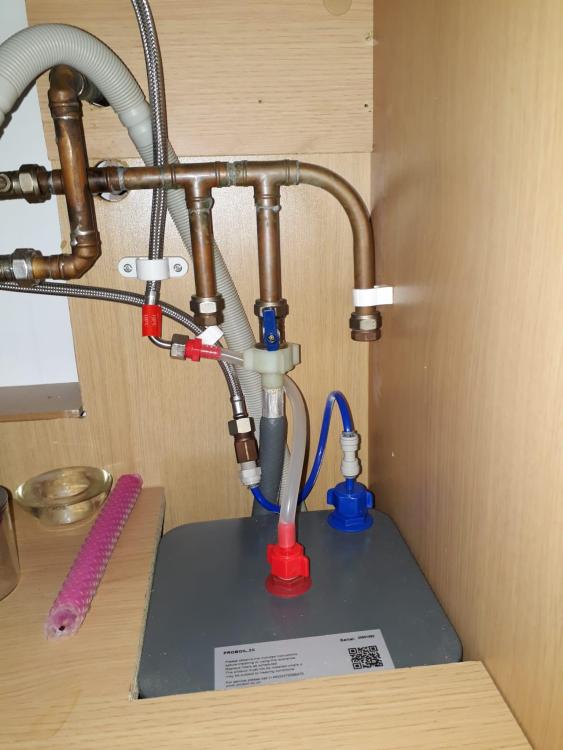
Yes there is indeed a non return valve inside the blue inlet fitting. It was a bit fiddly withdrawing it for a look, and having removed it I could see nothing wrong. It was functioning as a non return valve and had no obvious mechanism that would make it a flow restricting valve. So I have put it all back together awaiting further inspiration, turned the water back on and tried it, and everything is back to normal with the correct nice and gentle flow rate of boiling water. So it is "fixed" without having the faintest idea what was wrong. That does annoy me intensely.
-
Brass fitting removed and it is nothing special, just a thread adaptor with a hole straight through it. So it looks like continue the search for the real flow restrictor, or contrive one myself?
-
Use of land and it’s impact on future planning permission
ProDave replied to Lewis88's topic in Planning Permission
Mow it into submission and keep it mowed and claimed it is a garden for either your plot or another house on the land. -
Best solution for cleaning green mildue/mould off K-rend?
ProDave replied to Happy Valley's topic in Plastering & Rendering
I mix 1/3 bleach and 2/3 water in a squirty bottle and squirt with that, then let the rain wash it off. I do it annually. -
We have a boiling water tap, sold under the brand name Lamona by howdens, it is in fact a ProBoil 2 It's about 6 years old. Up until a week ago when you turned on the boiling water tap full, it dispensed it's boiling water at a nice steady slow flow rate that would gently fill your cup with hot water. Came back yesterday from a week away, and now the boiling water comes out way too fast, to the point of being dangerous, the only way to use it is just crack the boiling tap open a tiny amount. There is no mention in the manual about adjusting the boiling water flow rate, and no visible obvious adjustment, and searching has hailed to find anyone discussing the same problem, so I am asking the forum for advice please. This particular boiling water tap is not really boiling but 98 degrees. the way it works is the "boiling tap" on the tap unit turns on the cold water feed into the boiler, and the hot out from the boiler goes straight to the tap with no valves (it acts as the vent) So cold water going in pushes boiling water out. Picture: The thin blue hose is the cold water from the tap into the boiler, and the clear hose with a red nut is the boiling water out to the tap. All fittings are those supplied with the unit. If the brass fitting on the cold in pipe is the restrictor, there are no adjustments on it, but I guess that might be a good place to start looking?
-
I think the market of static vans depends a lot on where you are. Up here, there are very few residential park homes (which I think is what you looked at) and most that are for sale here are built as holiday caravans for holiday parks. Different interior layout and fit out and probably more basic / less well built. but that is all available up here. Ours cost us £4K (8 years or so ago) and at the time was just coming up to 20 years old and coming to end of life for most holiday parks. It is still in pretty good condition now and still on our plot. A winter in a static 'van (especially up here ) can be "challenging" you have to both want to do it and both be prepared for some hardship or at least very large heating bills. But the savings vs renting are massive and you really cannot beat the convenience of being on site all the time.
-
What stops wind driven rain running down the wall behind the tiles? I see no flashing? What are the air bricks for?
-
This picture shows a hip iron at the bottom to stop the hip tiles sliding downwards. The rest look to be held in place by virtue of gravity? Were they bedded in mortar or any other adhesive?
-
I am just retiring from 20+ years self employed. If such a draconian scheme had existed I would not have remained self employed. It has been proven again and again that having a bit of paper does mot make someone good, just as not having that bit of paper does not make them bad.
-
It really is simple. Run an ASHP at a COP of 3 or better and the cost is comparable to mains gas heating. I expect very few people actually save money by switching to an ASHP. The problem with retro fitted ASHP's (boiler replacements) is to get a reliable COP of 3 or better you need low temperature heating which really means UFH or vastly over sized radiators. And that is where the problems start. Who wants to rip the whole house apart to fit UFH (and the under floor insulation that would be needed)? So most will stick with radiators, perhaps a bit over sized, but I bet they will still be running what most of us consider to be "hot" and with a poor COP. ASHP's should NOT be sold to the general public as a way to save money. Yes a way to reduce CO2 emissions but not a way to save money. That is just asking for lots of people to complain very loudly when they do not save money. When I chose an ASHP for my new build, it was not because I thought it was going to be cheaper. I am happy to settle for similar running cost. It was because there is no mains gas here and I did not want an oil tank in the garden.
-
Extension behind an attached side garage
ProDave replied to Newbie To Extensions's topic in Planning Permission
How about this. Excuse the lousy picture. Build the extension as shown in yellow. It does not join the existing extension. Yes you have to go outside and then back in through a door to get to the new extension. Then later (with PP) build the link, which is little more than put a door on the back and a roof over the link. Easy if the foundation work is done at the time of the main build.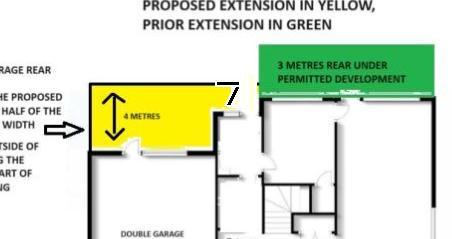
-
Extension behind an attached side garage
ProDave replied to Newbie To Extensions's topic in Planning Permission
What happened to the idea of build it so the new extension does not quite reach the old extension so it would qualify? Then later apply for PP to bridge the tiny gap between the two PD extensions? Build footings etc to allow that right from the start. -
Best electrical back box for ICF
ProDave replied to freshy's topic in Insulated Concrete Formwork (ICF)
Not if we are talking of plasterboard boxes. Appleby every time for me. Some of the others are complete rubbish. -
That will do no good whatsoever like that. Whoever fitted it does not understand. Unscrew the wall end, it will pivot on it's bracket. Turn it 90 degrees and fix it to the wall over near the window. I would expect it to be teloscopic, but if not lets prey the installer has not already cut it too short to now reach the other wall.
-
The point is, the fixed pane of glass, is supposed to have a stabilising bar from the visible bracket on the top of the fixed pane near the joint to the hinged pain., across to the wall the other side of the shower, in this case near the window. That seems to be missing, in which case it will wobble like a jelly.
-
Now i have seen the picture, even if that particular car moves, another one will promptly fill the vacant space. The only way you will "reserve" that space for the workmen is park your own car there, and don't move it. I can see this will be an ongoing battle even when built, there will be a lot of resentment that you have taken 1 "public" space away in order to create 1 private space for you. I expect you will frequently find it blocked, sometimes blocking you in sometimes blocking you out. Been there done that when i lived with my parents, frequently had to call the police to get a car moved to get out. At least the double yellows meant they could slap a parking ticket on it as well as move it. But if there are other cars parked right up to it. they can't just push it down the road a bit, so unblocking your drive will probably require a truck to come and lift it. Best of luck but I fear you have a bumpy ride ahead.
-
Why is your proposed soil pipe so low in the ground it is going through the concrete? or are you doing full trench fill, if so why? Generally a soil pipe wants to leave the building as high as possible (minimum allowed height below ground) leaving you maximum scope for fall on the drain to it's destination. In every case I have seen this puts the soil pipe through the blockwork, not the concrete in the trench, and it is simply bridged with a lintel.