
ProDave
-
Posts
30861 -
Joined
-
Last visited
-
Days Won
427
Everything posted by ProDave
-
I have always found it easier to start at the destination (entry to treatment plant for example) which will usually have a fixed depth, and then work that backwards towards the house, and see what sort of sensible fall you can achieve without the pipe getting too close to the surface.
-

Help me with my little penetrations, please.
ProDave replied to ToughButterCup's topic in General Structural Issues
Here was my list: Two foul drains into the house. Water in Water out to outside tap Electricity in Electricity out to shed and treatment plant Telephone Data cable (spare phone cable) Hockey stick duct for gas pipe to kitchen island Hockey stick duct for tv aerial cables etc to under stairs "A/V hub" cupboard The only ones that had to be super accurate where the drains. -
Help me deal with a neighbour!
ProDave replied to hmpmarketing's topic in General Self Build & DIY Discussion
So get the lines removed and see where he parks? My guess is he only parks there because he knows if he doesn't someone else will. If it ceases to be a parking space, he might just use his own drive. I had a friend who used to park on the road which as it happened was closer to his front door than his own driveway, simply because if he didn't park there, someone else would. -
Help me deal with a neighbour!
ProDave replied to hmpmarketing's topic in General Self Build & DIY Discussion
The access in that photo is not as bad as it looks from the plan. As long as nobody is parking to block the access to No 16, then even with his van in the parking space, it looks like you can get into your plot okay. It's probably only large lorries that might be an issue, and if it's in the daytime when his van is not there.... I can see why the space is where it is, to put it where I proposed earlier would block access to his own drive. I also guess even if the space was deleted, in the absence of double yellows, he would carry on parking there. On ballance I would probably just have a word about being prepared to move or not park there when you are expecting large vehicles. -
Help me deal with a neighbour!
ProDave replied to hmpmarketing's topic in General Self Build & DIY Discussion
Well if the plot used to belong to No 14, then I would have no sympathy with him whatsoever. He could have divided the plot a bit more logically to have given himself parking alongside his house, but presumably chose not to. He has created his problem, me must deal with it. Unless of course No 14 has changed hands since the plot was divided off? -
British Geological Survey for ground source heat pumps
ProDave replied to vivienz's topic in Research Resources
I discounted a GSHP when I found the cost of the pipe you have to bury, and the cost of the antifreeze to put in it (which is supposed to be replaced every 10 years, where are you going to dispose of it?) Even having my own digger so the install cost would have been minimal.- 2 replies
-
- 1
-

-
- ground source heat pumps
- ground survey
- (and 1 more)
-
Unvented Cylinder D2 discharge pipe calculations
ProDave replied to ProDave's topic in General Plumbing
The blockwork is not rendered, but yes it did burst the face of the block so I will repaint it first. Not sure I want to camouflage the pipe though, I want that to be visible. -
Unvented Cylinder D2 discharge pipe calculations
ProDave replied to ProDave's topic in General Plumbing
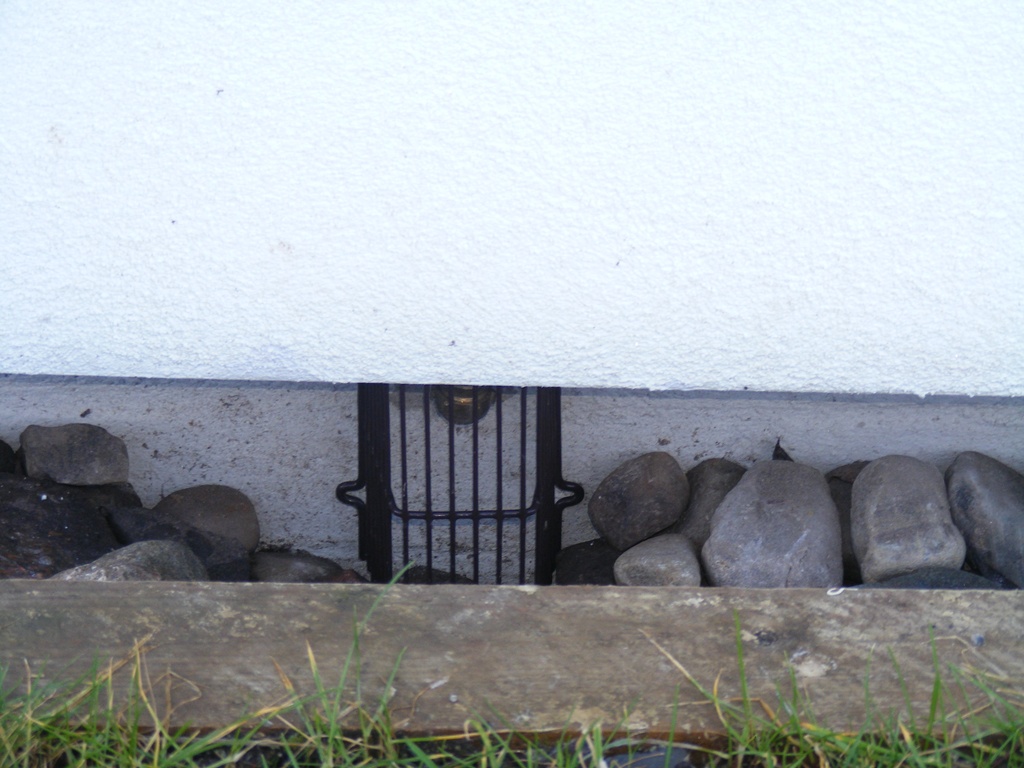
That wire cage from ebay fits well. Just need to screw it to the wall.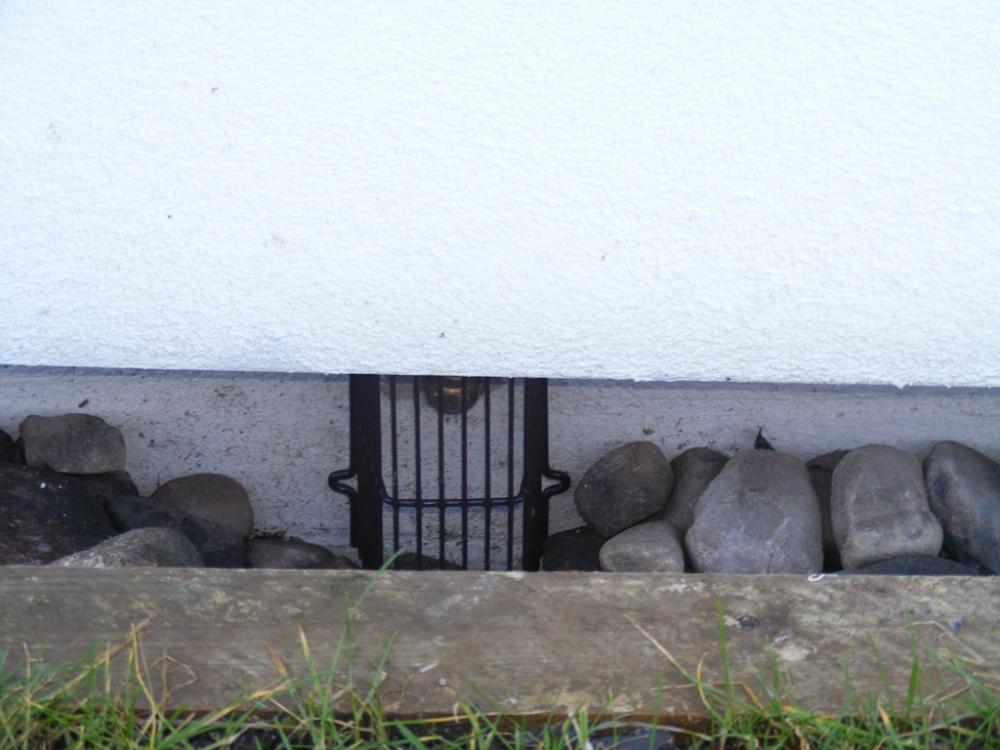
-
You definitely can't discharge to a dry ditch here. It's like pulling teeth just to get a permit to discharge to a flowing watercourse. One of the things they take into consideration is the minimum flow rate in a dry summer. I even made a temporary V notch weir to measure the summer flow rate.
-
Help me deal with a neighbour!
ProDave replied to hmpmarketing's topic in General Self Build & DIY Discussion
Neighbour "disputes" and access can be a real problem. when I lived with my parents, the front drive where I parked openned onto a service road with double yellow lines opposite my drive. It ws a very common occurrence to get up in the morning and find a car parked, on the double yellows, blocking my drive. Phone calls the the police were a regular thing, but usually all they did was employ some grunt to push the car along a bit and left. They hardly ever put a parking ticket on it, and even once when I pointed out the tax disc was out of date, they took no action. I got so fet up I printed a slightly rude note I used to leave under people's windscreens telling not to park there (not quite the exact phrase I used ) until one day the police knocked on my door and cautioned me for "distributing obscene material" He could be bloody minded and carry on parking there even without a marked space, then it gets messy. -
Yes sorry, holes or gaps for wiring in the battens that create the service void, sorry for the confusion.
-
Help me deal with a neighbour!
ProDave replied to hmpmarketing's topic in General Self Build & DIY Discussion
Rather than delete it, could the space be turned 45 degrees and slid sideways so it is to the north east (assuming north up) of the space outside No 16 Is there any scope for creating an off road parking space for No 14 in the course of the work you are doing? It's ther sort of thing where I might sacrifice a couple of feet of the plot if it enabled No 14 to have his own off road parking next to his house. Can you get the Highways to come in one day when he's out and "delete" or move the space or would that be a red rag to a bull? -
He's screwing through the battens, through the insulation and into the stud of the timber frame. So if he's got his measurements wring and the screw does not go into the stud, leave it in place and try again.
-
I remember a strange thing about the big thermal store in the straw bale house. It had no water feed to top it up. It was just a VERY big bucket and you hat to periodically check the water and manually top it up to allow for any evaporation.
-
I wired a straw bale house that had a similar setup. Massive thermal store. WBS that put 12KW to water and only 2KW to the room. The theory wa you light the stove about once a week.
-
Hi and welcome to the forum. I have moved this to the "introduce yourself" sub forum as that seems more appropriate. The technology exists to build near zero energy buildings already, it's the mass house builders that seem disinterested in doing so. And will any EU directives in 2020 have any impact upon us?
-
Seeing all the complications of a cavity and board+render system, have you considered what I have done, wood fibre direct onto TF with no cavity, and render onto wood fibre board?
-
The Vortex was one that I considered. When I was looking for one, nearly 2 years ago now, the Votex, Conder and Biopure were the three that were best in terms of cleanliness of the effluent. (others may have come to market since so don't assume these are the only "good" ones) I ruled it out because on my wet site it would have required a lot more concrete to encase it.
-
That's certainly one to look at. Not only would 1.6 metres deep be above our water table, but probably above the level of the burn much of the year. Interesting it seems to use a standard Graf tank (discussed recently?) and the final treatment tank contains worms, also discussed a while back. It seems to use the chimney effect to aerate the water without a mechanical pump. I wonder how that works on a still day?
-
Yes, it's all about "safe zones". Once you have fixed an accessory to the wall, you can run cables horizontally or vertically from it, but NOT at an angle. It's quite common with a TF house with a service void to just run cables around the room at socket height *. It's a lot less common to do the same with a light switch as that normally goes up, but there are plenty of cases where running a light feed horizontally from one switch to the next is a good idea. * I had a big argument with the joiner on a job last year. He was trying to tell me I must run socket cables up the wall, along above the ceiling, then back down to the next socket. I had to educate him about safe zones including NEVER put screws through the plasterboard at the same height as sockets because there might well be wires there. That was the gist of his argument that if I ran them horizontally he might put a screw through them. It still bugs me that no other building trades seem to have heard about the concept of safe zones for wiring.
-
I am assuming the battens will run vertically fixed to the timber studs. You (or your electrician) might want to do some of the wiring by going horizontally from socket to socket for instance, which will be in a safe zone for wiring. So it's a lot easier to preempt that and drill a horizontal hole through the battens at switch and socket height before you fix them to the wall.
-
A screw through the air tight layer is okay. If by chance it misses the stud, do bot remove it, leave it there filling the hole and just fit another one. Pre drill the studs at 450mm and 1150mm above finished floor level to allow for cables, or leave small gaps in the studs at that height.
-
Yes Leasehold is rare in Scotland. When we owned a flat, we jointly owned the land it stood on with the flat above. We were both jointly responsible for "common parts" i.e foundations and roof. We owned a 1/8 share of the entrance area in front of the flats, we owned the whole of our garden and a parking space. But the issue is not about ownership, it's a covenant issue and who / if can enforce it or how to get permission. Very often if the covenant was put there by the builder, it was to protect them from you doing something stupid while the development was being built that might hinder sales of the other units. Quite often when they have finished and gone, they have no interest in enforcing the covenant, but it is still there, and "unlikely to enforce it" is not the same as saying you can ignore it. On a much more trivial level, I kept a caravan against a covenant for 3 years with nobody bothering me, but it would have been simple to move it if there had been an issue. The annoying thing about this situation is it demonstrate developers total lack of interest in providing a window where it might enhance the property with a nice view. Instead it's probably one of their standard designs and they could not be bothered to tailor it to better suit the location.
-
The only way to be sure is lift some floor boards in the small bedroom immediately above the wall you want to remove to see what it's doing. Chances are it is only built of block because "that's what they did" or are there other walls in the house built of stud and plasterboard? It was common in the past to have load bearing walls upstairs that are not immediately below the load bearing walls downstairs so there will be some bending forces on the joists, but hopefully they will be sized for that, if not there may sometimes be some sag in the joists.
-
This time insulating my ground floor. Blog at the usual place http://www.willowburn.net look for the entry "insulating the floor"
- 1 reply
-
- 1
-