
ProDave
-
Posts
30861 -
Joined
-
Last visited
-
Days Won
427
Everything posted by ProDave
-
New install? Boiler swapped for ASHP? If so was it noisy with a boiler?
-
Those are impressive figures, the usage is commendably low. One of the reasons for my DIY solar PV diverter was the unusual meter position and PV generation remote again from the meter. I hard wired my current clamps using twisted pair armoured telephone cable between the meter box and the house, about 25 meters, then 2 pairs of a CAT5 cable from the entry to the house to the plant room where the diverter is, probably another 10 metres. All seems to work well. I have exported just over 400kW in about 5 years. Definitely very much colder from today for at least the next week.
-

Boils my blood... Gullible people and cowboys!
ProDave replied to Andeh's topic in General Self Build & DIY Discussion
I would love to know just what was wrong with such a new build that was such an easy fix to make a noticable improvement. -
Boils my blood... Gullible people and cowboys!
ProDave replied to Andeh's topic in General Self Build & DIY Discussion
So after the work that cost her £6, is the property actually warmer? Was there really visible black mould before they came? -
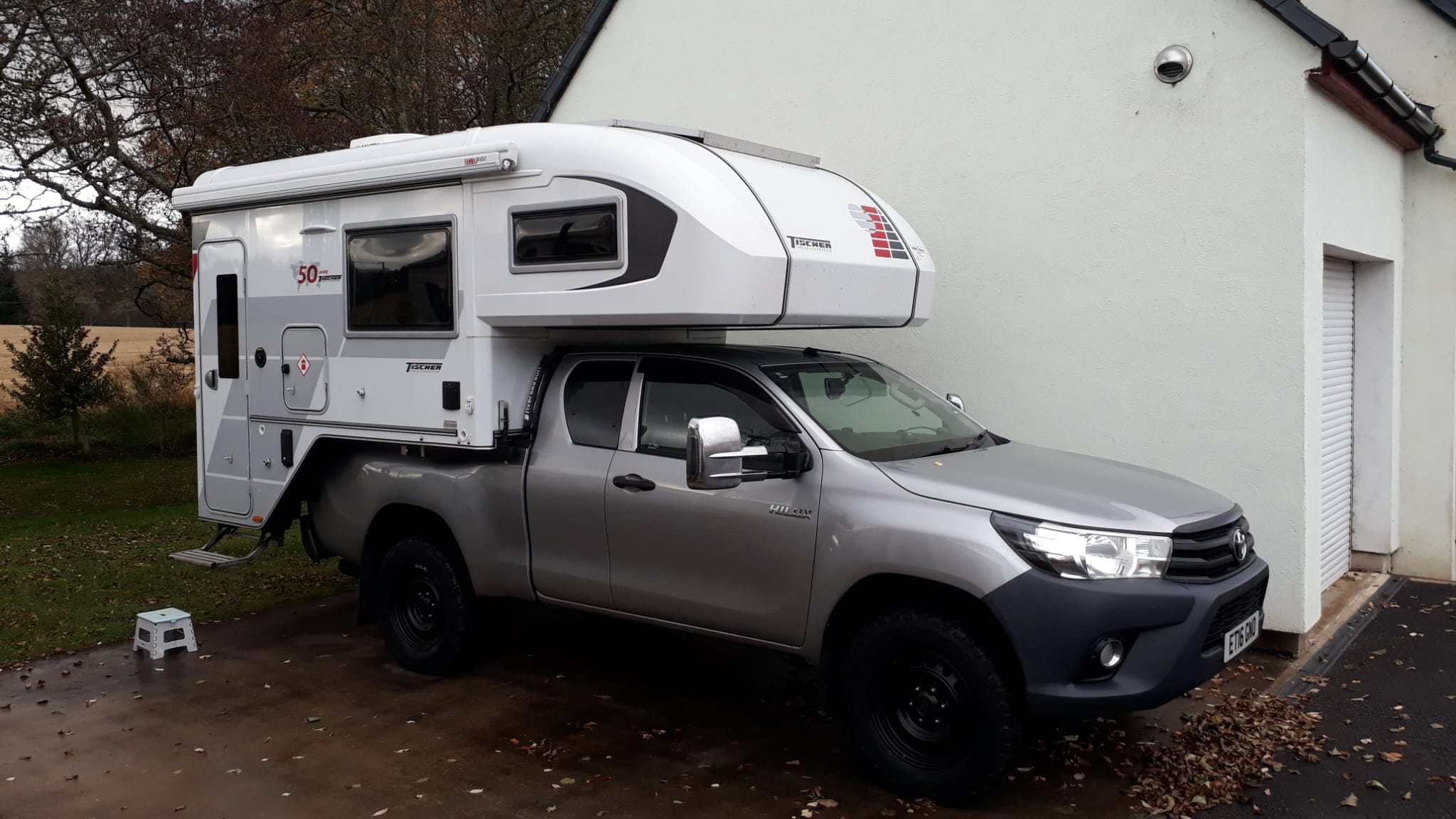
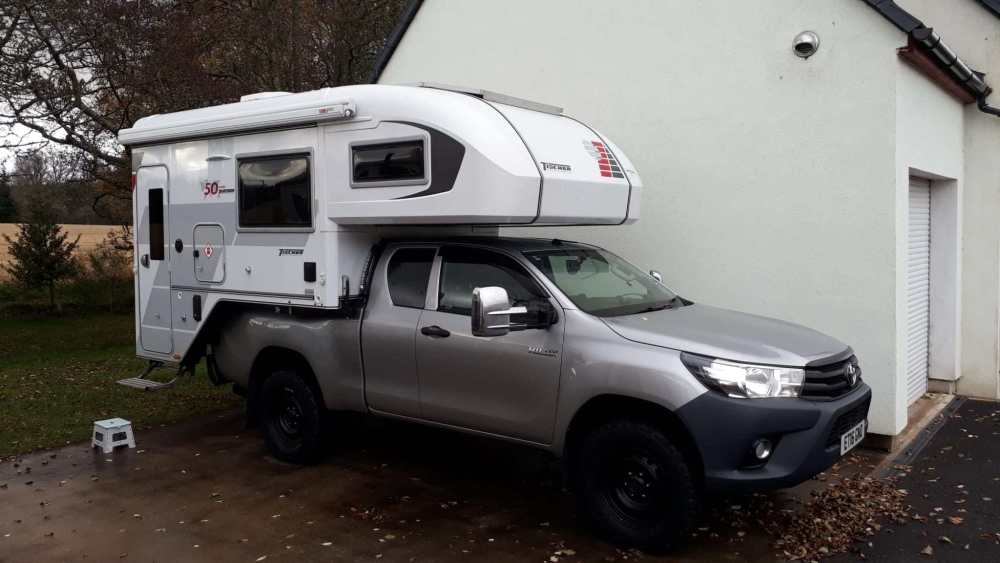
There will likely be a gap but it can't / won't be that much, the supporting poles will be attached to the garage wall for stability. The whole point of buying this particular type of truck is you can wind he legs down and demount the camper unit from the truck, and use the truck on it's own as a normal vehicle. So parking the other way would mean driving out onto the grass to demount which would not end well in winter when it is wet and soggy.
-
That is the plan, with battery storage as well.
-
How much is a fair cost for kitchen redelivery charges?
ProDave replied to tokyotecubate's topic in Kitchen Units & Worktops
I would have made it my business to be there and move the builders stuff out of the way myself if they were not there to move it myself. -
I meant when you remove the actuator head, and energise it by electricity, i.e. demand heat, does it operate fully and turn the boiler on? 20 degree movement seems too little for a 2 port valve, I would expect a lot more so suspect a mechanical issue in the valve.
-
If that is the actual valve being discussed, it looks like a clone of a Honeywell.
-
I could extend them (externally) one to the front and one to the back so they were not actually under the canopy. The front one visible is the exhaust, the rear one, hidden in this picture is symetrical so the same distance is the inlet. There will be a small gap anyway, to avoid trying to form any sort if flashing from the wall to the roof.
-
DC is nasty as it is hard to let go. But these things are designed to only output a low current, so if you did touch it the voltage would drop a lot lower. It's volts that jolts, it's mills (milliamps) that kills.
-
A part of my build that is still awaiting to be built. And a good job as the parameters have changed as I hinted in another thread a few days ago. It now needs to be built a bit higher than originally planned to accommodate the latest addition to the fleet. It's almost 3.2 metres to the highest point so we need comfortable clearance under for that. The size remains the same, 6 metres by 6 metres. The original plan would have been sloping down from the front to the back, but that would make the front insanely high now, so it will now slope from the garage wall down towards the left. It will be roofed with box profile roofing as originally planned. I will sketch a proposed joist plan in due course to bounce ideas around. But one thing that has become obvious, the car port roof where it attaches to the garage is going to be above the MVHR vents. I am not sure if that is going to pose a problem or not?
-
It outputs up to 500V or 1000V depending what you have selected, but only a low current is available. It will certainly smart if you touch the probes. Try not to.
-
It's okay to short the probes. The damp piece of wood is a good test to give some confidence that it is working properly.
-
What make of valve, different makes behave differently? If you remove the actuator head from the actual valve, does the actuator move correctly off the valve? does the valve spindle rotate freely with the actuator head off?
-
Building a straw bale house on the western side of Islay
ProDave replied to Selina's topic in New House & Self Build Design
I worked on a straw bale house build near me. But the straw bales were for insulation not structure. It was basically a larsen truss style timber frame with the gap between the inner and outer sections of the larsen truss matching the bale size and the bales were stacked up in there forming the wall insulation. Issues I recall, they were very lucky to get a dry enough spell once the straw was cut for it to dry and then be baled. they had trouble finding anyone with a working small square baler, most farms bale as very big round or square bales now. And then renting a barn to store the bales under cover until they were ready to build them in. Imho all it did was add complication and cost and made the finished walls very thick. Just so the builder had a cosy notion he had a "natural" material. He could have achieved the same building performance at lower cost and with thinner walls using some variation on mineral wool like Frametherm, -
Scotland - Ban on stoves in new build houses lifted.
ProDave replied to ProDave's topic in Stoves, Fires & Fireplaces
I'm going to work now dear, you can manage in the cold and dark until I get back can't you? (car runs out of charge half way to work)........ -
Scotland - Ban on stoves in new build houses lifted.
ProDave replied to ProDave's topic in Stoves, Fires & Fireplaces
Camping stove and gas bottle. Totally silent, and the fuel won't go stale (though it may run out) -
Scotland - Ban on stoves in new build houses lifted.
ProDave replied to ProDave's topic in Stoves, Fires & Fireplaces
As soon as you mention air fryer or kettle that's 3kW minimum and then only one at a time. There shouldn't be a minimum load requirement, but they will be less efficient at small loads. -
If you are doing a service void of 25mm and 12mm plasterboard, that is a perfect match to a 35mm back box.
-
You will get a reading in megaohms when set to insulation testing, and you are hoping for a very high reading, even infinity is good. anything less than 1 megaohm wants investigating, but typically a screw through a cable will read 0 If you get a low reading, look first at the other end of the cable in case the cores are touch each other.
-
Scotland - Ban on stoves in new build houses lifted.
ProDave replied to ProDave's topic in Stoves, Fires & Fireplaces
Yes. If you look at the detail that is 2 double pole switches bolted together one normally open the other normally closed and that is a 2 pole busbar jumper across the bottom and the left hand terminals are only for connecting that busbar. -
Most people consider that the old way of doing it but there is no right or wrong way. The disadvantage of loop at light, as that is called, is some consider it more tiresome terminating at a ceiling, and a lot of modern light fittings have inadequate provision for that many cables within the light fitting. Loop at switch I find easier to terminate as you are working at a nice height. It also provides a neutral at the switch if you want any form of smart switch, and in the case of say a string of downlights it really is the only sensible way to do it.
-
Yes test both cables individually
-
Scotland - Ban on stoves in new build houses lifted.
ProDave replied to ProDave's topic in Stoves, Fires & Fireplaces
A changeover switch Mounted in a suitable enclosure with the generator in connected to a suitable INLET connector rated for the generator output.