
ProDave
-
Posts
30688 -
Joined
-
Last visited
-
Days Won
424
Everything posted by ProDave
-
No I am completely not understanding the question?
-
No just the one on the incoming. and one on the site stand pipe. And one on the feed to the static caravan.
- 1 reply
-
- 1
-

-
Meaningless without a plan?
-
The verbal offer I have is the supplier will cover the material, and the plasterer will re do the affected areas for free. The sticking point is the company rep wants to visit the site and see it and agree to that, but that site visit is on hold until they return to normal business. I am not stripping anything off until that visit has happened.
-
Does it really all have to come off, EPS and all? I have an issue with a different make of thin render where it is blistering in places. the resolution has been delayed by the bug, but in my case I am certain it is just the top thin coat separating from the base coat and I am sure it will just be strip the top coat and re apply.
-

Connecting-up my empty meter box…
ProDave replied to Dreadnaught's topic in Consumer Units, RCDs, MCBOs
The broken meter box door is a common issue. The design is really really rubbish. Leave it unlocked on a windy day and the door won't last 5 minutes. You can buy replacement doors easy enough. -
Connecting-up my empty meter box…
ProDave replied to Dreadnaught's topic in Consumer Units, RCDs, MCBOs
I would just put a small, say 4 way CU right in the very top right of the meter box. Use that to feed your site power, remembering that the site power sockets need to be fed from a TT earth (local earth rod) Then get your chosen supplier to install a meter. Once they have done that, you will have a better idea how much space you have left in the meter box. For the permanent house supply, you will need to feed that via a switch fuse with an 80A fuse in it. Hopefully once the meter is in you will still have room for that. -
Hi and welcome. Where abouts are you? that will have a big impact on plot availablility. I doubt the recent relaxations in planning law will help self build plots, that is more about streamlining applications on large developments on land already zoned for housing development.
-
Hello. Timber frame within stone building learner.
ProDave replied to quickerbybike's topic in Introduce Yourself
Hi and welcome to the forum. That looks like a "challenge" There is an old saying "If I wanted to get to there, I would not start from here" Don't let that put you off. I would say the first thing is repair that roof. then you will have a dry building to work with. Nothing wrong with creating a free standing well insulated "box" within the building if you can afford to lose some space. windows will be a challenge and where your insulated box will be compromised. -
Watch your lighting scheme with that sort of shower head...

-
Parking fee for electric connection - have a guess!
ProDave replied to Mr Punter's topic in Electrics - Other
I'd go and park in the bus lane instead and pay the fine promptly. -
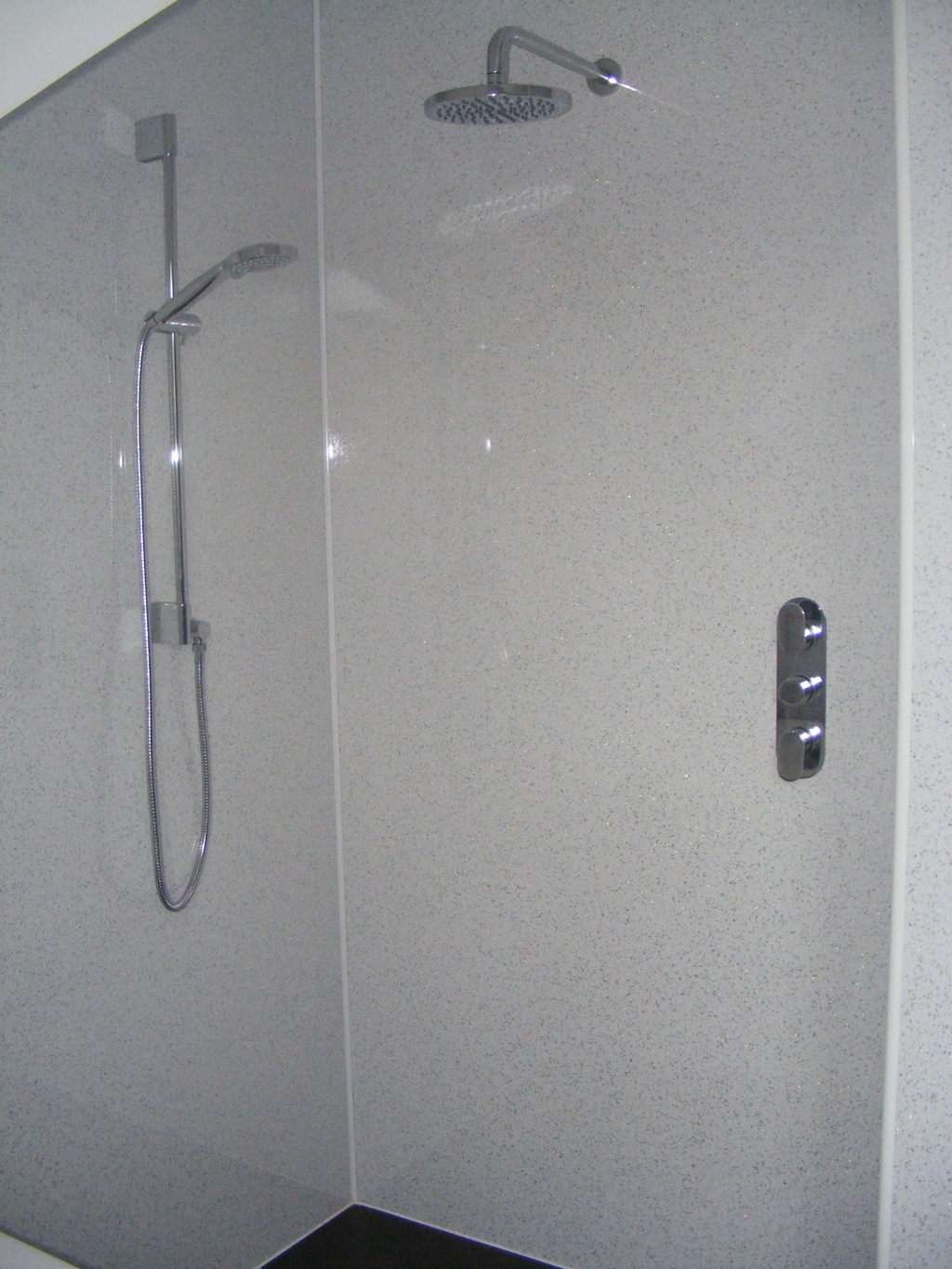
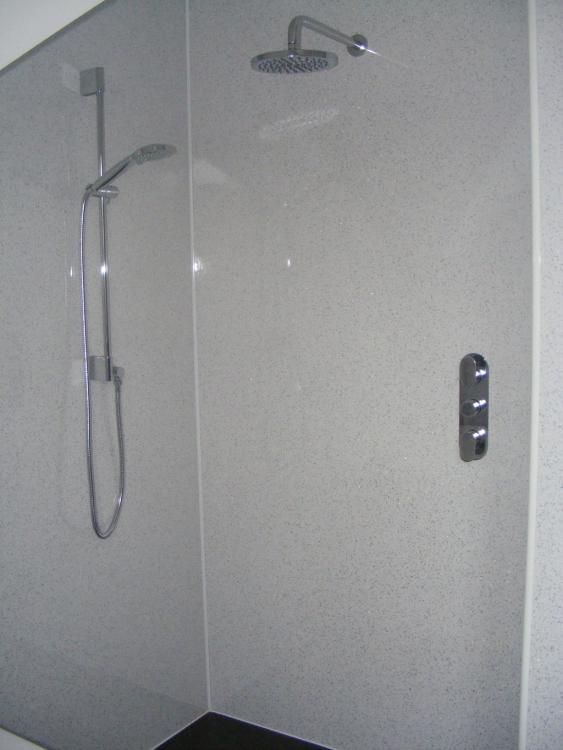
Yes, rainfall head in the centre of the 1200mm wall and riser in the centre of the 900mm wall (so hose outlet slightly off centre) Controls well to the right, so you can turn the shower on and not get your arm squirted by the initial cold water.
-
LABC Really? No Scottish cover
ProDave replied to SuperJohnG's topic in New House & Structural Warranties
Building control is still under the control of the local councils in the whole of Scotland. -
We have the rainfall head half way along the "long" wall (of a 1200 my 900 shower) which happens to also be the one with the controls, and the riser half way along the short wall.
-
Move the rainfall head round the corner so it's on the "gable end" wall, not the sloping wall, that will get it higher.
-
Sure that is not just the shower head draining down? They have an annoying habit of dripping for a long time, or start dripping in the middle of the night hours after last use.
-
Yes should be easy to cap that to test it. P.S it is handy having been doing plumbing for years and having a big box of assorted plumbing fittings (I never throw any away) so I can usually rummage in the box and cobble up something for most situations.
-
What constitutes a significant start?
ProDave replied to Dave and Helen's topic in Planning Permission
Ask your planners what constitutes "starting" For us, is was forming the entrance to the plot. Condition 1 of the planning was the entrance must be formed before building work started and when i notified the planners I had started on that they sent me a letter confirming that the development had started. -
Picture of the "shower head"? (I am guessing one of those horrible rainfall things?)
-
Heat loss from pump to storage cylinder
ProDave replied to paulc313's topic in Air Source Heat Pumps (ASHP)
Are you over thinking this? What sort of noise issues have you really seen? The main consideration, is with an ASHP all the noise is made by the outside unit. So just position it where it will be least obtrusive? Ours is at the end of the house behind the garage. Even with the nearby bedroom window open you can't hear it, because it's round the corner and not very loud to start with. Why do people perceive an ASHP as "noisy" yet are prepared to put up with an oil fired boiler with a burner roaring inside the house which is much more invasive? I suspect some of the complaints you might have dealt with were perhaps old large units that don't have inverter drive? they can start up with quite a clonk,. and only run at full speed or off. A modern inverter driven ASHP will spend a lot of it's time just running gently not making much noise at all. The biggest source of noise nuisance from ours, is the water circulating pump (that you have with any heating system) that is the only thing you can hear inside the house but even so it annoys me so I just set the times so the heating is not on at night for a silent nights sleep. -
Okay, so put the shower hose fitting in your picture on, fit the shower hose with a 1/2" male blank in the other end of the shower hose.
-
Unscrew your shower fitting from the wall elbow and screw a 3/4 male blank in.
-
Does it have to be plastic? I would bend a piece of copper to do that. Not sure if I would get 2 bends in that space so it might be a 45 degree bend to kick the pipe out from the wall then a 90 degree soldered elbow to take it down.
-
We used the biscuit mix upstairs in our last house. If floor loading is an issue, then aluminium spreader plates is a much lighter option.
-
I thought you had to register a septic tank with SEPA upon sale of a property now if it was not already registered? So surely that was done when you bought the property? I had great trouble getting permission from SEPA for a new discharge to a burn, and it was only when two other proposals had been rejected that they allowed it. I had to measure the flow rate of the burn to work out the dilution rate first. I think they were already worried at the amount of systems connected to the burn (including my immediate neighbour who is still using a plain septic tank discharging to the burn, illegal for 6 months now and nobody seems intent on making him upgrade)