ProDave
-
Posts
30688 -
Joined
-
Last visited
-
Days Won
424
Everything posted by ProDave
-
Is a cooker extractor necessary with MVHR
ProDave replied to SBMS's topic in Mechanical Ventilation with Heat Recovery (MVHR)
But in a house with mvhr you do NOT connect a cooker hood to the mvhr ducts, that would indeed be bad. You set up the cooker hood to recirculate with a filter. -
3-Phase - Connecting to Caravan...
ProDave replied to Mulberry View's topic in General Self Build & DIY Discussion
PME is Protective Multiple Earthing. There is nothing wrong with adding to that with a local earth rod. I have once encountered a house where the Outer PNE conductor of the concentric feed cable had failed and the N / E of the whole house was floating somewhere close to L potential. It was really weird as you didn't get a shock touching e.g. the radiators or kitchen sink. This is of course the reason for not connecting PME to a caravan as standing on the ground next to it and touching the metal skin would be very bad indeed. -
Is a cooker extractor necessary with MVHR
ProDave replied to SBMS's topic in Mechanical Ventilation with Heat Recovery (MVHR)
Another with a recirculating hood and mvhr. We did use the kitchen for about a year before we installed the hood, it did not seem to cause a problem, but it just looked wrong without it. -
That test would enable you to determine the power of this heating element. If it is low, it might be possible to just buy an isolating transformer to power it as a permanent fix.
-
I doubt we can do that. It will be 2 out of several connections to the compressor. If you can post some more close up pictures of the compressor showing all the different connections going into it, then it might just be possible to identify it, if it happens to be on a separate connector, but it could well be all the connections go through one big multi pin connector. If I were going to try energising R1 to try and dry it out, I would be attempting to make the connection for the temporary power at the unplugged relay.
-
KA6 appears to be switching "R1" which might be a resistance heating element as well as the compressor. The diagram does not tell us which is KA6-1 and which is KA6-2 Is there a parts list or anything else that says more about what R1 is? Have you sat and listened to the unit while it is working? You would know if the compressor is starting and stopping.
-
Fault finding by substitution rarely works. You are suggesting replacing the most expensive part, that requires an FGAS engineer to degas the system, swap the compressor, leak test the reworked pipework and re gas it. And all that might prove is there was nothing wrong with the compressor. Please seek out a better electrician first, someone that has experience of machinery / control systems would be good.
-
I think they allow a door to open further without hitting the frame or door recess. A bit like Parliament hinges for an internal door.
-
If you are feeling adventurous, unclip the trunking lids and follow the wires from the now removed relay to see what they connect to. Something won't be working as it should, so don't think it is fixed just yet.
-
3-Phase - Connecting to Caravan...
ProDave replied to Mulberry View's topic in General Self Build & DIY Discussion
Were you only expecting this to be a temporary supply and you were expecting the DNO tomove the supply head somewhere else in the future? Yes they seem to have supplied a PME earth terminal as they did with ours. You will need that if keeping the supply head there and yes it would then be a private submain to the house eventually. -
If it "works fine" with a relay removed, something must be not working so is it really "working fine" or is it detecting a fault (e.g. no compressor) ans using a backup e.g. electric resistance heating element? does it show any error with this relay removed? Can you tell what is not operating, e.g. no compressor noise or no fans running?
-
I think most people discount an ASHP because of the high cost, and then compare the high cost of an ASHP with a £2K boiler. I think most are looking at prices installed by an "ASHP specialist" at £10K or more.? But before you dismiss that as too expensive look up the actual cost to buy an ASHP and pay a plumber and an electrician each a couple of days labour to install it. You might find it is a lot cheaper. Several of us on here have bought them cheap and DIY installed them. Can't comment on likely running cost without knowing what you are building? Something that just scrapes through building regs? or a passive house? or somethiing in between. There is no doubt ASHP's work best with UFH throughout upstairs as well, and are better suited to low energy houses. Don't forget the cylinder maintenance or standing order costs when working out the cost of LPG.
-
A photograph of the manifold AND any wiring boxes connected to it, what actuators you have etc would help someone present a sensible suggestion.
-
Start by unplugging everything inside that you can, fans, compressors, valves, sensors etc. MAKING SURE you note what went where so it can all go back in the right place. It won't run and it will throw some errors, but if it does not trip you are making progress. Then put the unplugged items back one at a time until it trips and you have your likely fault. You might need a better electrician?
-
Picture of the bulkhead in the kitchen? That floppy duct that is there is about the worst sort you can have. I would replace it with 110mm rigid (drain pipe) but you will really need access into the bulkhead. That is going to be one hell of a noisy cooker hood, just what are you cooking?
-
Boiling Water taps. What and where to buy.
ProDave replied to ProDave's topic in Kitchen & Household Appliances
All the ones I have seen, the boiling water is delivered slowly. Fine for filling a cup of tea or coffee. I think it is done for safety, would you really want boiling water coming out at the same rate your cold tap could deliver and splashing everywhere? -
Help me to understand GSHP performance
ProDave replied to Benguela's topic in Ground Source Heat Pumps (GSHP)
But an ASHP needs to shift a lot of air to extract a little bit of heat from a lot of air. Put it in a little outbuilding and it will quickly cool that outbuilding down and then stop working. They need to be outside for a good reason. -
All ours is in a cupboard (under the stairs) and I use an Infra Red remote extender to relay the signals to the cupboard. More modern things like a firestick use a wireless remote so are not bothered by walls
-
What are you hoping to achieve with the tiny door? For me, the ideal AV cupboard would have a full size door front and back, the awkward bit especially with AV kit is getting round the back to plug it all in and especially awkward when you want to reconfigure something. Perhaps a side door in the side would help with that?
-
5 would be poor for air tightness, aim better than that. The difference between a self builder and a mass builder, is the mass builder would look at the score and say "that's better than we need where can we save money" where as the self builders says "that is not as good as it can be how can I improve it"
-
It was going from the assumed air tightness to the actual air tightness that was largely responsible for lifting our design SAP from high 80's to mid 90's
-
The rental house EPC I would not trust as far as I could throw it. Assuming a full SAP assesment of the new build, what air tightness have they assumed? you want to be aiming to get the building as air tight as possible and then get an air tightness test done which will allow the real world figure to be used in the full SAP assesment to improve the rating. Also windows and doors will make a difference as will proposed heating system. I would be looking to improve the walls to get them down to perhaps the same as the floor and roof so perhaps 200mm cavity? A bungalow will have a greater ratio of walls to volume than a house so will lose more heat than a 2 storey house of the same volume.
-
Moving from self-build insurance to standard house insurance
ProDave replied to jamieled's topic in Self Build Insurance
As a self builder I had a pretty good idea of what it cost to build. I then added on the estimated £50K I had saved by doing so much work myself, and then added on the professional (architects etc) fees I had left off my "build cost". Then a guestimate of £10K for demolishing and clearing a ruined building before rebuild. And then added 10% to the total for good measure. That produced a figure quite a lot higher than the market value of the house, but that seems quite normal here. -
Another stairbox customer here. Mine were only pine stringers and mdf treads (carpeted) but they don't squeak.
-
Foul Treatment Plant advice - choosing the right one!
ProDave replied to Dale Hesketh's topic in Introduce Yourself
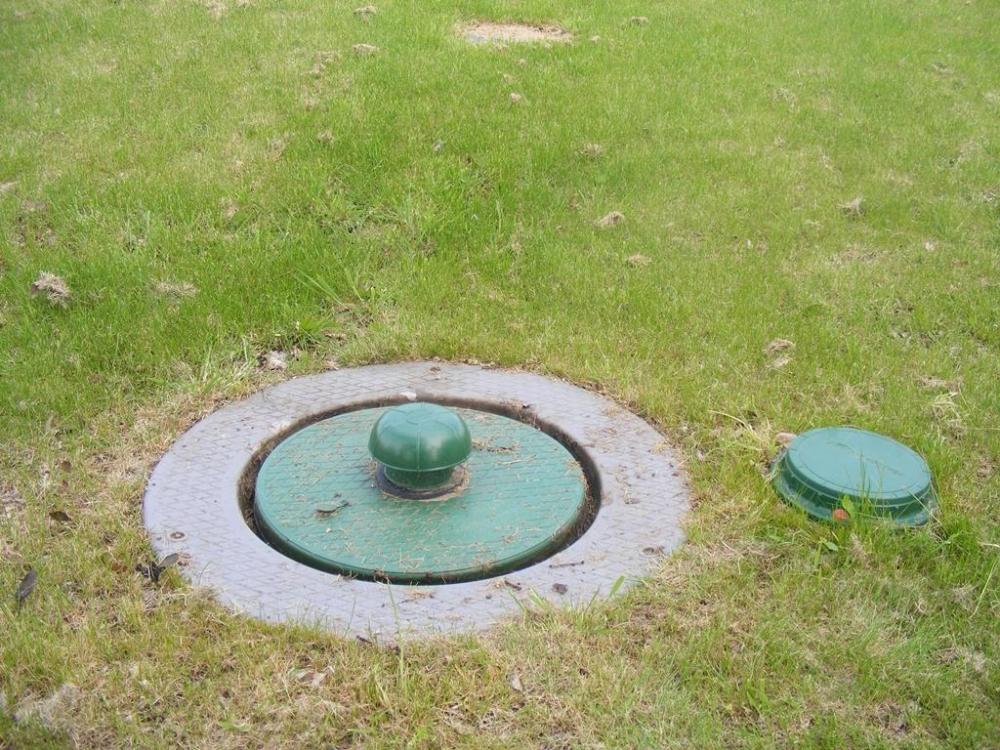
Yes you can hear the blower a few metres away but it is not very loud. In the Conder the pump sits in it's own chamber in the middle of the tank. In the picture below it's under the big green lid, and the mushroom vent on top is what allows it to breathe. In the case of the Conder it is emptied by unscrewing the smaller cap off to the right in this picture. I believe the BioPure tank while looking very similar to the Conder, requires you to lift the box containing the pump put to empty it.