
Stones
-
Posts
3761 -
Joined
-
Last visited
-
Days Won
23
Everything posted by Stones
-

Building Regs Committee Hearing - Scottish Parliament
Stones replied to jamiehamy's topic in Housing Politics
I think the issue is one of expectation, if you are spending a couple of hundred thousand, it's not unreasonable to expect a good standard of workmanship, longevity and that anything the goes wrong will be put right. The NHBC logo appears in developers marketing as if they prove what they build are gold standard homes and that they are guaranteed. They are, but not in the way purchasers think, as they later find out. I've no doubt NHBC does pay out on various things, but getting to that point, from all I've heard anecdotally, is not easy. -
Building Regs Committee Hearing - Scottish Parliament
Stones replied to jamiehamy's topic in Housing Politics
I've had a good read through as well. The main thrust of the examples given by MSP's were of constituents facing hefty bills for repair work, and it seemed clear that none of the industry contributors wanted to address this issue. The analogy of a pair of shoes, a car and house and the length of time you would expect them to be free of defect was I think a good one. The problem for policy makers is that increased building control inspection may well reduce some of the structural issues that currently emerge, but the costs of having an increased inspection scheme would I suspect, be prohibitive (if every house was thoroughly checked). Even then, this would do little to address a lot of the cosmetic or minor defects that new homeowners discover. The problem there is frstly the standard of finish, and then developers being uninterested in making the repairs / being too busy building the next house, and NHBC guidelines which developers hide behind to say certain things are acceptable and it's just tough luck. Whilst the majority of people are quite happy to buy into such developments, at the build/finish quality they see at the showhouse, there is little incentive for developers to up their game in that respect. One of the more useful / valuable protections offered by the NHBC is the cover provided before completion. Up to £100K. -
Speaking from the point of view of a taller individual, reducing the height of a door by the amount you suggest would make me walk away from the property as a potential rental. Is there any scope to raise the door frame header so you can still accommodate a standard door?
- 17 replies
-
- 1
-

-
- trim doors
- internal doors
- (and 1 more)
-
I do think we as a nation, are reluctant to complain. In the main I suspect that's because none of us wants the hassle and if it is a relatively low cost item, it's just easier to replace something, shrug our shoulders and bear the cost ourselves. It takes time and effort to complain, and the results can often be disappointing. I quite like the idea of posting an online video of the fault, writing a short letter of complaint with link to the video and see how quickly the company responds. I've not had any such complaint where that would be appropriate. One day....
-
I laid all the ductwork and positioned the individual plenums prior to plasterboarding. The joiners sheeted the ceilings then I simply cut out the holes for the plenum to go through, cutting each plenum to the correct length for a flush finish. The only plenums that the joiners fitted the plasterboard around were those in the vaulted ceiling where there was no subsequent access available. As they had to measure and pre-cut boards anyway, it wasn't much additional work to measure and cut out the hole for the plenum which I had previously cut down and fixed in place.
-
Have to agree with a lot of what @billt says above. When we built our last house, I was very disappointed to find that despite the high levels of insulation (U values for walls and roof were 0.1) and a heating energy requirement of a few thousand kWh had a lower score than the developer built house we were then living in which was built to minimum regs of the time (2005) and had a heating requirement 5 times higher. That house had mains gas whereas the new build didn't. It struck me then as it does now, that the system was designed to make mains gas seem the best and most 'eco' fuel source, simply because it is the primary fuel source for the majority of homes. When we came to sell that house, we had an EPC which had been issued when our PV was installed. In Scotland, we still have to get a home report done, and I remember telling the surveyor I had a valid EPC. He point blank refused to use it and said he would not issue the home report unless he had refreshed the EPC, his arguement being there could have been changes made since it was issued. The new SAP overwrote the old one on the register. No changes had been made to the house but the result of his EPC was slightly different to the one before. Given EPC's are only valid for 10 years, what's going to happen to all of the EPC's that members have worked to get top notch results. I stand to be corrected, but my understanding is that future assessments would be based on rdSAP, which being based on a lot of assumptions, risks devaluing the result previously obtained. My experience is quite simply no. Unless and until they form the basis of local taxation, then they will remain irrelevant to most. If they were to be used, I suspect a good deal of revision would have to go into the methodology used and the penalty attached to houses that do not use mains gas (especially in areas where main gas is not available, but other supposedly environmentally friendly forms of energy are).
-
Like many on the forum, we have a Treatment Plant installed to treat our waste before it discharges to a soakaway. There are of course do's and don'ts to observe in the operation of a treatment plant, not least what you actually put into it. Some detergents / cleaners are worse than others in terms of the impact they may have on the treatment process, so I have always observed a policy of using as little as I can but make a point of sticking to the same brand, so that the bacteria within the treatment plant can get used to and tolerate what goes in. Shopping for toilet paper the other day, I idly began speculating on the impact of 2 ply vs 3 ply and plain vs coloured toilet paper on the operation of an aeration treatment such as we have fitted. I'm guessing that 2 ply is going to be easier for the plant to break down and digest vs 3 ply. Subject to the colouring agent used, I guess there probably isn't much in it but it would be helpful to know. Anyone else ever researched this topic?
- 1 reply
-
- 1
-
-
Perhaps of some value for a room primarily used a study / infrequently used as a bedroom?
-
Our system had flow temps of 33C at 0C ambient, lower when ambient was higher.
-
The 'problem' with using low flow temps in a towel radiator is that they will not provide any meaningful heat or towel drying over and above what you will get if you just hung the towel over a door to dry. Towel radiators / rails are designed to work with high flow temps ( all you need to do is compare the Btu output vs a standard radiator of the same size to see how much less effective they are at heating). We had a wet towel rail plumbed into a low flow temp system in our last house, the bathroom was always cooler than everywhere else in the house and it did nothing to dry towels. We ended up swapping it for a normal radiator...
-
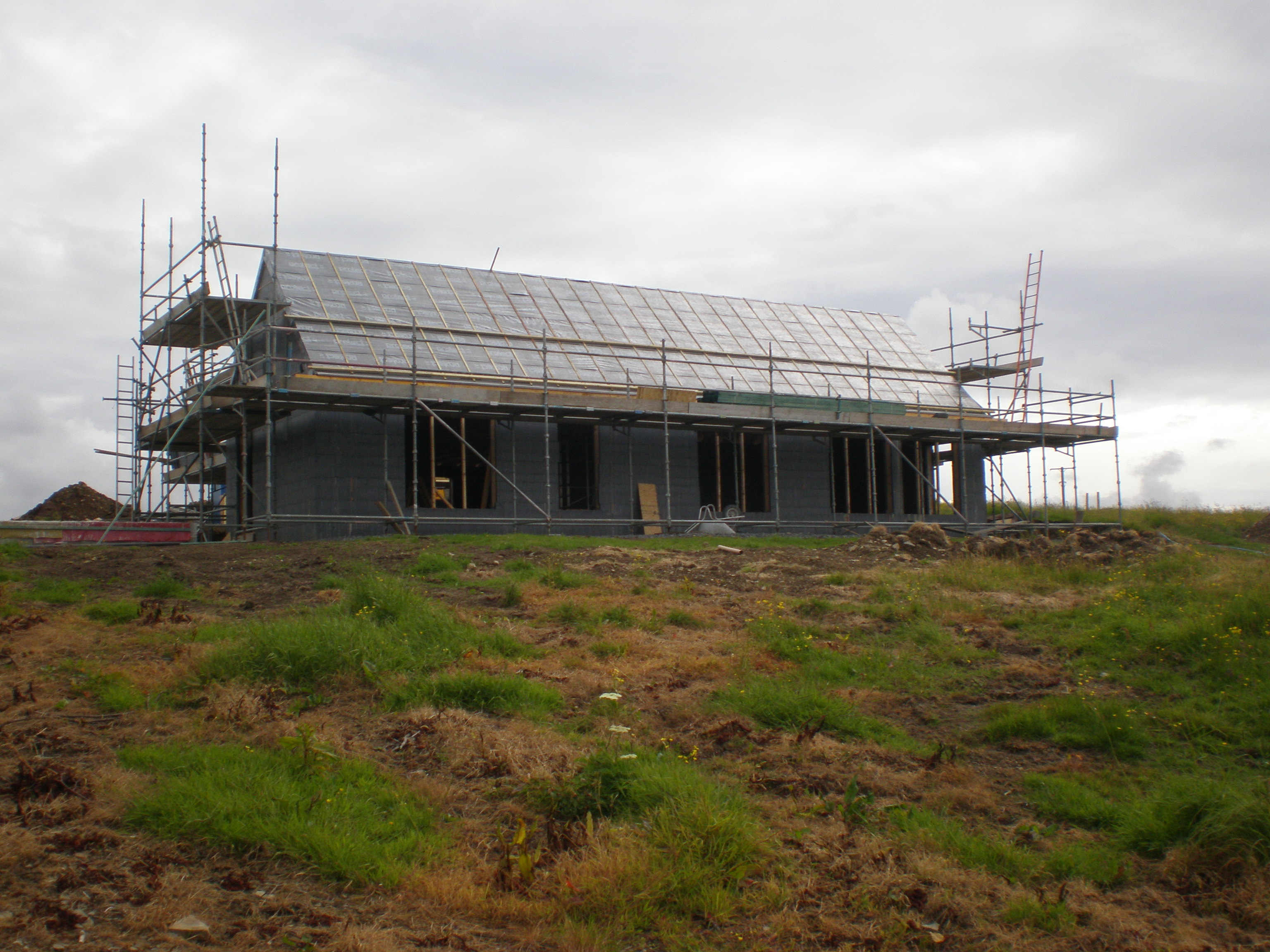
Just had a look at the quote for our site: "The proposal is to reposition the existing HV line. Dismantle HV pole 4 and 3 span between the pole 2 and 4. Replace pole 2 with a terminal pole and stay. Replace Pole 4 with a terminal pole and stay in the corner of the field as agreed with the customer and reconnect the HV line. Erect a new 50KVA transformer. Then lay 160m of underground HV cable. Take an overhead pole connection and lay mains cable to a pot end. Customer will come back for new supplies when they are ready. Customer to excavate and reinstate all track at no cost to SSEPD except the first 10m at the poles, to provide a ducted route to the meter point and to provide and install a fire retardant meter board." Total cost £9817 I had an additional domestic connection charge of just over £1K on top of this
-
We had to get overhead lines removed on our last and our current site. We dealt with SSE on both occasions. They were fairly prompt in quoting for the work (which excluded track work on site) but their pricing structure is confused to say the least. Our final bill for our last house was £2K lower than they had initially quoted after we had gone through the process of looking for less expensive alternatives. I was fairly fortunate in that I knew the chap who managed the particular team that was scheduled to do my job so he slotted our site in at a time to suit us. On our current site, there was again a fair bit of back and forth with SSE agreeing on the work required, and dare I say there seemed to be a fair amount of elasticity in the price. Actually getting them on site was a bit challenging but that I think was more down to the fact the contractor they used to do their on site stuff was booked up. All I can say is its not cheap. I think we were £7K to put cable between two poles put underground (new HV cable, new pole and stay, new joint to HV cable in roadside) and get a domestic connection in 2005. Our current site was nearly £10K to put HV cable underground between two poles (two new poles and stays, plus a new transformer for my own and my neighbours site) Edited to add: Just had a look at the quote for our site: "The proposal is to reposition the existing HV line. Dismantle HV pole 4 and 3 span between the pole 2 and 4. Replace pole 2 with a terminal pole and stay. Replace Pole 4 with a terminal pole and stay in the corner of the field as agreed with the customer and reconnect the HV line. Erect a new 50KVA transformer. Then lay 160m of underground HV cable. Take an overhead pole connection and lay mains cable to a pot end. Customer will come back for new supplies when they are ready. Customer to excavate and reinstate all track at no cost to SSEPD except the first 10m at the poles, to provide a ducted route to the meter point and to provide and install a fire retardant meter board." Total cost £9817 I had an additional domestic connection charge of just over £1K on top of this.
-
Not too shabby a view! Might I suggest a giant wind farm in the background to really enhance the natural beauty of the landscape?
-
Welcome aboard!
-
You've gone and said it now! Doubtless there will be a spate of tripping incidents in the next few days. In all seriousness, can't say there has been any issue and the Building Inspector was happy. As a consequence of your post, I've tried to catch my toe / foot on the strip but with rounded edges, it doesn't seem to be an issue.
-
Looking for a better electricity supply deal
Stones replied to ProDave's topic in General Self Build & DIY Discussion
I was wondering when I would hear from SSE myself. Got home from work to find my final bill from SSE in the mail box. So far so good... -
That's for what's usually termed an 'SER': https://www.ser-ltd.com/ser-scotland You still need a building warrant. If you get an SER certificate then you reduce your building warrant fee by 10%.
-
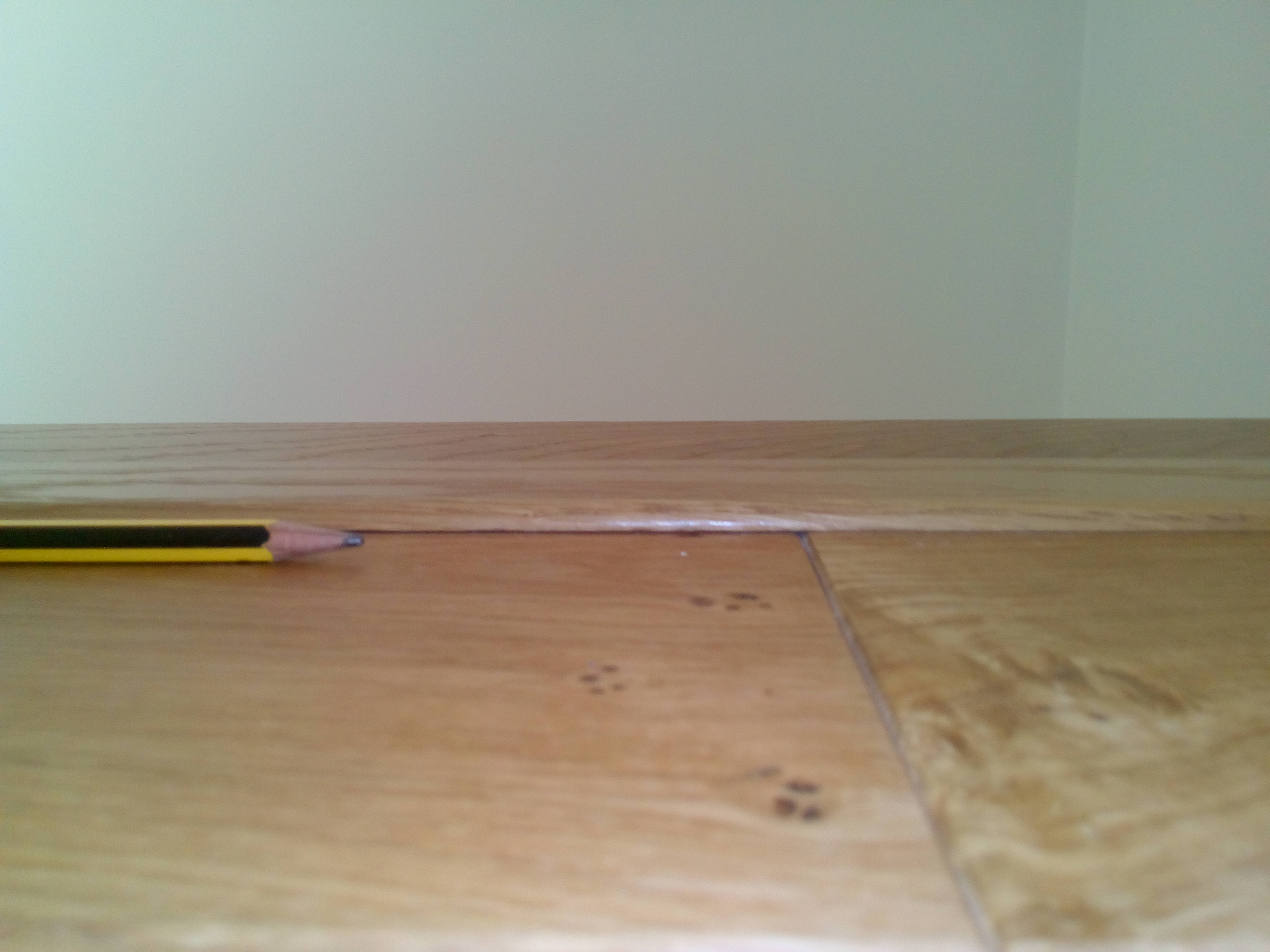
T bar solid oak profile. Push fits into a plastic channel fixed to the subfloor. Sits 4mm proud of the finished floor. https://www.luxuryflooringandfurnishings.co.uk/brushed-and-lacquered-solid-oak-t-profile-door-bar-to-match-oak-flooring.html
-
No, its just been oiled with Osmo, the same as the oak. Works surprisingly well visually, something a bit different.
-
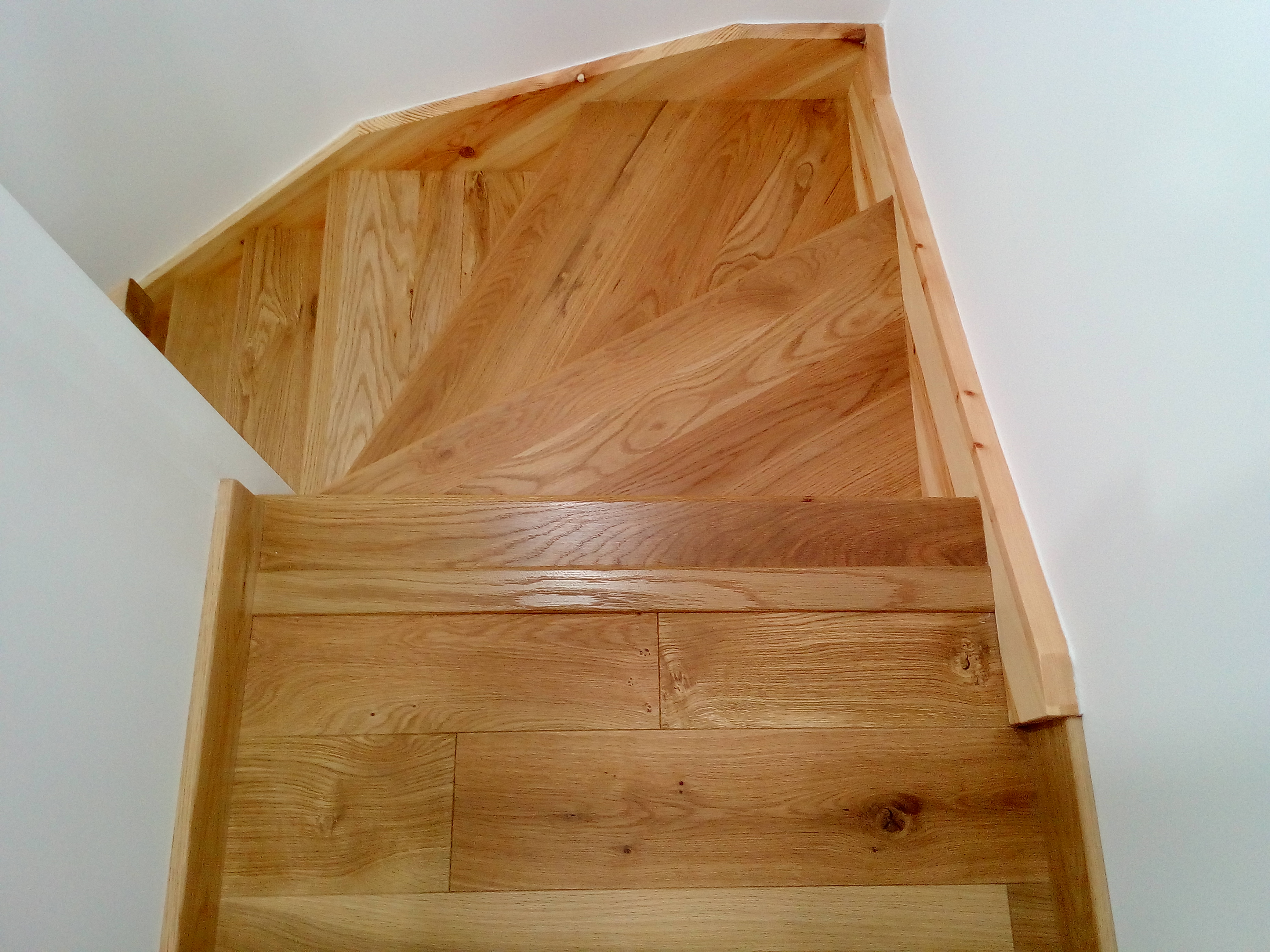
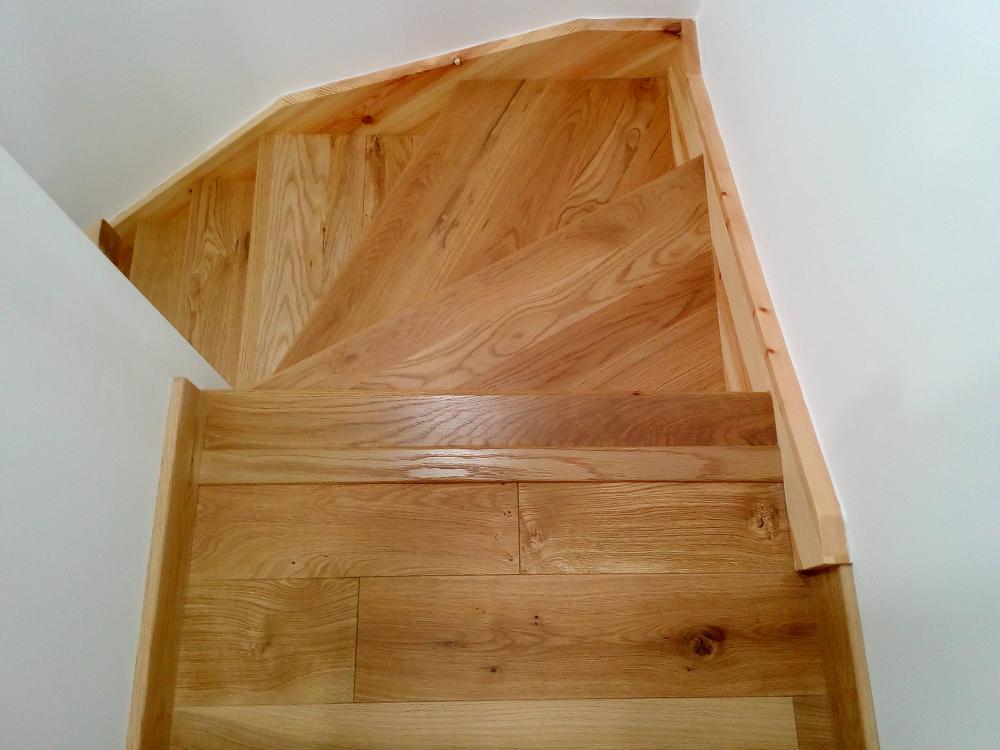
See picture below of how we did ours, exactly as you propose: 20 mm top oak tread. 2mm underlay and 18mm oak flooring. Expansion strip over join.
-
Their test certificate is dated 2010, and the list of certified treatment plants is a lot lot longer than the list above. http://www.britishwater.co.uk/Accreditation-Certification/certified-equipments.aspx I'm guessing that the list above relates to units tested over a certain period of time. Sadly, the list doesn't give the actual performance data. When we discussed this on the old forum, member JIH posted this in respect of the Biopure: Have managed to get figures from Biopure for their treatment plant: BOD 10 mg/l; SS 19 mg/l; NH3 10 mg/l which seem broadly in line with the test figures for the WPL Diamond, which visually at least is probably the closest match.
-
Interesting that what appear to be the most heavily promoted / biggest name in the industry - Klargester - have the poorest results for BOD and SS. It's something I picked up on when making my choice as Klargester was the easiest unit to get hold of in my location (supplied by all the BMs). My decision to go with the Biopure was in part because of its performance but also because they were willing to deliver to my location (others simply refused or would only deliver to a mainland port).
-
Certainly worth keeping anything with a decent face on it. Very useful when it comes to your landscaping - see my blog for how we used a lot of the larger rock that we dug up:
-
Absolutely, I pre-oiled all of our facings. When fitted, there was inevitably some orbital sanding at mitre joints to get a smooth finish. Two very quick successive applications of oil on a lint free cloth was all that was required to re-finish.
-
Compared to the varnish I was looking at and tested, Osmo was a lot lot easier to use, and only needed two rather than 3 coats applied, so overall I found the cost premium reasonable / justifiable in terms of my budget and the time I was willing to spend on the task.