LnP
-
Posts
449 -
Joined
-
Last visited
-
Days Won
2
Everything posted by LnP
-
The BNG assessment performed by an ecologist should be with the planning documents on the LA planning website. Talk to the ecologist who did the assessment and ask them. You could also ask them if they think you'll need to revise the assessment with your revised design and if so how much it would cost.
-
Good to know thanks. Who did you put down on the BC submission for BRPD?
-
Is this to do with the new requirements for roles under the Building Safety Act 2022 and Building Regs? Confusingly, we now have Principal Contractor and Principal Designer under both Building Regs and CDM and the roles are different - four different roles. None of this was written with self builders in mind, but there's guidance out there for how self builders can manage CDMPD and CDMPC roles. I'm clear how I'm going to do CDM, but I'm not at all clear what I have to do about the BRPD and BRPC roles. Has anybody seen good guidance on BRPD and BRPC roles for self builders?
-
Fill your roof with in-roof PV panels instead of pantiles?
LnP replied to Alan Ambrose's topic in Photovoltaics (PV)
Getting back to the OP question about economics of tiles vs panels, according to the guidance I posted, you should include the cost of a fire resistant covering: Ensure roofing materials are non-combustible* OR if installation on a combustible or partly-combustible roof is unavoidable, then apply a fire resistant covering. * Class A1/A2 s1, d0 to BS EN 13501-1 In practice what would be the best way to achieve this? Fibre cement sarking boards? Are installers doing this? -
Fill your roof with in-roof PV panels instead of pantiles?
LnP replied to Alan Ambrose's topic in Photovoltaics (PV)
Guidance here https://www.thefpa.co.uk/advice-and-guidance/free-documents?q=RE3 - Rooftop Mounted PV Solar Systems -
I've not got to that point yet. I agree it looks easy to do yourself, but if you're looking for help, Andrew Jones https://www.vat431.co.uk . He might help you find things you can claim which you might have missed. Or he might help you avoid claiming things you can't claim and getting it rejected. Give him a call and discuss your situation. He's very helpful. He has a sliding scale of charges depending on how much the claim is.
-
What's the case for not getting an ASHP?
LnP replied to kentar's topic in Air Source Heat Pumps (ASHP)
I'm as cynical about politicians as the next person, but credit where it's due ... I'm surprised that so far nobody has mentioned that our parliament passed the Climate Change Act in 2008 which requires us to achieve net zero by 2050. They also set up the independent Climate Change Committee to advise and audit our progress. The CCA was cleverly written. Other jurisdictions set targets for particular technologies - e.g. how many GW solar PV by a certain date. The CCA set carbon budgets. The CCC periodically define the carbon budgets and propose pathways to get there. The great thing about this is that, when the CCA was written in 2008, nobody could have imagined how the cost of wind and solar would fall. At that time it was all about nuclear and bio-methane. Bu by setting CO2 budgets, it has allowed parliament to adopt different policies as the landscape has changed. It has been very successful. The CCC recently published their 7th carbon budget. All previous ones have been met. We've halved our CO2 emission since 1990 ... and no it hasn't all been by off-shoring. Carbon emissions from power generation are a fraction of what they were. Cheaper more secure energy, what's not to like? High electricity prices, yes desperately needs sorting, but it's a legacy of the "dash for gas" in the 2000s. Worth reading more here https://www.theccc.org.uk And listen to Emma Pinchbeck, CEO of the CCC here https://www.cleaningup.live/net-zero-isnt-impossible-its-the-key-to-uk-prosperity-ep202-emma-pinchbeck/ -
What's the case for not getting an ASHP?
LnP replied to kentar's topic in Air Source Heat Pumps (ASHP)
The legal test in UK law is whether risks have been managed to be as low as reasonably practicable (ALARP). It’s most familiar application is under the Health & Safety at Work Act. So I wonder I wonder whether in a work place setting, the HSE would expect to see heating by a heat pump rather than gas. -
What's the case for not getting an ASHP?
LnP replied to kentar's topic in Air Source Heat Pumps (ASHP)
The engineering company Arup did a quantitative risk assessment comparing the risks of natural gas boilers compared to hydrogen ones. Natural gas ones were their base case. Their model predicted 17 individuals killed or injured per year in GB from gas explosions. This excludes explosions related to appliances by for example, people leaving gas hobs unlit. It would be valid to say that replacing all gas boilers with heat pumps would save 17 fatalities or injuries per year in GB. They didn't include CO poisoning so in this respect they underestimated the risk of gas boilers. I wouldn't like to comment whether the risk is "massive", but it's clear heat pumps are safer than gas boilers. -
There is a gap between the two pieces which are to be welded together. Throat thickness and leg length don't mean much if the welder is trying to fill the gap with weld. The two pieces have been bolted up incorrectly.
-
Boiling water tap - Quooker alternatives
LnP replied to canalsiderenovation's topic in General Plumbing
It's worth thinking about whether you're happy to drink softened water. I'm not an expert and can't give advice but in principle, water softeners work by exchanging calcium and magnesium ions for sodium ones. So e.g. calcium carbonate is converted to sodium carbonate. Calcium carbonate precipitates out when you heat it, i.e. hardness, but sodium carbonate is completely soluble, so stays in solution. The harder the water, the more Ca and Mg ions need to be exchanged and the more sodium ones will be in the water. With a water softener you'll be consuming more sodium ions and the harder the water is, the more sodium ions you'll be consuming. I found this from Kinetico. -
External camera to record the progress of the build
LnP replied to Indy's topic in Networks, AV, Security & Automation
I think I’ve found the answer to my own question. Some cameras have a time lapse function and some don’t. Most GoPro and Reolink cameras have it but not all. My Eufy one doesn’t. -
External camera to record the progress of the build
LnP replied to Indy's topic in Networks, AV, Security & Automation
Is it straightforward to get a time lapse video from these cameras? I have a Eufy set-up comprising a doorbell, external and internal cameras with events stored on a Eufy Home Base and I could use this kit during my build. I can view events and real time video on my phone and manually screenshot to my phone photo album, but I don't think there is a built-in time lapse possibility. -
Week 12 - Windows, doors, battens, roof, …and more insulation.
LnP commented on Benpointer's blog entry in Contemporary build in north Dorset
“Luck is when preparation meets opportunity”. -
Week 12 - Windows, doors, battens, roof, …and more insulation.
LnP commented on Benpointer's blog entry in Contemporary build in north Dorset
Really enjoying your blog. You're clearly doing a great job of the project management. I hesitate to ask, as you already have enough on your plate, but I'd be very interested if at some point when you have a minute to spare (🤣) if you shared some of your knowledge on how to do that well, what tools you use etc. -
TA has spec'd 150mm Kingspan TR27 for garage flat roof. Cheaper options?
LnP replied to flanagaj's topic in Heat Insulation
I was building a flat roof very similar to yours with a parapet around the edge. The DPC was in place and copings had been installed but not yet pointed when we had a couple of days of very heavy rain. I had water dripping through light fittings in the room below. Water was getting past the copings because they hadn't been pointed yet and the DPC had not been installed properly. The builder had to take off the copings and a couple of courses of bricks to install the cavity tray with weep holes and sort out the DPC. It's belt, braces and a piece of string. It's quite likely the pointing will eventually fail so if you don't have the cavity tray, all you've got is the DPC. A cavity tray with weep holes is very cheap and easy to install during the build, not so easy to retrofit.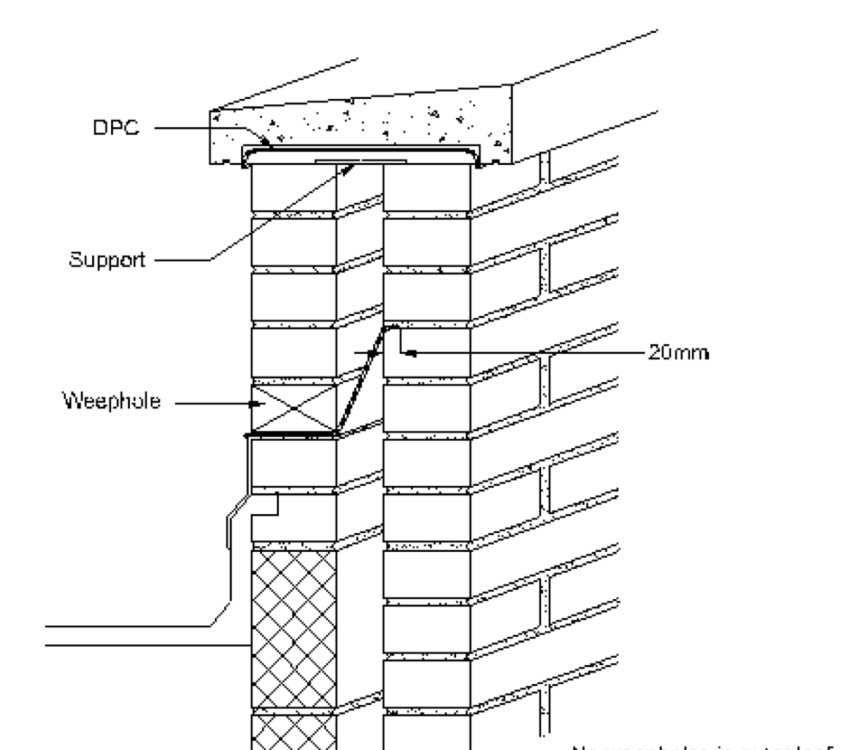
-
TA has spec'd 150mm Kingspan TR27 for garage flat roof. Cheaper options?
LnP replied to flanagaj's topic in Heat Insulation
Should there be a cavity tray below the coping in the parapet?
-
I've read that rather than fixing micro inverters or optimisers to the PV panel battens, it's better to bring them into the roof space so they are accessible for maintenance. This is because if (when?) they fail, you can access them more easily. If they're on the outside of the roof, you'll have to use a scaffold to get up there and lift panels to get to them. This is straightforward if you have internal roof space behind the panels, but what do you do if the panels are over a vaulted ceiling?
-
Further information, it looks like they're making an orderly exit. If anyone had an order then they had to have it delivered by the 31st October, if not then a deposit would have been returned. But yes, sad for people who've lost their job.
-
It's been mentioned on here before, but now confirmed. I got an email today from a Potton sales manager telling me they have ceased trading. Kingspan is pulling out of Potton and as of the 4/8/25 is no longer trading. There is potential for someone or a company to come in and buy it and build it back up, but there are no time lines to this. I think I'm right in saying they sold more self build timber frames than any other company and were the cheapest of the ones I looked at. My thoughts: Relieved I don't have an ongoing project with them. If things had gone faster with our planning application, it is quite possible that we might have. But I wonder what this means for people who do have an ongoing project, paid a deposit etc. They haven't gone into liquidation as far as I know, so perhaps they will stand by existing commitments. It is a reminder of the financial risk with timber frame, with substantial payments required before the frame is delivered. Does it tell us anything new about the need for financial due diligence of timber frame companies or how to do it to avoid getting caught? With Potton's capacity removed from the market, will there be ripples out to other suppliers in terms of price and delivery times?
-
3 days for a joiner and a labourer, round here would be about £800 or £900.
-
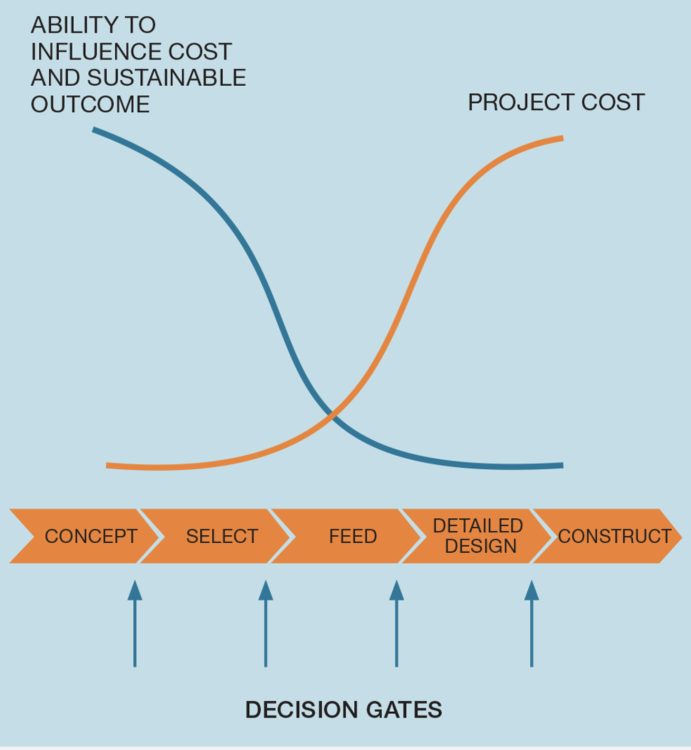
Good advice. It's like any project I suppose.
-
Potton no longer making kits for self-buiders? Where did you hear that? It's not my experience. I'm currently evaluating quotes and they are still engaging with me.
-
MVHR and cooling
LnP replied to flanagaj's topic in Mechanical Ventilation with Heat Recovery (MVHR)
Can anybody recommend a good way to calculate cooling load? There are a few tools on t'internet, but it seems to be more complicated than heat loss. -
Is it worth having a gas connection for self build house?
LnP replied to Wadrian's topic in Central Heating (Radiators)
You've landed on two of the least trustworthy commentators on matters related to climate change. I wouldn't trust The Daily Telegraph journalism on climate change, net zero or heat pumps ... or much else to be honest. They have a well documented anti green track record. See this criticism for example from Desmog. And the Global Warming Policy Foundation are no better. Just look at who their trustees are - founded by the late Nigel Lawson, Tony Abbott, John Redwood ... all renowned climate sceptics. They share real estate at Tufton Street with other right of centre lobby groups. You're better off with the real world and honest advice you get here on Buildhub, for example @JohnMo 's well argued post above 🙂.