


LnP
-
Posts
449 -
Joined
-
Last visited
-
Days Won
2
Everything posted by LnP
-
Remote DNO Kiosk, need cable to consumer unit indoors
LnP replied to Post and beam's topic in Power Circuits
I've got a 3 ph supply and my electrician recommended this kiosk from Meter Boxes UK. W800 x H1064 x D320 mm current price £684 incl VAT and delivery. It seems robust enough and will be big enough for all the 3 ph stuff - don't have everything in there yet. -
Since you will be self managing, you will be the Principal Contractor. There’s a nice summary what that means in the examples section towards the bottom of this guidance from the Self Build Portal. You’re responsible for the matters in Part 4 of CDM, which shouldn’t be difficult for you as you’ve managed building sites before. Regarding the Principal Designer role, it’s nice that your architect agrees that they have been responsible for that. Once the construction phase starts, the PD’s work is mostly done. The PD now just has to hand over the H&S file to the PC. Ask them for it.
-
@nod Please share it in the forum rather than DM. I imagine there's nothing confidential about the size of your plant room!
-
I wish I (or my plumber!) had known about manifolds on DHW systems. I've got a boiler which is a long way from the kitchen and it takes ages for the hot water to come through.
-
That's a pity. Are they 2G or 3G?
-
Update - I had paid PWC with a credit card, so I made a Section 75 claim against the credit card company .... and they have refunded my money, all £905!! Very happy😁.
-
It's a good point. The safety requirements apply also to residential/domestic situations and also to gates which swing. The place I bought my equipment from gave me good advice on what I needed to do to comply.
-
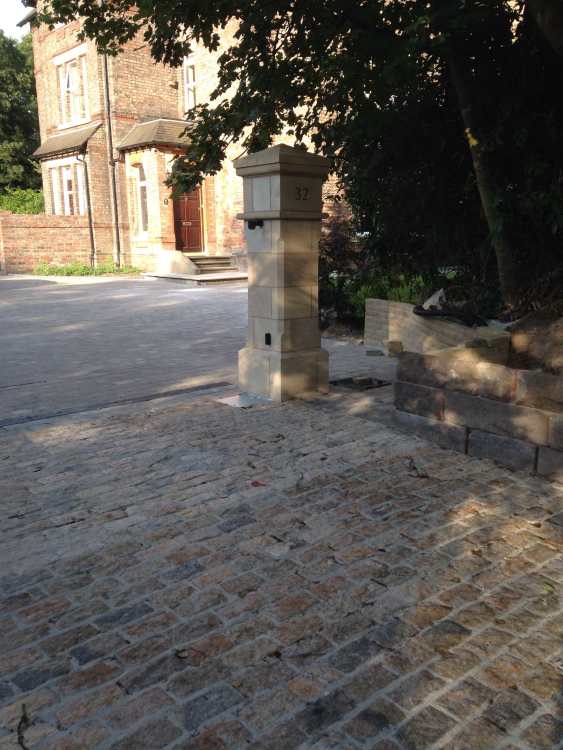
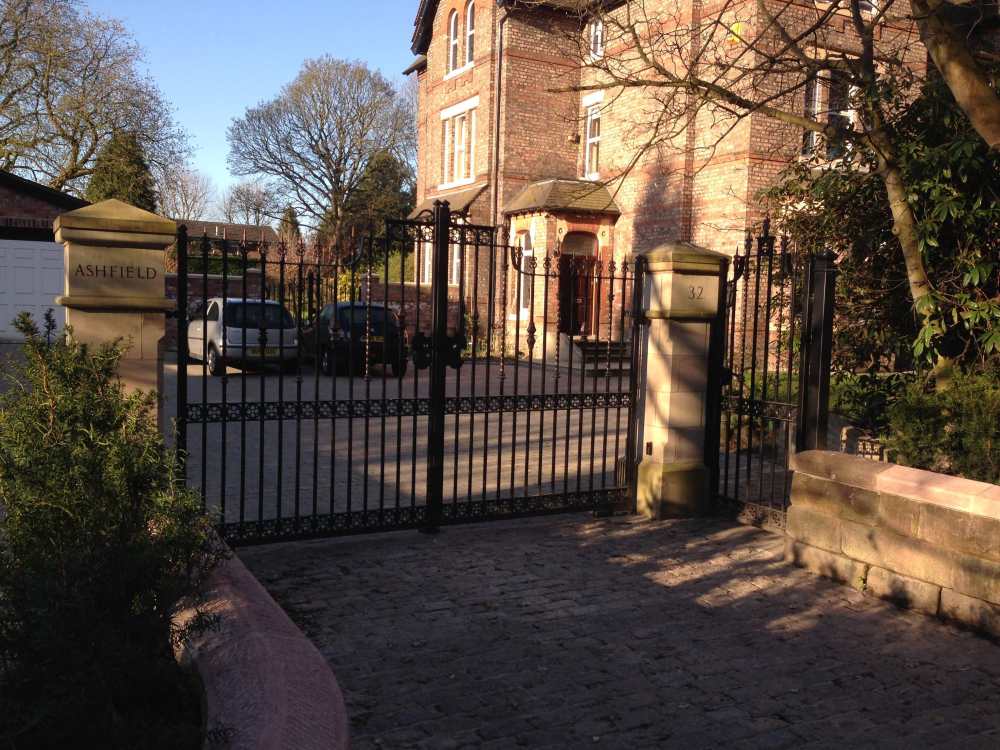
Same as Onoff, I cast 100 mm galvanised steel box section posts into the foundations (1/3 in the ground, 2/3 above) with a bracket on each one welded to it for the top hinge - possibly over engineered but these gates were pretty heavy! I then had the stone pillars built around the posts, with the top hinge bracket projecting out. The stone pillars didn't have to take any of the load. You'll need to lift some of your blocks to set the motor boxes in the ground. As Nod says, a lot of the weight of the gate is taken by the motors at the bottom, so you might be OK fixing the top hinge to the brick pillars with the right kind of fixings. I brought the wiring for the infra-red proximity sensors up the posts and out through the stone blocks, so the wiring would be hidden. Before you laid the blocks, did you put in the conduit for the electrics and control circuits? Btw, I think a pedestrian gate is essential if you don't want your Amazon parcels lobbed over the gate when you're not home.
-
I just checked back in my receipts. In 2018 I did a shower with two sheets of Versital, 2250x900 and 2250x1200. It was £1600 incl VAT. That was just supply of the sheets. The plumber had to fit it including drilling the holes for the shower. It's very easy to install though, provided the walls are flat and square. It's the same kind of material as kitchen counter tops, so if I was doing it again, I might see if one of those could supply it. Might be cheaper from them? So it is expensive, but we were happy with our choice. We didn't like the feel or look of the laminate panels.
-
I've used stone filled resin panels like this one from Versital. IMHO it has a superior quality feel to it compared to laminate products like Multipanel. Probably more expensive though.
-
Barn conversion on five acre plot in Northamptonshire
LnP replied to Owain1602's topic in Introduce Yourself
Take a look at the de minimis exemption - habitat impact of less than 25 m2 of area habitat and 5 m of linear habitat. If the new building is on the footprint of the old one, that should exempt you. -
If the suggestion is that developers are doing that so that the baseline has less habitat, I don't think that would work, because (quote from here). Within Schedule 14 of the Environment Act, which sets out the biodiversity gain condition for development, measures are included that allow planning authorities to recognise any habitat degradation since 30th January 2020 and to take the earlier habitat state as the baseline for the purposes of biodiversity net gain. In order to ascertain the habitats present and their condition on 30th January 2020, aerial imagery or data sets from that time could be used. 30th January 2020 is the relevant date as it was the day the Bill entered Parliament.
-
Starting the build - what do I need to do wrt Utilities?
LnP replied to Indy's topic in General Self Build & DIY Discussion
Yes, I think this is probably the extent of the information which Thames Water have. It was the same for me so I got a CCTV drain survey done to find out exactly what I had on my plot. It was only £250 + VAT and they provided a written report with a map showing where the drains are and the CCTV files. It's been invaluable information. Good value, maybe because they expect to get remedial work from what they find - their assessment of what they found was quite pessimistic. -
Starting the build - what do I need to do wrt Utilities?
LnP replied to Indy's topic in General Self Build & DIY Discussion
Check the drawings held by the utility and get a drains survey done in case there are drains which are not on the drawings? -
Starting the build - what do I need to do wrt Utilities?
LnP replied to Indy's topic in General Self Build & DIY Discussion
I agree with everything @Conor said but would add ... We're doing the same kind of project (demolish and rebuild) and will live on site during the build in an outbuilding which we've fixed up. The outhouse is heated by a gas boiler and we need all the utilities to keep going during the build. I decided to move the gas and electricity meters into new free-standing permanent boxes on one side of the plot. I decided to upgrade the electrical supply to 3 ph after playing around with this demand calculator. Our water meter was in the old house which was built in the '60s. I asked UU to relocate the meter to a box in the street by the stop valve which was straightforward. Don't recall the cost but it wasn't much. I was wondering what to do about the phone/fibre connection which is still in the old house where we're still living. Haven't sorted that yet. So apart from that, I'm now ready to isolate and demolish the old house and keep all the utilities going to the outhouse. -
Just an update. Another client of my planning consultant has been told by his mortgagee they will not lend him the money if he signs the UU. Not surprising, since it would mean that if he defaults on the loan within three years, they couldn't repossess the house without the permission of the local authority. Since most self builders require mortgages, Warrington Borough Council's policy of requiring a UU effectively eliminates the possibility of self build for most people in Warrington, unless they do the BNG demonstration. I spotted that there is a de minimis threshold specified in the Planning Practice Guidance. BNG is not required if the impact on the site is: Less than 25 m2 of on-site habitat; and Less than 5 m of linear habitat (hedgerow) In our case, the new house will be placed on the footprint of the existing house and its surrounding hard standing, so there is no impact on habitat and BNG should not be required. I've asked my planning consultant to try that one with the LPA.
-
I completely agree about keeping one's eye on the prize. The case officer has also raised concerns about our proposals which our planning consultant thinks are not valid. Nevertheless, we're prepared to make the requested changes. But signing this UU is not something you can appeal. Once you've signed it you're committed. I'm not prepared to lumber myself and potentially my family with these onerous obligations which as far as I understand, the LA have no legal basis for imposing.
-
No. For your particular site, you have to follow the Small Sites Metric scoring system prescribed in the guidance and use their spreadsheet, both available to download here.
-
It's Warrington. I'm attaching their proposed agreement. Our application was accepted as valid and they subsequently brought up the need to sign this UU. I'll discuss your suggestion with our planning consultant. Self Build - draft UU26.9.24 - FORMATTED 16.10.2024 CLEAN (1).docx
-
We’ve already had the bat survey which was money for old rope. This is another nonsensical professional fee. £1500 was just a guess btw.
-
Indeed. They’re just making this up as they go along. There’s no legal justification for what they’re doing. Good idea to take it up with local councillors 👏.
-
Not sure if you’re up to speed on this. It’s about new requirements which came into force April 2024 about getting an ecologist to assess how you will achieve 10% improvement in biodiversity. They have to use a very prescriptive scoring system. It’s not just about planting a few trees, although that might be all that’s required by the assessment.
-
My wife and I have a planning application in the system which has been received and confirmed valid by the LPA. The application was made on our behalf by a planning consultant, who is very experienced and knows his stuff. As allowed by the regulations, we claimed exemption from having to demonstrate biodiversity net gain on the ground that it is a self build. The LPA are concerned that we might be cheating and that it is not a self build. Initially they asked my wife and I for a letter saying we're building the house for ourselves and will live in it, which we did. In the meantime, they have decided as a matter of policy that all self builders claiming exemption from BNG will have to enter into a Unilateral Undertaking with the following terms: we have to pay their legal costs to execute the undertaking and they don't say how much that will be; if there is a mortgage, the mortgagee has to sign the undertaking as well; they will put a charge on our house; we cannot dispose of the property for 3 years. the only get out is that in the event of a "change in our circumstances", the council may "act reasonably" to release us. I think this is outrageous over-reach on the part of the council and it raises all kinds of issues. What happens if my wife and I need to go into care and need to sell the house fund it? What happens if one of my children who does not live nearby has a problem with childcare and we decide to move closer to help? What happens if we die? What will mortgage companies make of this? Anybody any thoughts or experiences on this? Maybe we just swallow the ~£1500 for an ecologist to do the study and whatever the requirements are to achieve the 10% net gain. Our project is to demolish an existing 1960s bungalow, so the baseline will be low and things we would anyway have done will probably achieve the required gain.
-
Jensen C-V8. Very nice. So could the car in the banner picture be an Interceptor ... or maybe an FF?
-
You can get cost estimates with dimensioned planning drawings from e.g. Estimators Online.



