


mike2016
-
Posts
647 -
Joined
-
Last visited
-
Days Won
4
Everything posted by mike2016
-
Not come across them before. They seem to provide a last leg buffer using PCM to minimize the initial cold water out of the shower. I guess it depends how long your hot water run is and if you're using twigs or branches vs a pumped hot water circuit? I've been looking at heat recovery units that provide heat reclamation for the currently running shower. Nice alternative though.....
-
rear porch ideas needed...
mike2016 replied to Tennentslager's topic in New House & Self Build Design
You'll need to consider that downpipe, the electric outlet for the outside light and the two vents. Which way is south? I'd take the new roof up higher so you can look out of the old back door through a skylight over the lower outside rear door. But that might block some light into the rear downstairs window? The photo example you have is nice, the level change would need to be looked at and it's very modern compared to the dashing on the rest of the house..... Maybe a twin ramp with a railing outside the new rear door? ramp - level area with railing opposite new outside rood - ramp? Do you step down inside the new porch or outside it? Will the new door open inwards or outwards? Lots to think about! -
A lot of tiny homes have the same issue. I recall that they recommend purging the air by opening all the windows daily. There's an article here worth looking at: https://tinyhousebuild.com/how-to-save-your-tiny-house-from-mold-and-moisture-issues/ Some type of active ventilation will most likely be necessary.....there's one mentioned in treehugger: https://www.treehugger.com/tiny-houses/leaf-3-tiny-house-designed-seriously-cold-climates.html http://www.lunos.de/en/product/e_with_heat_recovery/ Less ducts but any active system would help.....you need to move air through the property if possible.....
-
So, after talking to the Architect and a Passive House expert we've added louvres above the upstairs windows as already mentioned and plan to add one more above the downstairs bedroom. I'll look into planting a deciduous tree in the front garden to block the midday summer sun just as it's getting stronger. I've also asked about an overhanging front roof / extending the zinc porch over the downstairs bedroom window as an option/feature. I got the window sizes and they made both side and front doors glass which is not a runner so that will help when they are removed from those overheating calcs. I might tinker with the G value on the bathroom window (downstairs) but we'll see. The Architect modeled the house with an ASHP and alurads. I've been assuming underfloor heating but there's little need, about 500w max to keep 20oC when it's -3oC outside. The house is only 108 meters squared. I'm still keen on the SunAmp with underfloor as it gives me the full thermal storage for hot water if I don't use it for heating the house which is nice. I'm not currently planning an ASHP so will see how I go after 12 months without it. It was suggested to have removable louvres so you only put them up in Summer which is a nice idea! Thanks for all the suggestions and all good comments, great that there's lots of options and I hope this will help others with their range of choices too.
-
I see this topic in the self build magazines a lot!! Like anything each method has it's own Pro's and Con's! Balance that with the skill of the team doing the build and the end results can vary! I think noise can be an issue with timber frame, slamming doors, impact noises throughout house etc compared to Block/Brick/ICF. I believe brick/block is a also a cheaper option. That said, in my case I'm very keen on timber frame and I'm taking steps to deal with interior noise and will live with the issue of doors slamming....ensure a solid staircase etc. Actually not having a preference puts you in a stronger position as you have a wider range of potential companies to choose from.....picking the right one should be more about the relationship and confidence you have in the company / builder with price to guide you than the type of build. Once it's all plastered and covered up it's a home. Unless you want to keep one section unfinished to show everyone?! Best of luck!
-
Nice looking house - is that two houses or one? Hope you get the issues sorted and find a reliable groundworks contractor. Welcome to Buildhub!
-
Well, finally after years of iterations of drawings in the pre-planning and planning phases we're off to the races! Before I post the final plans I was talking to the Architect today about the potential for overheating shown by the PHPP calculations. I'm going for a Passive House and my concern was rising global temperatures (during the build and more likely afterwards!). The PHPP package allows for 10% of days where the internal temps can rise over 25 degress celcius. That's a lot of days! Not so comfy! The Architect initially aimed for 5%. We delved into it a bit further and I challenged them to improve on this. I did discuss the 3M film which cuts down on long wavelength IR, i.e. drops your Windows G value right down and no more overheating, but, you don't get solar gain in the cooler months either! Bit of a tradeoff. The G values they are using for me currently are 0.6. Other U values are as follows (based on timber framed construction): Floor = 0.12, Roof = 0.1, Walls = 0.125, Doors = 0.96, Windows = 0.84 (These are just placeholders but fairly typical and not hard to meet) I get an A2 rating from the DEAP package which is my preliminary BER. To meet Part L I need one, yes "1" solar PV panel, go figure! Add 5 more panels and I go up to an A1 BER rating, the highest. This assumes a standard Heat Pump and MHRV etc. I'll investigate Passive House Plus / Premium at a later time as that encompasses energy consumption & renewable generation. I should fit 8 panels on the roof comfortably, I'm hoping for more in the back garden at some point. Anyway, what was I on about - overheating! 5% was a bit high given that when I asked them to switch the climate data from Dublin to London it shot up to 13%. Scorcher! By 2050 I wouldn't be surprised if that was the result for this house without a physical move! I want to build for more than today and one generation. The 5% figure is based on having internal blinds on both the rooflights and south facing windows, and opening the windows in the evening to cool down the house if I understood correctly. And that's if you're home during the day otherwise if you forget to pull the blinds you'll be roasted coming home. The MHRV can help a bit but just can't deal with the heat load on a really hot day. I needed to find out what were my options and get that % right down.... I'd read here about the successful use of 3M prestige window film. It drops the G value in half which denotes the level of solar gain the window lets in. The only drawback is while you're cooler in the summer you'll pay for that in winter = less solar gain when you really do want it! It still might be useful for one or two windows and certainly if the temperatures soar over the next decade or two worth introducing then. External shutters are very common on the continent but rarely used in Ireland. As it's the front of the house this could be a planning battle but is it one worth having? You would have to go back to the planners later if so..... Brise Soleil if I've spelled it correctly are those overhanging louvres that are angled to block the worst of the summer sun. With these in place and this is the strategy the Architect is aiming at, it reduces overheating periods to 2%. Then if you start opening windows etc it get's it down to 1%. Blackout blinds are available for Velux rooflights but while they can be motorized, they aren't automatic. Even though the roof lights are on the north facing side, the angle of the summer sun will bring in light and associated heat during the peak months. Internal blinds are of course most likely mandatory but unless they are also automated, they might miss the period of time that would prevent an overheating event. So, right now we're looking at Louvres and internal window blinds. I did see some nice external blinds but these would have to take the weather and I'm not sure if outward opening windows would be compatible? Inward opening windows I feel would leak over time as the seal is pushed in with wind/rain over the years. But that's a different discussion! The front of the house faces just off south at 204 degrees. There's a zinc half porch over the front door and glass window beside it. The windows themselves are tall rather than wide so I'm not sure the Louvres will offer as much protection during the shoulder months but that's probably for the best. The PHPP package was used to drive the 2% with the proposed Louvres size so as long as they stay on the house and don't fly off in the wind, they are probably the solution I'll stick with. Unless the planners have their say! Maybe all I need is electrical windows that darken with a switch....!
-
Different hob option? Find out from the manufacturer what the max load for each zone is and how to stay below 4kw? Risky though if someone puts on a full load on all zones Look at running 6mm - where can you chase cable / remove a unit to make a hole? Maybe the 4mm is actually ok....(no idea myself) An idiot suggestion - Move the hob out to below the distribution board...?
-
I looked at doing the PHPP course but it's a 5 day commitment and in the end due to time and money constraints I've let my Architect do it! I'm interested in getting the worksheet once it's ready and going through it to understand how it operates and challenge the Architect to try different climate sources (SE England vs Dublin for instance) to see what mitigation could be incorporate for extreme weather events. I still can't get my head around the low space heating requirements for passive houses, I'll probably still be scratching my head living in one a year later! 15 kwh per m2 per year?! That's ridiculous vs standard houses.....A guy I know down the road designed a H shaped building and then did the PHPP course. The design was a challenge and he was too far along to change it but he did a lot of value out of the course and it help tweak things he was still able to change. I only found out about Passive Houses by accident, until then I thought a house was a house, how much have I learned since! Good luck on your journey!
-
Hi,I Read a good book - "Wind Energy for the rest of us: A Comprehensive Guide to Wind Power and how to use it" - by Paul GipeBasically the summary is that it's all been tried before, an amazing new urban solutions are unfortunately usually smoke and mirrors. Most are now tied off and non operating. There's a reason the wind industry currently builds wind turbines on 100+ meter towers with 3 very large blades and he explains how this developed very clearly. I would suggest checking out the book and see where the industry has come from before making a purchase decision. If you have enough land a standard domestic wind turbine would be a better bet once you have taken an extended set of measurements of the wind power (6-9 months at the proposed height of the turbine) to ensure you can generate the kWh you purchase! Wind is great and a free resource but taking advantage of it to generate power (vs pumping water/milling) has taken a century of trial and error to get right . There's always a new never heard of idea that's promoted, particularly over the last decade fooling entire Governments, Departments and companies into chasing them down (New Zealand Pension fund lost $50 million investing in the Ogin ducted turbine) and guess what the Ridgeblade system appears to me to be....a ducted turbine! And how does it handle overspeed in a storm? It can't be furled....there goes your roof!I may be wrong but you would want to see actual site installations and independent testing results before considering.....As with all things - it's Buyer Beware.... Now if you could mount your house on a turntable so it always favors the best wind direction....
-
Thanks! Got myself a basic draper one that should do the trick...
-
Hi, Plumbing 101 question! I fitted a water filter under the kitchen sink which feeds a separate tap. The new tap is still a bit loose and can swivel easily. I need to tighten the nut under the sink but it's at the back left of the sink unit. Simple question - what's the best tool to use? Should I buy a basin wrench or try with a pliers? Thanks!
-
We're recommended by the council to have 24 hours supply in the house. Lots of leaks all over Dublin and they occasionally drop the water pressure or cut it off entirely due to supply issues. Only going to get worse unfortunately with 11,000 more houses planned beside me... I'm planning to collect rainwater, rather than shower water and reuse it in cisterns / washing machine. Prefer a header tank rather than direct from underground storage tank to avoid cycling the pump every time I pee...!
-
Hi, I've been assuming that I'd put the mains water tank in my attic along with a grey water header tank. I was just reading an old Passive House Plus magazine (issue 15 Ireland page 37) and noted one builder put the water tanks for his development in an insulated shed? at ground level so it can't burst and drain water through the house. It got me thinking....are there any pros/cons to siting the tank in the attic (water pressure?) vs at ground level provided space can be found for it. Would you put it in a shed at the back of the garden or a garage? I'm planning to use PEX but if the connection to the attic tank dislodged or failed, that's a lot of water in a timber framed house to lose.... Thoughts?
-
Say 19kWh of storage....
-
Just thinking about ways to recharge the 3rd Gen: It's typically off peak electricity and solar PV isn't it? I was just wondering if it would make more sense to put the PV and off peak through an ASHP and use that to recharge the SunAmp? You could set the threshold for when PV is used which will be more variable (so you're not using more expensive daytime grid electricity to cover the difference). I like the idea of getting a better COP during the daytime with free PV and then the cooler night & off peak 'leccy. It's just that ASHP COP multiplier vs raw 1:1 charging that's very tempting. Of course there's the cost of the ASHP but still, if they got cheap enough? I was also wondering if there's any use case for solar thermal to charge the SunAmp directly - you'd loose some PV panels and the temperature would also be affected by the seasons....?? I see the 3rd Gen can recharge via AC or DC - any advantage to one over the other bar inverter losses? Unless you've a DC circuit in the house for lights etc would DC limit consumption to the SunAmp only - I'd imagine the AC route would open the use of power to the wider house/car etc. Would it make sense to dedicate some panels to SunAmp? I'n on mains gas so have options to consider for recharging, I'm just trying to avoid directly fossilizing (?!) my heating...! Thoughts anyone?
-
I was just talking to Andy in SunAmp about this very thing today! He recommended living in the house for 6-12 months (including 1 winter!) with just the Sunamp (Gen3) , PV and off peak electricity and see how I get on and add a high temp ASHP later if I need it. I like this evidence based approach. I can plumb/wire for an ASHP during the build and give myself that option. I'm currently finishing the floor plans so wanted to figure out where things could go and the potential footprint mainly. He recommended locating the Sunamp as close to the manifold and ASHP as possible as I won't have underfloor heating upstairs. I'm building passive so simplifying the heating system and using PCM would be high on my wish list..... I'll be interested to see if my final DEAP / PHPP figures influence the solution, I plan to have 2-3 occupants, 108 sq meter house. I'll be honest the solution compared to oil/gas boilers is strange to me but looking forward to trying it out someday!
-
Interesting about the air gap for regs - I'd have the thought the space between the shower head and the drain would have met that requirement (!), the fact you're dealing with flows in completely separate pipes - shouldn't matter if they snuggle closely, do they think you'd have two pin holes exactly opposite each other I wonder?! The kit I looked at above is over 1K so that might knock things back. I'm going passive so unless one of the showers is going to be used multiple times a day I'm less enthused but still like the idea of it. Great to hear about one in action though, between my plan of ashp & pre-heat, sunamp pv, inline water heater (Thanks JSHarris) and this heat recovery I think if I get this all working one day of setting up a shower challenge with Jack and see how long we can run the hot water for.....pruned to bits but shower happy!
-
Hi, Has anyone installed a heat recovery unit for the shower / wet room? Just wondered if it's worth the effort / risk of failure vs marginal waste heat recovery? I was looking at the Passive House component database and they had a section on it, this one caught my eye as it was the best performing (just listed as an example only): http://www.showersave.com/qb1-range/ I might look at including something similar in my build, a horizontal one for the wet room and the vertical one for the ensuite shower. Just curious what people's thoughts are on these generally?
-
Great insight into commissioned a MVHR! Thanks.
-
Thanks! Didn't even know about "soft" copper, would've been a disaster so! I'll get a suitable compression tee then and work off that. Much appreciated!
-
Hi, I bought a water filter kit for under the sink - reverse osmosis & uv (cherry flavoured!). Anyway, I can fit it under the sink after taking out a shelf but I'm worried about the saddle valve after my escapades last year with plumbing.... The hot water feed pipe is straight enough but the cold water feed bends a fair bit. Both are copper. My concern is getting a good seal with the Saddle Valve and avoiding leaks. Are Saddle valves prone to failure? Would a T-Piece be better? There might be a place to install it on a short horizontal section that tees off the cold feed and goes out the back wall of the house to a tap there, I'll have to remove the thin-ply at the back of the sink cabinet to see it though.... Any thoughts appreciated. Pictures: Under Sink Two feeds to mixer tap - left is hot, right (bendy one) is cold View from Left - potential connection points off cold feed - lower is larger 22mm? feed to attic cistern probably, upper one is smaller bore to outside tap:
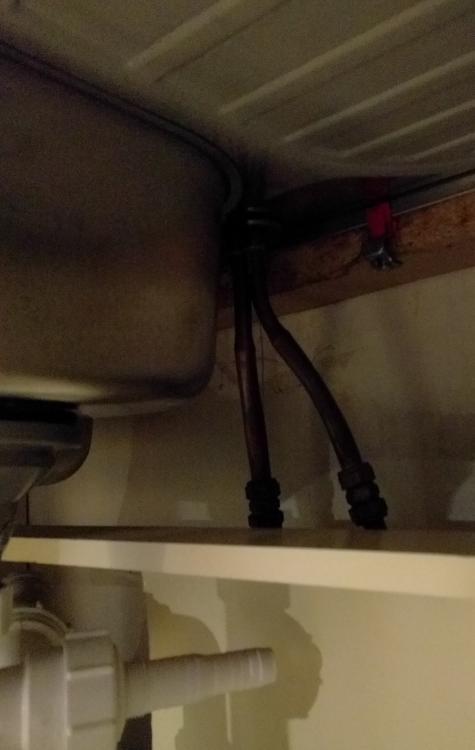
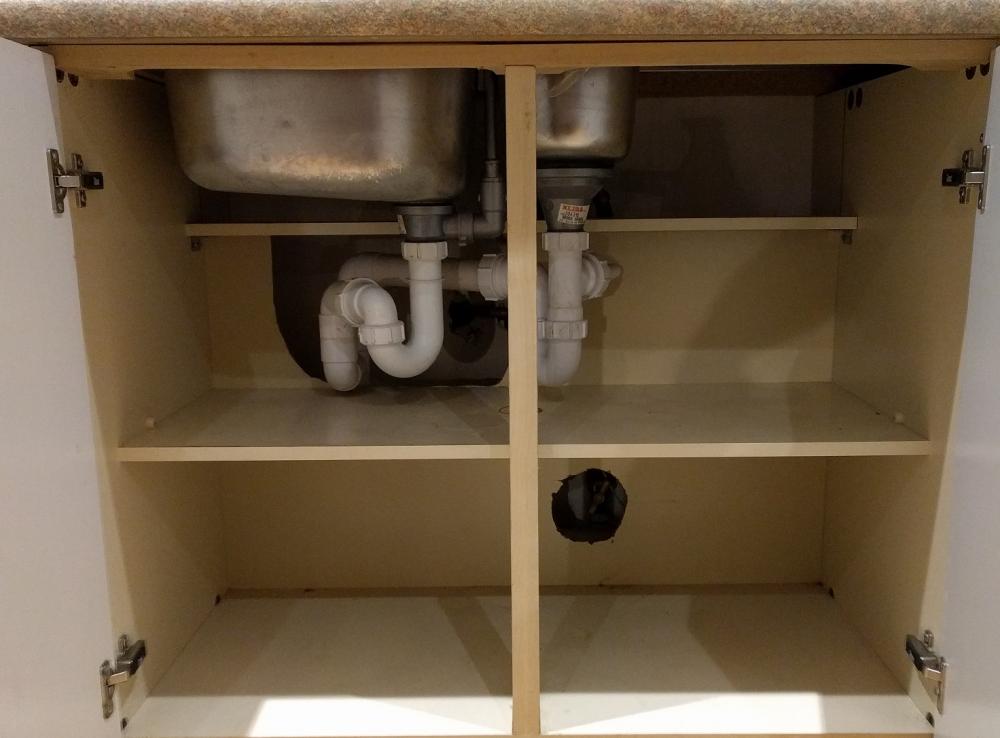
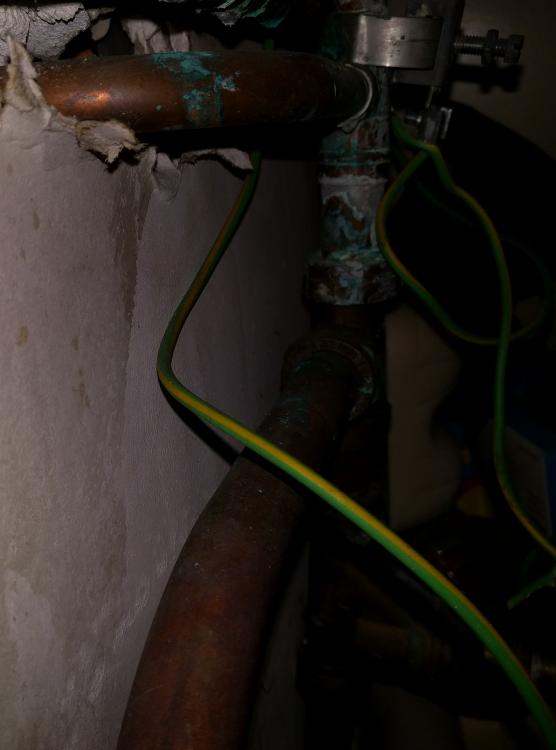
-
Thanks - not sure how much of a can of worms I want to open here yet so I'll check out the vinyl click flooring for sure and try to avoid drilling through any pipes!! Cheers.
-
Hi folks, Tiling a bathroom basics! I'm looking at the 1st floor bathroom floor as my next project. It's currently laid with old vinyl tiles and experienced a flood in the last year so it knobbly and uneven. I've been checking youtube videos and wanted to see how much work I'm letting myself in for and how long the bathroom would be out of action for. It's not a big space - 1.7m x 2.3m in total (including the bath). My main questions are as follows: Will I have to remove the toilet and wash basin? Or can I cut tiles around them? What should I place on top of the timber floor and beneath the tiles - plywood? One big strip or layers? Anything else? Should I just do the floor or go further? The box behind the toilet got wet when the cistern flooded the room....not sure if I want to open that up.... Is it ok to tile up to the existing skirting and finish with silicone? Should I remove or trim the skirting to get tiles underneath? Porcelain, textured tiles I hear are best to provide some grip on a wet surface? Any tile recommendations? Is silicone against the plastic bath siding ok or should I tile that area to? A friend suggested using magnets to create a removeable siding feature there. The Bath does flex however which pushes down on the plastic panel.... I think that's it - this will give me an idea of what I'm taking on or if I need to grow more hair first....!! Thanks.
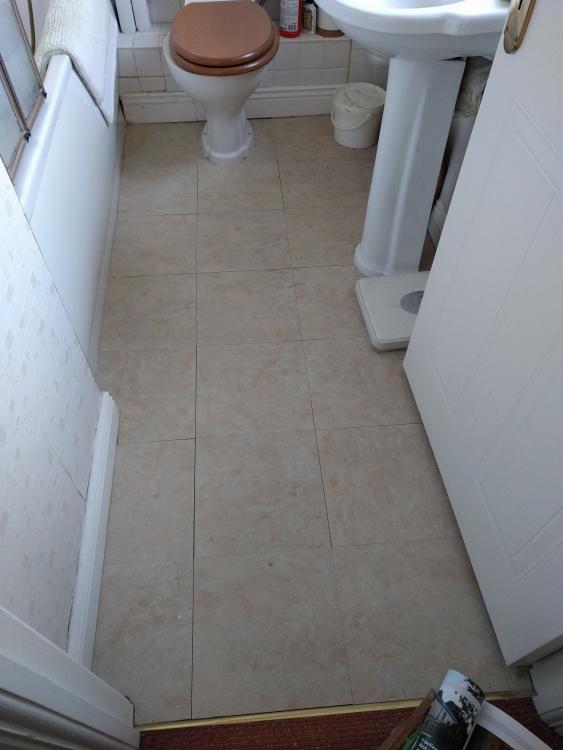
-
Yep, Dublin based - I'd agree about the tightening up but all it's done is increase the cost and added paperwork. There's still no building inspecting done! You can certainly self certify here in Ireland but still need some level of professional (Architect/QS/Surveyor etc) to sign off the stage payments for the bank and be answerable with their PI insurance for serious defects (good luck in the courts with that one though). My main gripe currently is the lack of control over what timber frame company is used in the tender process. There are a few on the go at any time and I'd hate to have to reject a good builder just because they responded with someone I've never heard of and has only been around for a less than a year! Do builder tender responses typically declare who is supplying the timber framed kit they are planning to use or do they just give you the finances only? I shouldn't be surprised that the contractor would want an overarching agreement so they have control over things but it's my money! Sounds a bit crazy to me but that's how it is.....



