


SimonD
-
Posts
2215 -
Joined
-
Last visited
-
Days Won
13
Everything posted by SimonD
-
No you don't have to start again - temp difference at the rads doesn't necessarily translate to temp difference at the boiler. Anything between about 11-20c on the rads is a great place to be. If you try for a perfect temp you're going to be pulling your hair out. As I mentioned above, the pump speed is important but not something you need to worry about if you have your pump internal to the boiler. Also, if you don't get a perfect 20C at the boiler, don't fret. These systems are dynamic so there will always be some natural variation. Main thing is to get heat to all your rads so they're all a fairly consistent temperature and then check the boiler flow & return. Then report back 😊
-
Yes, some progress. Don't be too worried about it all, it's just the ideal way to do it. Starting when the system is cold, just calmly walk around the house feeling each radiator and the pipes feeding the rads. You'll soon get a sense of which ones get hotter sooner. If there's the odd rad you miss out, once the heating system is fully up to temp, then you can go round and feel/measure which ones are the hottest and start adjusting the LSV on those. You'll soon enough know if you've got it wrong and turned down the flow too much as the temp of the rad will go down too. You need the flow/return boiler temps as that will tell you what difference there is at the boiler - like above you want 20C for your boiler. This will in part tell you if your rads are balanced as if there no difference, flow is just coming back to the boiler without being shared with the house, or whether you're losing too much heat. It can also tell you about the health of the system. Too much temperature difference can be a sign that there is a flow rate problem/too much pressure drop, too little difference can be down to too much flow. This can help you set the pump output correctly, or choose the correct proportional curve (if you have an external pump). It can also send you in the direction of checking the auto-bypass etc. So yes, you need the boiler flow/return temps. But a quick way to check if you can push hot water to the cold rads is to close the TRVs on the hottest radiators and then see what happens at the cold ones. But again, be patient as it takes time for the system to respond, especially when you've close a LSV and you're waiting for the temp difference to change.
-
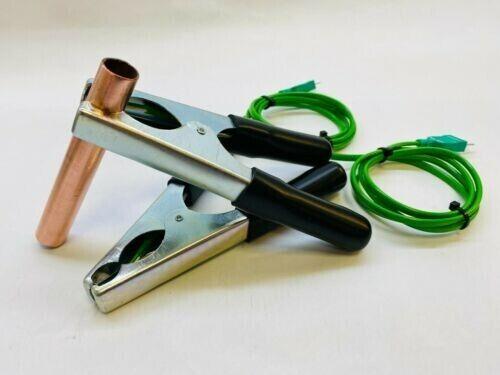
On some systems it isn't critical but on others it is. I'm going to try and sort a system tomorrow that has almost exactly 20 flow return temp different at the boiler yet 3 radiators aren't getting any heat at all. As water takes the path of least resistance, if you start at the beginning you're pushing the flow in the right direction from small pressure drop to greater pressure drop. Otherwise you can adjust the flow on a radiator somewhere along the circuit only to find that it's gone cold when you've adjusted the others - so the system remains unbalanced. If you think about that balancing first means getting heat to all radiators on the circuit, this might help. Once they're all hot, try to get them roughly the same temperature and only then do you try to refine the temperature drop across the rad. You may find that you do end up with a system where some rads might only drop by 10C and some by 20C, but then give you 20C drop across the boiler. It's not an exact science, more of an art as hydronics can be a devil sometimes. The Baxi 400 has a recommended difference of 20C Can be. Some lockshield can be so crap that it's almost impossible to regulate the flow. Sometimes barely a smidgen of a degree turn is all you need. Just depends on the brand of lockshield, with the main names being better to use - e.g. Danfoss and Drayton The multi meter is fine, but I'd recommend you use something like the below. Using a thermocouple like the one you have makes it more of a pain than an already painful job needs to be: https://www.ebay.co.uk/itm/115624510811?chn=ps&var=415642870400&norover=1&mkevt=1&mkrid=7101533165274578&mkcid=2&itemid=415642870400_115624510811&targetid=4585169654799844&device=c&mktype=&googleloc=&poi=&campaignid=412354547&mkgroupid=1305120599331881&rlsatarget=pla-4585169654799844&abcId=9300541&merchantid=87779 Good luck!
-
You'll probably hate this reply but I'm going to suggest you need to start again by collecting some basic information about your system and then taking it all methodically. what boiler do you have? Is it a system boiler/combi boiler with circulating pump built into it or is it a heat only pump with an external circulating pump in the airing cupboard or somewhere else? Can you look up the installation servicing manual of the boiler as you might find recommended delta T for the boiler on commissioning - for example an Ideal Logic Max should be balanced for an 11 degree delta T whereas an Ideal Vogue Max should be 20C. Fully open all your TRVs. From cold switch on your heating and run around to find out which radiators get warm first and which ones last. The one that gets hot last is usually, but not always, the 'index' circuit, which is the circuit with the most pressure drop, or in other words, resistance. While doing 4 above, check with your hand which pipe gets hot first on each radiator - this will determine the flow and return on each radiator. Your installer should really have installed them consistently with the same valves on each side but sometimes they get mixed up. If you're using K type thermocouples on your multimeter, try and get some clip on ones or get some clip on thermometers - they need to be on the pipe for a while. Then start to balance your radiators in the order that they warm up, so first rad to warm up first and then last rad last. You should find your lockshield will be more closed at the beginning to maybe fully open at the end of the circuit. Lots of videos on Youtube to help but some aren't honest about how tricky it can be to get it balanced right sometimes! Be patient. Be careful wit the amount you turn each lockshield. Many of the cheaper ones can be fully closed to fully open in less than a full revolution so it can take time to get it right. Don't be too perfectionist with each radiator - getting somewhere between 11-20C flow/return drop is pretty good. You might need to look at the setting of the pump if you have any external pump. HTH
-
Clean Heat Market Mechanism to incentivise heat pumps
SimonD replied to LnP's topic in Air Source Heat Pumps (ASHP)
For customers I tend to choose load compensating controls over just weather comp, although a few of these now also use weather data from some internet source (which weather data is accessed, I don't know but in my experience it's not far off). Here's a link to a University of Salford test of a variety of controls under different circumstances. If you read paragraph 4.1 you'll see they note some of the set up problems that exist with weather comp. only. https://www.beama.org.uk/static/7f5ebe31-04e1-470e-9befd249359959d9/15d07ed2-35d0-4c9f-90f958f81e9425f6/Salford-tests-on-load-and-weather-compensation.pdf -
Clean Heat Market Mechanism to incentivise heat pumps
SimonD replied to LnP's topic in Air Source Heat Pumps (ASHP)
I've had a lot more conversations with customers about heatpumps and unfortunately the popular opinion is still that they're rubbish and don't work. Some even suggested that they're too new as a technology and need longer to be developed 🙄 Recently I was away for some training and the majority of heating engineers in the room spoke very disparagingly about heatpumps and were going to continue with fossil fuel coz they worked and were cheaper. The stupidity is unfortunately constructed by the negative narratives abound in both the media and internet, but also partly down to some of the positive stories that say things along the lines of how great the heatpump is but this is all the stuff they had to do to get it that way. People are then rightfully worried by this. For me the 1st step has got to be a government that supports the foundations of the technology, which is upgrading building fabric, which of course they don't so everyone wil be paying 3 times - once for poor building fabric, twice for the boiler levy, 3 times for the energy market economic model currently in place. With wholesale energy transitions, the government has to play a major role in this beyond the ridiculous market mechanisms they're toying with. There also needs be somemore consistent communication to the national as a whole as a part of the necessary re-education. -
Clean Heat Market Mechanism to incentivise heat pumps
SimonD replied to LnP's topic in Air Source Heat Pumps (ASHP)
Yes, basically. If you're a heatpump manufacturer you're probably going to be rubbing your hands. The main problem is that it's a supply side scheme.....without the demand. It's not like people will now suddenly start queueing up for heatpumps now is it? -
Clean Heat Market Mechanism to incentivise heat pumps
SimonD replied to LnP's topic in Air Source Heat Pumps (ASHP)
I received an email from one of my suppliers today announcing the start of the CHMM on 1st January 2024 and the industry response. Most major boiler manufacturers have confirmed they are simply going to add between about £100 - £140 as a levy on boiler sales. So much for incentivising a market shift. Instead it's ended up as a low level inconvenience tax which will hit those least able to afford it. At the same time gas boilers and heat pumps on new builds are exempt from the tax and certainly no ban in sight for fossil fuel boilers in new builds. It's just a total farce. -
Those are the on/off valves for each of your ufh loops. They're the white things with red in the middle with the labels on the bottom rail of your manifold. Heatmiser UH8 wiring centre provides just relay control of the actuators so they're technically only on or off but can stick. So even though the UH8 has lights on for your office and bathroom in the photo, and the actuators look like they've opened, they might not be permitting sufficient flow. It may not be down to the actuators but just part of the overall problem solving process for any ufh with flow issues.
-
You are getting hot water flow to the manifold from the boiler aren't you? Have you physically removed the actuators from the manifold to see how it flows then?
-
Radiator sizing: to oversize or not?
SimonD replied to ectoplasmosis's topic in Air Source Heat Pumps (ASHP)
Context is everything. You need to consider your personal setup and lifestyle within this. Also, regarding radiator sizing, your system designer can tell you whether they considered intermittent use as part of the heat calcs. When considering intermittent use, this can significantly increase the emitter sizes as well as energy consumption depending on calculated re-heat times of the property. There needs to be a careful balance of this, that isn't just about your rad sizes and a single set flow temperature. When running with trvs if they turn off flow to your rads there will be less volume in the system for the heat pump to warm. You'll gradually get to a point where the system cycles due to low volume of system fluid. If you're running a thermosat in the house it requires some good setting of trvs and room stats to ensure the system isn't still calling for heat when all your trvs are closed. People often incorrectly think setting up a whole house heating system to run efficiently is a simple thing, even with weather comp it takes a long time to get it set up correctly. On here you'll find a lot of people who tinker with their systems until they get it right, because they have the interest and make the time to do it. Also on here you'll get a lot of people who have installed just weather comp, but depending on how you live, you may find load compensation or a controller that combines load/weather comp to be better for your needs. -
Radiator sizing: to oversize or not?
SimonD replied to ectoplasmosis's topic in Air Source Heat Pumps (ASHP)
Why? If the heating system is designed, installed and commissioned correctly with appropriate controls there shouldn't be a need to boost individual rooms. -
Plywood for lining internal walls in timber frame
SimonD replied to Hannah82w's topic in Timber Frame
Most plywood you get from merchants is going to be Class II with some of them Class 3 - e.g even B & Q ply is class III. Softwood can be class II or class III as it depends on the glue. I would suggest you go for minimum Class II which is for humid conditions but it doesn't matter if it's class III they stock. My local supplier doesn't even stock class I but has structural 18mm Elliotis Pine Class III at £27 per sheet inc VAT and £20 for the 12mm, with this minor price difference I'd go for 18mm as then you know it's got the screw fixing capacity for almost everything. -
Can you provide that drawing in colour? That would would make more impact. At our committee meeting our architect hand sketched a colour drawing that went down a storm with the committee members.
-
Not really, I did say.... 😉 Now it seems your re-draft does that 🙂 and + 1 to @kandgmitchell's comment about the annexe. It obviously depends on your context and local development plan, but when I sat on a development committee in a rural location, planning applications for 'annexes' for rent used to get viewed with suspicion. So be careful how you phrase it and how much you make of it. Even better if you can find a part of your local development plan for rural economic development, for example. There was one here recently where the farmer specifically noted an economic development clause in the development plan to be granted planning for commercial purposes. All local objections were overridden due to the clause.
-
Good luck with this, I hope it goes well for you! In terms of suggestions, there are a few things I would bring to the table: 1. Don't immediately go in for an argument or use the term 'easily dismissed' as it can come across as rather antagonistic. You need a compelling argument to get the committee on your side. 2. Build upon your initial paragraph to develop a story about how you've considered in your design the aspects of heritage, natural landscape, sustainability and support from the local community. Do you have any support from the Parish Council which could be mentioned. Also mention any and all your attempts to satisfy the requirements of the planners 3. Then go into how you believe you've satisfied the conditions the planner has based their refusal on. 4. Once you've built that story, if necessary you can then go to dismantling the planner's position using the advice you get from your planning consultant, but particularly if there are any problems with due process - for example, the planner has said you haven't 'sufficiently demonstrated' - have they asked for further information, defined what would be sufficient? And also there state that you have in fact supplied the PEA and updated it. Also highlight that you are willing to compromise on certain elements. 5. Carefully consider the legal duties on process for further appeal and raise any and all of these points if needed In my experience, the committee can completely ignore the planner's refusal if they want to. They can also completely ignore community/parish council in favour of a developer who has put forward a strong argument that they feel will actually benefit the community.....so it's a lottery. HTH.
-
An idea for insulation under an old uninsulated block and beam floor
SimonD replied to Carol W's topic in Floor Structures
+1 - have a look at full fill with eps beads. Otherwise I fear there will be a lot of swearing and cursing and a poorly finished insulation layer. I also believe that once it's filled with eps it no longer needs to be ventilated as it ceased to be a ventilated void. -
I have a Topdon TC001. It's between £230 & £280 on Amazon. I used it a lot for work. Very happy with it. Really small but you need to choose either the TC001 with usb c or TC002 for IOS. Some images:


-
Would Shelly relays suffice?
-
Yikes, the key point for me is that I need to pull my finger out to insulate the flow & returns from boiler to the hot water cylinder and ch manifolds central in the house. As I run hot water priority its a greater delta T!
-
Unless there's a bath to go in there? But as you say, swallow the mistake, have a cup of tea, keep calm and carry on and either cut some plywood or sister with a meter or so of 4 x 2 and job done ☺️
-
It's because the hot water is circulated around the pipework, usually at programmed times of high usage. It doesn't get pumped when someone opens the tap. Therefore, if it weren't insulated you lose a load of heat from the hot water circulating around the house and then going back into your hot water cylinder and cooling that down too. So you could in theory end uplosing all your hot water. Think of the recirculation pipework being an extension of your hot water cylinder.
-
Go and buy a couple of cheap portable Ikea induction hobs like this one https://www.ikea.com/gb/en/p/tillreda-portable-induction-hob-1-zone-white-70493503/ or even the double one https://www.ikea.com/gb/en/p/tillreda-portable-induction-hob-2-zones-white-90497166/ and try them out for a while. Obviously make sure you have suitable pans. Once you've spent some time using them, I'm sure demands will change. I once had no choice either 😉 but we do have a permanent induction hob now. One of the best things is how easy it is to clean compared to gas!
-
I have the Milwaukee M12 subcompact multi-tool and I'm not very happy with it. My very old Bosch professional version is much better and the Dewalts I've used are too. It may be a different story with the M18 Milwaukee tool.
-
Understanding insulation options and condensation implications
SimonD replied to Alan Ambrose's topic in Heat Insulation
You could look at Glulam - Buckland Timber, who I can recommend, do glulam in Oak as well as a number of other timber species. This could be advantageous for a number of reasons. https://www.bucklandtimber.co.uk/




