


craig
-
Posts
1119 -
Joined
-
Last visited
-
Days Won
5
Everything posted by craig
-
That annoys me, actually really p****s me off. It is their responsibility to check the details with you. Did you give them the defection rate of the steel? Did they give you recommended tolerance? Did they advise what material to use for insulation during installation between head and steel? If sitting directly under the steel, using a solid insulation for example, steel deflects, pushing down on slider. Then only one thing happens, compression on head and operational issues with the slider.
-
One of my favourite doors @HerbJ stunning colour choice and a brave choice in all honesty.
-
The tape is purely for handling purposes, it does nothing other than protect during handling. It is not an air seal or anything like that. It’s a pain to remove but it’s not needed and can be the cause of unit failure if left on. I should add that some types of glazing silicon can react with the hotmelt which is why people leave it on as well.
-
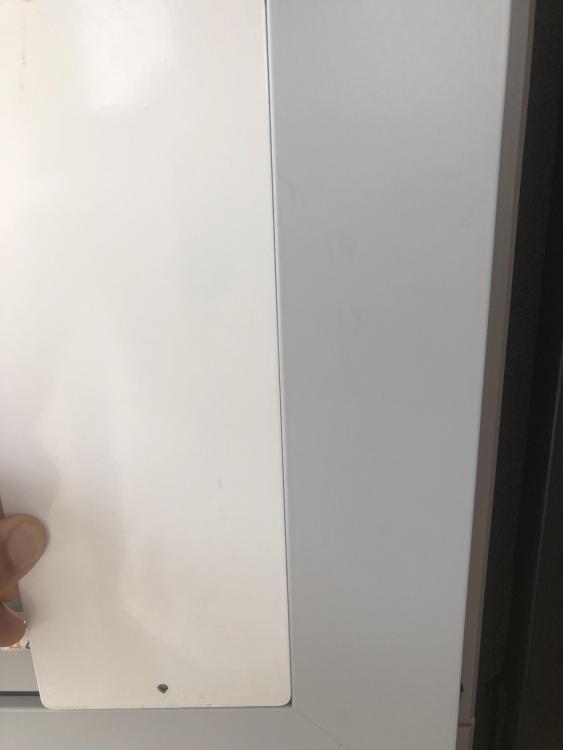
It's not about making decisions based on pictures viewed online, no one here is going to be making decisions based on online pictures. They will have samples galore and go through numerous decision making scenarios, putting different finishes next to each other before making a decision. This was to assist people with "ideas". Different time of day, different lighting - 9016 against 7035
-
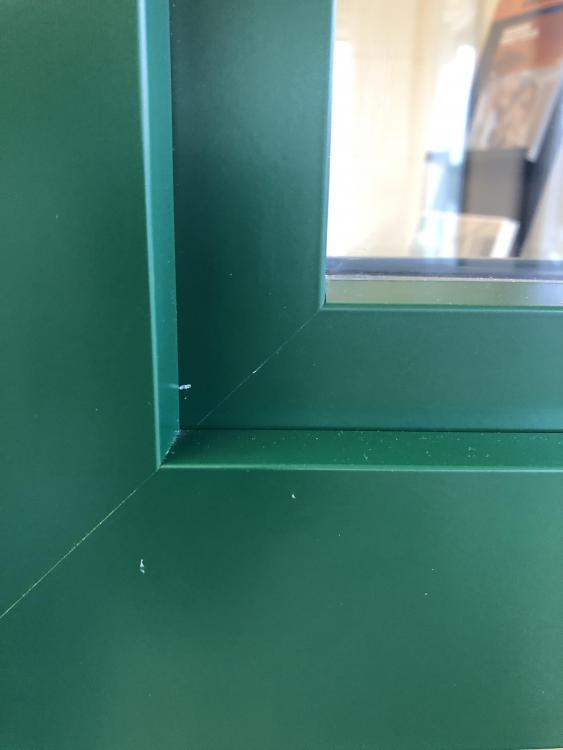
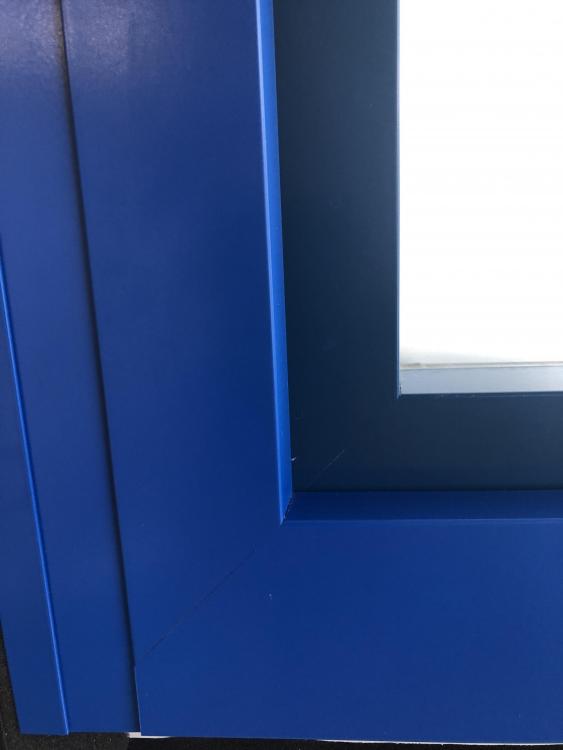
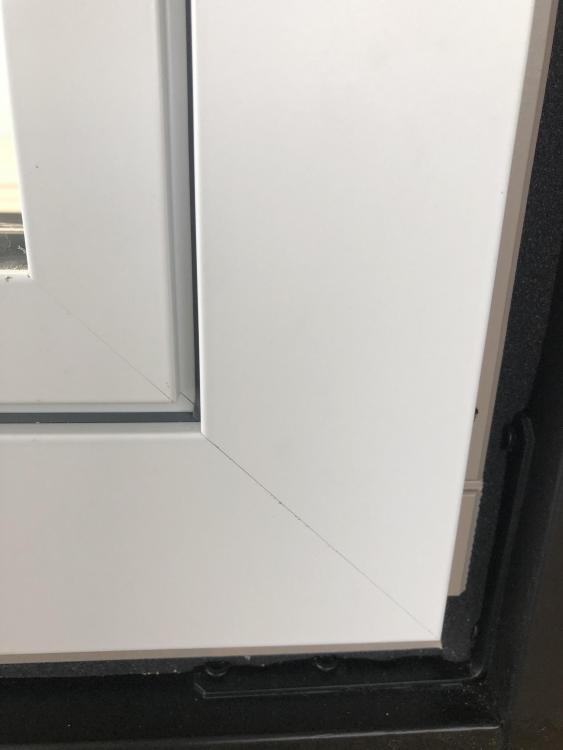
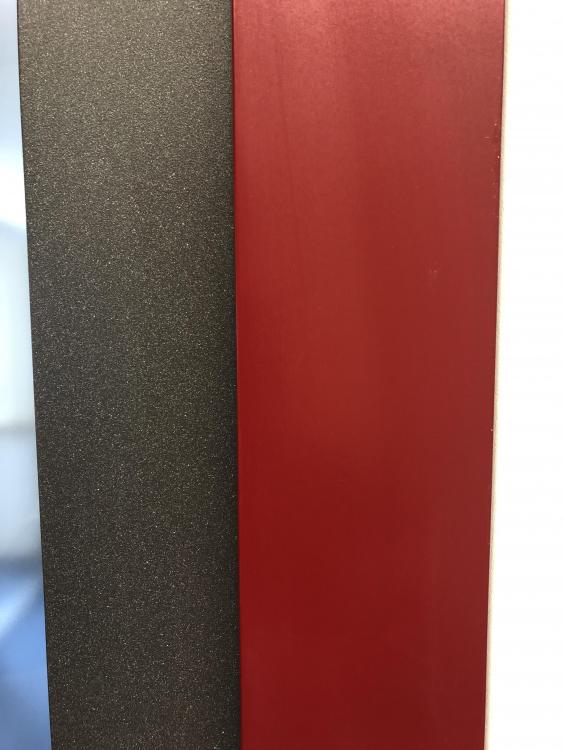
Just took a couple of quick pictures of a couple of windows with different colour which might help some folk with some ideas. RAL 6005 - Moss Green Frame: 5005m Signal blue Sash: 5001m Green blue 7035m Light grey Frame: 3003 Ruby Red Sash: DM02 Metallic fine structure
-

Windows....which company did you choose and why?
craig replied to Tom's Barn's topic in Windows & Glazing
To be fair, we’re looking at about 4 weeks for quotes being issued. The lass that normally processes them is on Furlough and I’m processing them as quickly as I can. I’m hearing of glass delays in the UK but not in Europe tbh. Our production timescales have not been impacted for about 3 months now. However under weekly review. Transport is an issue. They want a weeks notice and need exact weights/dimension rather than best guess loading meterage and weight (used to be 48 hrs notice). -
You do not need to be Fensa or Certass registered, that is an urban myth. It just means you can self certify your own work and don’t need to notify building control and pay the small fee. It is also only applicable to England Wales and replacements/extensions only. It’s also a waste of time, last check all they did was attend, check u value of window and left. Never checked the install itself or anything like it.
-
What kind of door? Are we talking lift and slide style? French doors? Entrance door? 50mm EPS looks a little on the light slide for a door in excess of 200/300+KG Pretty certain it was instead of cavity closures, @Alexphd1 built with ICF and would advise how he did it. I would need to double check.
-
18mm marine ply all around, that’s all you’ll need.
-
https://www.gap.uk.com They may be able to assist.
-
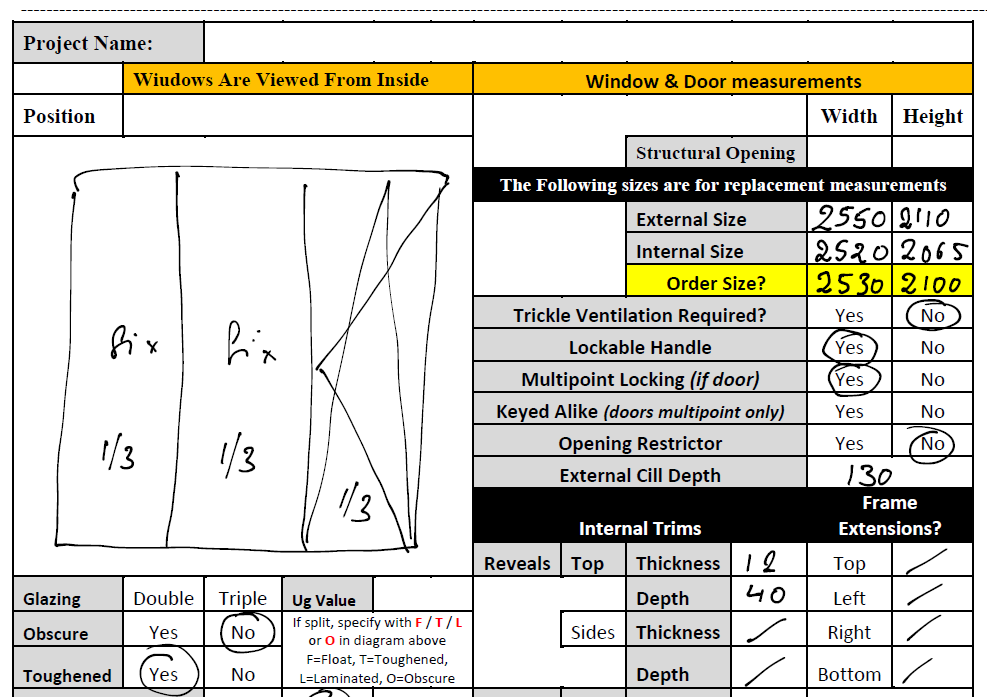
Here's a screenshot of a recent survey we carried out. With the below survey the external width was larger than the internal width. Our tolerance is 10mm all around and went with this in width and 5mm top and bottom. We would have done 5mm all around but due to how the window was going to be sitting, fitting compriband and PU foam would have been problematic.
-
Measure width and height inside and measure width/height external (not the window size) and you can take your measurement from there. Your window size will “generally“ be 5mm to 10mm larger than your internal size.
-
You want to seal to the building ideally, taping over the top of the building wrap isn't the best way but should not be a major issue if you do.
-
I buy direct from Illbruck as we have an account with them, Illbruck don't sell direct to the consumer I'm afraid. If you speak to Dortech they can order it for you, failing that, let me know and I can order a roll for you. Only difference is, we don't do free delivery as it's delivered direct from Illbruck as we normally order for each specific job and in quantity.
-
Iso bloco is a compriband, just a different type. It’s equivalent to Illbruck TP651 https://www.illbruck.com/en_GB/product/tp651-trio/
-
Just by the pictures, you may not have the relevant gaps for a compriband. I would apply ME501 VV. I only recommend Illbruck, as it's what we use all the time and it does the job, I don't get anything from it. https://www.illbruck.com/en_GB/product/me501-vv-duo-window-membrane-hd/
-
https://www.illbruck.com/en_GB/products/innovations/i3-system/ Essentially an i3 application (3 layers) in a PH it's a given to be honest, it doesn't matter who supplies the products but it should be installed as standard. PU foam is not water tight it's an insulation layer. ME508 or equivalent is not water tight, it is an airtighness layer. So what weather tightness has been applied on the external aspect of the window frame? That's why compriband is used. It has thermal properties, it has weather tightness properties, it has acoustic properties and we all know the importance of thermal performance in a Passive House.
-
None what so ever. They have taken the easy option. Compriband does more than just seal a window, it has thermal, acoustic and weather tightness properties.
-
Apololgies I meant to refer to ME508 membrane and would waste 24m of a 25m roll, TP600 15 28/40 would be 2.7m roll length and about £55 - wasting 1.7m length. Nice of you to offer the left over ME501 to him.
-
Just a fyi, a tape designed for 7 to 12mm gaps for example would give 900 pascals at 7mm and works for thermal insulation and acoustic insulation. 12mm the same but the pascal drops to 600. Past the 12mm you lose the gaurantee on weather tightness but would expand upto 21mm but ideally not past the tape width. https://www.illbruck.com/en_GB/product/tp600-compriband-600/ technical data sheet, page 3 of PDF.
-
First picture you appear to be pretty tight to the frame, using the thin nozzle for the PU foam, might be a challenge to fill. I would try and squeeze in a 3 to 7mm expanding compriband and repeat on the right side on the inner and outer section of the frame but you might just be too tight. You won't need anything else, no need for airtighness tape. I would PU foam the bottom and apply an airtightness tape here, you have got a large gap at the bottom. I would suggest compriband but it wouldn't be economical to do so. A single roll would be approx 5 to 8m length and you would waste about 4m of it, costing in excess of £100 for 1 roll.
-
It is, sent PM. Apologies but only myself working and inundated with quoting and Other work. Way behind but we’re back up in strength next week and back to the office as well.
-
You should. Your 2.63x2.39 fixed window, will be under 300KG triple glazed. It generally should only start to cause concern at 400KG. I have previously declared myself in introductions but only here to help and offer advice and don't like to see someone stuck or think they are limited in choices. The sizes you have mentioned are not restricted to just Internorm, generally speaking some suppliers will struggle with the sizes due to a number of factors. One of them being engineered timber v's non engineered timber and overall unit weight. Numerous suppliers/manufacturers will be able to meet those sizes easily & the price for the slider should be nowhere near £9k for that size if I'm honest, probably more like £6K/£7K possibly less dependant on system. Tilt and turn at 3m high should also not be an issue but again you need to take in the width/height ratio of the opening section.
-
It should always be a priority, not having one leaves quotes open to interpretation/imagination of the suppliers at the quoting stage. Your architect hasn't indicated any handling of windows on the elevation drawings for example. That's not that overly large but the width/height ratio would need to be checked, max glass size for laminated pane/toughened pane also accessibility to site and on site. How will they be manouvered? Things like that will determine whether being supplied in one unit or coupled is more feasible. Generally speaking, 3m height is fine (width dependant), they and others will be able to do 4m height (width dependant).
-
Windows....which company did you choose and why?
craig replied to Tom's Barn's topic in Windows & Glazing
That's the first thing you do, can't defend them tbh.




