


Carrerahill
-
Posts
2132 -
Joined
-
Last visited
-
Days Won
10
Everything posted by Carrerahill
-
Air brick extensions... or lack of air
Carrerahill replied to MartinP's topic in General Self Build & DIY Discussion
What a bodge! If we each had a pound for every time we heard a contractor say, "It will be fine!". The issue is the builder probably doesn't understand it - won't understand air dynamics and is too ignorant to see his own mistake. The warren of bends and T's and small bore is not going to work. Basically you are meant to sure 110mm soil pipe or similar sized duct. Get that ripped out and have him start again. He probably spent more on solvent weld bends, tee's and pipe than a piece of soil would have cost. If you need to use leverage tell your builder to do it right you can comment building control will not accept it.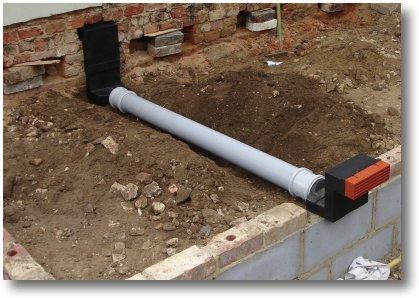
-
The old conservatory conundrum. I'd take it down and build a proper room.
-
Thank you for this! I may come back and pick your brain at some point! My plan is to build the system up in my workshop - then deploy it once I have it doing what I want it to do as I would love to be able to collect data like this.
-
House build from recycled Materials.
Carrerahill replied to Patrick's topic in Energy Efficient & Sustainable Design Concepts
I used a lot of 6F2 in my garage build, basically concrete and brick crusher run - ideal for my first fill. I like to think that it helped a little bit. -
If I have a cord of wood ready at the end of each summer I have a gas bill of about £6 a month all winter!
-
Always the case, also if they are on say 20% cover on the boiler, for every additional £100 the boiler costs he is on £20. My brother had a new boiler fitted a year or two ago, boiler man sold him the biggest Worcester Bosch domestic unit they make - he was happy with this and asked for big, but part of me figures he actually created an issue for himself. Sort of luckily for him his Victorian property with 3.2m ceiling heights and no insulation probably actually benefits him in this situation.
-
You keep producing lots of good graphs from your house, it makes me think you have a control room and lots of sensors and a home management or at least monitoring system that I suspect you made, can you elaborate if you do? I love metrics, I am looking at an Arduino based BMS for my house just because I can and I love this sort of stuff.
-
Should be good, the load on the boiler from the rads would probably stop short cycling - it's easy enough solved to be honest so I would not worry.
-
Fire safety for structures - timber frame?
Carrerahill replied to Mr Punter's topic in General Construction Issues
Yes totally, I agree and that comment may have appeared daft, but, in my case a roof fire at the sides could sit on these firestops and burn them through then burning debris would fall to the bottom, quickly melt the membrane and start to ignite the OSB. -
Do foundations first to get build cost idea?
Carrerahill replied to Amateur bob's topic in Costing & Estimating
I don't see why having some founds in the ground will help you cost the rest. Assuming you know your ground type and size of the founds then you will know fairly accurately what your founds will be then everything else just sits on top and can be priced easily enough. My worry would be starting it, then costing it and discovering I have poured a house bigger than budget would permit. Just cost it up. -
I may not be a UFH buff but I know enough about boilers to answer this one. It can do but depends on the UFH loads and boilers modulation ratio - a buffer tank is a mitigation measure but an inefficient one at that. So the best way to engineer out short cycling is with with things like a towel rad on the circuit on full flow or heat a central colder area like a hall with a rad which can consume enough to consume enough of the boilers minimum capacity. This of course is only an issue when other rads on the system are drawing very little from the system - if the house is being heated and the system demands enough it won't be an issue. Sometimes having a slightly smaller boiler is actually better than a bigger boiler in these circumstances.
-
Fire safety for structures - timber frame?
Carrerahill replied to Mr Punter's topic in General Construction Issues
As I see it a timber frame is going to burn, the way we just completed ours, to latest BS, I cannot see what will stop it burning down to be honest - that is obviouslt dependent on the location of the outbreak. The "fire-stops", as per our approved BC drawings, are 50x50mm treated timber - timber - give that a month or two and that will be bone dry. It depends where the fire breaks out to be honest - if it's in the plasterboard shell of the room then the PB offers 30mins (according the Gyprocc) now that doesn't really take into consideration things like penetrations that may not always be very well "fire sealed". If the fire breaks out in a socket (why I always use metal pattress boxes for that little extra protection) then flame could easily lick up the stud and ignite - heck knows what the 100mm of PIR will do. If a fire were to break out in our roof void I think the roof would be in flames fairly quickly, the fire would rage and quickly burn down through the timber fire stops at the top of the walls then the fire would then travel down the frame. Unless it was caught fairly quickly, and that time depends on where the fire breaks out, I think it would be a gonner. If the fire was stopped in its tracks, yet had managed to weaken timbers the building is still going to need to be torn apart and rebuilt anyway - so all these are about life protection. Ideas and thoughts - Build in block, concrete floor and concrete first floor - a false PB ceiling with 100-150mm void for lighting, ducts etc. then a twin sheeted Fireroc ceiling to protect timber above at roof level. I think that would be a good idea - then for other common sources - electrical, pattress boxes could be bigger metal boxes fastened between studs with fire rated glands then a smaller section which actually takes the socket - space for proper termination and not a crowd of wires, when correctly installed into a wall against PB any ignition sources are contained and the socket and cable ought not to self extinguish anyway. Just ideas and thoughts here but stop the fires in the first place is my thought. I watch a YouTube channel of a young Canadian framer called "The crazy framer" - he basically builds complete timber houses by himself - I note they use a product called DensGlass on walls adjacent to other buildings - it is a fiberglass/gypsum product used for, but possibly not limited to, external sheathing like we use OSB for here. They use it due to the fire-rating it can provide - I don't know how long it gives you but if say it gives you 15minutes before the fire breaks through the sheathing either way it will help protect. He also uses a lot of PB between lintels and where main floor supports meet etc. this is all to reduce fire spread and I like it. I think it is a good idea. The idea of using PB on an open timber frame might not work too well here in the wet but I have line rafters and under the loft floor in plasterboard around most of my downlights. I know you can buy hoods but I think my idea is better as I made a big box, sealed the wire penetration into the PB bulkhead I formed and that lets me pull the light in the future and pull out the tail to the junction box and I think A, it stops draughts via the light which causes that bad dusty mess on them over time and B if that GU10 LED lamp was to go pop and even blow hot material about it is not going to land on anything flammable - that is the theory. I keep meaning to do a test - i.e. get two pieces of 2x8 and make the PB bulkhead then set fire to it. I might do that when I have PB left over from the lining stage. When I do my electrical on my extension I am going to form fire-stops with PB in the wall - I will post it up at the time. My belief is that arresting the source of the fire is better than pointless stops - their inclusion is futile. -
Thanks - I will sort this detail soon and allow for this. I am going to lift the temp joists and see what I have - been a while since I just stared at it all - I may now backfill with type 1, sand, DPM, 150-200mm PIR then crete!
-
Our LA sort of did this to us, about a week before the statutory 8 weeks was up I decided to call in and ask how things were going. No one had even logged it! It wasn't on anybody's radar at all. The result was the planning girl was around the next day, very apologetic and the head of planning called me to say sorry and that it still had to go through the 21 days notice period. She said she would let us know within the week if it had been approved by the planning department and unless any serious objections were received they would telephone to approve it on the 21st day. I got a call at 12:00 on Friday and the JCB rolled in on the Saturday! Official letter came in on the Monday or Tuesday.
-
Which look like Fischer smooth galv?!?
-
This might help you in your adventure: 522.6.201 A cable installed under a floor or above a ceiling shall be run in such a position that it is not liable to be damaged by contact with the floor or ceiling or their fixings. A cable passing through a joist within a floor or ceiling construction or through a ceiling support (e.g. under floorboards), shall: (i) be installed at least 50 mm measured vertically from the top, or bottom as appropriate, of the joist or batten, or (ii) comply with Regulation 522.6.204. 522.6.202 A cable installed in a wall or partition at a depth of less than 50 mm from a surface of the wall or partition shall: (i) be installed in a zone within 150 mm from the top of the wall or partition or within 150 mm of an angle formed by two adjoining walls or partitions. Where the cable is connected to a point, accessory or switchgear on any surface of the wall or partition, the cable may be installed in a zone either horizontally or vertically, to the point, accessory or switchgear. Where the location of the accessory, point or switchgear can be determined from the reverse side, a zone formed on one side of a wall of 100 mm thickness or less or partition of 100 mm thickness or less extends to the reverse side, or (ii) comply with Regulation 522.6.204. Where indent (i) but not indent (ii) applies, the cable shall be provided with additional protection by means of an RCD having the characteristics specified in Regulation 415.1.1. 140 522.6.203 Irrespective of its buried depth, a cable concealed in a wall or partition, the internal construction of which includes metallic parts, other than metallic fixings such as nails, screws and the like, shall: (i) be provided with additional protection by means of an RCD having the characteristics specified in Regulation 415.1.1, or (ii) comply with Regulation 522.6.204. For a cable installed at a depth of less than 50 mm from the surface of a wall or partition the requirements of Regulation 522.6.202(i) shall also apply. As for the reference to 522.6.204 - that basically means earthed runs, so twin and earth cable etc. earthed conduit, protected from damage (this applies to where damage is likely).
-
Footing issues [with images]
Carrerahill replied to Johnjames32's topic in General Construction Issues
Is it a sewer? Or is it your drain? Just for clarity, a sewer is what a utility company own, the definition of a waste pipe/drain/soil pipe is that if it only carries waste from a single dwelling and it's outbuildings and drains then it is just a waste pipe - if it passes into your property line carrying waste it immediately becomes a sewer. Confirm what it is carrying first. We have a similar pipe along the side of our house but it only carries rainwater from the front gutters - I am going to trench it across into a new manhole much further over that will connect up to the garage too before heading back to the main stack joint. -
If it was me, I think I would need to do an experiment first, at least on the main cold feed for the sink tap - copper tap connector tails are all 10mm pipe which get event smaller as the taper at the tap itself, but the whole run on 10mm - I am keen to confirm this as I have 100m of copper 10mm on a coil that I could then use to run H&C to my new kitchen with no need for any joints until under the sink all the way from the main stop-cock - now that would be nice! I suppose you can do the same with 15mm plastic but I won't have plastic pipe anywhere near my house. Copper all the way. The only exception would be small bits of heating pipe.
-
I would do this too. Let's face it, if HMRC say that the paperwork from Wicks is not a suitable form of invoice then the authority has spoken. Having said that, it all seems a bit ridiculous, that a large known firm such as Wicks who are very traceable and known to all have had their invoice questioned by HMRC - I could understand if it was Builder Bob of no fixed address in case it was a scam but it's a legit paper receipt!
-
Always the same. I think we could get a group of us from this site and we will start a building organisation and start to control the industry! We will make a fortune - we will make builders believe they must sign up to our organisation to be allowed to build.
-
All these organisations are just a body that bring together some information that is almost always available through some research or talking to the right people or engaging a consultant etc. All these memberships and subscriptions, whatever they are for and for all trades, are just a money making machine, they are all the same. A boys club, people who set up a website and have some literature and claim to be an authority on something and are basically self appointed with a false sense of important. They are never government organisations and there is no law that says you must be a member - yet people end up forced into feeling they must subscribe and tick a box and what they actually get for it is very very little. The only one that is a legal requirement is Gas Safe under the Gas Safety installation and use regs 1998. NICEIC/Select for electricians, again not a legal requirement. In the case of NICEIC/Select they are VOLUNTARY organisations you can join to be told you are competent or not. In all cases they were set up by a couple of electricians who saw an opening to extract money from people and they then grew to a point where their self appointed authority and credentials became gospel. I treat ALL of these organisations with complete contempt. I recently had the pleasure of sitting in a design meeting where a NICEIC consultant was appointed to come along to offer advice independently to a client - the client had a duty of care to ensure they were getting the best information. Anyway, the guy, who's card is sitting on my desk right next to me, was totally clueless and was totally out of his depth, he was continually corrected throughout the meeting by myself and my engineers present with me. Shortly after the meeting we were advised by our client that they would be disposing of the NICEIC chap as they realised that he really didn't have a clue or a place in the meeting - I advised that all our work would be, as standard on large projects, put out to another consultancy as checking engineers to provide an independent audit, so that satisfied the client. However, the NICEIC chap's report came back to which I line by line dismantled for being grossly incorrect and misleading. This guy, apparently, is fairly high up the ladder and a bit of a go to expert on electrical matters within the NICEIC - it made me think.
-
I agree with the galv chassis route. I can do a Landy chassis in a weekend now with a Teleloader or my 2 post and a simple body jig (RHS with some plates welded on!). If doing the bulkhead too it's worth stripping it.
-
MIG I'd say. I have stick and MIG and have been able to do fabrication, keep my Land Rover on the road (needed a chassis in the end though!) and make custom things. TIG is all very well and good but I have never felt the need to do aluminium etc. and the cost of a TIG for ali is expensive as you need an AC TIG welder for the negative half cycle cleans the weld as you go. I MIGed ali and it was very dirty - it worked though (for the aluminium cross-member above the chassis crossmember on my Land Rover's tub as it had split at the brackets - worked OK). Just type DC TIG into google and up come some 400 quid units, then type AS TIG and the price over doubles for a simple setup. I know a couple of fab shops and got talking to the owners, as soon as I said Ali they always say AC only. So I am glad they did because I actually nearly bought a little cheapo Jazzi or some such name unit, but he said that was steel only. Mind you, TIGed steel looks very neat, but I can produce MIG welds that look really really nice when I take my time and care to prep well. I have a Clarke Turbo Mig, biggest one they do. It's a nice bit of kit. Works very well and is my second MIG - first one got me so far and then I outgrew it so if you think this will be a serious enough hobby and skill to add to your collection go better first. For gas look into the small hobby bottles, you will go through the little canisters in one good welding session. You can use BOC too but they can have high metal prices and or rental. Also, if you know your local owner well, get them to get you pub CO2 - however, argon mix does give a nicer weld.
-
Thanks, 19mm, 25mm batten? OSB over joist thickness? I think I shall go this route Dave, so I need to workout my floor makeup - my joists are sitting in, loosely, to give me my temp working floor - with 11mm OSB on top for now - at that I am am about 10mm lower than the floor level of the rest of the house - minus any floor covering - so I will need to reduce the plate the joists currently sit on by 19/25mm so that my FFL works out.
-
I am learning all of this too, I am in no way saying this is right but here are my thoughts and or findings: Manifold goes somewhere that suits - for me that will be against the original house wall nearest the current boiler pipes which then lets me start my UFH run from a convenient corner. Connected directly to the boiler - I am going to extend my 22mm pipes under my house and out into the kitchen - this is best practise for fluid dynamics as far as I am concerned, I will look at the dimensions of the unions on the valve and make a decision then. I think you really do need a valve or manifold - for a single room the one I am looking at is a Danfoss FHV - they seem to market it as a radiator add on kit. Without a valve of any sort you would get full flow into the system from the boiler which could get a bit warm if the boiler is on a lot. I do suspect I could develop my own system using just UGH pipe and then connect it up using an electronic solenoid and an electronic thermostat (of which I have several for some reason in a box in the old garage!). I am not using spreader plates, I will insulate, vapour barrier wherever it goes (under PIR, over PIR?) then screed - mainly as I have 1/3 ton of cement and tons of sand spare! Over screen and battens I think I will just fit 9mm ply then tile over it. If this floor is changed in the future the ply can be unscrewed and replaced without interfering with the screed or UFH. I am confident it will heat well - I worked out the expected BTU's of my system and it's far more than a radiator would be.

