


Gus Potter
-
Posts
2383 -
Joined
-
Last visited
-
Days Won
34
Everything posted by Gus Potter
-
Loads of folk have made some good points. Here is a thing. There are two kinds of soil investigation.. a factual one and an interpretive one. The factual one just gives the results of the investigation. I get these and it is then up to me to work out what loads I can put on the ground where. In this case I carry the can if it goes wrong.. obviously I want to avoid things going wrong. The interpretive investigation passes the liability to the Geotechnical / Soil Survey Company. Here I get a report that says things like.. Bearing capacity of the soil is 100 kN/m^2. Plasticity is this / swell shrinkage is this and recommended foundation depth is this... taking into account environmental things like trees ect. Soil is "acidic" in nature thus recommended concrete grade is this. For all.. some soils can be contaminated some acidic and aggresive to concrete so you need to select your concrete grade based on this information. Ground water was found here but could vary by x.. very imprortant as you don't want you raft floating. Now a lot of these companies I deal with are very helpful and give you a heads up if you pay for the more expensive interpretive report. They tell you things over the phone like.. we have worked locally so here is what to also watch out for and here is what you can disregard. But to sumarise. Before I commision a soil investigation I do a desk top study just to get an idea of what kind of founds may work. No point in going for a raft on rock / good chalk. There are load of more efficient ways to skin the cat. Yes basically you are. In terms of working with a remote Engineer. Yes it can be done. I do some jobs this way where I never go to site. BUT.. this only works if the Client fully engages and spends time learning about their site, the ground and how their self build / extension is going to work. In other words the Client puts in a good effort and becomes a fully invested part of the nitty gritty design team.. imagine yourself as a young graduate .. you are not daft but you don't know very much but are happy to learn.. and once you have learnt you get to make the important design decisions in terms of say structure .. how the drains work and so on. This will take time but if you adopt this approach you will gain a huge amount of confidence. You'll also know that later in the project.. say if you go on more on your own then you can always call up the professionals that helped you at the start if you get stuck. They say that site investigation should take up about 3 -5% of the budget by the way. A lot of professionals have a wide range of knowledge. Architect's know about structures, SE's and Qs's about design.. some good builders fall into the same category. In the round though if you spend the time to learn it can take you away from the day job that often pays the bills. The upside is that you reduce your risk and the process can be very rewarding personally... and that is hard to put a value on. @Barny Keep us posted.
-
Have you had a look at the extra load potentially that you are adding to the roof structural timbers. That may cause a problem if you come to sell. I am starting to see a bit of uptake in folk wanting a report and structural calcs for fitting PV on existing roofs. Assessing old roofs is challenging.. but a lot of fun as you get to delve into the history of the structure. You may think.. big old timbers, I think yes fair enough but the nails holding it together are rusty! for example. Also a lot of these old timbers were are working on the edge.. they look big but tend to be on their span maximum. Over time some of the bracing may have been taken out, the batten fixings are nail sick, loss of stiffness in the roof etc. Next.. you are putting on PV panels.. surely the roof under should last as long as the panels as they are a big investment.
-
An introduction... Renovation + 1950s + subsidence = a challenge!
Gus Potter replied to alfaTom's topic in Introduce Yourself
Double post here alfaTom... as I'm on a roll. Last post was about the ground but once you know how you building works what next.. how do you design to take account of the movement? To start.. what do you want to do internally. First I look at where the movement takes place. If we wanted to change some non load bearing walls inside then look at doing them in light weight frames, could be timber or metal stud for example. But these panels are quite stiff, but not heavy. You have a square and stiff panel attached to an old building that is moving up and down, probably differently at the edges of the panel. An easy way of dealing with this is to introduce shaddow gaps around the edges of the stiff panels so the movement cracks are hidden. The beauty of this is that it allows a huge amount of flexibility in the interior design.. and future proofing. You can change each panel without having to redecorate the whole room. Floor coverings.. well go for flexible floors that can take a bit of distortion.. say 25mm! That leads you down the timber / carpet /Lino tile type route. You could have small areas of ceramic tiling.. but that will come at a cost. Externally you can use drain pipes to hide joints, sometimes plants.. a treliss.. If you want to make structural alterations inside, say knocking a hole in a wall then you end up with point loads on the founds / underbuilding. To get around this you can use a box frame that "tricks" the found into thinking that nothing has changed above. Going back to you original post I would explore every avenue before commiting to underpinning. -
An introduction... Renovation + 1950s + subsidence = a challenge!
Gus Potter replied to alfaTom's topic in Introduce Yourself
Yes do that before you embark / commit to anything. You could potentially save thousands here.. pick the wrong solution and you could lose thousands more! My immediate thought is this.. well I'll start with a bit of background info to explain... and Linconshire is a great example. For all. Often you may think that deeper founds = more soil bearing capacity = more load you can put onto the ground. But in parts of the UK we have "upside down ground" yes deep down there is rock / good sand / gravel etc but this can be far down.. Here the ground nearer the surface has a stiffer crust and below there is softer material that doesn't behave well. In other words digging deeper causes more problems than it solves. A lot of houses in Linconshire / small industrial buildings too have deliberately shallow foundations that sit in the stiff crust near the surface. The load is then spread out so by the time it reaches the softer layers the stresses are reduced on the weaker layers. The reduced stress causes the lower layers (weaker soil) to compress less and this reduces the settlement. @alfaTom If you look at your results you can see that the shear vane value reduces a huge amount with depth. We use the shear vane value as part of the calcultation to determine the bearing capacity of the soil. Also you can see that the soil classification changes with depth. At all levels you have what is called a plastic soil.. more prone to settlement. But the deeper you go the more plastic the soil becomes.. in other words worse. The trial pit result shows that the soil changes to something possibly more favourable at 3.4m depth as it is starting to transition to a sandy layer which is more ameniable.. but you may need to go a good bit deeper to get to something sound. There are loads of houses in Linconshire and elsewhere that are built on the stiff crust. The house does go up and down a bit but the secret is that it all moves up and down at the same rate and that is why many of the houses have not fallen apart. You have two different types of loading on the soil.. from the single story part and a two story part. Both load the soil differently so will move by different amounts, hence the cracks you see. Do you know what came first? This underpinning stuff.. what are the companies proposing? and how much? I think more time needs to be spent understanding how this old building works and the ground under. Then you design for the movement when you want to make changes, save a load of cash. You SE has said that the cracks are not a big problem so the building as it stands is not structurally unsafe. If it was my house I would be asking the underpinning folk.. are you sure that you are not going to make things worse and can you prove it! Looking ahead you may want to extend and go for high insulation and energy efficiency.. say Passive design concept. Here what we do is excavate out the soil, stick in loads of EPS and deduct the difference in soil mass. we play about with and take advantage of the light insulation and balance that with the loads the old house is putting on the ground so we can make a good attempt at making the old bit and new bit move up and down in the same way and that reduces differential settlement. Just if we do this we need to make sure the new bit does not float as EPS is lighter than water.. we need to look at water table and flood risk. Once you get your head round the fact that your building moves up and down you then design your investigation strategy around this. You gather the facts and prove it SE wise.. they did it for the Pizza tower.. we can do the same in Linconshire. for less cost! Crack stitching in this case on this type of soil often just results in moving the problem somewhere else. Often we want the building to be flexible.. like using lime mortar.. so we get lots of little cracks rather than a few big ones. Keep us posted. -
New extension cracking - advice please
Gus Potter replied to John543219's topic in Introduce Yourself
What is on the inside? another masonry leaf? If so does the crack appear on the inside. If so you may have a problem on your hands as the tying together of the building needs to be checked. How long is the wall? On the other hand it could just be the blocks shrinking and the crack manifests at the weak spot. -
Yes I think they do but from that value you need to take of the cost of an SE assement. I have surveyed some steel portals.. with a view to extracting extra capacity, say by adding an extension or a mezzanine floor. Have had reasonable results but.. you need to be very careful. You need to get yourself there and examine it in detail. I would be very wary about trying to reuse a concrete frame.. there are not just issues around strength but bar cover. When these things were made there was often no quality assurance.. if you don't know how the thing was cast and how well then how do you justify it will perform? Last man on the job gets the blame! Now if you are an SE make sure you take a micrometer to measure the flange and web thickness as for a while folk were passing off Chinese steel as BS sections. They look the same but the web and flange thickness is thinner and the steel grade who knows? For all.. if you are doing things that require steel box sections for example then there are two fundamental types; hot finished and cold formed. The cold formed tend to be cheaper.. but don't do the job. If you are going to buy something second hand then you need to really do your research.
-
Invaluable knowledge disseminated. Thanks for that.
-
This all sounds very complex.. a few watts here and there? In my bathrooms I have UFH, but going for an electric heated towel rail, say 150 -250 watts so that will be on and off in the summer, UFH off. Enough to make the bathroom feel warmer, actually quite a bit warmer as well insulated. But are you off grid? Look this thing about UFH.. we sit here doing theoretical stuff about weather compensation, floor coverings , all sorts of techy stuff, flow temperatures etc. All of that takes complex controls that break down, valves get sticky after a few years and the folk that supply the say Hive controls keep updating their software. Yes it may look great on paper just now and you may think I'm a philistine. but I was doing this stuff 30 -35 years ago! So I know about the hidden long term costs. Just have a think about how much it is going to cost you to replace the moving parts in five years time say! A twelve way manifold.. the flow control stats! Software updates.. the usual replacement of zone valves.. and if you need to drain down the system.. the inhibitor cost.. it seriously racks up the running cost. But in real life folk try and make do so you end up paying for something technical that works for a bit and then is crap. The intrinsic beauty of UFH is it's simplicity. In my current house I have UFH. The water goes into the manifold at about 30- 40 deg C. The flow through the loops is controlled by some hand turned gate valves. I have a couple of room thermostasts. I have adjusted the flow in the loops maybe twice in the past four years. The maintenance costs are well so far well pretty much none. Yes, on the odd occasion it gets too hot or not hot enough.. but it really is on the odd occasion. When I balance that with the low maintenance / environmental costs I do get the last laugh! What I'm saying is that folk are trying to make UFH into something it is really not suited for.. by introducing all these controls that also need future maintenance. Then folk try and calculate things to some finite degree for flow temperature and zoning.. but they then stick a big sofa over the floor or a rug.. which make all the calcs invalid. If you have a well insulated external envelope then the heat is trapped inside.. you don't lose it.. but you can open some internal doors !
-
Drywall screw length, is 35mm too long?
Gus Potter replied to Thorfun's topic in Plastering & Rendering
Posts overlapped there! -
Drywall screw length, is 35mm too long?
Gus Potter replied to Thorfun's topic in Plastering & Rendering
No 35mm is probably the shortest length for fixing plasterboard if into timber. For plasterboard 9.0mm or 12.5 mm thick I use a min screw length of 38mm. The rule of thumb is that of you are fixing something to timber the embedment length of the screw needs to be 2 x the material thickness you are fixing. Thus a 12.5mm plasterboard needs 3 * 12.5 = 37.5mm. One key thing about fixing plasterboard is you use a bugle head type of screw and screw it in so it lies just under flush of the face of the plasterboard without breaking the paper face. It takes a bit of practice unless you have an auto feed type of screw fixing tool with a depth setting. I would encourage you to do it with an ordinary battery operated screw driver as when you get to corners you may need to use a battery drill anyway. If you go onto the Gyproc website and Utube you can watch videos about how to fix plasterboard correctly. Gyproc tell you how close to the edge of the plasterboard the screws can be and the correct screw spacing for walls and ceilings etc.. There are two edge distances. One is if the paper is left intact at the edge of the board, you get this with tapered edge plaster board, the other when you have cut the plaster board and you have a weak edge, you also get this with square edge plasterboard as the paper does not continue around the edge. Main thing is to read up and then have fun! -
Low Level Brick Spalling / Brickwork Fracture
Gus Potter replied to azureblue's topic in General Structural Issues
Good to help out. Yes looks like some potentially significant movement has taken place. Photos showing the wider context would help a lot. Don't forget to include the roof so folk can get a full picture of how the building may be loading the wall. -
Yes Fourier could be applied but does it work with an infinite depth of material when you are dealing with a soil?
-
Yes it's a bit of a mine field. Starting with the design codes a lot of the ground floor heat loss calculations you get using the online calculators are based on on BS EN ISO 13370 (2017) and BRE 443. I'll leave suspended floors out for now as a different approach but take ground bearing slabs. The following is a rough explanation.. but this is kind of how it works. You have UF in some kind of screed or could be in the structural slab, that sits on insulation. We know the thermal conductivity of the insulation. But to make things efficient we need to look at what is under the insulation and around the edges.. the ground will heat up a bit and once it does where does this heat go? Heat leaks out in two dimensions, down and sideways. Now often the online calculators often attribute a thermal conductivity (the Lambda value based on clay soil) of the ground below of 1.5λ (W/m.K) . Imagine we had a huge warehouse.. that ground has an insulating effect. Now as we don't have a warehouse we modify the calculation for the size of the slab.. and that is where you get the perimeter / area value from as this takes account of the heat that leaks out the sides. A small slab tends to have a P/A closer to one, a large slab say P/A of 0.6... big area vs perimeter. Now when you work out the perimeter area you need to make a judgement on whether is is just the edges of the slab next to the external walls or do you need to include the edges that face into the building.. matter of judgement on how you are detailing it all but you can make savings here if you are struggling. Often if need be you can offset by adding a bit more insulation in the easier parts of the build. Turning to the maths. We start with the thermal conductivity of each material, its thickness .. add up and reciprocate to get the U value. @SteamyTea and @Carrerahill et al. The ground thermal conductivity works I think on the principles of an elastic half space.. an infinite depth, same kind of principle pressure in soil modelling but coupled with flow of electricity through a bus bar. The maths I think are based on the Laplace equations for three dimensional flow... which can be water / electricity or heat. Now @RobTristram if you start to struggle you can put extra insulation down and around the perimeter. Say take 50 -75mm of insulation board down the inside of the underbuilding to the top of the founds. This could get you out a hole and will actually work. @saveasteading knows more about this and the practicalities. For me I would would take the online U value calculators assumption of perimeter thickness of insulation (often 25mm). Then if I at least double the depth and increase the thickness buy 3 times I would have a stab at demonstrating that I can reduce the P/A value by say 25- 33%... not below say 0.6. Now that thickness seems a lot but if doing a TF / maybe dot and dab insulated plasterboard on masonry it can work a dream as it marries up closely with the thickness of insulated plasterboard... you get some continuity of insulation. Life does have a bonus from time to time. Once you have got the thermal conductivity established you can then look at your delta T and play about with that.
-
To add a bit more to @George's comments. Often folk think that masonry walls can carry loads of load... but sometimes a lot less than you think. A masonry wall well braced with piers / return walls on a good founds does often carry a lot of load. But if the applied load is not in the centre of wall (an eccentric load) this eccentricity introduces a bending effect in the wall top to bottom..and this can significantly reduce the load bearing capacity. Common case is where roof trusses and joists bear / are built into the wall so the load is not applied to the centre of the wall. External walls also carry wind load which introduces another bending effect.. and again this can significantly reduce the load bearing capacity of the wall, especially if the roof is lifting up and you are using the walls to hold the roof down. I do mean significantly.. not just a little! Now the stength of the wall is derived from partly its effective thickness. What you have here is a collar jointed wall.. the codes allow us to take the effective thickness of the collar jointed wall as being the actual thickness = say 215mm. But introduce a cavity and the effective thickness is now 2/3 of the two leafs (100 + 100) = 133mm.. a very big reduction in stength! For the mathematically minded the bending strength of the wall is partly a function of the wall thickness squared so the reduction in strength is exponential... 215^2 = 46225 (collar jointed) compare with 133^2 (cavity wall) = 17689.. now 17689 / 46225 = 38%! of the strength of a collar jointed wall.. oh dear! Maybe your SE has a point here and while it may seen a bit "odd" maybe your SE is saving you a load of cash? For a collar jointed wall you need to build both leaves at the same time and use the correct wall ties specifically designed for collar jointed walls. You don't need to fill the 10mm gap as the ties are thick enough to resist the small amount of bending. But you do need to make a good effort to reduce the eccentricity of loading. See link below for an example of wall ties. https://www.ancon.co.uk/products/masonry-reinforcement/ancon-amr-cj On the practical side if you are cladding the wall in stone often you will get coursed stone. To make life easy you want the coursing to match up with the blockwork say 225mm. But if you lay blocks on the flat you end up with an average mortar bed of 12.5...or some other nasty derivative.. starts to get messy. Also you use more mortar as the blocks are 100mm laid flat but you need to achieve 225mm. A normal bed is 10mm. Please think carefully before changing the SE's design.. best just to ask them first before carting on.
-
Is it normal for roof membrane to leak like a sieve?
Gus Potter replied to Tom's topic in Roofing, Tiling & Slating
Tom.. unfortunately I think you should get this looked at by an independant person that has experience of inspecting this type of self build work. The general standard of workmanship looks poor. What is going on in that valley? Why are there different types of membrane and why are they not laid flat. Cost wise if you go for this kind of inspection allow 1 day for the inspector to have a reasonable look over at the superstructure. If bad and dimensional checks plus a more in depth look is required add another day. Then one day reporting. Daily rate for this would be around £300 -400, plus travelling on top. Sounds a lot but you seek to recover most if not all from the builder. Unless it was you that did the work in which case it's time for.. what can you do to make this ok.. you'll get help here on that. One obvious reason is that the cross temporary battens will be trapping water.. it is a vapour membrane and they not designed to resist standing water. Also, your valleys will be leaking like a seive as again you have got the valley material on top. It's almost like breaking the miniscus on the breathable membrane. In the old days we used to use type 1F bituminous felt that could stand all types of abuse.. you are using a modern fabric that is a bit more like a Goretex jacket.. compare this with a wax Barbour.. that can take all kinds of abuse and still remain water tight.., but a bit sweaty right enough. -
You could find an absolute mess behind that canopy and never get it to look ok. If you want to get light in can you do anything at roof level, say by way of some kind of light well, glazing panel?
-
The right decision to stick build
Gus Potter replied to saveasteading's topic in Garages & Workshops
Looking good! Ok? But for all you spend loads of money on something like this so regs or not you want it to stay put. You'll notice that that there are come chunky connections at the base (can't see the top..) that @saveasteading has designed.. but why? For all with something like this it's often the case that although you have to hold up the downwards load.. the wind uplift can sometimes be more.. the thing acts like an aircraft wing and wants to take off. I have seen this happen on more than one occasion. Now you may say.. open on three sides so the wind will blow through. But it's how you are going to use it that often matters. When designing canopy hay sheds say we consider that at the end of the summer the thing is filled with hay. Now the farmer starts taking bails out from one end.. and out the middle where the bails are dry. Now we have a partially enclosed building. In the design codes we call the bails.. a blocking effect and the open sides, one or two as a dominant opening. The internal wind pressures (inflating effect) coupled with the wind suction on the top side of the roof can be surprisingly large. Now rather than bails you may want to store logs.. large machinery under a hap.. very similar to bails. The worst of the winds can occur November to say January.. just the time when you have created the perfect conditions for wind uplift. Motto is make sure you really tie the roof down to something solid! Lastly think about.. say the roof comes off.. what is it going to hit on it's journey back to earth? There are rules in the agricultural design codes that deal with proximity of these type of buildings to others when assessing the classification of a farm building. Yes I know it is not an agricultural building.. but if the roof comes off and hits your house or the neighbours, worse a person, what is the insurance postition and your liability? -
Warm Roof Overhang & Fascia Detail For Rendered Wall
Gus Potter replied to HHHAMSTA's topic in Flat Roofs
Hiya. Good post. What you are doing is hard and taxes the mind. When doing a detail like this it's common to feel.. am I making an idiot of myself here and am I making a big mistake? Well done you for asking the question and posting your detail. Hat off to you as you have identified a big elephant in the room .. how do you marry up a warm roof at the eaves with the walls below, and how do you make / detail the transition between a beam and the rest of the wall. These details are very, very tricky. Every job is different and very hard to.. to get everything perfect. This is what we face as designers.. we balance what we really want with what is achievable to build on site and cost efficient. Next we try and construct an arguement that will satisfy the building regs... we are not cheating.. we are innovating, understanding and improving design. The regs don't tell you how to do this and you won't find much stuff on the internet. Here are my thoughts, I'll make some assumptions as I can't see all the detail.. what is below and what structural loads are involved.. cut me a bit of slack too? For all. Let us start with buildability. The rule of thumb is simple stupid works. This drives down cost and then as you drive down the cost you can then reintroduce the things that really matter, we offset heat losses/ bridging by improving else where. If you value engineer this you also get to consider the extra stuff you also want.. be able to spend more on the things you see visually.. like a better kitchen. Ok the top detail where you have the box gutter. If you think about the sequencing of the works.. make it simple. You do the structural roof and then add bits on once you have selected your roofer and taken advice. Try and build in some flexibility in case you have to change roofing contractors or go for a different membrane / system. Keep your options open as prices are changing. Can you plumb cut the rafters at the outside line of the flange of the UB. Most joiners are ok to do a checked (birds mouthed) rafter but you have quite a complex shape.. I'm not shitting you.. a lot of modern joiners just can't do this simple stuff... they work with battery powered tools that have no poke.. they will faint if you ask them to cut a check they way you have detailed cut along the grain.. cut by hand with a saw? Frankly a lot of them need a dose of National Service.. or something like that.. for those on BH that have other views.. Some of our European neighbours have national service.. I say this out of frustration with the building trade at times. Next scab on some 95 x 45 C16 timbers at 1200mm centres say to every third rafter. Now you have less repeating bridges, rather than every rafter they are only one in three. To the ends of the scabbed timbers attach a runner timber behind the fascia, make it straight and that gives you a continous piece of timber to fix the gutter brackets to.. a get out of jail free card when you come to fix the gutter and fascia... For me I would say.. put the main roof on first and the ply, run the VCL under the upstand edge kerb and decouple the job, extend the VCL as far as you can. Give the roofers a flat bit of ply with continuous VCl below and let them form the kerbs the way they want to. That also lets you change horses / insulation thickness if you want to change the kerb detail once you get the prices back. It's not just a buildability thing as follows. On the top detail I would introduce a strip soffit vent (although not technically required on a warm roof.. but we are innovating here and designing using first principles) just behind the fascia as I know that in real life there needs to be a compromise between the SE and Architectural Design. You have this dead zone where it is really hard in practice to marry up the warm roof with the wall below and still make things work structurally. I'm not surprised you can't find any details on the net.. BC themselves often have no clue either. But this is not their resonsibility, the basic regs are some 500 pages long, then you have on top of that loads more regs. BC are there to do their best..don't knock them without good reason.. delve into it and at the end of the day it is you responsibily to comply..with all the standards that the regs refer to. If you want to protect your asset just do it properly and don't try to be a smart arse, innovation.. yes go for it, use first principles, save money in places and spend on the things you enjoy. If you accept the weak spot between the wall and roof then condensation / the dew point will happen but how often you will hit the dew point where you have water in the structure.. the objective is to say how often and how do you remove that as quick as you can once the weather / temperature changes. The air tightness is hard to detail and complex... think about first what is the simplest way to do this that the builder will actually do / deliver at a sensible cost.. next think about.. if I ask for complex stuff how do I make sure it will get done and do I need to be there every day to check the builder has done what I want? How will that impact on your relationship with the builder? The alternative is that you pay someone like me to preform a Clerk of works function.. that is very expensive...and will have a knock on effect on the prices you get at tender stage. Keep it simple so everyone is in their comfort zone. My view is to say.. you can draw stuff to death with complex detail but it is never going to happen on site on a self build job where every penny is a prisoner. Go for simple stupid, you can enforce that easily on site without someone like me turning up. Let's just accept that some water vapour is going to get into the eaves and condense from time to time. What can we do to get that moisture out before it cuases harm to the timbers. My starting point is to often look at a soffit strip vent, extend rockwool out half way say over the soffit so you shift the dew point outwards, examine the location of the building, the prevailing wind, take view on that, make an Engineering decision, check it is buildable and say.. well I can rest easyish now. Ok, have a go at re detailng this with a solid bit of timber behind the facia and running the rockwool out half way over the soffit. Now you have shifted the dew point outwards. Put in strip vent to ventilate that. Have a go at thinking the construction sequence through. One last couple of things. Don't use OSB to form the box gutter, spend a bit more on doing it in a WBP ply.. you are asking for trouble here if you use OSB. Make sure you have a good support over the gutter area as this is where folk step when accessing the roof and point load the roof... like the window cleaner... think ahead.. in real life where is the roof going to get loaded / subject to trafic on a regular basis? Hope this gives you some food for thought, even if to say.. no Gus it's not for me. Design is often about identifying what you don't want and this lets you concentrate on the things you do want to achieve. -
Build over agreement- existing drainage info
Gus Potter replied to Richard Marin's topic in Waste & Sewerage
Hi Richard. You're going about this the right way. Yes good info and probably the starting point really to make progress. I have designed a few solutions for build over permission where we have a run of houses with the public sewer running up the back of the houses, very similar to yours... it can be done with a fair wind. In some ways having the old combined system can be a blessing as you only may have to make one connection and maybe blank off other existing ones. However, depending on where you are some water companies are not keen on you adding rainwater flow to the combined system as this exacerbates the problem with stormwater overflows spilling into rivers. At some point they may or may not ask for flow calculations. Leave that for now as it is in itself a lengthy topic. There are loads of folk on BH that know a lot about this, ask if you need to. For all... generally. A private sewer is a drain you do not share.. you own it. A public sewer serves more than one house and generally the water company own that. These public sewer run into main sewers.. often the big one in the road. In this case the drain being build over is a public sewer. There will be branches in the public sewer that connect into your bit of drain from your own house. You generally own (private sewer) the upstream bit from the branch socket. Also, as this is a combined sewer your rainwater pipes will be trapped and then connect into the public sewer. This is relevant later once you get into the detailed design as you often find that the trap and other connections start to obstruct founds etc and you compromise the ability to rod the drains. You may be lucky and find that the rain water down pipe serves both houses and the trap is on your neighbours side. I recently designed something like this in Scotland, similar rules apply in parts of the rest of the UK. This is the Scottish Water compliant method I used to get the build over permission. The line of houses were on a slope and the gardens were terraced. The manholes were away from the site.. I could roughly figure where the drain might be but not how deep as did not know the fall and also folk had been regrading the gardens over time. 1/ @saveasteading, yes I got the plan which indicated the MH covers and invert levels. That got me on the ball park. The main thing to recognise is that the record plans are often far from accurate and ofetn incomplete. 2/ The Client knew that the neighbour had a MH cover in their garden that was not buried under flower borders etc so after asking nicely we were allowed to lift the cover. Good news the invert level was not too deep. The year before I had one where we lifted the cover and could nearly see Australia. After a bit more investigation we abandoned the job as the drain was so deep it needed an expensive structural / gorund solution to deal with that and a couple of other things that just made the project uneconomic. At least we found out early on! Everyone was dissapointed, including me. 3/ Next was to get an approved Scottish Water company to do a CCTV survey. This was one of their (SW) requirements. We put the camera into the neighbours MH and fed it uphill to about 1.5m beyond the far boundary. The equipment they use is pretty good. Now we knew the line of the drain and the depth to about + / - 200mm. We could also see where the branches were connecting in. Importantly we were able to assess the condition of the drain and how good the joints were. Some of the joints were leaking and there was a bit of ground water seapage into the sewer. You could see a couple of little water spouts! Anyway the CCTV guys said.. not bad and the drain looks ok, SW should be happy with that. The CCTV folk do a formal report, a sketch plan with some dimensions. They also send a natty video and at the bottom you can see the calibration so you know where the camera is. The camera gets a bit of a hard time as it's amazing how often folk flush their toilet. This give you confidence to make the next step. 4/ We next hand dug a pit to check the CCTV info. Found the drain and the rainwater pipe trap which was bang up against the boundary retaining wall. Because the drains were at an angle it was clear that we needed to design the founds for this. But at least we knew what was what and could plan for that rather than risking problems during construction. 5/ Next was to design the drainage layout, prepare the drawings and then submit the CCTV survey package and the drawings for SW approval. Part of the approval was conditional on us getting a post construction survey. Screen shotted below is part of the build over approval so you can see what kind of thing the water companies are looking for. Ok that is.. call it the permission side / admin. But what sort of drawings do you need and how to design a build over up the back of of say @Richard Marin's house? My starting point is to go to the Sewers for Scotland guidance. It has a diagram that shows the zones where you can do stuff. You'll see lots of similar diagrams produced by water companies over the UK. Next was to marry this up with the site levels, look at options and get the best drain layout that suited the actual thing we wanted to build, in this case a rear extension. I have attached the two drawings that were submitted along with the CCTV survey to support the application for build over permission. I have edited them a little to remove identifiable info, if I have missed something can folk let me know? All drawings need a title box, sometimes it's good to let folk turn on and off the layers if using pdf. There is a fair bit of useful info on the drawings that lets you see the level of information that results in a good application. Hopefully they give you food for thought and point you towards what you need to know about your project. Please bear in mind though.. there is a bit of my IP in there which I don't mind sharing as I learn loads from BH and enjoy the enthusiasm here. One important thing is that these drawings show part of the foundation design. What they don't show is the structure above and how that fits with drawings you see. For example the drawings take into account the loading from above, building stability, soil pressure bulbs, what impact these will have on the existing house founds and the retaining wall adjacent to the existing house founds. In other words don't just copy the info and hope for the best.. or you will end up in trouble. Just to finish. You may be thinking.. is this overkill from Gus and how much does is that type of application going to cost me? Cost.. not as much as you think... probably the wrong phrase to use if in say Yorkshire. Good planning like this keeps the build cost down and reduces the risk of the unforseen. The dreaded "invoice from the builder for extras".. which they have a habit of submitting when they know they have you over a barrel, risk is reduced. But also you put loads of time, effort, invest your emotions.. and money into something like this and do it right. But what if your neighbour builds out the back, they are gung ho, damage the drains and put your extension at risk.. Oh.. now that post condition survey suddenly comes in handy, especially as it went 1.5 m beyond your boundary. Think of this CCTV survey as buying a bit of insurance. @Richard Marin Hope this gives you a bit of insight and allows you to pick the best bits that suit you and disregard the rest. Keep us posted and all the best with the project. DRG-SW01 Foundation and Drainage Layout A2.pdf DRG-SW02 Rev01 Drainage and Cross Sections A2.pdf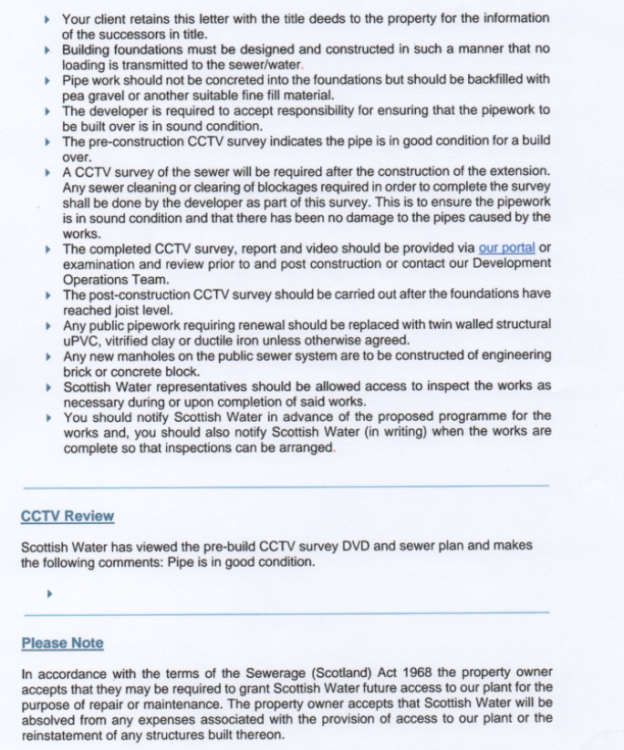
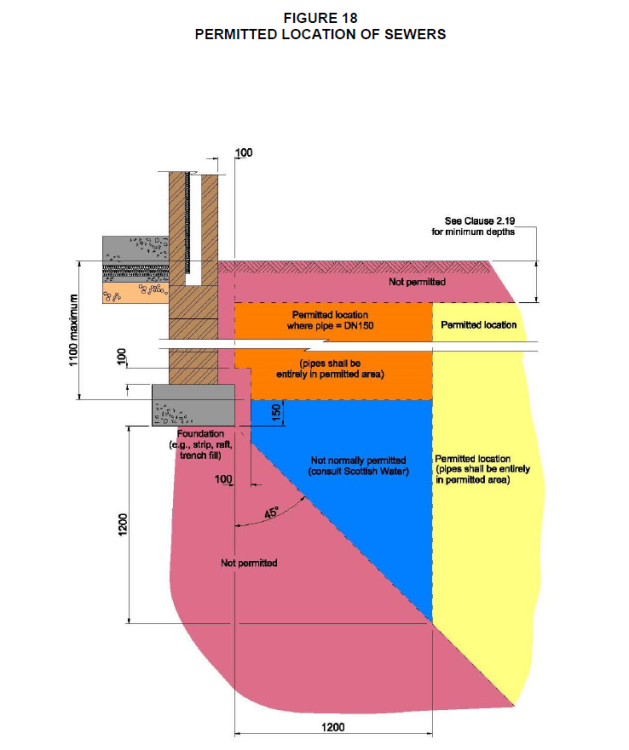
-
Hi @DissyStitch Oh trickle vents.. subject of much discussion. Ok to explore. Yes while you may feel you have agreed at the time and are now feeling boxed in you are afforded quite a lot of protection as a domestic customer. Now the contract you signed can't be unfair under the terms of the consumer protection act no matter what the double glazing company think. The contract you have even if loose is much different from a commercial contract where we expect that each party is experienced and has taken appropriate professional advice.. this type of commercial contract.. there are no friends in the desert here. But for you a court will take into account that you are a domestic and inexperienced Client. "They said that vents are not required if 30% of the windows are replaced at a time. " Now if you have that in writing then that is grist to the mill. Basically it is their responsibilty to check that they have are complying with the building regs and they also have a duty of care to you. The first question to ask is.. you installed the windows and where is the justification for your 30% view, the staged application process and how that sits with you having a correctly ventilated dwelling at the end of the day. Now it seems you have to some extent colluded to circumvent the ethos of the regs.. but they as a professional company should never have suggested you do this in the first place. If you write to them asking for justification and they don't respond then now you have recorded that. Anyway you could just chose to run with it, but you know the risks I think. Or you could get a bit rough with the window folk and start to find other faults with their work and this allows you to put pressure on them.. you skin the cat another way. If I was asked to find faults I would start for example to look at the mastic around the windows for compliance, see if they are they are fitted in such a way that they compromise the insulation or not, then the drip on the cills, is it enough (NHBC like 40mm of a drip), check that the windows are square and that the drainage is working.. by pouring water into the bottom of the window frame and checking it comes out the front somewhere. I would also see if they have mucked about with existing load bearing lintels for example or damaged say roughcast. This is part of the visual inspection side. Next stage is to say.. do we expose what is behind the reveals on the windows and look at the brackets and check they are ok structurally and as per the manufacture's specification. We also check that they have not compromised the fire barriers / cavity insulation if applicable. At no point do we touch the window itself so as not to let the installer off the hook.. lots of photographs. Next stage, the full Monty, would be to look at how the window is actually glazed.. have the glazed units been installed in the frame correctly and packed. Here I would call up someone say like at @craig and say do you know this system, how do we get the beads off to look at the glazing packing and can you send someone that knows how to do it without damaging the window? The objective of the above is to bring the double glazing folk to the table. To do this you need to find the stick to beat them with. The trickle vents.. we go full circle and ask.. did you assess the ventilation before you installed the new windows? How do you justify your approach. Have you made the ventilation worse and compromised the other parts of the house. Never mind your fly stuff about submitting the thing in stages.. you have a duty not to compromise the rest of the house so lets see your figures and evidence.. and we will take it from there.
-
Wrong Sand - is it still ok for bedding mortar?
Gus Potter replied to ChrisE92's topic in Landscaping, Decking & Patios
I think you will be ok. Buy some mortar plasticiser and do a trial mix with the grit at 4 to 5:1. Don't use fairy liquid as an alternative plasticiser. Much will depend on the weather, how fast you can go laying and whether you have a mixer or are hand mixing on a board. Give it a go and see how workable it is. If you find it is not that workable buy some soft builders sand and mix that in to the grit as the soft sand has the fines content. You won't need much soft sand. In some ways you want your bedding to be a bit porous as it is less frost succeptable so don't over do the soft sand content. Any left over then follow @Temp advice. -
Hi Mike. Thanks for posting this, very interesting. Also thanks to all the other folk chipping in, makes great informative reading. I have loads of question and like @saveasteading am enthusiastic about the idea but also cautious. A few of my thougths are: The durability. Yes they have a guarentee but if they do have a 3.0mm thick wall then I assume they are galvanised, if so what kind of steel are they using? One weak spot for me seems to be how they connect the plates to the top of the piles, are they welded and if so how is the protective coating made good after? For me I want to design houses economically that are going to last a lot longer than 50 years for many reasons. I think there may be a lot more lying behind this that you and your SE knows.. but we don't. Anyway for a bit of fun.. and hope this helps crystalise / inform your thoughts. The muck away cost, depth of made ground and what is in the ground. If you have reasonable access for say a JCB with an extra dig arm and some space at the front of the site to stockpile for lifting with a lorry with a grab then that is a way you could get the muck off site. But what is in the muck? Have you had the ground tested and the soil classified. The easy way to go about this is to phone up local muck away folk that know the area and transport costs etc. Ask them what they need and go from there. Sometimes you can have a bit of soil that is contaminated and the rest of the site is ok. If you can get a handle on this, say by testing at different depths and places you can work out how much soil is inert and how much falls into say the non hazardous category. The next stage up classification wise and the muck away cost increases a lot. What muckaway contractors can do if you only have some soil that is not inert is to mix it a bit with the inert stuff so that it can all be classified as inert.. and that brings down the cost... can be a lot... like lots! Do you know why the test pile was only inerted to 1.5m ? Maybe your made ground is not that deep? I'm curious how the design works holistically. You have neighbours next door? .. what if they build close to the boundary, plant trees or the boundary walls need repair. Will that cause you grief later on if they destabalise your piles. I wonder if this is worth looking at? My gut feeling is to go for the simple stupid that local contractors can deal with and avoid big costly errors and all the stress that goes with that. Around the perimeter dig hit and miss pits say 600 mm wide with a 900mm long base at the level of the good ground. These would be spaced at say 2 - 3.0m apart. Think of this a bit like partial underpinning a building. Doing it this way means you are less likely to cause problems with the boundary walls etc. This gives you a series of pits around the perimeter and the boundary walls etc remain stable. Now maybe dig two more lines of pits running front to rear parallel with the side walls of the site. That gives you a grid pattern of pits and splits your effective structural floor slab span into about 2.4 m.. the benefit of the grid is you can span in two directions which introduces economy. Think of it like a carpark floor slab with columns in both directions. You can finnesse this later to deal with point loads. Also the made ground may vary in thickness, A JCB with extra dig (3.5m) will get you down to 2.2 - 2.4m, the extra dig gives the reach to get into the corners of the site and allows the driver a bit more room to manoevre. You fill the pits with concrete to create piers in the ground. They are just concrete piers and not reinforced with rebar. If the ground does not contain sulphates or has not been used as say a scrap yard where folk have been tipping out acid for years then the concrete will last...acid is not good for concrete as are suplhate rich soils, we need to classify the ground as non aggressive to concrete. If so then I would first look at using a GEN2 concrete. The GEN2 has a compressive strength of 15 N/mm^2 so a fairly week concrete and reasonably cheep. Get a price for that to gain early confidence. You can work out the volumes for muck away. @saveasteading gives the best advice here. Ok.. when you look at this idea and the practical side.. how do you do that? Well it's all about sequencing of the works.. keep the machine working, the concrete arriving and the muck getting carted away. What you don't do is did all the pits, then try to get the muck away and the concrete later, by that time for example a lot of the pit sides may have collpased.. and then you site will look like it has been cluster bombed. Start at the back, dig enough for say a 6 or 8 cube concrete waggon, fill the pits and carry on or have the weekend off. Now you don't have to be that accurate! The site will get churned up a bit, levels will get lost, try and keep the alignment though. The secret is to leave the concrete in the pits high. The next morning the machine just scrapes off the green concrete. As an aside the general rule for pile placement... we usually design for the pile being 75mm away from where it should be as shown on the drawing.. we are not talking precision here.. it's ground engineering. Once you have completed the installation of the piers you are out the ground and on your way. Assuming you have a two storey house my starting point would be to aim for a 180 - 200 mm structural slab and then see if I can get that down to the 180mm thick side, if so is there any benefit. Maybe better to have a 200 thick slab on a self build and not have to thicken the slab edges.. much easier to do on site, less opportunity for construction errors.. can we do it flat all the way. The made ground. Well assume we have scraped off the green concrete tops of the piers to say 0.0mm / - 50mm. I would want to guard against the fill (made ground) swelling up and lifting the slab. Say there is a bit of swell potential. Lets put a bit of 50mm clayboard in, that once wet falls to bits and lets the ground swell. On a 9.0m span we need some watering holes to collapse the board later, easily dealt with. Main thing is not to leave the piers high as that cuase punching through the structural slab. Next stage is to design the slab. Now we need to keep an eye on the rebar area vs the slab thickness as it is a structural slab.. story for another day. In essence a slab that is too thick can eat rebar.. so thickness is not always good. Now we have a structural slab, reinforced locally to deal with point loads.. but really simple and easy to construct. You now have a simple platform to put the rest of the building on top. Simplicity = Savings. Put a structure on top with the perimeter built off the slab, use say marmox blocks to make the thermal breaks round the external walls and standard details. There are loads of folk on BH that know this approach like the back of their hand, have been there and worn the tea shirt.. and know it works, some can even prove it. It may be worth revisiting your design concept, speak to your SE now you have got a bit of feedback from BH. Your SE should be fine with you and recognise that they have a Client that is going through a learning curve. They may ask for a bit more but as folk are hinting on BH there may be different ways of doing this that will easily offset any extra your SE may ask for. Hope this helps and have fun with your project, it's something very few folk get to do.
-
Yes good point.. like that.
-
There was a fair bit of load. Behind that wall is a big open plan space running gable to gable, there is a fair chunk of roof also. The first floor joists frame into the inner leaf, thus floor load also on the strongboys. The strong boys were supporting both inner, outer skins, the first floor and part of the roof. I had designed and specified props on the inside, steel needled with lacing and diagonal bracing between the props. The temporary works were also designed to resist a bit of temporary wind load on the gables. The props were resting on the edges of the concrete slabs, under the slabs was clay.. like soft butter, no appreciable strength at all. None of the props were in tolerance plumb wise as per manufacture's recommendations. If that was not bad enough they had then gone ahead and knocked out other walls on the inside, the folk were still living in the house. The thing is that to do it right would have cost another say £700.00 quid and an extra day and a bit time wise for a couple of guys. All they had to do was follow my drawing. The lacing and bracing is just done with standard scaffold tubes and couplings.
-
@ADLIan sums it up. You may just get away with this but not ideal. Your Architect is rightly cautious and probably nervious about approving this. To solve the problem you may want to pay your Architect a bit more and ask them if they will arrange to get this analysed for the dew point. If it comes back clear cut that the dew point is above the VCL on the top side of the boarding then you are on the right track. but you need to make sure the VCL is the right type and has been installed correctly for your own benefit. Next you need to check that you are still achieving the U values for the roof as the 25mm below is subject to the repeating bridge of the joists. The repeating bridges will have reduced the thermal performance C.f having the uninterrupted insulation on the top side. Lucky you.. that suggests you have a bit of spare capacity in the insulation or BC have missed the repeating bridge effect and the shift in the dew point. For you own piece of mind get the dew point checked. If the roof starts getting wet that will cause big problems later on, a bit extra heat loss?.. well use common sense and beef up the insulation elsewhere for you own interests. When we get problems like this we take a compensatory approach.. add insulation in easy places to counteract the builder cock ups to some extent. If it all goes horribly wrong.. probably not.. then before you rip the roof off consider adding more insulation and a new membrane on top of the existing. Often you find that if an extension you need to get the roof flashing in under the upper floor windows. Or you could take the ceiling down, take the 25mm insulation out and compensate else where insulation wise. There are often plenty ways round this so don't worry too much about this for now. Talk to your Architect, make sure you understand the potential problems, make an informed decision.. then you will feel much happier. On this ratio of insulation above and below the VCL you may find your are ok. Mind you what on earth was your builder thinking about when they deviated from the Architect's spec?



