


Gus Potter
-
Posts
2383 -
Joined
-
Last visited
-
Days Won
34
Everything posted by Gus Potter
-
It is possible but there is a catch. There is to my mind a massive and fundamental niavity in the west where we think that the rest of the world thinks like us. They don't. Ball park figure 2/3 of the world are either driven by autocratic regimes or a form of religion that is fundamentaly not compatible with our western way of life. The last thing on my their minds is the environment and the sooner we wake up to that more chance we will have of saving the world climate wise.. and all the organisms that rely on our fragile ecosystem. I grew up in Arfica, spent lots of time exploring that continent, understanding different cultures. I have also travelled in the middle east.. I remember when I was a kid turning up in Beruit round about 1976... someone thought it would be a good idea to shoot up the airport terminal and chuck in some hand grenades.. there was dead folk lying about, blood all over the floor and up the walls.. nothing has changed.. except now the weaponry available has become much more devastating. I had the pleasure of briefly meating Idi Amin, he was just a corporal then but became a president. The western world has become beholdened to regimes and religions that are not compatible with our way of western life. We in the west think that by appeasing they will be nice to us.. they won't. In the West we have allowed these countries that don't share out way of life, values of equality and freedom of expression to become our manufacturing base and dominate the supply our some of our base materials we need to manufacture, there will be a price to pay for this... I think we in the west will be invoiced sooner rather than later. I say this as an Engineer.. it's partly logic and partly probability. Until we address the balance politically there is little chance of us saving the plant. The other 2/3 of the world and in particular their leaders will just do enough to make sure that they and their immediate cotary will come out not too bad.. and sod the rest of humanity... and that means pretty much all of us on BH! Sadly it may need a war that significantly reduces the human polulation and that may ultimately save the planet and all the other organisms and animals that share our land, sea and atmosphere. To finish on a high note..yesterday I was chatting to a fisherman pal of mine. He was showing me some of the fish he had caught and released off the the west coast of Scotland. He had caught a 200lb Scate, photographed it and released. The animal was beautiful, enormous, it's colours were so vibrant.. it made me wonder.. why not just leave it alone? he said it was a common scate and these are protected so catch and release.
-
Ok no money tree. What about taking this approach? If you have piles and a ring beam then the concrete is probably going to be around a RC35 (the RC indicates that this is a reinforced concrete) and thus if you lay, compact and cure it properly it will be pretty resistant to moisture. Now we do this a lot on industrial buildings.. B & Q for example. Take a leap of faith and recognise that this is not a habitable space.. all you are doing is controlling moisture from the ground in most circumstances. This type of conrete is good enough to be pretty impervious.. but as it is a stronger concrete it will tend to crack. so we put in reinforcement to control the crack width. In other words treat this as an industrial building and there are tens of thousands of these that are built this way. BC are ok with this appoarch. Just remember if you want to convert it later to a home office it may need a lot of extra work, not least as you have an unisulated slab. If I was designing this at concept stage this I would decouple the design into different elements. It will save you money on builder cost. I say concept as there are doors / threshholds etc that need to be considered and you may have varying ground levels externally. I would pile it first. Now you have potential ground heave, hence the clayboard. I would put the clayboard under the ring beam so you don't generate uplift in the piles. I may want to put it up the sides of the ring beam as well to stop swelling soil pushing the piles sideways. Once your ring beam is in place build your brickwork inner skin. Lay the clayboards in the middle and put the DPM on top of them. Then do your reinforcement for the slab and cast the slab. Now that sounds simple but there there are things you need to know about clay boards.. some need watered so they degrade and collapse. To get more guidance tell us about what the size of the garage is (floor span and length is important, as it relates to a good economic slab depth vs the amount of rebar you need to use and if you need joints in the slab) and why you need clay boards in the first place.. a soil report would be helpfull. Some garages are small and don't need much thought.. but some are very big.. the size of a small house so you can lose a lot of cash if you don't grasp the basics of design. I think you need to go back and identify how the soils behaves, what the piles are doing, if you have trees close and thier type and size and your ground levels. Only then can you get the right position of the DPM and DPC's. Best thing would be to post as much info you have as this will invite the best response from BH folk.
-
Fair enough.. but it's primarily the fittings, bends couplings etc and the glue if you are using it. The main thing in my view is that if you are using above ground fittings and brown pipe that you may sure the seals / glue are compatible. What's the latest code we should be using? .. and what parts of that have been ammended relate to what we are talking about?
-
Does anyone know a Balustrade supplier with this type of fixing?
Gus Potter replied to Mikey's topic in Timber Frame
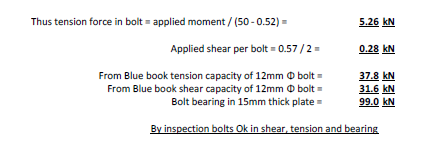
This is minefield! Generally the folk that supply the glass and track test it on a rig that is very stiff. When you look at the fine print of their test data they tell you this... but they don't take any responsibility for the fixings of the glass or glass mounting track to the supporting structure. Your general SE designs the principle structure but when you look at their fine print it often says "glass / track and fixings to be designed by specialists. So no one checks the actual fixing between the track and the main structure. The main reason for this is that the supporting structure can be wood/ concrete / steel etc.. everyone passes the buck... and for good reason as it takes time to do the calcs as every job is different. In Scotland everyone knows that the fixings must be checked and then you should produce a drawing which takes time too.. but in England (apart from Yorkshire folk who are in my experience very shrewed and clever) you are still often in the dark ages I have to say! It's ok I'm not a scot nat.. just yanking your chain... but if you followed the process below (and paid for that part of the design) you would not get into trouble. Below is a part of one of my designs for a glass balustrade that checks a side mounted track and fixings into a structural steel assembly. What I'm doing here is the bit that the general SE doesn't want to do or the glass and track supplier as both take time, effort and an understanding of the behaviour of what it is they are fixing the glass and track to. The funny looking equation is just a mixed up version of O level maths (quadratic equation) that you would have been taught at 15 years old.. if maybe been born before 2000.. it's nothing geeky. Most of the calculation above determines the tension and vertical load on the fixing between the track and what is supporting the glass. The tension in the bolt varies from track type to type and depending on what type of material the track bears against and what material the fixing go into. But make no mistake.. the material you are fixing into can have a dramatic impact on the bolt forces and the possibility that the whole thing comes lose. The above is for a fixing into a steel backing plate (the hatch suggests concrete but it is actually steel) but if fixing to timber the red bearing area would extend upwards and the forces in the bolts would increase a lot. The main thing is that a few mm in terms of bolt postition or a change in material can have a dramatic effect. That is why no one wants to step up to the plate! In summary the fixings are the key bit and what they are going into. Failure to check all the different parts will lead to disappointment not least. For all on BH .. if you are doing this type of balustrade then it is essential to follow the instructions.. don't make it up as you go along! @Mikey hope this helps a bit.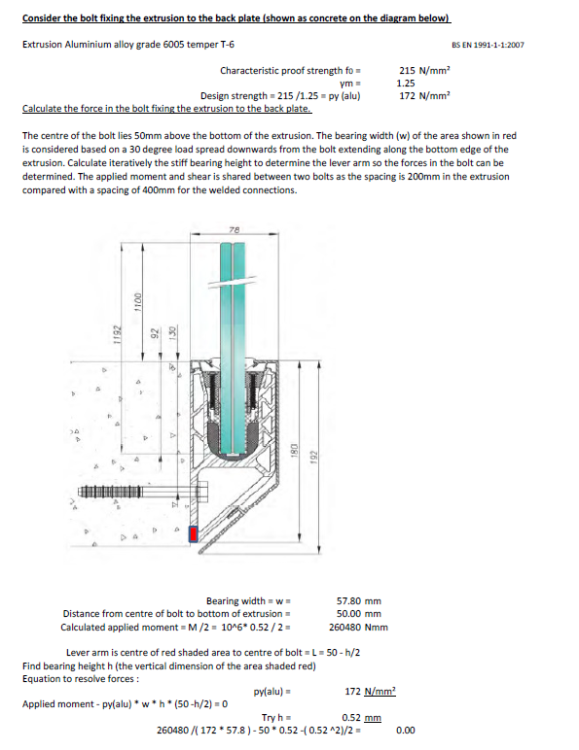
-
Why is your SE not helping you here? BC are just there to ensure you comply with the building regs..look at their fine print.. they are not there to give this kind of advice.. the fee you pay them is far too small for them to take on this kind of liabitlity. We as SEs often do bespoke foundations designs.. if you pay us the right fee we can spend extra time putting together a design that will likely save you money. Bespoke designs often take the general BC and NHBC foundation rules and adapt them to suit the site. Sometimes we don't even take into account the standard BC / NHBC / LABC etc guidance.. yes we can do that as SE's.. we design for safety and movement.. we also carry insurance to underpin that and keep our Clients financially safe. This concept that BC et al are the be all and end all in terms of design knowledge is a misnomer. We at the sharp end (Architects / SE,s etc ) justify our design. It's not up to BC to dictate what we can and can't do provided we can prove our design is applicable to a particular site.
-
Do you also have a money tree growing in the garden? Have you asked you SE about just how much movement can be expected from the adjacent trees? What about building the garage on a 150mm thick or 180 - 190mm thick concrete flat structural slab with mesh that floats about and has a movement joint between the house and the garage structure? Yes I know the 150 or 180 - 190mm sounds like an odd number but there is a technical code compliance reason for this. There are few technical details associated with this but it seems to me you might be using a sledgehammer to crack a nut and burning cash going for piles... Is your site on a slope? Which way does it face.. as we look at prevailing winds and where the roots of the tree will grow. Has your SE been paid enough to find the most economic solution? I'm not kidding you here.. with a bit of thought you could have a slightly thicker concrete slab that moves about but still strong enough to stop the walls from cracking.. it's worth asking the question.. imagine if you found out later you had chucked a load on money away on blindly following BC / standard guidance and put in piles.. all for a garage! Now that is an odd question as a Client would expect that the SE fee would deliver the most economic solution.. but.. that is not the way it works.. as an SE will need to spend more time finding the more economic solution.. but that set against the cost of piling! Now I may seem to paint SE's in a bad light.. But there are folk on BH who think paying an SE or an Architect more than a grand is a waste of time as they know better.. well to those all I can say is.. the door swings both ways you smarty pants!
-
Alan.. what a brilliant post and thanks for the compliment. I posted based on what I know from the design / engineering side. You have just fleshed out the part of it in legal terms and more importantly the procedure you can follow.. big learning curve for me / stuff I didn't know about. You explain well how to execute an effective strategy... off to read your post again. Thanks again for spending time writing.
-
Don't worry too much.. it is what it is. There are plenty folk on BH that have spent ages planning heating loops .. but on site when the pressure is on pipes get lapped over and some have little cover. Life is not ideal! Think about this another way..it's not 70 deg C water you are pumping in through the pipes more like 35 - 45 deg tops.. about the same as our body temperature give or take. Ok you have some bamboo flooring. Now imagine you have some patio doors and the sun has been streaming in all day on the floor.. how hot will that get locally? I have a big floor on UF.. but floated it rather than glued it down.. it moves about but is still a happy floor. Don't panic.. just turn it on and enjoy. Bamboo is very forgiving... think about the climate it grows up in.. humidity, big changes in temperature and so on. What you do need to watch out for is this. In the winter when the UF is on.. the moisture content is low so the floor shrinks. BUT the biggy is when the heating is off in the summer the moisture content will rise and the floor will swell a lot that funnily is when you get the visible problems at the end of the summer.. and folk blame the UF. Leave a gap round the edges of the flooring for the movement.
-
Hi Mike. In Scotland under the planning regs there is a bit that covers the stuff in BRE 209. I agree.. if they are not honest or try and cause delay without evidence it will go against them. If it was me developing this site I would make sure I had a complete evidence based grasp on the situation, present that to an insurer, get insurance and cart on with the build.
-
Site Insurance - The first or final hurdle?!
Gus Potter commented on mike2016's blog entry in The Fun Irish (House)
"I didn't think for a second that piling / groundscrews would be an issue for an insurance company" Tanners should have provided sufficient information to show that their design was valid for 50 years as they should know this is the basic for lending criteria and insurance. That means that all the parts and contractors guarentees / warranty's need to be good for at least that time or someone has to cover it in one way or another. They know your brief and should be sufficiently experienced to design for best value and anticipate things like insurance premiums, buildability and overall cost of their design. As an SE you have a vicarious responsibilty to highlight to your Client the knock on effects.. it is just not good enough to say well my SE design won't fall down. If you wish post you plans, underbuilding spec, ground report and screw pile specification as interested in your design proposal. -
Ok let's assume they do. Now lets delve a bit deeper into how you put something together. I said earlier that "It sounds brutal but if they have made alterations without consent then these don't count.." You may need to force their hand... but if you do then you need to do a bit more homework. Who decides the amount of light you are entitled to, how do they measure it and then judge what is a reasonable loss of light? We all have to live together so as development occurs some light is inevitably lost. Take London and say the Shard.. it casts a big shaddow.. some folk somewhere must be getting a little less light! But how do you decide what is a little less or swinging the lead? I have attached BRE 209 which I think is publically available. Start at page 15 Clause 2.2.7 and then read around. This bit deals with when you are pretty close to a boundary. This could be the key bit of info you need in that there is recognition that a lot of development results in a certain loss of light. In summary if you can tailor your design to comply with the recommendations of BRE 209 then your neighbour would have to put forward a counter arguement.. which could be expensive for them as they would have to come up with why they disagree with the BRE. I use this as in Scotland and it is referenced in the Scottish planning regs.. so you should find reference in the UK regs as the BRE serves all the UK. Also they would need to fesse up as to what they have been doing next door! If the loss of light impacts a bathroom for example .. then the game changes. If you can get a design that say complies with the recommendations in the BRE then you have strengthend your hand. But to cover yourself you could take out an indemnity policy to cover potential action by your neighbours. Ask your solicitor what this would cost for that piece of mind. You would need to jump through some hoops insurance wise, get someone to translate BRE 209 in numbers with a report. If they did decide to kick up a fuss and find out your insurance is going to cover the costs.. up to them if they want to lose their shirt if their case fails. If they win then you should be covered if you set the policy up right.. which will take a good bit of your time to explain to an insurer what the risk is you want them to cover... hence the homework. BE CAREFUL.. for these types of indemnity policies to be effective you must often not alert a potential complainant. A good example here is where you have converted your attic without BC / planning permission. If you let the council know that you have a problem and then take out the policy there is fine print that can make it invalid. @moncchichi be careful not to identify yourself or your site on BH which is a public forum. Hope this helps and keep us updated as to how you are getting on. BRE 209 Site Layout Planning for Daylight and Sunlight BRE 2022.pdf
-
Welcome to BH from me. This is not my area of expertise but you'll get loads of help and advise here from some real experts. To get the best advice I would post if you can floor plans and info on the building construction to start with. To get expert advice the more info you can give the better.. that means if you put effort into letting folk know what you have they can give you targeted advice rather than generic answers. Photographs really help a lot.. much more than you can imagine.. 1 photo = 1000 words! Enjoy BH
-
The best Architects have a good knowledge about structural design and the best SE's have Architectural knowledge and that make projects come alive. Often at reasonable cost. Of course all need to have imagination.. without that.. it's a race to the bottom and that is not good! But that comes at a cost as you are paying for years of experience. Once you get to a certain age in the design world (I've been at this construction / design world for nearly forty years and the lines get blurred), I think of myself as a designer that knows a bit but learns new stuff all the time from all the posters on BH for example. Thanks to you all.
-
@Canski Check out @Russdl how he cut the firrings and set up a basic Skill saw.. gold dust! Now you have my techy bit and someone who has been there and worn the tee shirt on site.. will this work for you?
-
The public information is the key plus you need to go to the council and library archives and possibly pay for a search on what if any consented alterations have been made to the house next door. You may find that the neighbours have made unauthorised alterations and that may explain their reluctance to engage. How deep have you delved into the public records? I always advise to play something like this off a straight bat. Go right back and make sure you have all the basic facts correct. It sounds brutal but if they have made alterations without consent then these don't count.. just don't warn them in case they get restrospective consent before you get your submission in.. Once you establish that you are on a sound footing and you work from there. The right to light calculations are complex when close to a boundary and they vary depending on how your project will impact on say a utility room next door or a bedroom / habitable space often called an office but still a habitable apartment. You also have over shaddowing that applies to say external spaces and privacy.. looking into their windows. This requires diplomacy as you are going to have to live next door and you don't want to fall out big time in an ideal world.. but you if you can establish what you are entitled you have a basis on which to negotiate your way ahead..as you have other things to deal with as follows.. Can you post the soil investigation report and a plan of the site showing where the tree is? What is the height of the tree, what is the trunk diameter 1.0 m above the ground, how far does the canopy extend, what is the orientation of the site in relation to the tree. It's important to understand where the tree gets it's structural support to resist the prevailing wind and nutrients from.. (which could be from a diferent direction). Then you can take view on where the roots grow and the impact it will have on your founds. Your SE is playing safe and sticking to the BC and NHBC guidance.. probably because you have not paid them enough to look at this in greater detail. Pay them an extra five / seven hundred quid to sort this out, provide a bespoke Engineering solution for your site and they could save you thousands. A bespoke solution would require your SE to have sufficient expertise in this area which not all SE do have. Can you cut the tree down and wait 18 months before building?.. a brutal approach but we are taking money here and not one I would advocate as a first option.. but if the tree is old / diseased that may be the best approach. You could go to an Arborist for a tree report that covers root propegation and life expectancy of the tree.. why adopt a complex found design if the tree is on it's last legs.. trees die like all of us! I think your SE is being cautious here as probaby does not have a lot of info to go on. Work on the premis that you'll need to some PWA notification, don't let this drive your initial design assumptions. Any pile or found that adds significant extra stress to ground you don't own basically requires consideration under the PWA. Screw piles do indeed mitigate the need for deep excavations.. but they come with potentially significant problems later on.. there is no free lunch. I would go for the simple stupid type found, get a handle on the tree, gather the facts on the neighbours position in terms of light, don't panic and take it a step at a time.
-
The concept is great. For example there are folk on BH that have large plots.. access to excavators as part of their day job, space to dump the muck away and so on and this could make things cost efective. On a small scale I have UF in a structural concrete slab on a well insulated perimeter wall. I know I'm heating the dumpling of clay soil in the middle of the house.. like a battery.. I notice it as going into winter we need to pump in a bit of heat to dry out the concrete slab above the insulation.. and warm the dumpling below.. it takes about a month to settle and after that all things being equal the energy input drops off. As on clay there is no ground water flow that carries the heat away. I'm sure I have some kind of low temperature battery / heat store .. just can't prove it.
-
Good to see you making progress. Hope this helps. As you are doing this yourself you are probably doing a good job.. getting levels etc right. I like your roof build up spec apart from "the massive firring pieces" and a vapour barrier to the underside of the joists. Your joists are in the warm envelope.. why the vapour barrier.. maybe best to let any water vapour that condenses in the joist depth zone just re evaporate and come back into the room? Anyway by the time you paint the ceiling it will be failrly impervious anyway so will resist most say steamy bouts that may occur in a say kitchen area? Ok now the structural side. These types of roof are pretty light weight so don't deflect that much under normal conditions.. so under these loading cases your 225 Posi joists won't deflect / creep that much. Practically under their self weight they will dish a bit in the middle as you would expect. When you lay them examine each one as the won't be straight.. put the bendy side upwards.. like a pre camber. On the top side of the drawing this will be fine but you may trap water behind the kerb at the bottom of the drawing. An easy way of sorting this out is just to add some extra GRP layers on the top / high side (bottom of the drawing) to give you local fall so the water / snow melt does not get trapped behing the kerb at the bottom of the drawing. Once you build it and put the spirit level on it you'll see where you need to build up locally... this you can do with GRP but not say as easily and well with EPDM or PTFE membranes. It looks like you have potential for snow drift loads, snow being driven against a higher parapet wall and falling onto the flat roof or falling off a higher roof onto the flat roof etc. I think your SE may have clocked that hence the joist size.. so you can go back to BC if asked and say my SE has accounted for the loads so can use a shallower gradient... 1:80 For all it's not just the extra weight of the snow but the fact that snow blocks the drainage routes up that causes the problem.. it's that wet snow / rain you get.. it clogs everything up and is heavy.. not like powder snow you ski on... it's just nasty. Now it looks like your SE has sized everything up properly in terms of joist size thus you can use the finished fall of 1:80. Roof length / 80 fall is 4940 / 80 = 62mm fall. But this requires a configuration of firring pieces that will be 62mm thick at one end tapering to zero..! This means that you have to cut each firring piece to a different depth, to a close tolerance and fix it to the top of each joist.. which the merchants are not keen on supplying as each firring piece is bespoke. Where the firring pieces are thin you use longer fixings and glue... the glue is important as is allows transfer of the forces in the roof to the walls. called diaphragm action.. long fixings tend to bend so we need the glue to properly bind the firring to the tops of the joists.. like a Glulam beam. The thin firrings are just packers. You need 40mm screw penetration into timber so as soon as the firrings are less than 40mm thick you need longer fixings that go all the way and at least 40mm into the posi joists flanges. @Russdl has done something similar as has height and thickness constriants. I hear he cut the firring pieces on site with a Skill saw, got them spot on and made a saving... even put a bevel on them as the top side of the firring piece needs a scuff to follow the plane of the roof as it slopes perpendicular to the firring piece. In summary.. maybe @Russdl will let you know how he did it... with varying depth firring pieces tapering to effectively zero.. which could solve your dilemma. In other words you roof fall will be 62 mm. At the high end the roof will be 62mm higher. If you end up with only 100 mm upstand at the bottom of the drawing this should work if you seal it all up well as you have not got potential snow drift build up or wind driving the rain up the wall as it is on the leeward exposed side?
-
As if you probably don't have enough on your plate below is a link to Polypipe https://www.polypipe.com/housing/above-ground-drainage-faqs Which says... "Can below ground PVCu drainage pipe or fittings be installed for above ground sanitary pipework? Below ground PVCu drainage pipe and fittings can only be used underground, they are not manufactured to the correct standards or material formulation for above ground applications, Building Regulations Part H state that PVCu materials for above ground gravity sanitary pipework should be to BS EN 1329" Below ground pipes tend to be brownish. In terms of internal or external pipework.. internal pipework is fine, specify this often.. but recognise that at some point someone is going to put something daft down the toilet or a lot of fat or a decorator is going to wash out some fast set or Polyfilla down the sink. So long as you think about.. where will the blockage occur and make sure you can rod the drain form one end or the other. What you don't want to do is have big access hatches in your nice decor / tiling or other finishes.
-
Thanks for the appreciation.. but practically and on site when the pressure is on.. the sequencing of works could fry everyone's brains.. and if it "forgotten" about it could cause havoc later on. Mind you this is the advantage of self building and keeping an element of control.. if you put the work in early and understand what you need to do and when then you can tackle the whacky and present it as simple to the builders.. which helps stops them adding on daft costs. I can see this might suit the home automation folks on BH.. its a free duct (apart from the fabrication of the cap and notching at the base) so can you put something in it!
-
I wonder if they have hidden the rainwater pipes inside the columns? The cap plate at the top would be like a polo mint.. at the bottom the pipe exists via vertical slot or something along these lines. Would be interesting to see if that works structurally, probably would as the loads are pretty low if using say a 10 inch circular hollow section.
-
What great posts from all, you all get a "like from me". I used to say when I was a main contractor. If you PM on a self build and work hard you can save 10 - 15% on the build cost. The posts above are great as they show you how you have to adapt and wear lots of hats.. build relationships, network, learn to deal with suppliers, getting let down and go through a big technical learing curve so you know that what you see getting built is right and complaint. There is no free lunch, it takes hard work. However if you put your back into it big savings can be made that are tax free. One big thing is you can do overtime at work, earn extra, save and pay someone else to do it all. But you get whacked for income tax on your extra earnings. Or you can spend less time at work and work on your build.. you'll actually have to work much harder.. but it's for you so you don't log the hours spent, the personal sense of achievement can't often be quantified in monetary terms. The main thing is that you get that quite satisfaction of doing it yourself.. few folk in the UK ever experience this so grab the opportunity and go for it. There is an old saying .. folk that work hard often get lucky!
-
Pretty much all of them.. that is one reason for self building.
-
Beam helper on stair stringer
Gus Potter replied to MortarThePoint's topic in General Construction Issues
What a tidy job.. well done. Those birds mouths at the bases of the stringers look great! The weak spot is at the top as you are fixing into the end grain where the notches for the treads can split off. Follow the load path which is.. each tread is on a non continuous piece of timber to some extent... the notched part. The notched part transfers the load to the main continuous part of the stringer. At the top you have three fixings into the end grain, probably only two of these are really doing the work, hard to tell. Assume that at some point the timber will split to some extent. If you plate the outside stringer with ply and glue any potential problem should be mitigated. The ply will also give you a good stable background to glue / fix the facing timbers.. in other words you kill two birds with.. Fantastic! Can you post more photos as you go to let folk see the results. It's a great way of doing it if executed well. You have spent the time making the underlying structure stable at low cost.. now you get to play with the high end finishes.. which should be cheaper comparitively as they are non structural.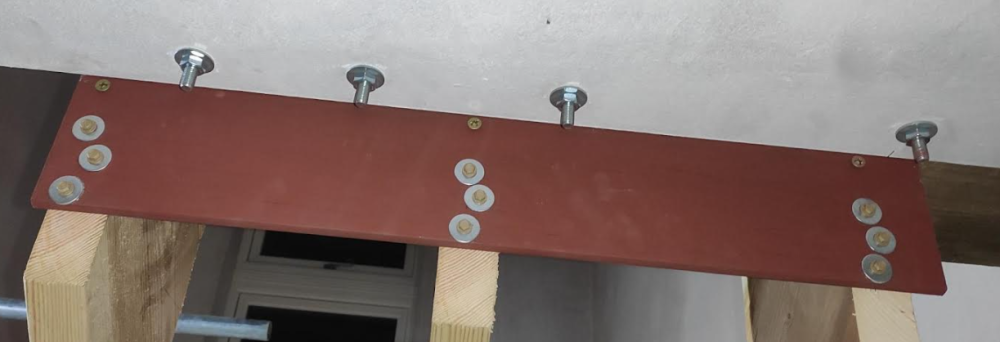
-
Nearby Piling, advice needed!
Gus Potter replied to Residential build's topic in General Structural Issues
Lots of good advise from folk on BH. Excuse the spelling and grammer. Hypothetically if you came to me I would take a different approach. Yes I know we have the party wall act etc. But why focus on that as you main stay of arguement. The PWA( England) and the law in Scotland is not strong and has a lot of gaps that can be exploited, a weak spot is ground water, flows, head and flow paths. Lets take a few steps back. You have an old house, the original part circa 100 years. I doubt it will be sitting on the sedimnetary bedrock (Greensand). In fact it surely can't be as you have an extension with 1.0m deep founds... I suspect that the extension found depth is driven by standard foundation rules from BC that applied at the time. In other words your house and extension are sitting on a layer of different soil that is underlayen by Greensand. The soil you have under is proved so far to be adequate. Now ask.. why are they next door piling down to the Greensand. I suspect it is because they want to put more load on the ground compared with the load your house is applying to the layers of soil above the Greensand and it is not working for them.. so they are piling. Now as your house is probably "floating" on the softer layers above the green sand then you need to look at what could pose a risk later. Yes you have some vibrations but for me I would want to look very carefully at how they are going to drain the site next door and if that will change the level of the ground water that could result in damage to your house. Now that sounds all a bit abstract.. but if you got me round I would hammer the developer for information on things like this and say.. your are being unsafe.. I'll report you to HSE and all the other bodies if you don't give me the information..that I need to execute my responsibility for public safety. I do a bit of Claims work against say the NHBC and major developers. They are masters at deflecting, threaten legal action.. but when you hit them on structural safety.. they have no clothes! -
Thanks for that tip. Every day is a school day. I'm off to think about that and put that in my book of learning. Scary thing is that the older you get the more you realise how much you don't know!


