IanR
-
Posts
1841 -
Joined
-
Days Won
6
Everything posted by IanR
-

How net zero works in reality
IanR replied to oldkettle's topic in General Self Build & DIY Discussion
From the second sentence: Suggests he/she hasn't done any research in to their opinion piece, so is not worth investing the time to read. Edited to add: From UK Government published White paper 2019.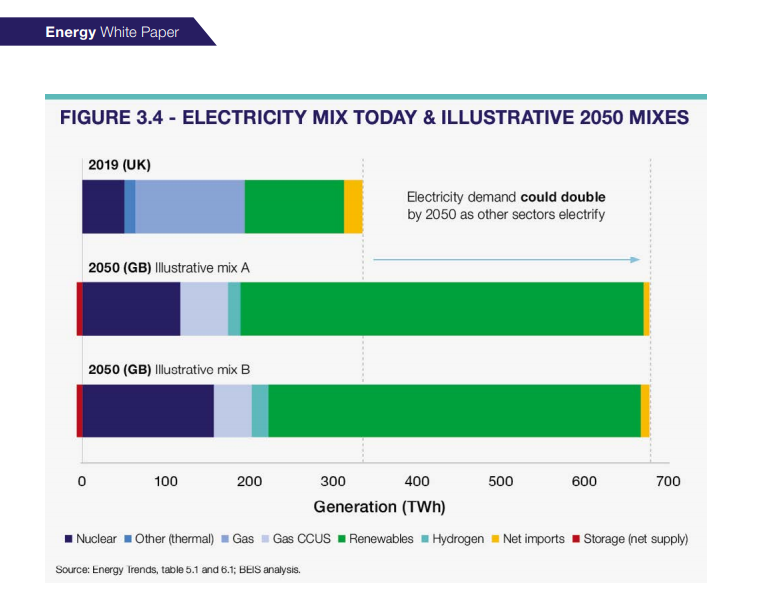
-
Do I *have* to allow a planning officer access?
IanR replied to harry_angel's topic in Planning Permission
While internal changes, not effecting the exterior, do not fall within the planning definition of "development" and as such do not require permission, they would be within their rights to ensure the habitable area of the building is as approved on the plans, even though there would be nothing stopping you converting after occupation, as long as there is no condition that says you must not, and it meets building regs. They may also wish to ensure that any internal changes have not effectively changed the building's Use, by making the building no longer fit for the Use it has planning permission for. More related to agricultural buildings. If they can't make those checks, I would assume they would refuse the S73 on the basis they've not been able to ascertain if you have honoured the approved drawings. But, if there's no staircase and it doesn't appear there is provision for one, then it can't be a habitable 1st floor. If there is a stair sized opening though, I would be inclined to board it up to a loft hatch sized opening, with no steps available to gain access. -
First Self Build - Paragraph 79 Home in AONB
IanR replied to thefoxesmaltings's topic in Introduce Yourself
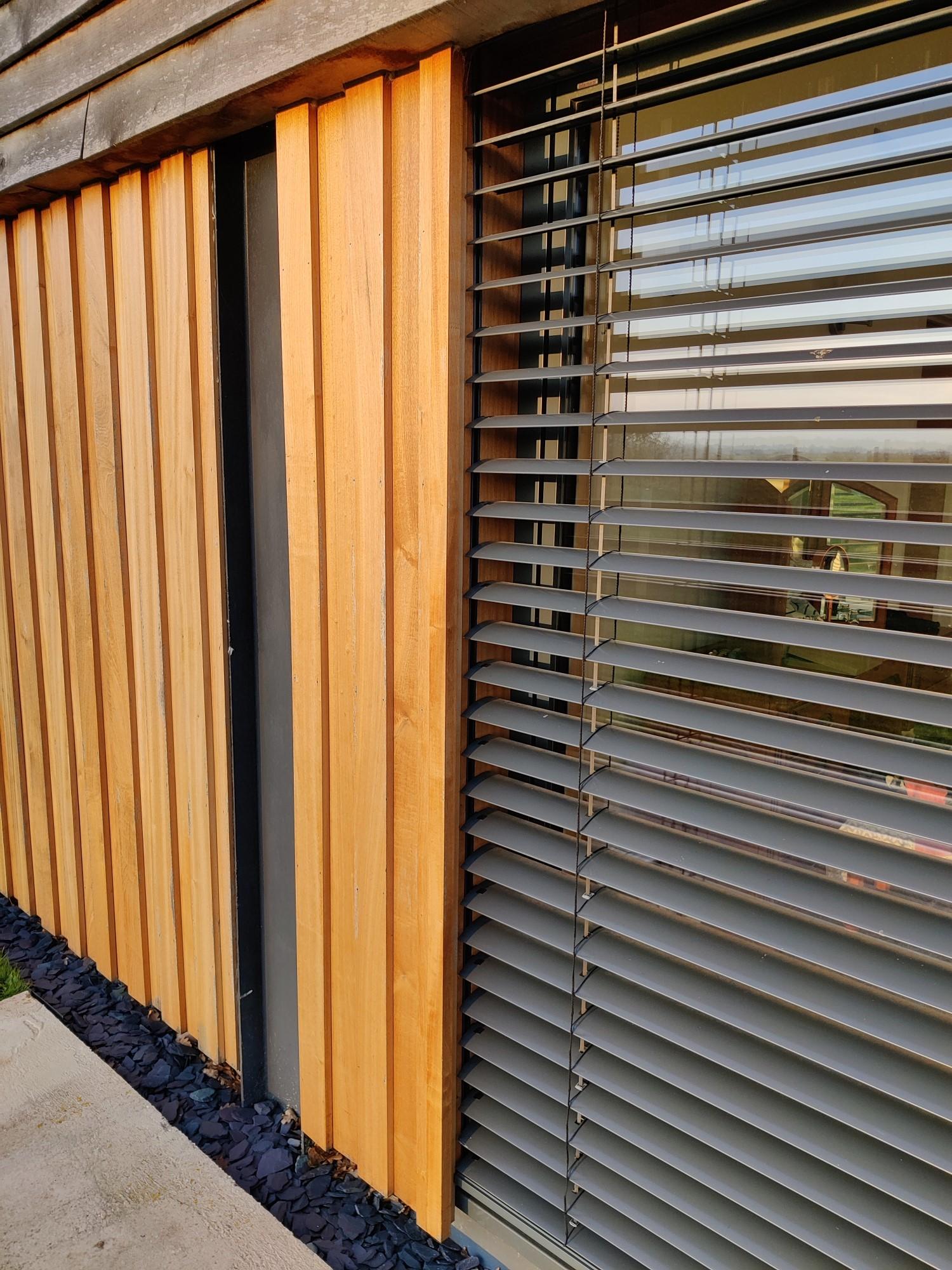
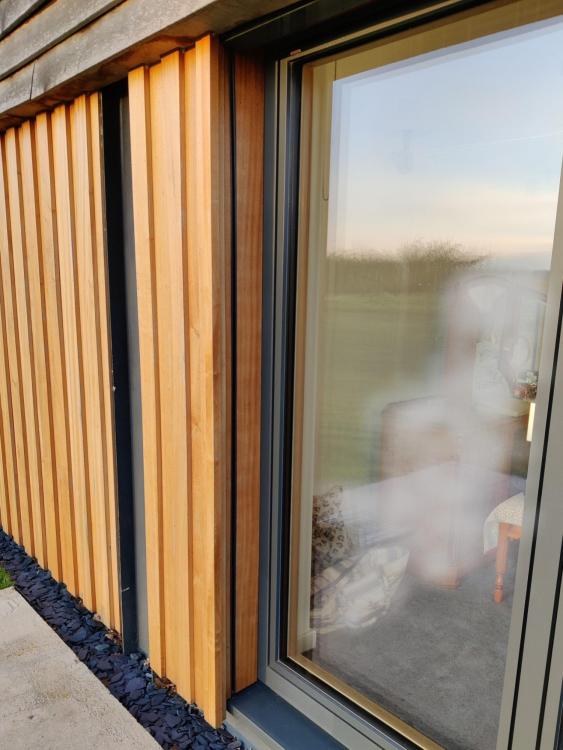
My installation is external to the wall structure, but within the timber cladding. You can see on Thorfun's install, it's sculpted in to the structure, and more efficient for overall wall width, but requires more of a local compromise on insulation thickness. The cladding details in my previous message were an early study before actual cladding sizes and windows were agreed. The final install did a better job of integrating the side channels and getting a bit more insulation against the frame, behind the cladding. I've never had any issues with the blinds touching the windows. They do get raised if there's a "blust" of wind over 36mph, and up to that speed they're surprisingly robust, even on the 5m spans on some of my larger windows. You can have versions that run on tensioned wires, that span top to bottom, and you can align these to the vertical mullions on the window, but I wanted as little of the blinds noticeable when raised as possible.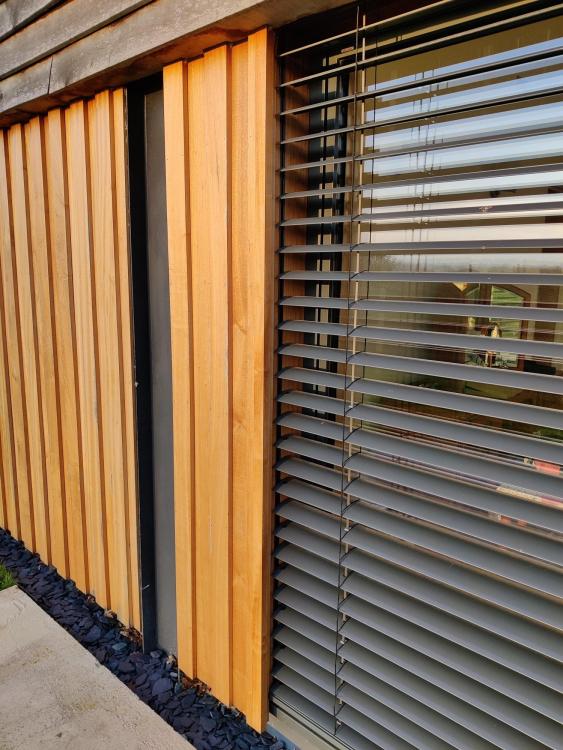
- 55 replies
-
- 1
-

-
- paragraph 79
- paragraph 55
- (and 6 more)
-
First Self Build - Paragraph 79 Home in AONB
IanR replied to thefoxesmaltings's topic in Introduce Yourself
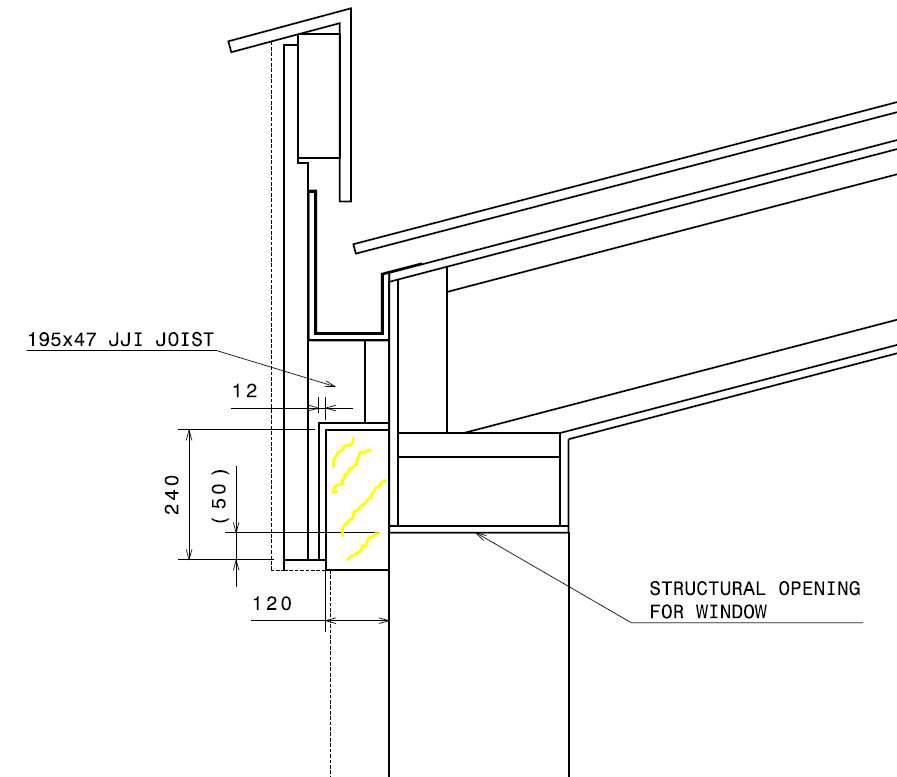
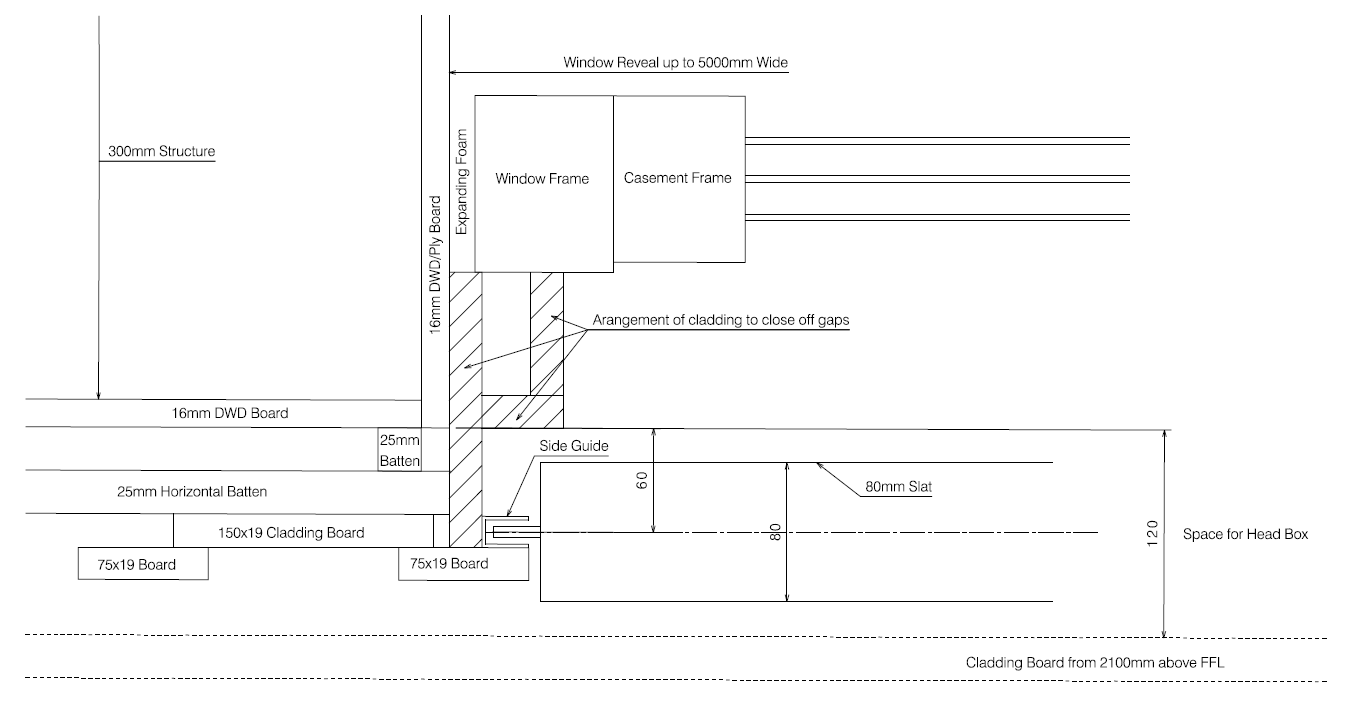
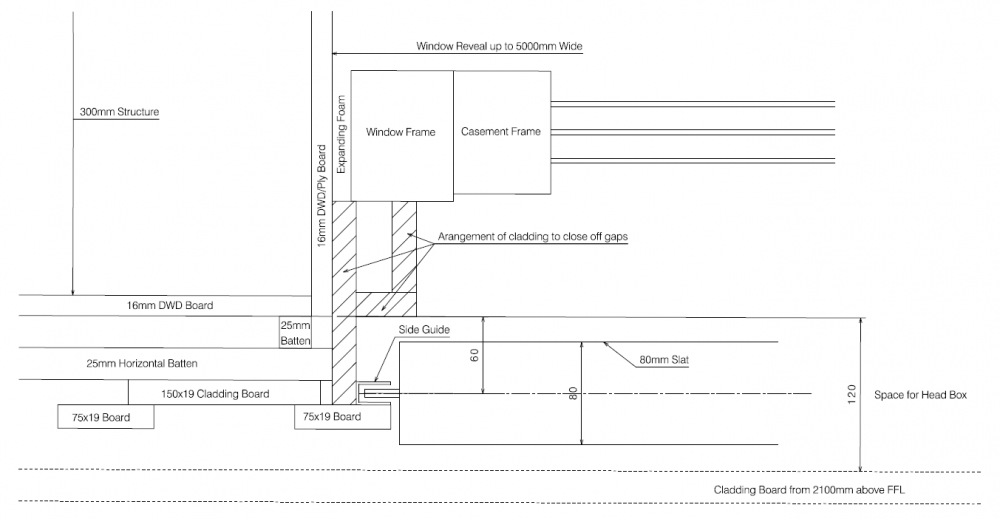
Thanks. The slat angle automation is an out-of-the-box feature of the Loxone system I have used for my whole house automation. Hunter Douglas do offer a standalone automated control, but I can't remember if it goes any further than remote operation and pulling the blinds up if it gets too windy. HD give out very precise detail of their head box sizes etc. There's no need for them to get involved with how their blinds are incorporated on a particular house, that's down to you or your house designer. There's also no direct integration with the widow package, so again, no involvement from the widow installer. My install was helped by the planning restrictions that meant I had to fall in line with the position of the outside surfaces of the original shed I was converting. This naturally gave an overhang at the top of the windows, where there was originally profile cladding on the walls from the eaves, dropping down around 500mm and overlapping the original walls. I replaced the original steel cladding and wall finishes with horizontal cladding above the window level, sitting proud of vertical cladding below that level. It allowed me to create a recess for the head boxes, without sculpting in to the wall structure. It can still be done without such an overhang, but needs a more detailed integration with the structure over window openings, to ensure you get enough insulation to avoid cold bridges. The below is a vertical section, highlighting the void for the blind head box And a horizontal section showing the relation to the window frames There's no need to have such a big gap between the blind slats and the window. Mine is like this as I had the space due to the original building geometry, plus where I have blinds over a bi-fold, it leaves space for the handle. Mine were fitted after the cladding was complete and windows in.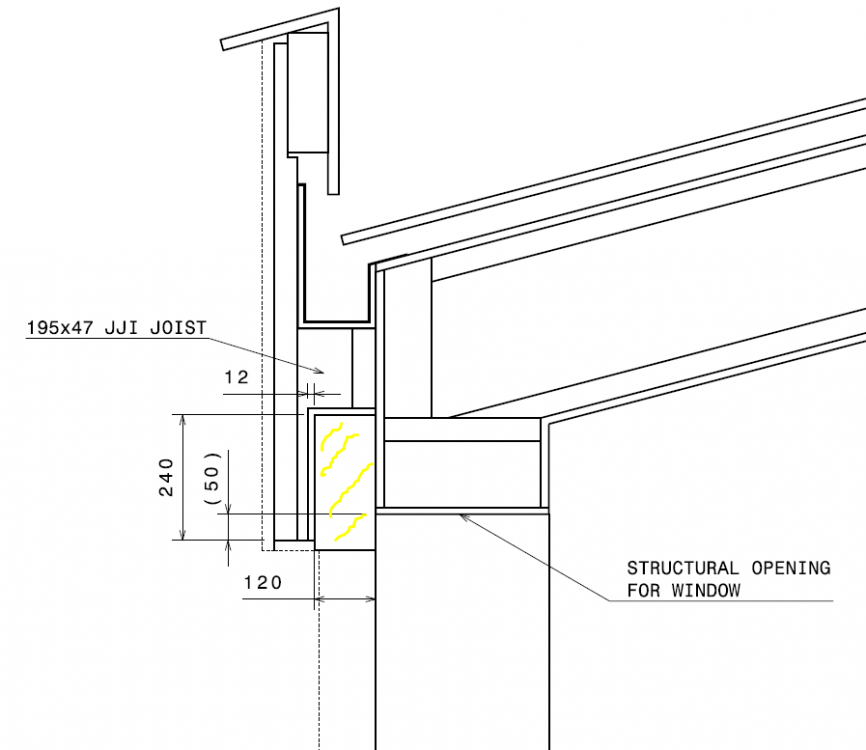
- 55 replies
-
- 1
-
-
- paragraph 79
- paragraph 55
- (and 6 more)
-
They were cheaper than that with Chilled and Boiling in 2017. Ambient and Boiling were around £900 when I was looking, but as I said, my Kitchen place came up with a good price. My concern about your 25mm overhang is whether you'd be able to get the tap close enough. You'd need a "full size" tap to reach, I would think, rather than a typical boiling tap with a short spout.
-
We went without the chiller, and paid around £680 all in. It did seem a good deal compared to other outlets, and our Kitchen supplier didn't normally sell Zip, their main boiling taps were Qooker. I liked the Zip as it was the only one I tried that didn't "spit".
-
Do you need a full sink. A drip tray works for us with integral tap font from Zip: All fits in Ø215mm
-
First Self Build - Paragraph 79 Home in AONB
IanR replied to thefoxesmaltings's topic in Introduce Yourself
Here's mine. Venetians from Hunter Douglas, automated so the slat angle changes with the sun's position, for max visibility while still stopping the solar gain. When raised, they are out of sight behind the cladding. Congrats on the planning. Looks a great project.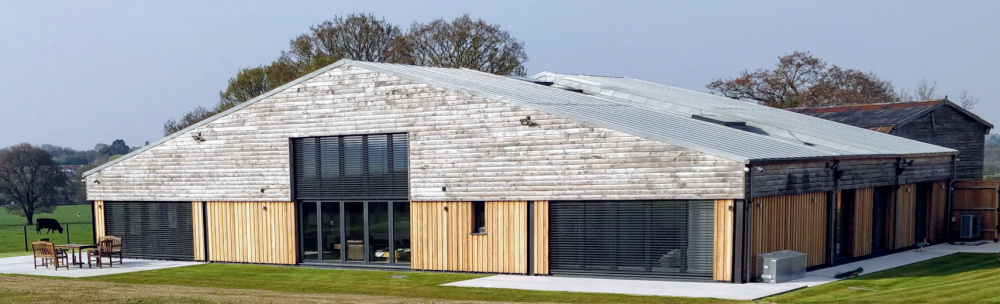
- 55 replies
-
- 1
-
-
- paragraph 79
- paragraph 55
- (and 6 more)
-
Cant't help with current prices for costings, but looks a simple build so would expect a local builder to get pretty close without needing to use a QS or construction drawings. As an observation, do you really need a fireplace (and chimney)? The chimney position is going to put shade on the roof where PV would go. There's going to be more and more pressure on all but rural homes to stop burning solid fuels, so not sure how much life there is left in "fireplaces" in suburban homes. If the LPA insist on a chimney stack for the street scene, then stick a false one on the other side perhaps. I also believe the stack will intrude on the Master Bedroom, which isn't shown on the drawing. You'd also not restrict the width of the path.
-
I looked back at your earlier post And it maybe making a bit more sense. Did you go with the Castleform raft and have to underpin the Steel columns to get the floor level lower? I thought Castleform insulated rafts were similar to Advanced Foundation Technologies' and Kore, where they were generally 100mm thick, only going deeper where the loads are. And, provide the finished surface with no need for the screed. If this is the route you went, have you got any photos of the slab going in. I have another barn to do and am looking at how I get an insulated raft under the existing oak/elm frame.
-
That's a shame, the slab could almost definitely have been done with less concrete, with UFH integrated and no screed. Not sure I understand about the steel frame. Have you knocked down and rebuilt, or "underpinned" the original foundations? I'd expect them to be on individual foundation pads (without insulation), but if you've found a way to get insulation underneath the steel columns then that's a plus. Be interested to know how it was achieved. If the slab is in already, then I'd suggest as much insulation as possible under the screed to thermally break the screed from the slab, so that you are not heating it up. Have you got the cavity of the outer walls, outside of the steel columns, so that steel frame is inside the thermal envelope of the house? If so you've managed to avoid another of the issues of converting a steel framed shed. What's the SAP suggest your peak energy losses are?
-
There's no reason why not. Best coupled with UFH for the ground floor. Are you saying it's a ground bearing, insulated slab and no screed? If so, do you really need to go 250mm thick everywhere? Could it be engineered down to 100mm in areas not taking a load, so that you are heating up less volume of concrete to increase its reaction time. Less concrete and more insulation is better for the performance. Have you had any heat loss calcs done on the conversion. A correctly sized ASHP will be more efficient and potentially last longer.
-
...but I agree with you that the Design does not stop at the planning stage. But why should the client need to stay with the original architect to complete the design. Having the CAD file would benefit the client and improve their options. Not having the CAD file only benefits the original architect. The OP seems to want to do just the Planning drawings, and some renders. I have to be honest, that's a saleable service.
-
There can be many reasons the paying client might not want to use an architect for a turn-key solution. They may just want to be more involved with the process, but cost is a fully justifiable reason. Why should the client continue paying any architect's hourly rate, and added premium when they engage outside consultants for content they are comfortable controlling themselves and it is content that does not justify the architect's hour rate. You are more than welcome to set the rules for how you wish to work, but not everyone is going to accept it. I believe you have have high-lighted my point that the client is at a disadvantage if only the original architect has the CAD files.
-
It's the OP that set the boundaries of the Service. Planning drawings and a few Renderings. We're starting to repeat. Other professionals may not be engaged prior to planning being awarded. The OP's contract will be complete at that time. I won't repeat my prior reasons for why I would benefit from having the CAD files. I'm paying for what ever I have agreed to be paid for. I acknowledged what is typical in the Architectural Industry, and high-lighted the disadvantage this may put the client in, and acknowledged that if the client wants something different from what is typical, this would need to be agreed up front, and if the architect was not willing, then move on to the next. I didn't personally buy a kit house, but I did work very closely with Cullen Timber Design who not only designed a first class bespoke frame for me, but fully collaborated, swapping 3D models every step of the way. It allowed me to overlay their frame with the existing steel portal frame structure, that I had 3D scanned and reversed engineered, in order to ensure the timber frame dove-tailed with the original structure, incorporated the new steels from the SE, that were required to stabilise the original frame and allow the new timber frame to be cut-off site and stick-built onsite without hitting any unforeseen issues. And at the risk of repeating myself, so what? Why would that be a problem to the Architect that has delivered and completed their contract. It's really not a lack of understanding. There are plenty or Architect's who are happy to collaborate with the client and use the CAD data to do so. I personally wouldn't engage one who wasn't, any more than I would engage one that insisted on fixing a price for their service that was related to build cost. The OP asked: Self-builders are not a homogeneous bunch, not all our wants will be the same. CAD data being part of the deliverable is high up my wants list.
-
Because the Architect's work is not the finished article. Having the Native CAD files is an advantage for preparing the Regs Drawings, drainage drawings, frame design, further renders to try different options etc. etc. etc. If the client doesn't have these, then they need to return to the architect and pay a premium for the additional work, or get others to start from scratch. I was actually just pointing out that not passing on CAD files has nothing to do with copyright or IP, but then you introduced "control" as a reason and I disagree with that also for reasons previously stated. Smiley emoji or not, this does hint at you feeling you need to save those self-builders from themselves. Again, not a reason for not handing over CAD files anymore than PDFs or pencil drawings. It's not necessarily about change, although why shouldn't they? it is their house. It could just be about down-stream uses of the drawing that is more easily done with the CAD files than with a PDF. With the architect paid for their work, why should the client need to keep coming back to them for follow on content that could be done more cost effectively elsewhere. But why should the client only have the option of you sending the files on to a consultant? Personally, I want to send the file on to who I wish, to get what further work done on it that I wish, without having to cover an admin change or what ever the architect feels it is worth for moving the data around. I may even wish to do that work myself and save some professional fees. Again, you are trying to control what happens after your part of the contract is finished, and that's not for the benefit of the client. Maybe you are only interested in supporting turn-key projects, but the OP has no plans on delivering a house, they wish to deliver planning drawings and a couple of 3D renders for £5K. As a package, I feel that's actually reasonable value (as long as it includes working through the planning app), but not if I had to keep coming back and paying a premium for additional renders, building regs drawings, tender drawings, inevitable changes during the build etc. etc.
-
If the only way of using "Blocks" in the CAD system you use it to insert the entire block with all its "intelligence", then that is a weakness in the system you are using. Our own macros and templates deliver orphan geometry in to the part/system being created, so when the CAD files are handed over only the geometry they create is present, not the template or macro. Not really. The client using the CAD files should understand that making an alteration and printing off a new PDF using the Originator's Title-block, without recording that change in the Revision Block is not correct, in the same way as changing a pencil drawing, without recording that change would be. Drawings go through multiple updates, often by different draughts-persons, so another change by the client could just as easily go unnoticed. However, the Originator in all likelihood keeps a record (data-base or blue/black line) of the final drawing passed to the client, so any changes after that point a very easy to identify should problems occur. I'd say version control is far easier with a CAD file than with a manual drawing. You only need to control your part of the contract. What the client chooses to do with either a CAD file, PDF or Pencil drawing is for them to understand the implications. Whether it is a CAD file, PDF or pencil drawing makes little difference to control, copyright (apart from your Blocks if that is the only way you can work with them, but I'm sure there is an alternative) or IP. Protecting the CAD files is however a potential income stream. If the client wants additional 3D Renders, later revisions or additional drawings etc. then you have a competitive advantage if they do not have the CAD files. That is the typical position within the Architectural Industry, but not one that I would accept.
-
Whether it is a CAD file or a pencil drawing makes no different to copyright. Copyright is not a reason for not passing on a CAD file. I'm not sure who is misunderstanding here, your analogy is poor. The CAD file is the product of the tool, not the tool. No one is suggesting you hand over the workstation and software license which would stop you from producing any more "product" in the same way a carpenter handing over his saw would do. The tool is the software, or the pencil, the product is the CAD file, of the pencil drawing. In the same way that a client could choose to change a pencil drawing, and if that was to directly cause a failure in the design then it clearly would be no fault of the original creator. My own industry, Automotive Design & Engineering, went through this same conundrum in the 1990's. The Engineering Service providers did not wish to hand over the Native CAD formats to the client. Not for IP or copyright, but because you have an advantage at the next tender stage of the project, future updates or a later "face-lift", if only you hold the original CAD files. Any competitor has to allow for recreating all the geometry from scratch, whereas the originator is holding the database and thus could quote stage two or a later face-lift cheaper. Since the late 1990's, it's now written in to every contract that work will be completed and delivered in exactly the same software the client uses, right down to Version, Service Pack and Hot Fix overlay, to ensure compatibility. We still build our own macros and templates for developing repetitive areas of the geometry, and wouldn't consider handing over our library of macros and templates, but the geometry they create gets stored directly on to the client's data-collector. The Architectural industry in the first instance typically tries to protect this data, so if the client feels having it would be a benefit to them then it needs to be agreed up front as a deliverable. This is how I did it and it really worked well. The timber-frame designer, structural engineer and passive house architect all shared their data in compatible file types. In this instance I held the Master for the data as the PH architect was supporting small defined areas rather the doing the whole house.
-
Glass gable ends. Looking for examples..
IanR replied to Olly P's topic in General Self Build & DIY Discussion
I've used the same on my Sapele vertical board-on-board cladding. Really went over the top on the Osmo application. 2 coats before it went on the building, 2 coats once it was up, 2 more coats after 12 months, and again on the third year. Unfortunately, after just under 5 years the Sapele has really bleached on the South-West and South-East facades. Not silvered, but lightened. -
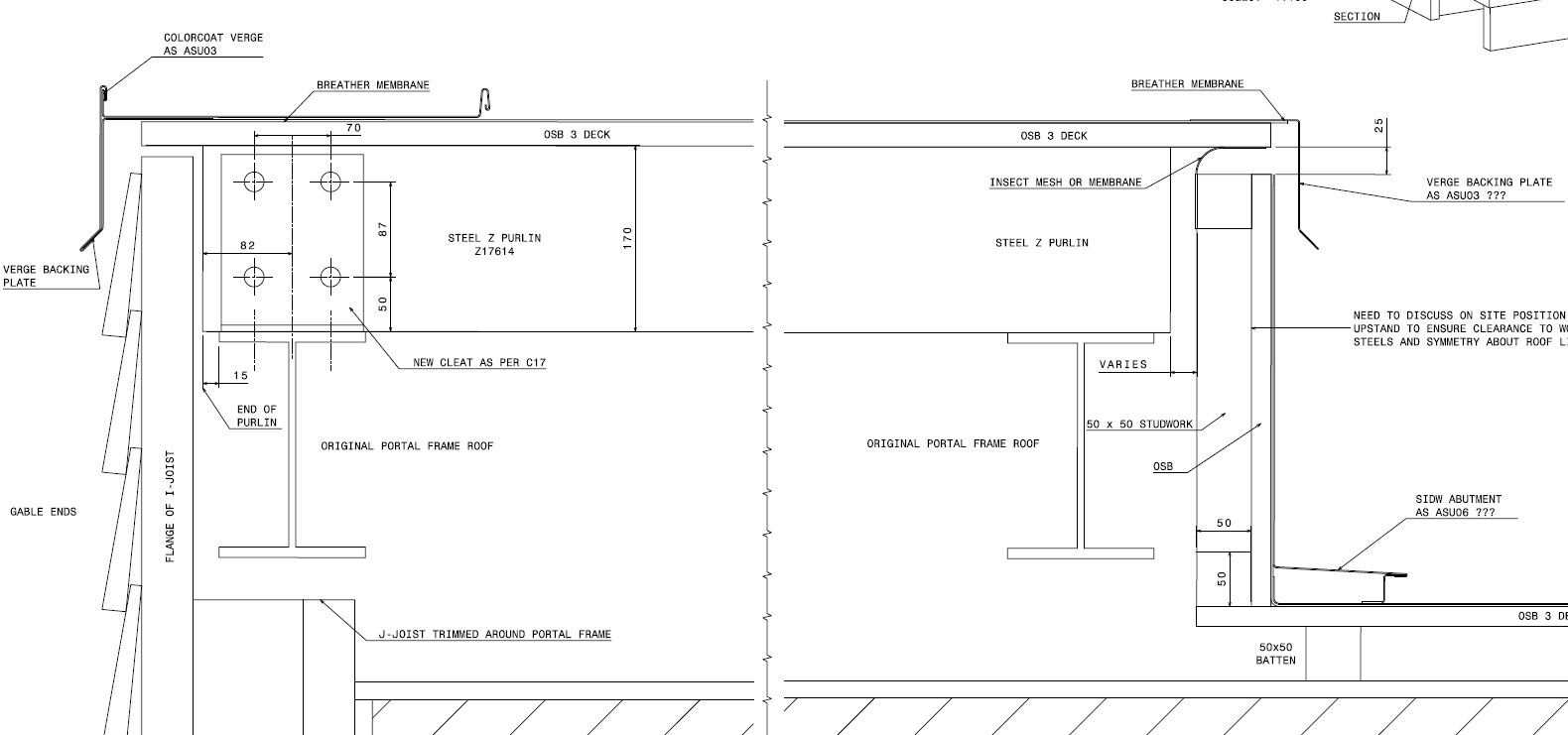
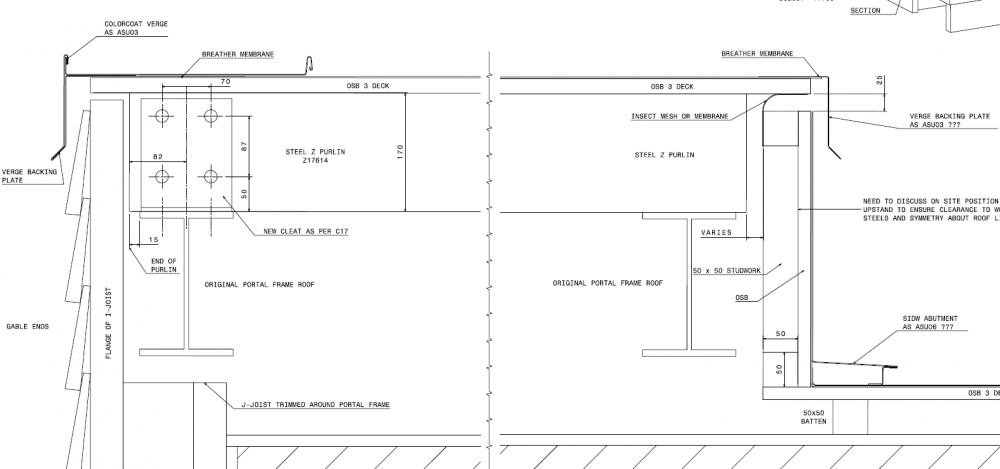
I develop this for doing my roof in Colorcoat Urban, but ended up doing the same thing in Aluminium, formed on site. I used a drip feature on the verge to move the water away, rather than a clinch on the vertical panel
-
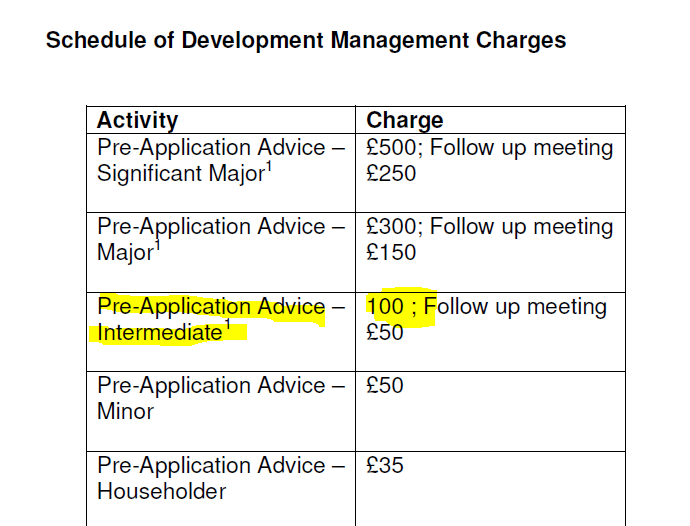
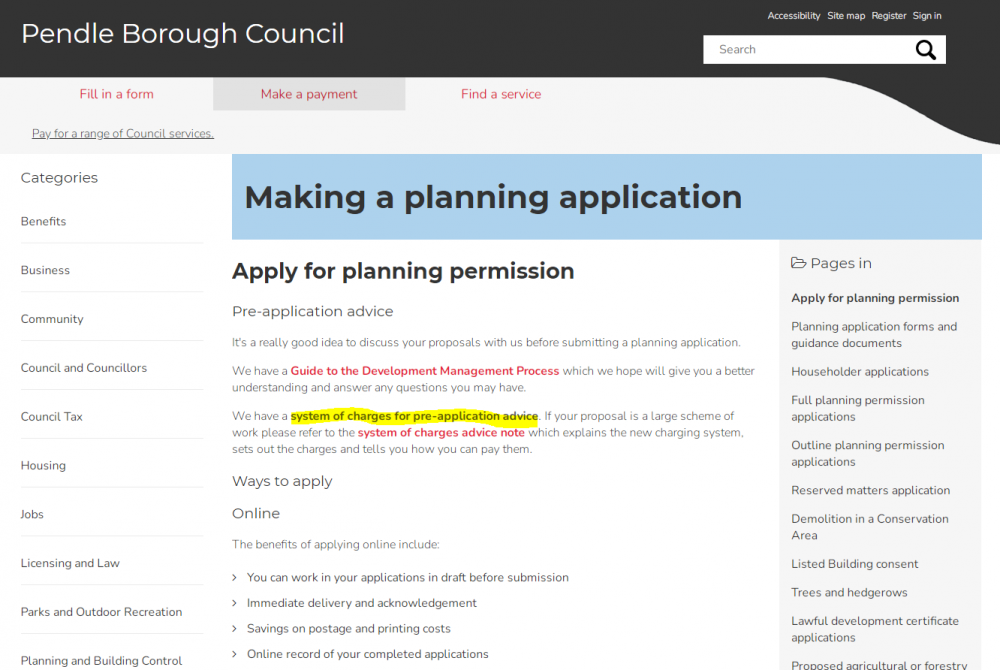
I believe it is this one: from: Scale_of_Charges.pdf Good Luck! Edited to add: Should have added, that PDF was from here: https://www.pendle.gov.uk/info/20070/planning_applications/84/making_a_planning_application
-
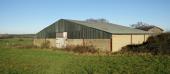
With an LPA that is pro-Class Q, I feel the lambing shed has half a chance. The primary frame, while it has a bit of surface rust, still looks serviceable. The timber roof purlins are shot, but that shouldn't be an issue, you should be allowed to replace them. While the hole in the roof should not be an issue as it is not structural. I would repair it, hopefully with some aged profile sheeting, similar to what is up there. But it has to be like-for-like so that there can be no argument that the shed has undergone any development. Since it stands a chance for Class Q, you have to clear it out of all that is non-agricultural. Buy in a container and use that for storage. It would come in handy during the build also. Joining the two buildings is not possible under Class Q. You can not extend beyond the existing building(s') envelope. To do, this will require a Full Planning App and to get to a successful Approval the path may be via a Class Q first, in order to establish the Change of Use. This is not underhand, as your planning consultants stated, it is part of the process. For a Full Planning App, then the pre-App has value, especially on a scheme like this. For a Class Q, there is little subjective decision making on the LPA's behalf, you either fit the criteria or you do not. Maybe different LPA's do it differently, but my local LPA does not allow a pre-App for a Class Q, But, it maybe worth sounding your LPA out with a pre-App on the Full Planning Application for the Scheme you want. They may be positive regarding you going straight to a Full Planning App, without needing to prove the case for the Change of Use first. However, you need to make sure both sheds fit the criteria for Class Q before the LPA first visit, since you may need to go the Class Q route if they suggest a Change of Use via Full Planning is not achievable, and you don't want them to be seeing the sheds being used as something other than Agricultural Use. The Steel portal frame structure of your sheds (and mine), is a very lightweight structure, and is unlikely to be able to take the weight of the required roof insulation and framing to hold said insulation. It could take the weight of insulated profile sheeting panels of the type Kingspan produce, but these come with some compromise and you will need to do your research to understand if you would accept the compromises. Without using the same panels to clad the walls, you'll have a difficult junction at the eaves to get an airtight and insulated joint between roof and walls. But, Class Q does not allow you to extend beyond the existing building envelope, so cladding outside the existing walls (and steel structure) is not possible. Since you can't wrap the outside of the steel structure with the thermal envelope, you really need to consider putting the thermal envelope on the inside of the steel structure, so the steel work is outside of the thermal envelope and not causing cold bridges and potentially damp/condensation. Creating an insulated roof below an existing steel roof structure needs you to build a whole new timber roof structure just under the existing steel structure, sitting it on the outside walls plus internal load bearing walls if the spans require. The existing roof ends up just being a rain screen. That then raises the question of whether there is a sufficient ring-beam under the existing walls to take the weight of a new roof. A Full Planning App should be more flexible, and should allow you to develop slightly outside the existing building envelope to put the steel structure inside the Thermal Envelope.
-
If the steel is fully outside the thermal envelope of the conversion, then it may be better to leave it open and ventilated. If it is within, or partially within the thermal envelope then I'd go with option 1 and ensure there is a robust vapour block layer stopping warm air from getting to the steel and condensating. You'll get better opinions if we can see the whole roof/wall build up and where the steel sits within that overall build up. If the top side, as drawn, is open to the outside, and the insulation is drawn roughly to scale, it looks under-insulated and a cold-bridge risk (with associated condensation/mould risk).
-
The 10 year rule is only for buildings built after 20.03.2013. The earliest such a building could qualify is in just over a year's time. Buildings built prior just have to be be in Use, or if now redundant, last Used, in Agriculture. https://www.legislation.gov.uk/uksi/2015/596/schedule/2/part/3/crossheading/class-q-agricultural-buildings-to-dwellinghouses/made Edited to add the 2018 & 2020 Revisions to Class Q: https://www.legislation.gov.uk/uksi/2015/596/schedule/2/part/3/crossheading/class-q-agricultural-buildings-to-dwellinghouses The Revisions change the area of conversion as well as increasing the max number of new properties to 5 from 3, opening up some other opportunities. There's not yet been a re-write of the "The Town and Country Planning (General Permitted Development) (England) Order" to incorporate these revisions in to the main Class Q, so the two documents need to be read together.
-
Hi Neil, and welcome. Don't rush in with the Class Q, you definitely need to get your ducks in a row before applying, as if you get any aspect wrong at the application stage it could stop the Class Q. Difficult to know if you are being advised correctly without more info re. condition, structural worthiness etc. and knowledge of how your LPA respond to Class Q prior notifications. Definitely don't propose to knock the smaller barn down under a Class Q, there would be no benefit. When I did mine (Class MB then) there was also no pre-App process either, you had to go straight in, plus it was only £90 for the Prior Notification, so cheaper than a pre-App. All LPA's do not appear to treat Class Q's in the same way. You need to review every Class Q your LPA has Allowed and Rejected to understand what they will and won't accept. Some of the legislation is "black and white", so not up for interpretation. Have you gone through the rules and know your barns/sheds fit the requirements of location, floor area etc. Other bits of the legislation are more subjective and depends on whether your LPA are generally for or against them. The most subjective aspect is probably whether the required works to convert to a dwellinghouse are "reasonably necessary". My LPA is strict on this and expects none of the 4 sides of the building to be "open", even though you are allowed to replace walls. A neighbouring LPA allows one side to be open, other's I've seen have allowed a pole barn to be converted. My LPA is also strict on flooring, if it's not got a concrete floor, they won't allow the conversion. Current or last Use being Agricultural, is relatively clear, but understand the definition of Agriculture. It doesn't include equestrian or storing hay for non-Agricultural animals, or storing anything that is domestic or light-industrial in nature. My LPA has rejected prior notification because there have been logs stored in the barn or a car, although I have seem some LPA's be a little more relaxed. It's best to clear the barns/sheds out before the LPA come on site. If the LPA finds its current Use is other than Agricultural you will stop any chance of a Class Q for at least 10 years. You do need to be able to say when the barns/shed were last in Use in Agriculture, but you don't need proof - you just need to ensure it can't be dis-proved. The barns/sheds need to be (or have been) part of an Agricultural unit. Did you buy the "whole farm" (even though it is no longer a working farm), or just the buildings away from the farm, and is the farm they were part of still a working farm. What matters is it is the Agricultural Unit that has the PD, not the buildings. If the Farm that the barns were part of is still operating, then you will need to be asking them to accept you are using up their Permitted Development Rights. If I was them, I wouldn't accept that as it puts restrictions on them with regards to using Class Q in the future as well as Class A & B Agricultural PD. If, as is happening a lot, the land of the farm has been absorbed in to a neighbouring farm (and a separate Agricultural Unit), and you have purchased the old Farmhouse and some Outbuildings, then you have effectively purchased the Agricultural Unit, and as such the PD remains with you. Proving what the Agricultural Unit is, is often more onerous than the Use or last Use of the barns/sheds themselves. With regards to strategy, is there any chance your LPA would consider a Change of Use of the Barns/Sheds to resi? The rules for Class Q are strict, and you may be able to build/convert a better property under a Full Planning App, rather than a Class Q. It will almost certainly be cheaper to convert. This may be worth doing a pre-App for, if the answer is not known, but "sanitise" the barns first in case you need to go the Class Q route. If they won't consider a Change of Use under a full planning App, then go the Class Q route. But, the LPA should then take an Approved Class Q in to account if you were to follow up with a Full Planning App.