
JohnMo
-
Posts
12465 -
Joined
-
Last visited
-
Days Won
179
Everything posted by JohnMo
-

Gloves when handling lead flashing?
JohnMo replied to epsilonGreedy's topic in Roofing, Tiling & Slating
I use gloves for everything now, as a kept loosing my finger print (small cuts and scrapes) for my phone. -
For UFH design you download loopcad for a 1 month free trial. You build you house in the software and you can then experiment to get what suits you and the house. If you are not air tight on the rest of the house MVHR, may not be the right way to go. If you are, look on eBay for surplus stock clearance etc, my whole MVHR, cost £2700 for everything. I went for oversized fan units to keep fan speed as low as possible, to ensure noise is as low as possible. Match airflows in and out, in England I think it's 0.3 air changes per hour in Scotland 0.5.
-
Have a slightly higher demand to yourself, and also running a combi, tried it without a buffer and the boiler just short cycles, so you are going the right way. I have used an open vent thermal store, with the boiler heating the store via a coil and thermostatic switch set at around 40 degrees. Using store as I want to dump excess summer solar PV into it as heat and then use as DHW in the summer. If you can also run your cold water feed to the DHW through a coil in the buffer, this will preheat the cold water and improve DHW performance in the winter.
-
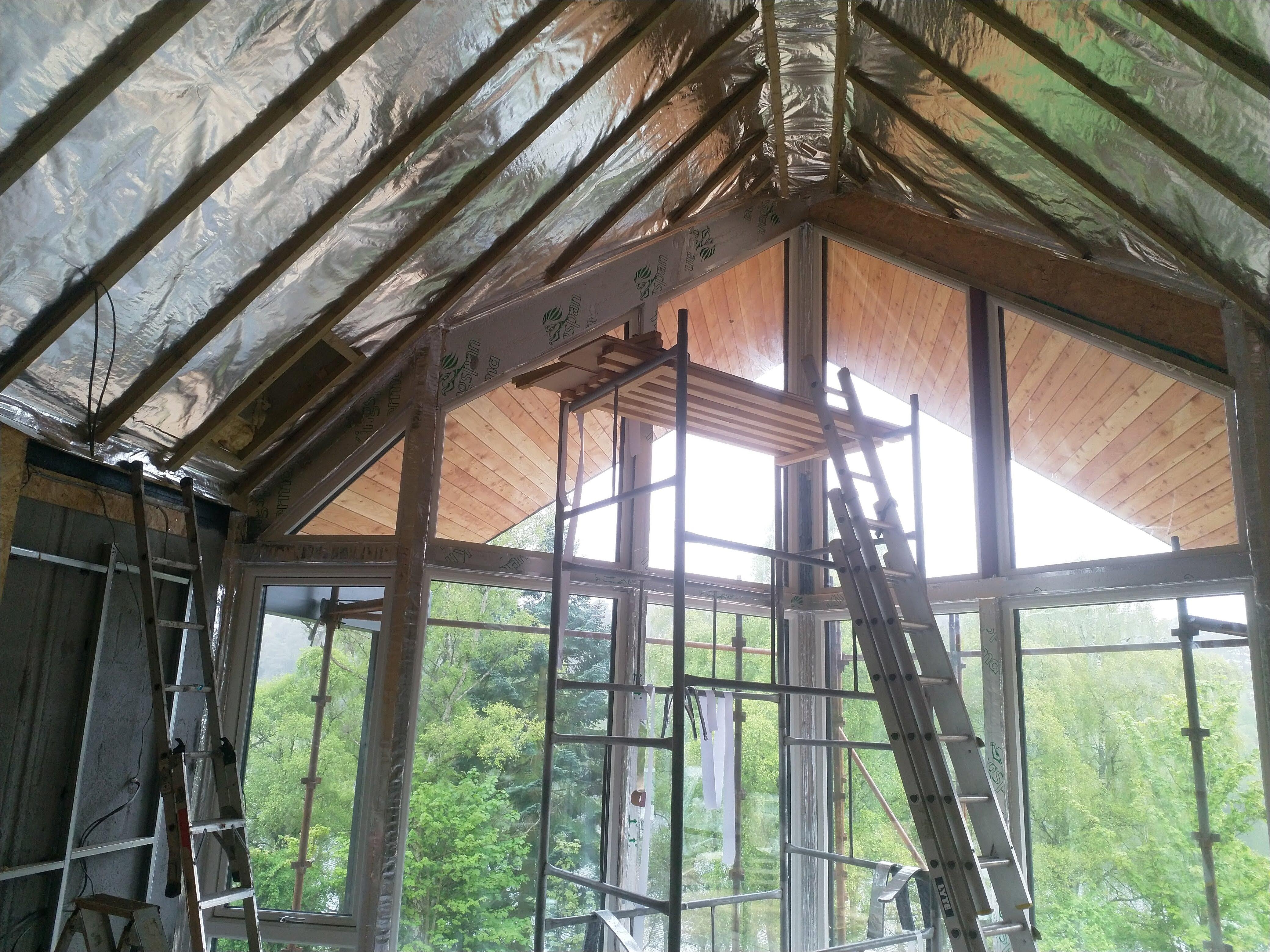
We had a barrel for burning stuff on, so did my own experiment Put Icycene spray foam off cuts, PIR, Rockwool and glass wool, durisol blocks, aluminium vapour acvl and Pert-al-Pert tube materials on the burning fire at different stages. Icycene and PIR burnt very quickly Rockwool not touched , came out the way it went in. Glass wool, mostly unaffected, sort of matted together. Durisol blocks, become slightly more friable, but didn't burn and stayed in shape. Aluminium AVCL, paper backing burnt away, but otherwise intact, just a bit wrinkled. Pert-al-Pert, plastic disappeared, aluminium core remained intact. PIR, would I use in a high rise or anything above a couple of stories no. I have it inside my Durisol blocks, protected by concrete and Durisol and under the floor, again sandwiched between concrete. Icycene, is inside roof, protected by plasterboard, and aluminium AVCL. This would buy time to escape the building. I have Rockwool in every internal wall, to mitigate fire spread. Should of had in the roof, but 250m2 of roof I would have lost the will to live, installing it. Like all things it a balance of risk Vs reward. Companies exist to make profit, would you really trust any of them - watch the film Dark Waters about Teflon
-
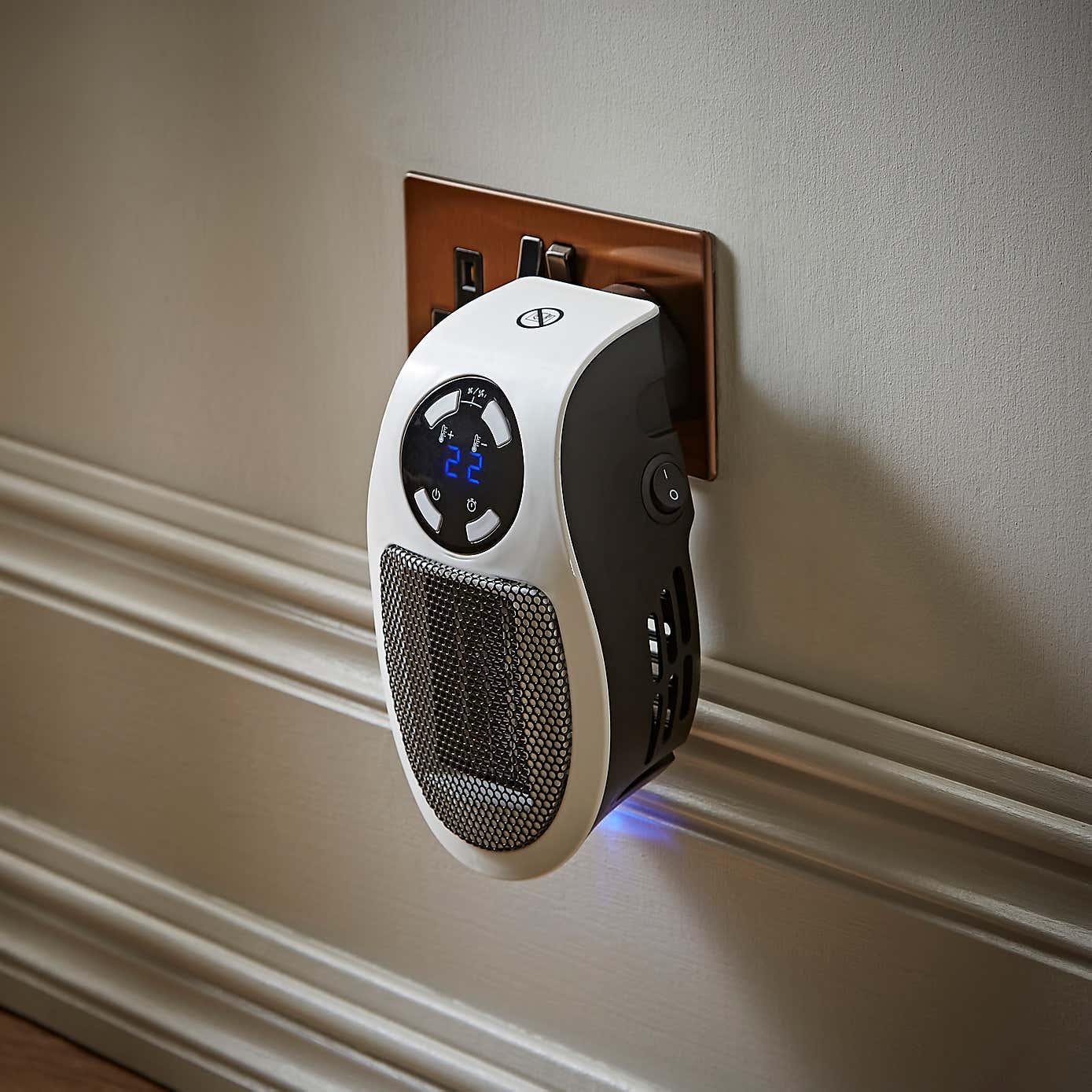
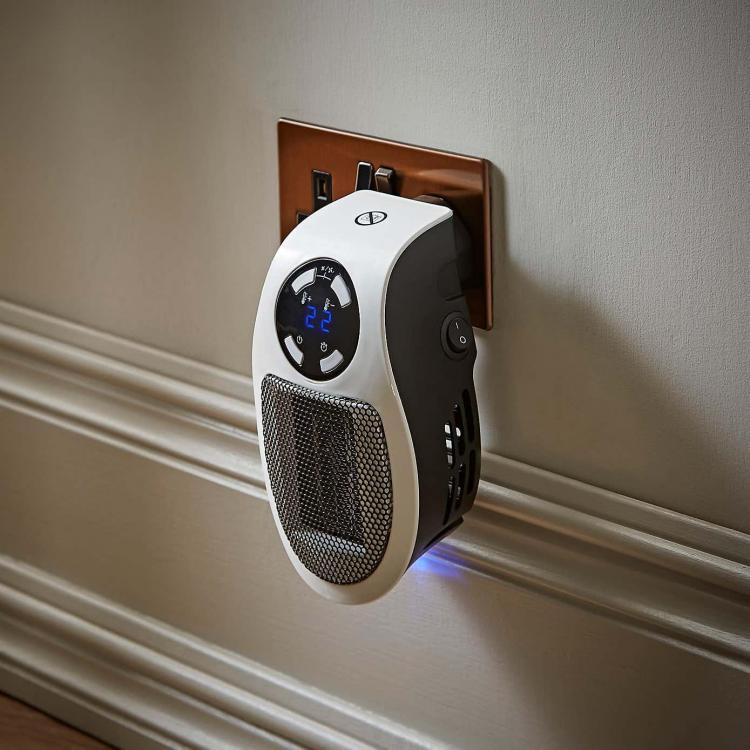
Just bought one similar, but with remote. Will also report back. https://www.ebay.co.uk/itm/Plug-In-Wall-Heater-500w-Mini-Electric-Space-Portable-Digital-Timer-Ceramic-Heat-/133901305662?mkcid=16&mkevt=1&_trksid=p2349624.m46890.l6249&mkrid=710-127635-2958-0
-
We have two issues 1. Changed the use of one the bedrooms and need some additional heat. 2. Room has wet underfloor heating running at low temperature, but we installed carpets with UFH underlay, but it insulated the concrete floor from room too much. Room temp ok for a bedroom, but not for sitting in for any length of time. Need a temporary heat source as room will revert back to a bedroom in a year or so. Have seen this, but not sure if a load of rubbish or good, only need about 300 to 400w. Anyone used or have an alternative temporary solution. Thanks https://www.dunelm.com/product/plug-in-ptc-heater-500w-1000190124?defaultSkuId=30737374&branchCode=0515&ds_c=Christmas_Heaters_[GOO-LIA+PSB-ELECTRICALS-HEATING]&gclid=CjwKCAjwz5iMBhAEEiwAMEAwGC68C9R_lEL5lStKsf9mfXkq8I79IUi_83djyk6HGVSVFfV2-66O3hoCm-oQAvD_BwE&gclsrc=aw.ds
-
This is what our instructions said that came with the pump When using pump models with pump housing code 65B (item 9 in Figure 3), use the G1/2 check valve (item 14 in Figure 3) supplied in the packaging. This prevents water from flowing through the pump backwards when any faucet is opened, thus causing damage. • When using a check valve other than the factory supplied one, pay attention to the appropriate closing pressure. • Install the check valve after the pump in the direction of flow, so that the arrows on the pump housing and on the check valve point in the same direction
-
Do you have a check valve installed to stop reverse flow?
-
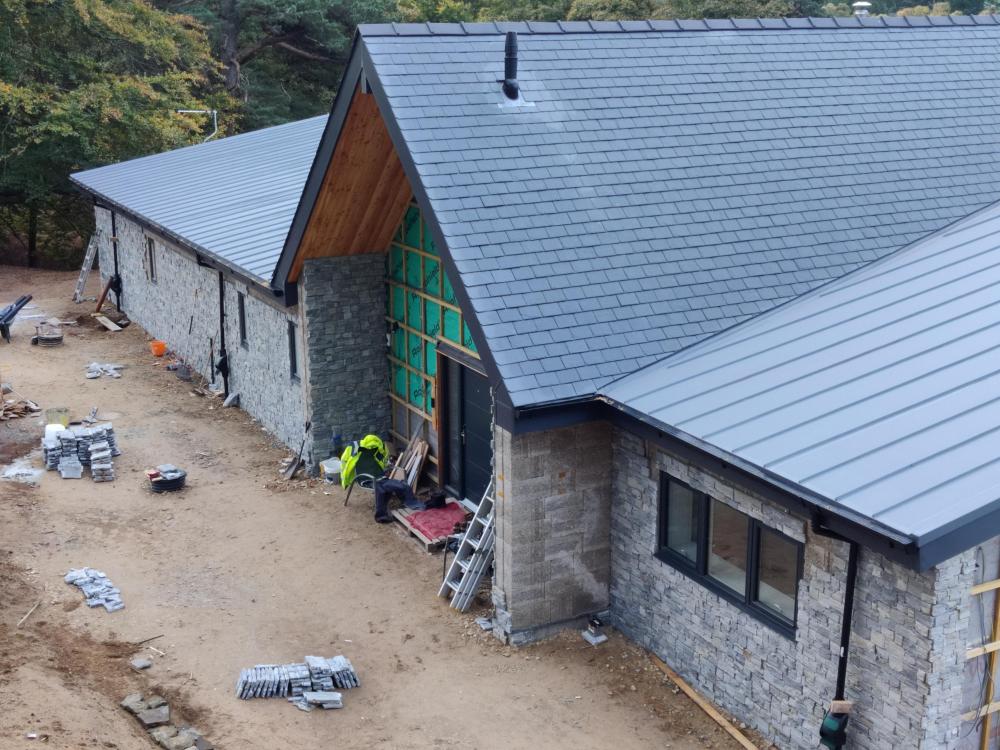
I went a slightly different route, and used Sarnafil S327. Fully welded standing seam, but not metal. Can be installed by only approved and qualified installer, came out at £70 per m2 with felt underlay installed. We have fully voulted ceilings and didn't want rain on steel noise.
-
Another outbuilding / garage floor detail question
JohnMo replied to Moonshine's topic in Garages & Workshops
Would you be better having the insulation below the concrete? Wood above the insulation will give very little load bearing if you used for cars later. Would you benefit from better u value for the walls as the building is being heated, your electrical bills could be huge? Consider using a layer of PIR over studs on the inside, if you tape this you could delete the vcl and improve u value by reducing the repeat thermal bridge. Do you need a double skin of osb/ do you need any osb? Should there be a dpc/ DPM at the bottom of the wall? -
It's not very warm let's light the fire
JohnMo replied to JohnMo's topic in Stoves, Fires & Fireplaces
Today a few scraps/ off cuts from the build. Next trees we cut down a year or so ago, just need to chop it up, and build somewhere to store it, so out with the huge store of pallets we now have and build a log store -
Well, 8 degs and wet outside, so we lit the stove. One small load of wood on minimum air setting, we now have the windows open to cool down.
-
Use soapy water at the joints, if foams you have a leak, if it doesn't you don't
-
The main reason for using was really airtightness and vapour control, so was applied per instructions and used their tapes and jointing materials. If it adds anything to thermal efficiency that's an added benefit.
-
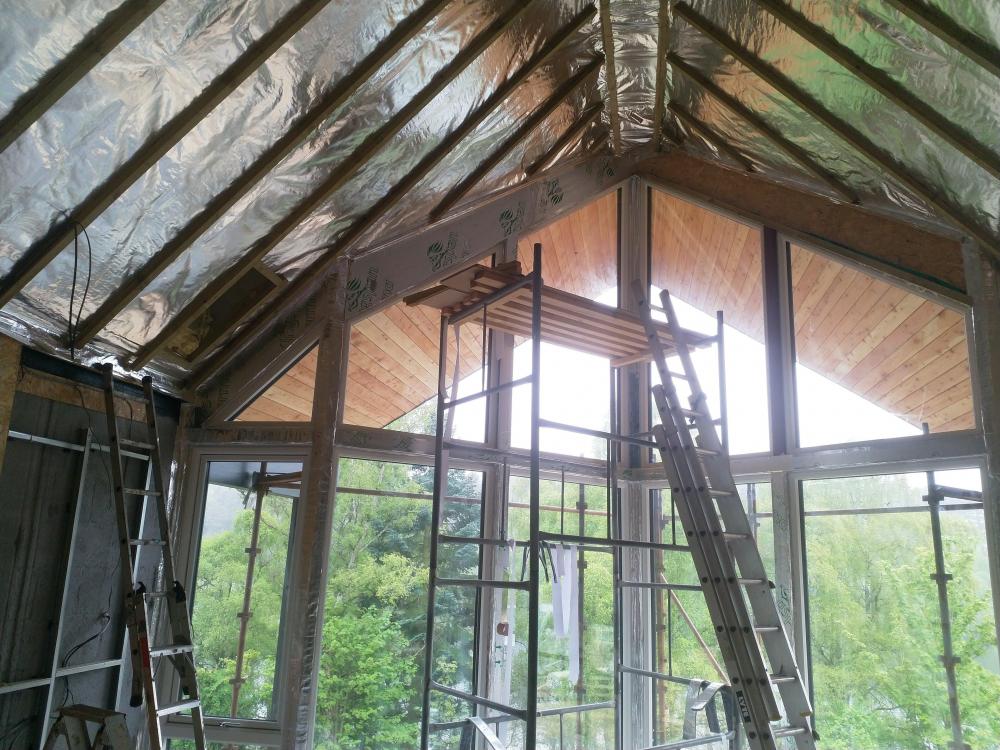
If you are adding an airtight membrane and battons, look at something like PHS Hi Therma, which with a service void gives an increase R value of 0.79. Then skip the PIR.
-
Just made a few changes to the way the UFH is working. Did away with the bathroom thermostat all together, the manifold has self balancing actuators, so went for a simplified scheme altogether. Timer to run pump with and without a call for heat, runs for about 14 hours a day. Only have thermostats (simple dial type) in bedrooms now; to keep the bedrooms cooler than the rest of the house. Only one other timer/thermostat to switch of the boiler on/off. Thanks to the contribution on this and many other threads, I've read over the last few days.
-
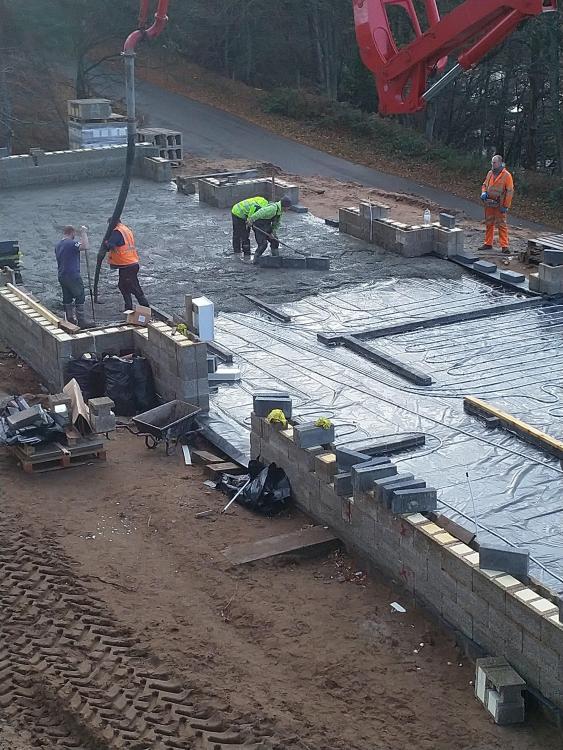
I needed anti freeze in my gas powered UFH as it pressurised during last winter without the house to keep it frost free. The slab was a huge chunk of ice most of last winter. So well insulated, that once it froze it stayed frozen for days. But this has mostly been flushed out now get air out the system during commissioning.
-
Do you run the UFH all the time, or on a time switch
-
Great will have a fiddle
-
Hi after some assistance, does know of a thermostat that can be installed in a bathroom. The heating is wet UFH. Ideally a wireless one, as would be easier to install. The problem I have is, the thermostat is outside the room and I was going to have a probe through the wall. But we moved the bathroom around and I now have a shower the other side of the wall.
-
That's the anti freeze I used. I had no water at site, so fill with a hand pump, same pump was used to pressure test. So I pre mixed it with the fill water in the Jerry can. To manually fill took about an hour (50 L) RHays 10 bar is what the instructions of my pert-al-pert pipes stated. The risk is at the high pressure, something is likely to fail at the high pressure, not when you have lowered the pressure. Because you done something at lot of times doesn't mean it's safe or less unsafe. I've climbed ladders for 50 years, never had an issue, fell off one this week, it still hurts.
-
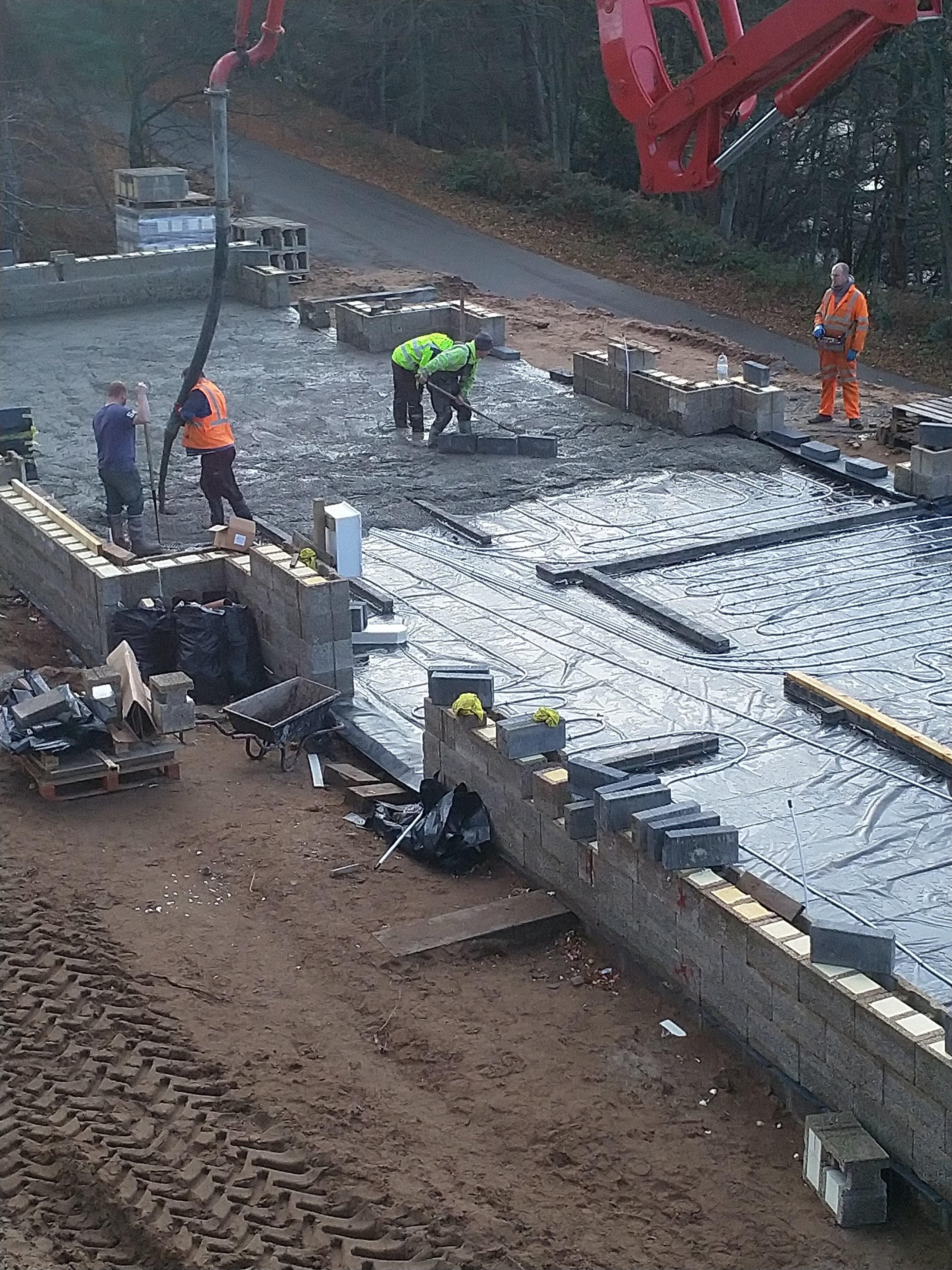
This what Uponor instructions state • Pump up the pressure in the manifold to 2 x the operating pressure (minimum 4 bar, maximum 6 bar) for at least 1 hour. After an initial slight drop in pressure as the pipes expand, there should be no further drop in pressure. Check the pressure gauge during this period to ensure that the pressure remains constant under this period. • Decrease the pressure to the system working pressure, or a minimum of 2 bar. The system pressure will initially increase as the pipes contract under the lower pressures and will then stabilise. If the pressure has not fallen below working pressure after 1 hour the system is pressure tight. • Uponor recommends that the system should remain under pressure whilst the floor is laid so that if any damage occurs to the pipe, the laying of the floor can be stopped and the damage repaired immediately. The floor should be laid immediately after the pressure test. • Where there is a danger of freezing, suitable measures such as the use of glycol-based antifreeze should be taken, using the correct mixture of water and antifreeze solution. However, before start up, the glycol mixture should be thoroughly flushed out of the system and disposed of carefully. Any reason the manifold cannot be installed? Assume the pipes are stapled or fixed down to the insulation. The pipes held unpressurized are liable to be being crushed as the screed contractors walk all over the pipes.
-
External wood paint or wood preserver for battens?
JohnMo replied to Thorfun's topic in General Joinery
Or get the blow torch out and char them also. If you can see them, so can UV and eventually what ever you treat them with will need to be retreated, with little or no access. -
We had ours filled with water and pressurised last winter, just add antifreeze. We used flowmaster antifreeze from Screwfix it's cheap and works. When you install the piping, you need to do an initial stretch of the pipe wall at 10 bar, then lower the pressure and hold between 4 and 6 bar. Filling with air has a lot of stored energy, so if anything does come loose you could damage equipment yourself or others. You will have several hundred meters of of pipe with (maybe 10 bar) 4 to 6 bar in it. Equipment pressurised with air when it fails, fails with a huge amount of force, because the air is compressed and expands, water cannot be compressed, so when you get a failure it is a low energy event. It's not safe I would recommend water and anti freeze, but it's your choice.
-
Our door has 15mm PIR insulation within it and it gets a U value of 1.0. You could do the same on the internal face and then over clad with some ply and paint.