


JohnMo
-
Posts
13292 -
Joined
-
Last visited
-
Days Won
200
Everything posted by JohnMo
-
It may also change the design of the trusses due to the weight
-
Wouldn't you need to back through planning as the change would make a big change to the look of the building?
-

MVHR condensation trap type
JohnMo replied to cwr's topic in Mechanical Ventilation with Heat Recovery (MVHR)
Mine also -
Jeremy spreadsheet is pretty good. Would trust it over some generic tool on the internet.
-
Only thing I would say it's the flow meters to adjust and you need to make sure all loops have a call for heat.
-
Been to Fintry hill climb a few times. Welcome
-
Do you have a photo of what you were adjusting?
-
Its a pretty crappy calculations tool, it says my house needs 15kW, in reality it needs 3kW - on the coldest day. The output of the tool isn't kWh it's kW, so you will use 7x24hrs per day if the calculation tool is to be believed, to heat a 70m2 area. So 168kWh per day. In gas terms after Oct that's £17 per day, plus the other house heating.
-
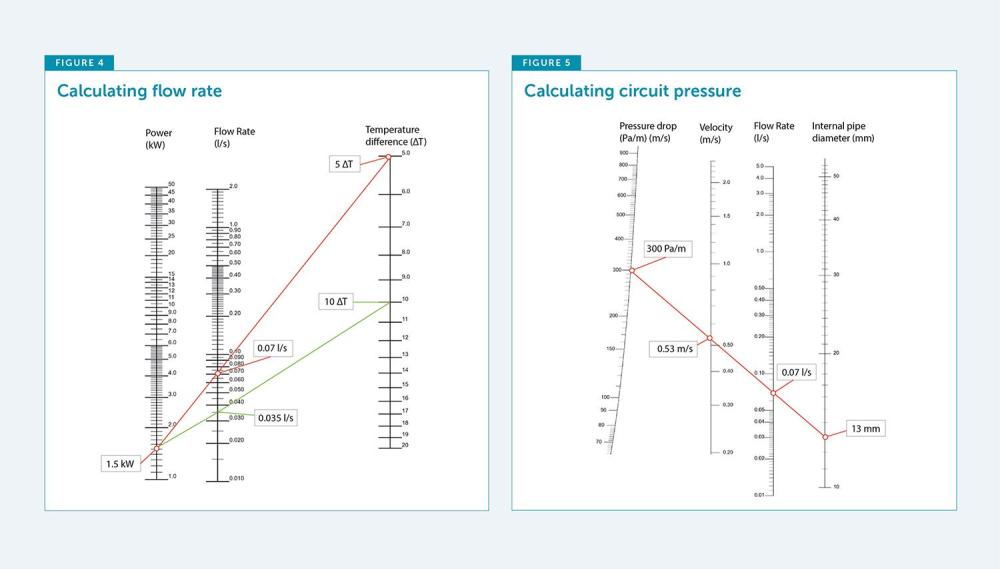
You are trying to heat a big chuck of concrete/screed, if it's 70m2 you could be 8 to 10 Tonnes. So getting it to temperature takes a fair bit of energy, after that you are managing heat input to heat losses. Would strongly suspect you are running it too hot. The heat output of the floor is governed by the mean flow temp. So the bigger the delta T the higher the flow temp needs to be to the same output v a low delta T but the higher the flow rate. Have attached a sheet to help you calculate the mean flow temperature you need. Ignore the lines already on there. You will need to know the floor area and heat load required. Then from that calculate the W/m2. Have a play. I tried running my floor all day at 30 deg flow temp, massive overheat of the house and used tonnes of gas.
.thumb.jpg.e6f5b10749b0a8b28a782f83356b9791.jpg)
-
What's your heat load, as you seem to be insulating the house well
-
Assuming it's the same boiler as this looks easy enough. Maybe a different plumper, seem to be plenty of expansion vessels in the £45 to 80 price range. https://www.google.co.uk/url?sa=t&source=web&rct=j&url=https://m.youtube.com/watch%3Fv%3DhpcAJ5b7UDg&ved=2ahUKEwj2w7qaxoz6AhVSnFwKHeNjBGUQjjh6BAgtEAI&usg=AOvVaw3kyI-ON7JT_0dc7fUuYnij
-
If your boilers is just loosing pressure sounds like the diaphragm or Schrader valve has gone, either is an easy enough fix. Way more eco to fix instead of replace, with some something manufactured in China on coal generated electric then shipped half way around the world.
-
Airtightness vs bugs
JohnMo replied to puntloos's topic in Energy Efficient & Sustainable Design Concepts
We get a few insects in through open windows and doors. I know we have mice in the woods, I'm hoping they don't find the open doors. -
Even a gas boiler doesn't need or want a 20 deg delta T. at low temps. I'm running mine for UFH and its modulation gives 6 degree delta. If it running at about, 25 degrees there is only a 3-4 delta.
-
So heat pump heated, so storage temperature is around 48 degrees. Not the same as a gas boiler where storage would be 60 to 65. Average usage according to SAP for a 2 person is just under 5kWh of hot water. At around 4.5kWh usage the water would be coming out of the tap at around 35 degs. So you need 300l, any less your taps would be running cold, assuming one heat charge per day.
-
25mm or 50mm internal wall insulation for this room size?
JohnMo replied to House man's topic in Heat Insulation
Would have thought the internal insulation would have gone on as full sheets then the battens then plasterboard or no battens and just plasterboard on top of the insulation. There is a diminished returns past a certain point, but I think with 50mm cavity insulation your still way of building regs I would have thought. Have you completed u value calculations? -
Where is the kWh price heading in 2022?
JohnMo replied to epsilonGreedy's topic in General Self Build & DIY Discussion
Meant to include the source of the prices https://www.google.co.uk/amp/s/metro.co.uk/2022/09/10/energy-price-cap-how-much-is-electricity-and-gas-per-kwh-17342836/amp/ Also from Which? If you pay by direct debit: Your rates will be an average of 34p per kWh for electricity with an average standing charge of 46p per day, and an average 10.3p per kWh for gas with an average standing charge of 28p per day. These rates will be slightly different depending on where you are in the country -
A resurrection of an old thread. I am in a similar position wanting cooling over summer and no heat pump. The problem is solar gain, and general overheating even with low ambient air temp. UFH water trapped in floor is around 25/26 degree C. Location NE Scotland. Overnight temps generally low to mid teens even in height of summer. My idea 1000l IBC filled with inhibited water, suitable for UFH. Suitable valving to connect to UFH mixer and pump. Use UFH pump to circulate from IBC. Heat from floor slowly transferred to IBC, giving a cooler floor, hopefully a cooler house. Overnight or even during a cool day the secondary pump circulates water through large car radiator and fan to cool IBC to close to ambient. Can run the fan from 12v battery or 2 and simple car charger. I think? I have radiator, fan, battery and charger, can get IBC for £50. Will need circulation pump, valve and pipes. 1000l of water starting temp 18 end temp 25 will absorb around 8kWh. Does this daft, workable or need a bit of work.
-
Looks good, still looks funny, living in Scotland, where they use sharking boards and no battens unless they are using concrete tiles.
-
Where is the kWh price heading in 2022?
JohnMo replied to epsilonGreedy's topic in General Self Build & DIY Discussion
Back to the title of the thread, seen this Under the new government’s EPG scheme, which has frozen energy bills at £2,500, people in England, Scotland and Wales will pay an average 34p per kWh of electricity. Similarly, people England, Scotland and Wales will be paying an average 10.3p per kWh for gas -
Mitigating Risk With Upfront Payments To Timber Frame Companies?
JohnMo replied to thefoxesmaltings's topic in Timber Frame
Think I would consider stick build. There are a few people on here who are way more knowledgeable than me, who have suggested to a few it's the way to go. -
Mitsubishi Ecodan Air Source Heat Pump - Low Efficiency
JohnMo replied to TimToos's topic in Air Source Heat Pumps (ASHP)
So it weather compensation with load compensation. That's why you need to ensure the system is balanced and the curve is right. If your room is overshooting, either flow temperature is too high, or the flow rate in that room is high. You need to set the flow temp to most of the rooms at the correct temp, then tweek the flows up/down to get the rest of the rooms correct. Once you have that correct you have to twerk the curve. The thermostat should really be set above the target room temp, so if you get solar gain say, the flow temp is reduced to compensate. -
25mm or 50mm internal wall insulation for this room size?
JohnMo replied to House man's topic in Heat Insulation
At least 50mm is my vote -
DIY log burner install in garden office - stupid idea?!
JohnMo replied to sunflower's topic in Stoves, Fires & Fireplaces
Just reread the £24 or 80kWh per day. Are you sure it's insulated? Or is it really big? and the doors open all day? If you put a log burner in, you would get no work done, you would be forever loading it up with wood. -
DIY log burner install in garden office - stupid idea?!
JohnMo replied to sunflower's topic in Stoves, Fires & Fireplaces
Or if you want a high efficiency A2A heat pump. Mitsubishi Heavy Industries SRK25ZSX-W/SRC25ZSX-W 2.5kW


.jpg.87d6d75adaec59a22c40fcf0ea8d2464.jpg)
