
JohnMo
-
Posts
12470 -
Joined
-
Last visited
-
Days Won
179
Everything posted by JohnMo
-
No you don't need complex
-
Certainly for your upstairs I would look to install dMEV fans (one in ensuite and one in bathroom), these run at a low rate all the time and boost when needed. As long as you have an under cut below the door of about 10mm (or other means to allow air to move) will take the air from trickle vents in bedrooms. This provides cross ventilation to improve the air quality. Greenwood CV2GIP, fans are really good. Silent, easy to adjust, have built-in humidity sensors and can be picked up on eBay very cheaply. Add to this humidity sensing trickle vents, these open and close as required to maintain air quality. If you have a trickle vent in your bathroom or ensuite seal these closed when you get everything else sorted - this trickle vent makes a short cut for the air and your bedroom doesn't get ventilated.
-
Hence saying use humidity activated, not manual ones, which are almost always closed at some point and never get reopened, or vise versa. dMEV ventilation in summer house, currently -2, last night -5, external humidity is 87%, internal humidity is currently 32% and last night dipped down to 30%, so not sure at that level condensation would form. Our house has MVHR and sits at 36%. Important bit is having ventilation that does what it's supposed to do.
-
UFH is extremely slow responding system anyway you look at it. Slow the flow rate down in areas you want cooler, by reducing the flow meter rate. I have reverted to trying to keep the floor at a constant temperature, waste of time doing set backs as it never gets to the temp you want when you want. Unless you have super thin screed and high flow temps. A lot depends on how well insulated you are, and at what flow temps you need. Not a fan of zones. But if instant you need thermostat with a low hysterisis, ideally 0.1, to stop over and undershoot, most smart (?) thermostats are not that good from the specs - ok for radiators not so good for UFH.
-
Read the section about ventilation. With MVHR you do not have background ventilation with MVHR, you have mechanical ventilation, so rules are different. Unless your really determined to have MVHR, it is not the be all, end all solution. Trickle vents - humidity controlled (CO2 levels are closely related to humidity levels) and humidity controlled MEV (extract only in wetrooms only when required) or dMEV, can be easier to install, low running cost solution, that cost effective in use and certainly to install.
-
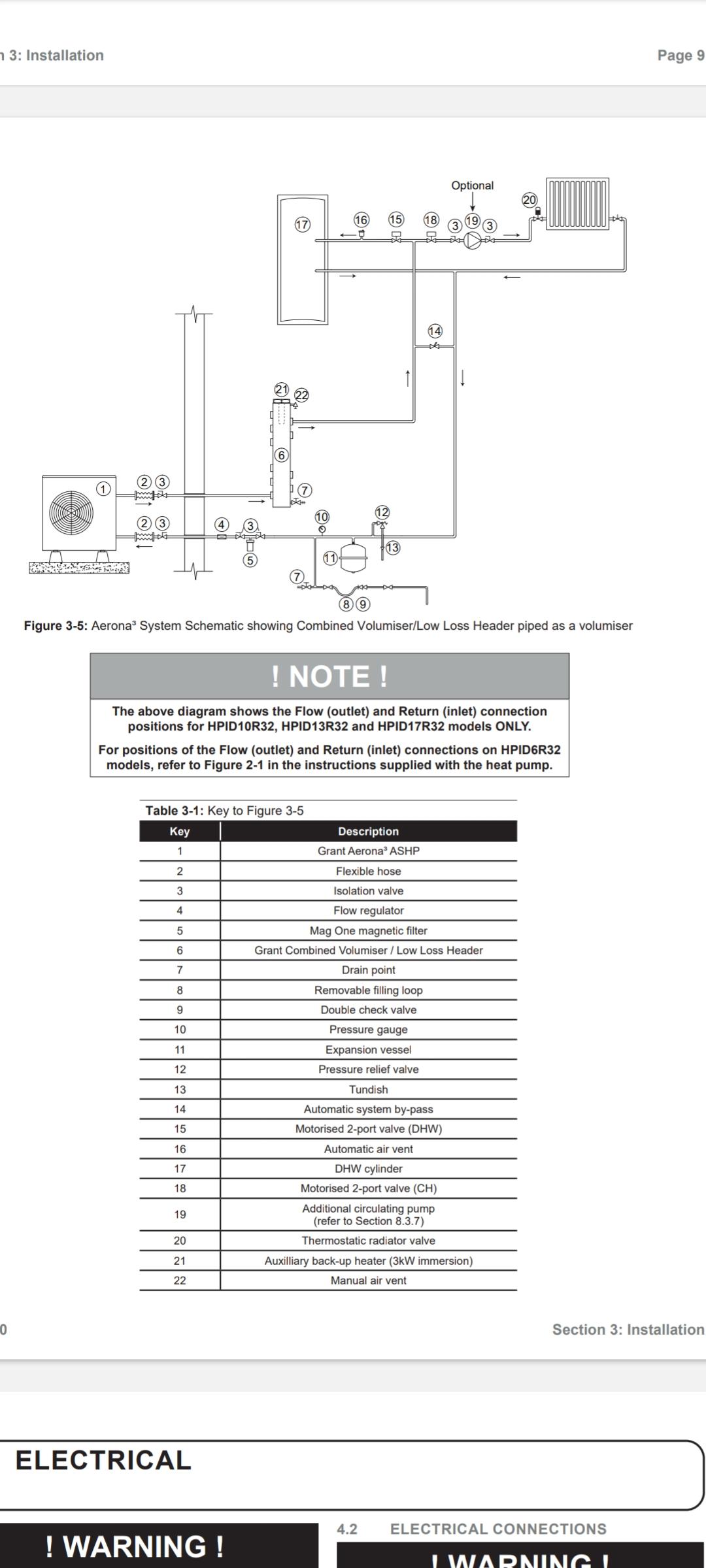
 Unfortunately it's instructions give two ways to install, low loss header with hydraulic seperation or volumiser without hydraulic seperation. It really best to install without hydraulic seperation, to have lowest possible flow temperature. So clarity required. So layout should look like this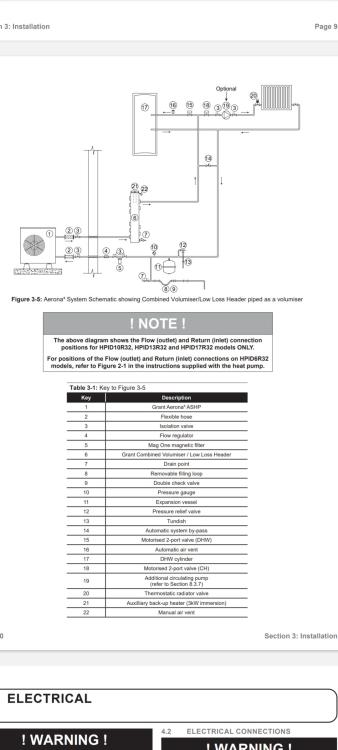
-
How are you operating? Is the temperature set point, always set or are you operating on a timer on and off? Heat output will slowly ramp up the output temperature depending on the temperature the return water is at. So depending on water volume within the heating system can take a while to heat up. Trying to operate for short periods of time doesn't work for a heat pump.
-
I would ask them to clarify which volumiser/buffer they intend to install. Grant do several including externally mounted, vertical and ones within the cylinder.
-
Tried the fan coil on auto mode again today, and just cooled the room down. Reverted to manual fan operation and room temp settled to where I wanted it (after a few hours). The reason could be the Salus auto balancing actuator, auto mode switches the fan to different speeds and to off, so maybe dT is just changing too quickly for the actuator to keep up as it will have been tuned for UFH, not a coil containing a litre of water. So manual mode with WC is probably the way to go. It keeps it simple.
-
Try turning on and off the whole unit, to see if it resets itself, similar to a computer reboot.
-
Hi Is it a log cabin type of garden room, with inter locking wooden blocks to build the walls?
-
Would also look at why there is a need to run the immersion (booster) to get hot water? Unless planned during a cheap rate period is really a waste of money. If you are not 50 Deg water from the heat pump something could be a miss. As said the over heat protection on the immersion has tripped.
-
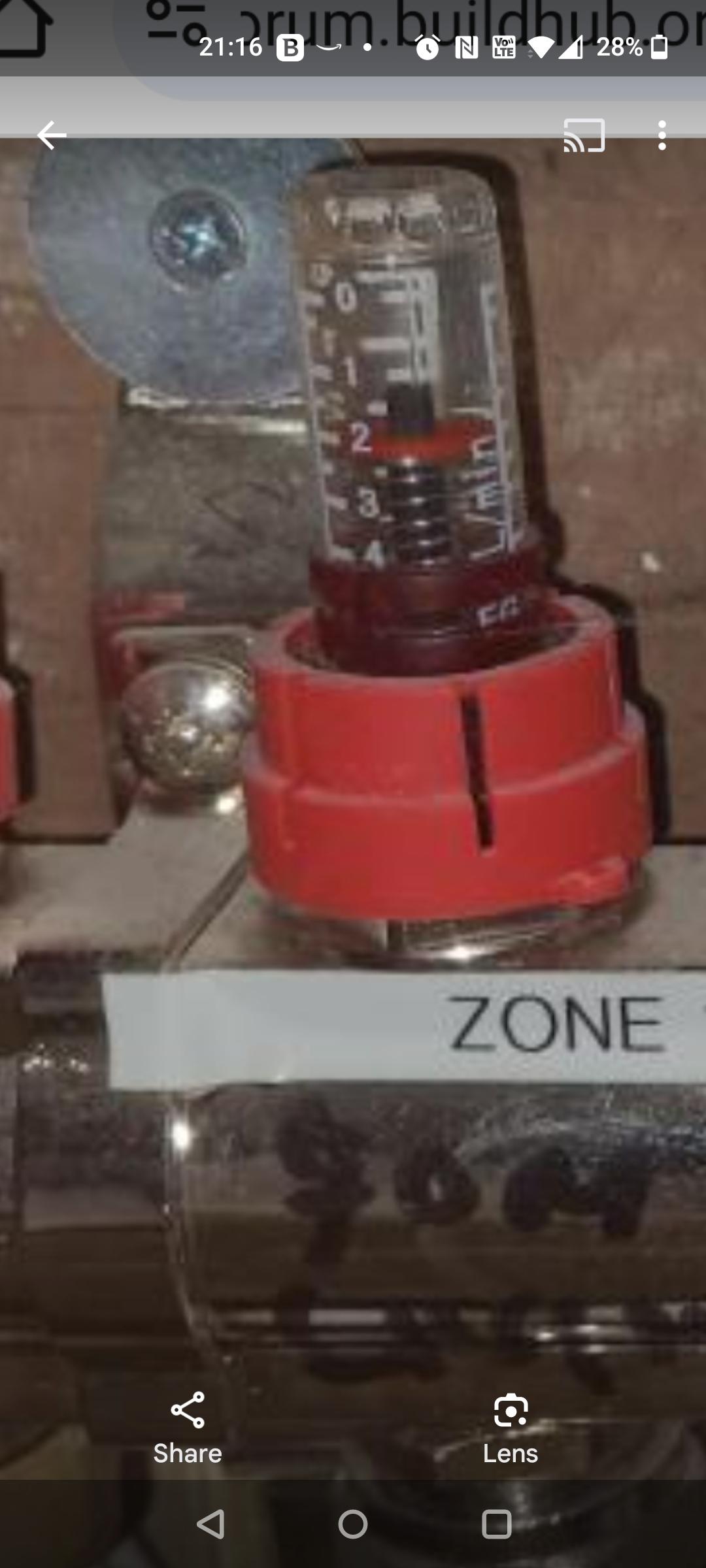
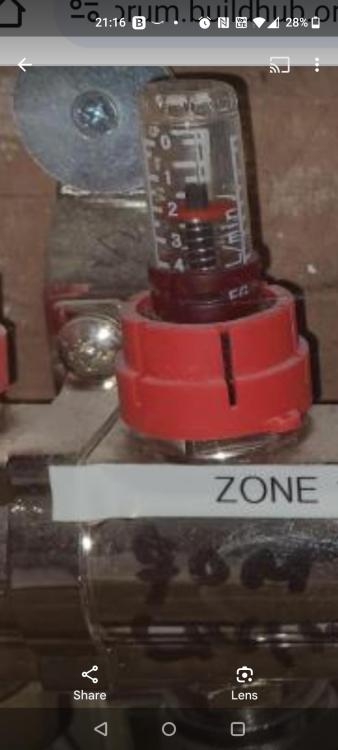
Take red cover off, there will be a black knurled nut below. Turn clockwise to reduce flow. You will see the indicator currently at 2 - move up/down. Hot areas move to 1.5, cold area 2.5.
-
In the colder area increase those loop flows by 0.5 on the flow meters, the other area that tends to be hotter reduce by 0.5 on the flow meter. Tweek until you get a happy medium. Take a few days, doing one adjustment at a time. Bit of fiddling is way better solution, you learn as you go. Just note down the start point before you start and log what you do so you can go back a step or two later if needed.
-
Doing distance in AC is problematic, doing it DC is easy. Adding to the existing inverter is a different issue. You really need to treat it as different string, not add to existing. Other issue is max amps the existing inverter can handle. I have just done 3.6kW about 70m and had to split into two strings otherwise the cable became big/expensive. Each string was 260V DC, and used 6mm2, 4 core armoured cable.
-
Sorry I am 60 and not American, so don't use imperial units (BTU) and prefer to use kW. So let's step back a little, a gas boiler at low flow temps is in operation mode pretty similar to a heat pump. So when you get down to low temps, the dT across the flow and return is about 7 to 8 degrees. Your ring main is more likely to be the limiting factor not the 10mm tail. At dT 7 10mm pipe can carry 1.61kW 22mm does 8kW. Have read here https://www.heatgeek.com/does-my-pipework-need-upgrading-for-a-heat-pump-with-cheat-sheet/ You need to understand the heating requirements of each room, and the radiator duty. From there do the flow required through part of the system to get best pipe size for the flow required.
-
The Grant unit can be installed in two ways a buffer/low loss header configuration, buffer gives hydraulic separation between heat and UFH - you do not want this configuration. The other is a system volumiser - a buffer is installed in the supply piping only. This is ok. Ideally you want, UFH as a single zone, no buffer, no mixer and no additional pumps, just run on weather compensation. Heat pumps have a minimum system volume as long as your system configuration complies no need for a buffer. But installers want to install in buffers
-
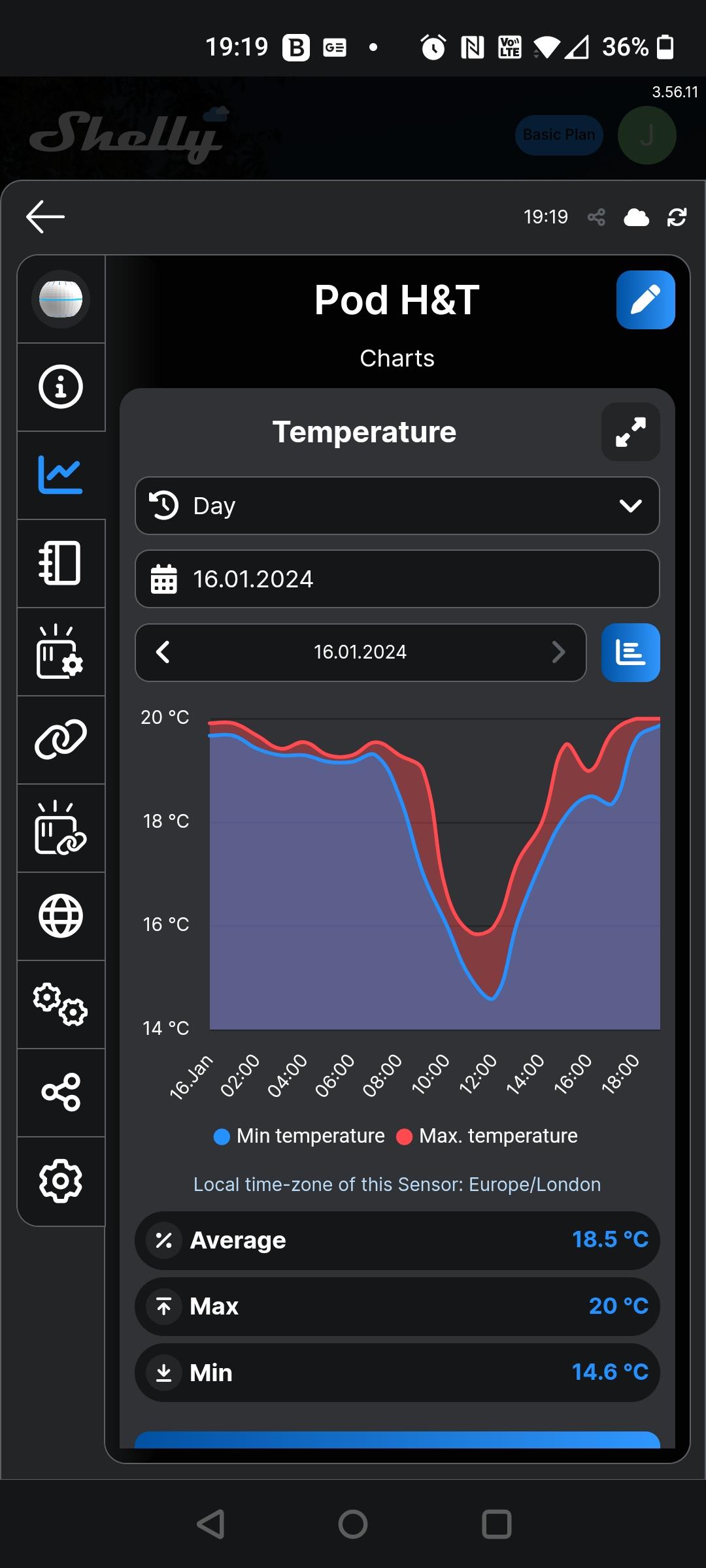
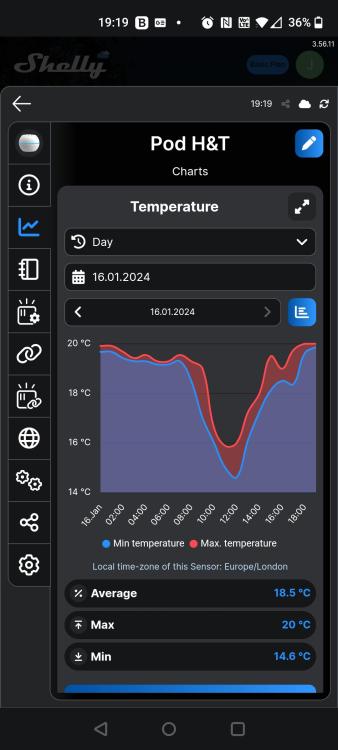
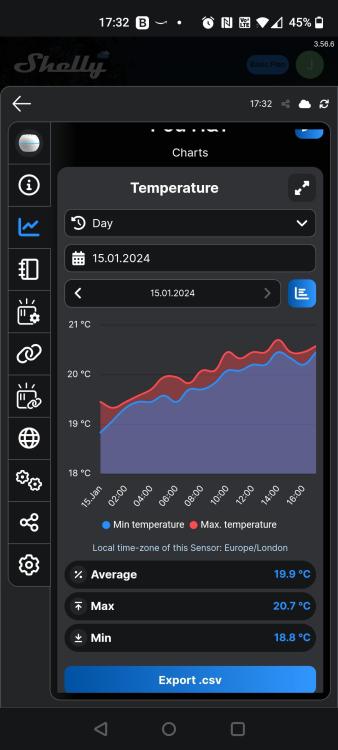
I have set my fan to manual min speed, the heat pump isn't being asked to do much, as the mixer is set to 28 deg flow to UFH. Currently heat pump is kicking out about 36 degs. It's been cycling on off today. The room temp is very stable, water temp is varying from 36 down to about 27. This is the plot from my H&T sensor to can see where the heat pump flow temp dips with the peaks and troughs. I may have to tweek the WC curve a little. The Salus actuator is on the return piping side and "hand on" pipes, there is a difference in temperature so it's doing something. Used on a radiator straight trv from Screwfix, item 48346 - Straight TRV about £15, which gives a positive shut off for maintenance also. Have powered it on all the time to the main incoming power. No noise from the valve
-
You should be more concerned about your health - the outflow from the flue contains Carbon Monoxide - it can kill and has. You don't smell it, who ever said its fine, shouldn't be allowed near a gas appliance - find a new plumber. Also if its expelling steam you are not condensing so the boiler is not running efficient. Flow temps are set too high. Your return temp needs to be below 53 degs. to ensure condensing.
-
Chopping your system into smaller parts does risk your boiler going into short cycling mode - I assume you are aware and have made allowances for this. Short cycling will possibly end up using more fuel to get a worse outcome - conder house. If one area is just getting too warm, reduce the flow for those loops a little every day until you get the result you want
-
Tried the unit overnight with fan set in manual mode at a constant min speed overnight. Heat pump ran over the full period except a few defrosts (-2 overnight). This morning the summer house had settled to 20.1 degs. Will monitor it over today. Have built a WC curve based on the running parameters and added to heat pump. Curve starts at 10 deg outside temp with 29 degs flow temp. At -6 outside flow temp is 39.6 deg. Suspect a little modification will be required, so will monitor. Next issue is humidity has dropped like stone, it's currently at 35%, so will reduce dMEV fan to min speed.
-
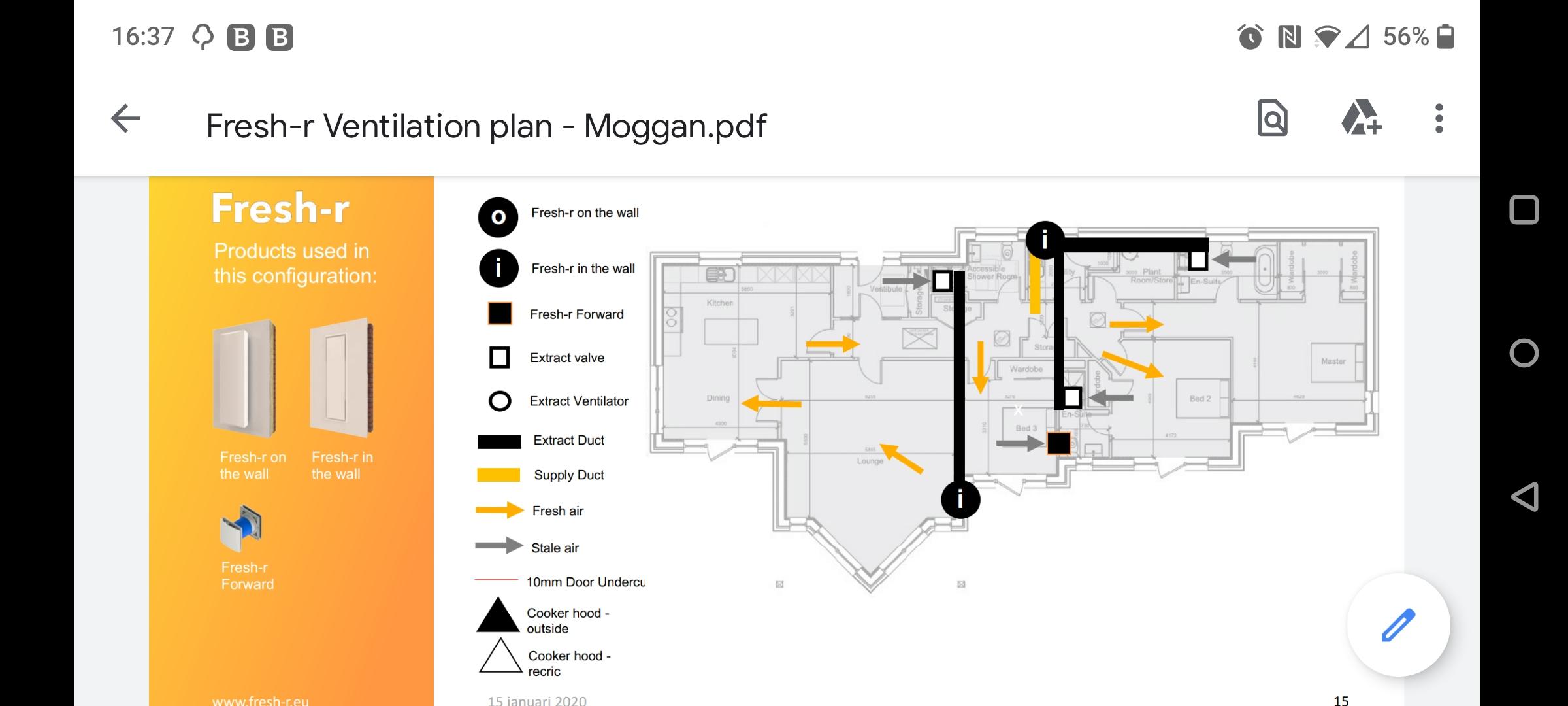
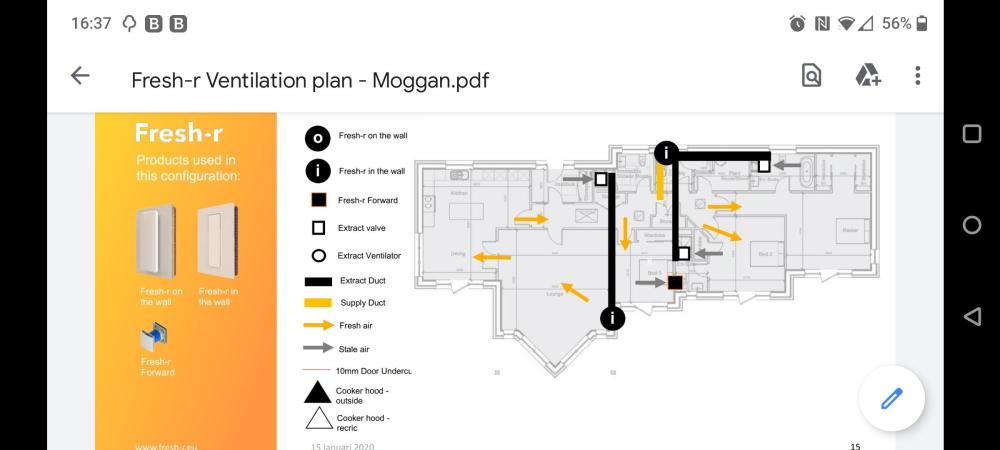
If you are going this direction anyway look in to cascade MVHR. Units like FreshR and BluMartin use this principal. Don't have to use those units, but the way they do it, can be done with normal MVHR units. This is how FreshR proposed we did how house. Basic three extract points in bathrooms and 2 supply points, one in hall and one in the lounge. Some reading material comparing systems. Atamate_SDAR+Paper+2019+(1).pdf
-
MVHR settings for a less airtight house
JohnMo replied to pstunt's topic in Mechanical Ventilation with Heat Recovery (MVHR)
A quick comparison of different solutions to humidity control. To give people an option, as MVHR can be difficult to install as a retrofit. Two solutions implemented - MVHR and dMEV. Outside currently is 0 degs and 82% humidity. House has MVHR, inside humidity currently is 41%, and 21 degs. Summer house, dMEV, inside humidity currently is 40%, and 19.3 degs. MVHR isn't the be all, end all solution, different solutions are sometimes easier to implement and give similar results, especially in less airtight properties. -
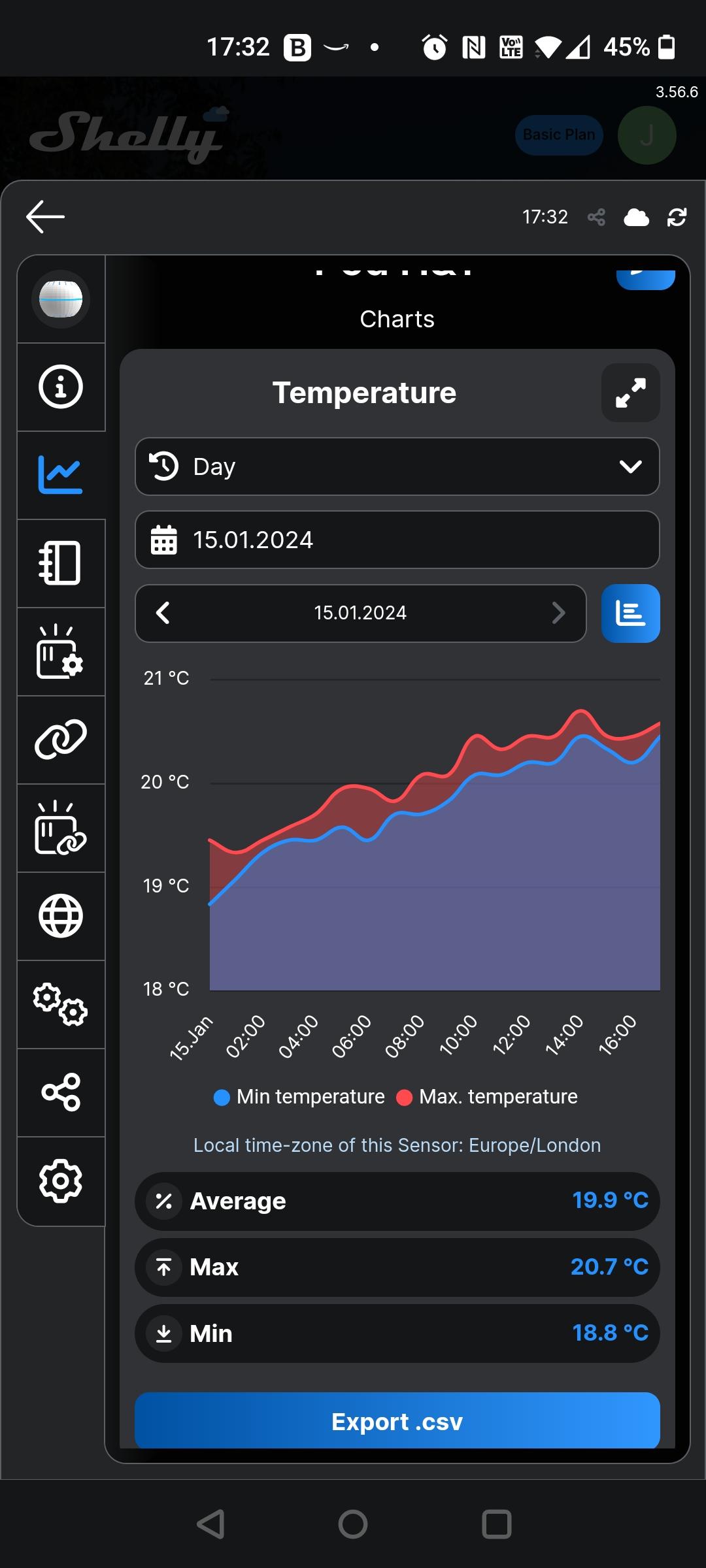
So got the unit running last night and over a few hours it heated the room. Heat pump ran continuously during the period. However once heated the heat pump started to cycle an hour on hour off. The summer house temp drops to 17 from 20 overnight. It did the same again today, took most the morning to recover, then over the next few houses drops to 17. So scratching head on how to setup. Can do two running regimes Thermostat, this starts and set fan speeds, but if water drops below 32 (adjustable set point) fan stops. Or you can run at a set fan speed, but no thermostat. Anyone with some experience of what works best?
-
Gas & solar or air source heat pump
JohnMo replied to JoePlant's topic in Air Source Heat Pumps (ASHP)
We have the same, but are they required - no. First month had the blinds open each night, but after that don't really look out those windows.