


JohnMo
-
Posts
13297 -
Joined
-
Last visited
-
Days Won
200
Everything posted by JohnMo
-
It may only take you 10 years to build it at this rate. 2 days of discussion on a 30 second job.
-

Planning Approved - Feedback on proposed layout
JohnMo replied to Owain1602's topic in New House & Self Build Design
That would work. Yes with doorway, it may need to be 30min fire door(?) someone else can confirm that. I would run in the floor. Have a read up on cascade MVHR. Couple of bits attached. Basics are you do extract as normal, but supply is pushed in to common areas and is cascaded by being pulled through other rooms. Example master bedroom - ensuite has extract. Air is drawn from hall through bedroom and dressing room. Bedroom is ventilated without a direct supply. Brink-Multi-Air-Supply-systeem-Leaflet_4388762584830.pdf 615103-a-leaflet_multi_air_supply-en-dig-lr_5057512563596.pdf -
MVHR intake and exhaust separation
JohnMo replied to dnb's topic in Mechanical Ventilation with Heat Recovery (MVHR)
I wouldn't. Most logical is generally the best place. Competition Spot the MVHR vents, this is the road side. Inlet and outlet?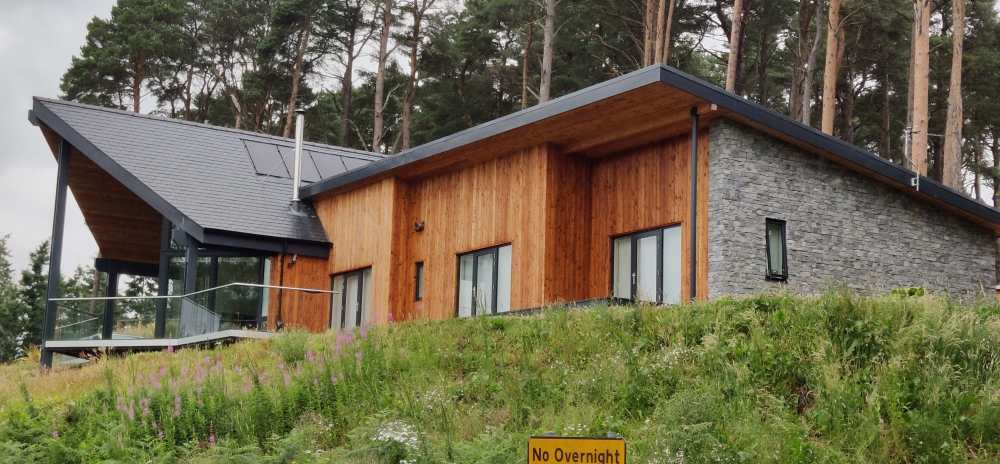
-
Way to many variables. What is your heat demand? If it's 2kW at -3 it will.be about 1kW at 7 degs. A heat pump will give you a SCoP of 4 or a quarter the running cost of direct electric. Plus a sunny winter day make the most of any excess PV. A 7 Deg day CoP of 5 + at -3 CoP of 3.
-
What does your structural engineer say? Use proper DPM. 200mm EPS is pretty poor insulation, would increase to 300mm.
-
Planning Approved - Feedback on proposed layout
JohnMo replied to Owain1602's topic in New House & Self Build Design
I know you are starting from a barn, but 380m² for a 4 bed house is lots of wasted space, but with pocky cupboard downstairs and little else. Think about storage. Ideally you would have the plant where you propose to site the heat pump. Just bring pipes through wall. Your cylinder is likely to 600mm dia, but will need some room around it for maintenance. You don't need to have MVHR in the plant room, so look for a central location so duct length aren't huge. Same is true for UFH manifold. Your hall is the same size as a small house. You could have a major issue with control of fire spread, as you lounge is open to upstairs and not segregated from kitchen. Do you need an accessibility shower/bathroom room? Even if you don't, you have enough space to make one downstairs. You may have no accessibility needs, nor did we, but ice and a fall incapacitated my wife for 2 months and the accessibility shower was a god send. Strongly consider it. We found a trip to the beach with tape measure and drawings was great. We draw out the house in the sand full size and walked through the building, first revision seemed great but just didn't work, so we moved doors and walls, to make it work. Best 2 hours spent in the whole process. Did it twice. -
Keep gas boiler or install heat pump?
JohnMo replied to Walshie's topic in Central Heating (Radiators)
Assuming a system boiler. Use a heat pump cylinder - not a boiler cylinder. This will future proof cylinder, but get very fast reheat time, from the boiler. Set up boiler on X or W plan (priority demand hot water). Definitely not S or Y plan. Design the whole heating to run at one temperature, ufh and radiators, then run weather compensation direct from boiler. Ideally if possible 45 or well below. Do a heat loss calculation, does your boiler modulate to half that figure? If you don't want to, or cannot with the free boiler chuck it or resell. -
Suspect a few additional details are needed What does you system look like? Just UFH? Retrofit or part of new build? Floor build up? Size of heat pump? How do you operate? Zones or single zone? Buffer, volumiser or none? How many manifolds? Mixer and pump on manifold(s)? You won't get warm feet from UFH, if you do there is something wrong generally.
-
You would choose one airtight pathway, inside for me was way easier. Ceiling membrane draped onto wall and airtight glued in place. But I have all vaulted ceilings. Air can move in all directions, if you do two airtight pathways for walls, you need to do that on the roof also, or you are just wasting time and money. Doing 2 is waste of time and money anyway. Choice inside or outside and stick with it.
-
PIR avoid. Easy to do badly, difficult to do well. Would look at EPS beads, fully fills all voids, all gaps etc. make cavity as wide as practical. Minimum BR is pants
-
But looking at the flow rate of a 10kW electric heater, winter output at 41 degs is a pathetic 6 L/min. So on that basis an 80L equivalent would 18 mins without top up. Zero outside here last night and around an hour between defrosting. So ample time for multiple showers or a bath fill. Even if the a HG combi cylinder was an interim solution it's easy to do. If owner thinks it rubbish the solution is an UVC and they will need to allocate space. Electric showers were always pants, electric efficiency is still 100%, so would be no better, with an online heater instead.
-
You only need one or the other. I did parge then 50mm service battens screwed through parge into woodcrete and dry lined (jointed plasterboard). Also provided an OSB area at top of wall for all wiring to clip to. Parge coat gave zero air leakage via wall. Had big air leakage to fix at DPC, used liquid membrane for that. If plastering direct the air leakage is likely where you have cables and sockets, so some thought needed.
-
Or you just do a heat geek mini cylinder, install in the wall space taken up be combi. Piping is already there, for heating, cold supply and distribution of DHW. Then you comply with BUS requirements so you can get a grant. Cheaper and easier than any other options offered.
-
DIY Inline Carbon Filter
JohnMo replied to Duncan62's topic in Mechanical Ventilation with Heat Recovery (MVHR)
Not used just thought about it, they do a 200mm one also, so pressure loss would be way lower. Filters look cheap enough but 10 years worth, suspect if using 200mm the life would be a couple of years. -
Round 1 Woodcrete - No floor drilling needed, not a single hole made in my finished floor during wall construction. All bracing was OSB directly screwed to blocks. Then removed 24 hrs later. Zero risk of ufh pipe damage. Airtight either parge, purple spray airtight stuff or membrane - all easy enough. More work than EPS.
-
DIY Inline Carbon Filter
JohnMo replied to Duncan62's topic in Mechanical Ventilation with Heat Recovery (MVHR)
Or you could do something like this https://www.aliexpress.com/item/32776690229.html?src=google&pdp_npi=4%40dis!GBP!55.19!55.19!!!!!%40!12000021440263015!ppc!!!&src=google&albch=shopping&acnt=494-037-6276&isdl=y&slnk=&plac=&mtctp=&albbt=Google_7_shopping&aff_platform=google&aff_short_key=UneMJZVf&gclsrc=aw.ds&&albagn=888888&&ds_e_adid=&ds_e_matchtype=&ds_e_device=m&ds_e_network=x&ds_e_product_group_id=&ds_e_product_id=en32776690229&ds_e_product_merchant_id=109202788&ds_e_product_country=GB&ds_e_product_language=en&ds_e_product_channel=online&ds_e_product_store_id=&ds_url_v=2&albcp=17859500389&albag=&isSmbAutoCall=false&needSmbHouyi=false&gad_source=1&gclid=CjwKCAiAlPu9BhAjEiwA5NDSA02cmd9lWX18kOWYE1fblhpGBsA7dkCIRhHGkK4iflueogNV-5zOixoCc4MQAvD_BwE -
Ours on the same double switch. It's nice to have the option of brightly lit or just a strip of light on our kickboards.
-
No fibre near us until late this year. Was only offered about 2 meg, so useless. So just went 4G. Even BT said it was a rubbish speed, and the guy I spoke with said go 4G.
-
Seamed Roof - what to have Zinc/Aluminum/Greencoat
JohnMo replied to Caroline's topic in Roofing, Tiling & Slating
Just NE Scotland I believe. But there is a network of install companies nationwide. Sika only sell to approved installers I was told. -
Seamed Roof - what to have Zinc/Aluminum/Greencoat
JohnMo replied to Caroline's topic in Roofing, Tiling & Slating
Forgot to mention 220m² approx. -
That is exactly how I was told to do it. Maybe a regional thing - I am in Scotland or things have changed since I did it.
-
Seamed Roof - what to have Zinc/Aluminum/Greencoat
JohnMo replied to Caroline's topic in Roofing, Tiling & Slating
Cost and ease of getting an installer. Cost was £14k for system chosen, that included all the correct underlay, all edge trims etc. Alternatives priced TATA standing seam, 2x quotes £18k (lots of detail not included) and £29k Zinc was about £30k, quote had no details of what was or wasn't included. -
Seamed Roof - what to have Zinc/Aluminum/Greencoat
JohnMo replied to Caroline's topic in Roofing, Tiling & Slating
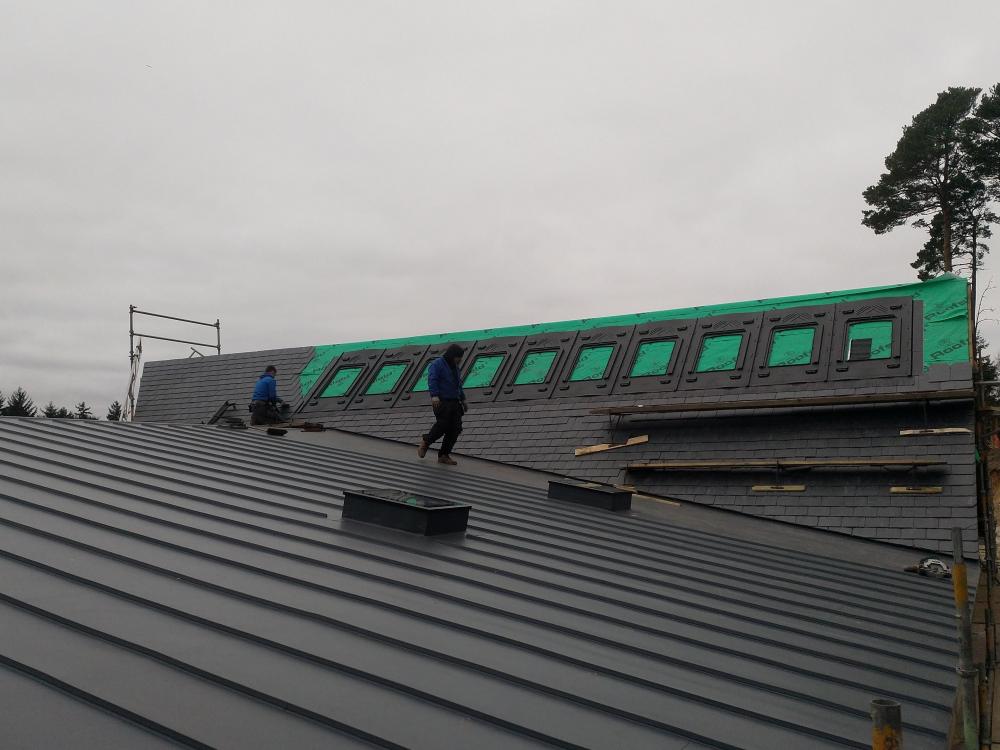
I had the same dilemma, in the end went Sika Sarna S327 standing seam. A seam welded and mechanical fixed EPDM.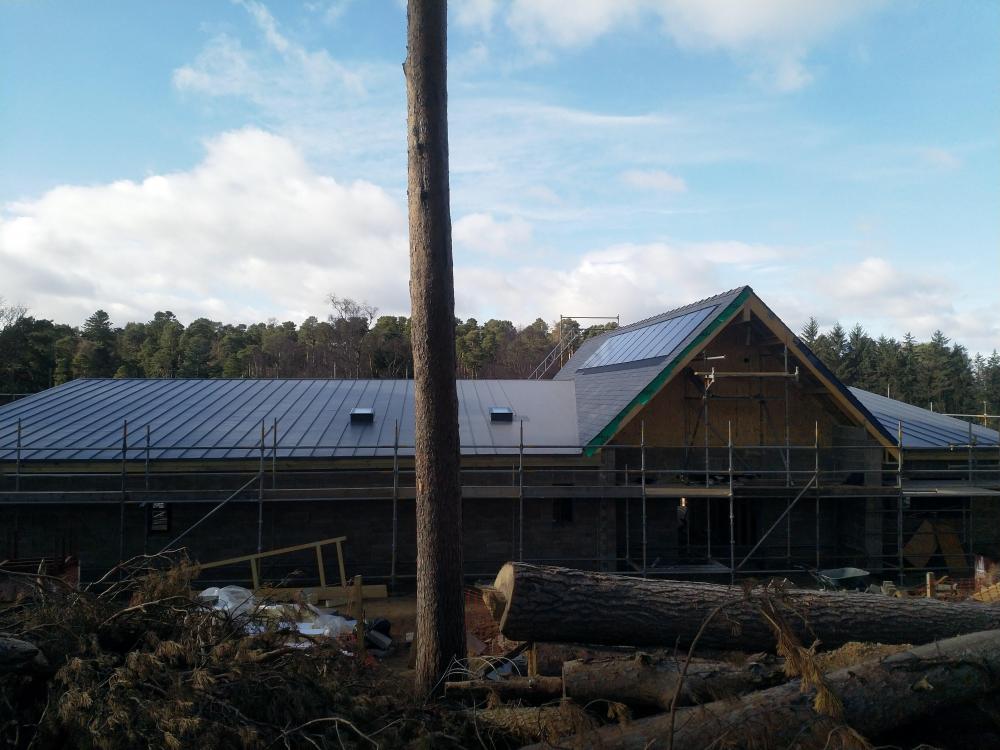
-
That is so true of a lot of house related things. We have just had 2 days where all the heating and DHW has been provided by excess PV. We are a lot further north and have plenty of trees so a shorter than expected solar day length. And we have a little over 6kW. Not really done the cost benefit analysis of heating v export. But with heat pump running at an elevated flow temp, we are getting a CoP of 4.8, so turning 5.5kWh PV into 26kWh heat and immersion has cylinder at 70 degs. So 8kW on a sunny February day you will have plenty of export as well.
-
Are you a developer or just a single house. If not a developer no need to sign up. I rang BT, they arranged for Open reach to deliver cable, which I installed, now at front door and at nearest pole. Costs no idea as I just stayed on 4G. BT, is in principle a phone system, that what occurs first and the broadband sits on top of that. I had a trench for mains power that's in the bottom BT cable above about 300mm no ducts. BT/Openreach happy with it in sand.






