


JohnMo
-
Posts
13297 -
Joined
-
Last visited
-
Days Won
200
Everything posted by JohnMo
-
Smallest defect in powder coat and it's rubbish. Water gets in and corrosion starts unseen, by the time peeling starts it's too late. Strip back as far as you can and paint, you may need a plastic primer on powder coat so it sticks.
-
A heating season will bring the pH up apparently.
-
 We have now been in the house with MVHR for a couple of years. We had manual over rides for boost and sensors in the MVHR unit. During winter humidity levels are so low, even after a shower boost is never needed. Sensor for humidity is in the hall, humidity this afternoon was 39%, after boiling veg and potatoes for tea, humidity jumped up to 40% (1% difference), after an evening shower humidity up to 40.5%, 30 mins later back to 39%. Boost not used or didn't need to start. MVHR flow rates are set lower than building regs
 -
Buffer?
-
So if your design load is 10kW+ at -3 the demand at an average of about 2 degs will be about 75% of 10kW. So 7.5kW. 24 x 7.5 is 180kWh. So you are getting a CoP of about 2, assuming everything is going into the heat pump. Your trouble is your flowing at 45+ degs. So what temperature do you have into UFH and out and from heat pump and back. Are your radiators only in bathrooms? If so I would look to dual fuel with an electric element and reduce the flow temp of the heat pump down to max mid 30s. This will knock 30% off your electric consumption. Not seen asked but does your heat pump feed a buffer then heating system?
-
I will bow out, obviously wasting my time answering questions as this was answered previously.
-
Extending house which is already too close to septic tank
JohnMo replied to Jimbobjones's topic in Waste & Sewerage
? Possibly, think you may be answering your own question. What other choice would a planner have? They will not turn a blind eye. May open a can of worms you don't want? -
HLP is per m² of the outside surface area not the floor area. It gets further calculations done to it, so not sure it's a good number to use. Just looked at the calculation behind the one posted and that's not that good either. The heat loss parameter (HLP) is an intermediate result from the SAP calculation which describes the specific heat loss per unit of the dwelling’s external surface area, in W/m²K. It includes ventilation heat losses as well as conduction heat losses. It is in that respect a very pure measure of the thermal efficiency of the shell of the building. This is therefore another option for use as a fabric efficiency rating metric.
-
Interesting the target rates are lower that the as built. Which is very poor. So built house is worse than minimum building regs.
-
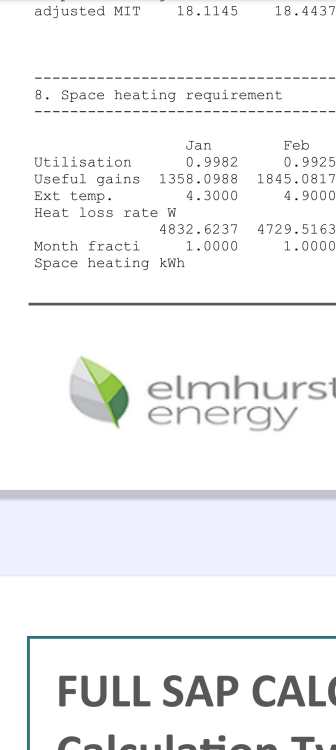
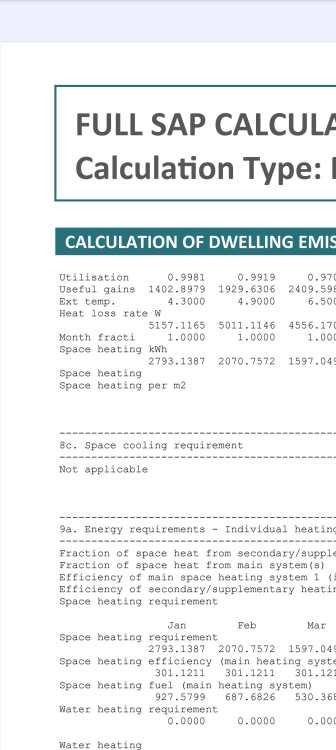
As said earlier the 11kW sounded high. Your SAP report says the January heat demand is 5171W.
-
Nearly. Set thermostats to 22. Ideal is to trim everything to get the room temperatures you want. But after a couple of days of settling. Set backs are serving to make the heat pump work harder than it needs too.
-
Steel is great conductor of heat. Under block and beam ground will be about 6 degs. Insulation through the floor will make zero difference. The post will be sucking heat from house a very quick rate if not insulated. 25mm PIR insulation and plasterboard. If you have the option to have outside the heated environment, do it. Other insulation is definitely needed
-
Very dependant on flow temp. 6kW is nearer to what they modulate to at low temps. PDHW allows t 2 hrs per day, that will be loads. So 22 hrs to supply all your heating instead of 24 hrs. As said previously use a heat pump cylinder heat to 50 degs. 210 to 250L would be ok for 3 to 4 bed house. Size boiler the same as a heat pump. Say your heat demand is 6kW, (24 x 6)/22. So 6.5kW. UFH gives you quite a bit of leeway on sizing. As the floor will take all the heat you can though at it. I found mixer and additional pump a hinder rather than a gain.
-
Sounds about correct. But your target flow temp has been met, dT is small, so heat pump is modulating output down. At that time you have the UFH switched down to 20 degs, so most likely the heat pump is just doing radiators.
-
There isn't a reason why a house completed in 2022 should need anywhere near 11kW. I'm at nearly 200m² 6m high ceiling in one room, which also floor to ceiling glass, all other average 3m tall. At -9 the house needs around 3kW. Taking away heat recovery ventilation would double the heat load Floors take lots of energy, take a huge amount of time to recover from being cool. Letting house cool takes an age to recover. If house heat loss is say 10kW, an 11kW heat pump needs to run 24/7 to just stand still. Let alone recover from 14 hrs effective off due to thermostat timings.
-
The ASHP install. Lots of heating on/heating off then fingers crossed.
JohnMo commented on TheMitchells's blog entry in Renovation of Ellesmere Bungalow.
So you have basically removed your ventilation and not replaced with it? Mould will be happy, parents health not so. -
A thing I forgot to mention With a mixed radiator and UFH, the flow coming out of the UFH (cool) will dominate how the heat pump runs, until the floor temp stabilises.
-
The basics on how a heat pump works. It will start and basically ramp up to full load. It will first try and get it's running delta T (difference between flow and return temperature) to within a defined pont controlled by the controller. It then only as Delta T reduces add more heat to the flow temperature. With UFH this can take hours. I would set all thermostats to 22, and let the system stabilise. Leave a couple of days. Do not do any setbacks, just let weather compensation do it's thing. You are making the heat pump run full load most the time. Doing yourself no favours. If I let my house temp drop by a full degree, heat pump or boiler would take around 24 hrs to recover. Room temperature setup, if a room is too hot, reduce the flow rate to those loops by 0.5L/min, leave again for 12 hours. Opposite for cool rooms. Use the heatmiser as a monitor system do not use for control. That is the heat pumps job. This will take some time.
-
Extending house which is already too close to septic tank
JohnMo replied to Jimbobjones's topic in Waste & Sewerage
What you do has to comply with current regs, as you are making a change So outcome could be, a treatment plant to replace septic tank, located in a suitable location. -
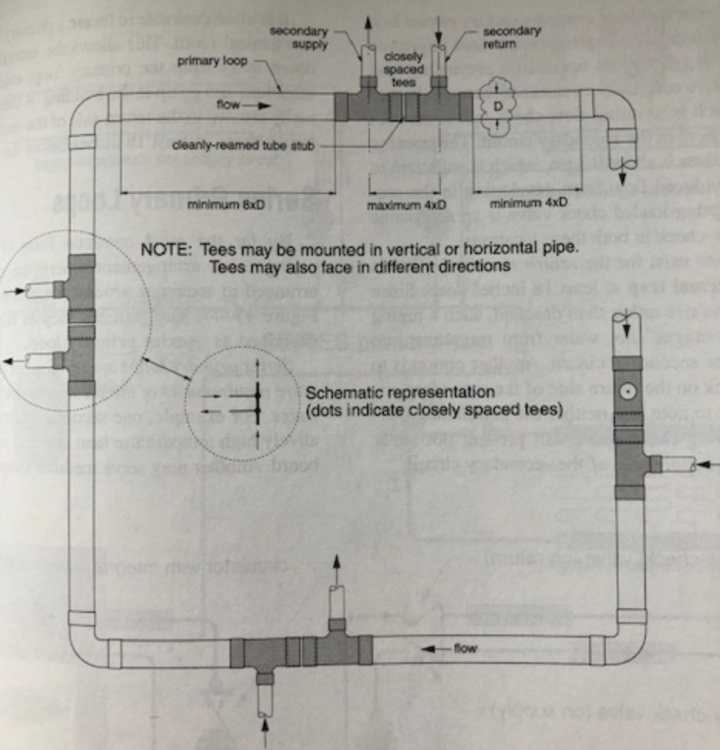
Guidance on close coupled tee install dimensions, so you get proper hydraulic separation.
-
Cylinder and boiler are within the heated envelop of the building, so any heat losses are going into the building, so winter time heat losses don't go to waste. Summer time cylinder and pipe losses are not useful. So you need to insulate for that. Space looks very tight. I would as a minimum insulate the hot cylinder pipe top for first meter. And the flow and return from the boiler where practical.
-
My niece moved into a house with an electric boiler, it got removed after the first month in the house as bills were hideously expensive. Ask to look at the electric bills. But with a smart meter you get a decent time of use tariff to make costs acceptable. Octopus Cosy for example is for heat pumps or electric heating.
-
Couple of things jump out of your description So 80kWh divided by 24 hrs, is just over 3kW electric input. Your either running 24/7 and getting a CoP of 3.3 or you are running on a timer for short periods and getting a piss poor CoP for the hours run. New build in 2022 should be nearer 3 to 8kW for your size house. So something doesn't add up. I suspect how you are running the system is the bit that's amiss. And or how it's set up. So are you running on a time based and thermostat regime or running on weather compensation 24/7? How many thermostats do you have?
-
Strong suspicion the insulation details around the steelwork leave some thermal bridges. It's a big bridge if not correctly detailed. The steel at the top of the roof, could also be an issue as you have lots of gaps in the roof insulation at that area. PIR in cavity walls is easy to do badly and difficult to do well. Suspect you have a lot of small detail issues that all stack up. Window size shouldn't give you issues. But post your thermal images. Around windows, around all steels, floor to wall intersection, the walls and ceiling.
-
If you have MVHR the air change per house is 0.3 to 0.5. But this has about 80 to 90% heat recovery. An air test of building tightness of 10ACH would give you around 0.5ACH natural infiltration. If you looking at a grant, the MCS spreadsheet has pre added ACH figures. You want them to move on the numbers you need an airtightness test result and then argue the point.




