JohnMo
-
Posts
13296 -
Joined
-
Last visited
-
Days Won
200
Everything posted by JohnMo
-
 No, true, but discussion is about a gas boiler install, so pretty relevant.
 -
I had the same discussion, myself and wife went to a big showroom with many different windows, wife commented after about 5 mins, plastic does look rubbish, think again. We went hardwood painted, grey outside, white inside, made by a local company. See them, feel them, then make a call. My opinion and anyone else's are just our opinions, you are paying and so you should choose. Most important is Uw this is the whole window U value, many window companies will give you Ug which is just the glass. Also discuss how the window is installed, do they use airtight expanding foam etc around the opening to seal and get rid of the thermal bridge.
-
T This sounds like the conversation I had about cellulose, they wouldn't even quote until I had all the drawings changed to suit what they expected. So zero idea of costs without going back to architect to amend drawings - so moved on.
-
But to do this you first need to understand what the boiler does and doesn't do. You can make massive reductions to gas consumption just by running the boiler differently. I more than halved ours with no other changes. Combi they tend to be big (generally massive, compared to heating duty) and sized purely on the basis of hot water. To get them to run well, you need a boiler with good modulation - most are rubbish. The higher the minimum output (at 35 degs) the bigger the water volume you need, so big radiators are good, zones are bad. A simple design is best, but designed well. Your bog standard install will be high flow temperature, small radiators, lots of thermostats. Most boilers short cycle a lot, but knows or cares, they just lay the bills, because gas is pretty cheap.
-
ASHP advice on buffer tank / heat store and more
JohnMo replied to Joyosa's topic in Air Source Heat Pumps (ASHP)
Something isn't correct, I would start with a decent heat loss calculation and go from there. Big rambling pile with a wall missing maybe 50+kW, but would more likely suspect way smaller. -
ASHP advice on buffer tank / heat store and more
JohnMo replied to Joyosa's topic in Air Source Heat Pumps (ASHP)
From original post Heating and hot water are different heat pump - or at least that's what I read? -
With a boiler If you are set on a combi, a storage combi would give better hot water performance. Then oversized the radiators so you run a max temperature of 45 or lower. Run either weather compensation or load compensation on a single zone, with simple TRVs on bedroom rads to limit room temp. Ideally complete a room by room heat loss calculation to size radiators, not a plumbers thumb in the air guess.
-
ASHP advice on buffer tank / heat store and more
JohnMo replied to Joyosa's topic in Air Source Heat Pumps (ASHP)
Are you sure you have a 56kW heat pump? If so you must be heating a castle. 2000L will contain 46kWh with a start temp of 55 and dropping to 35 degs. So not much, plus you take a huge CoP hit heating to that temperature, so why bother. Think you need to think simple. I would say dump the buffer altogether, if you need more water volume (approx 20L per min kW output of heat pump), use existing buffer as a volumiser for heating system. So connect in supply or return line not both. You can delete the secondary pump. You need to look at zoning also, i.e. remove as much zones as possible and the ones that exist make as big as possible. You want heat pump running low and slow all the time generally - not the red days obviously. -
Large Soakaway - Couple of quick questions!
JohnMo replied to Mulberry View's topic in Rainwater, Guttering & SuDS
Crates are really an alternative to what we did. That design just follows the recommended design by SEPA. If you have space its easy and almost no material costs. -
Large Soakaway - Couple of quick questions!
JohnMo replied to Mulberry View's topic in Rainwater, Guttering & SuDS
https://www.cotterillcivils.co.uk/blogs/guides-to-flood-management/how-to-install-soakaway-crates?srsltid=AfmBOoohgOP6ReHBhn3MNaLCNlKWv0QntWy-0RO-CJBHyVViWn_e6_77 We didn't use crates at all, just slotted 110mm pipe in crushed gravel, geotextile below and above. The pipes were covered with more gravel then geotextile.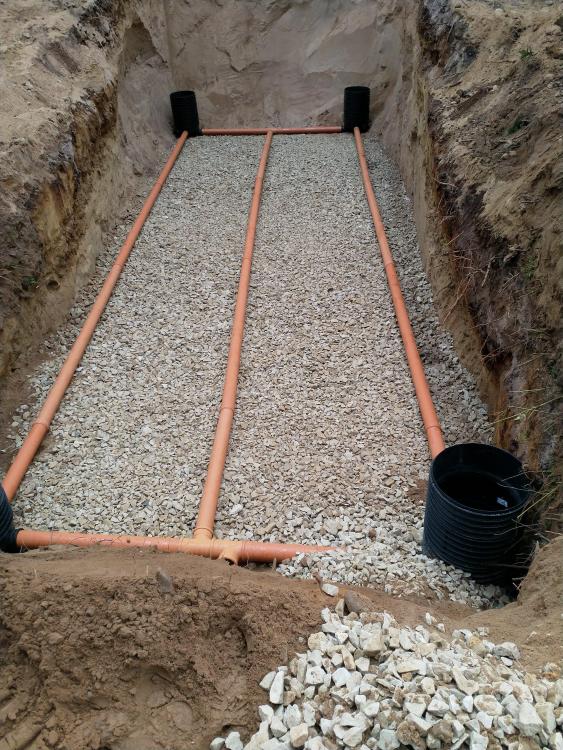
-
Come on now, you can't simply tick a box that says "eco" if you need to do some justification. That just isn't a easy to do.
-
You may well have included all this, but just in case Have included the grout spacing in your calculations be a shame if it doesn't match perfectly. Will you be skimming the ceiling or dry lining have you included this in the calculation? Also, if a shower tray will this be bedded down on anything that may elevate it?
-
Large Soakaway - Couple of quick questions!
JohnMo replied to Mulberry View's topic in Rainwater, Guttering & SuDS
If using crates follow manufacturer instructions? -
Back to the good old days of oil lamps then
-
Best filler for floor joist holes
JohnMo replied to DKenn's topic in General Self Build & DIY Discussion
Put a doubler on to strengthen. To do this correctly you would drill and bolt both the doubler and the original joist. So you are making more holes, is this fixing the issue? What issue so No. Will filling make it look pretty possibly, will it add and structural integrity - No Move on with more important stuff, like putting the floor boards down so no one breaks their neck. -
In our last house we had GU10 led things (if not bulb, what do you call them?). They had a poor installed life, tried a few differences they were all rubbish. Think the main issue, the GU10 holder isn't optimised for the cooling LEDs need, so they overheat and fail quickly, dimmers and 7W don't help either.
-
Best filler for floor joist holes
JohnMo replied to DKenn's topic in General Self Build & DIY Discussion
I doubt you would add any structural integrity by filling holes. Wouldn't overthink it. If you are finding loose boards, sounds like like an older not new house, so holes have been there for years, why fix it if it isn't broken -
I did ours at 600mm and had to alter to 400mm
-
Electric UFH, you will be paying a second mortgage, about 4 to 5 times the cost of gas. UFH isn't a small job, are you ok rising the floor. Any possibly getting the floor screed?
-
MVHR ducting insulation?
JohnMo replied to Street18's topic in Mechanical Ventilation with Heat Recovery (MVHR)
I would get some 25mm PIR insulation. One sheet should be enough. Also get some aluminium tape and mineral wool or B&Q do some white plastic wool insulation. So make a box out of PIR to insulate the manifold and pipes below, cut to shape and tape together. Fill with wool insulation, make a spacer to wedge the whole thing against the wall from the MVHR unit. The metal pipes also need insulation, you do similar to above.- 1 reply
-
- 1
-

-
- mvhr
- heat recovery
- (and 2 more)
-
We have had good weather, but maybe not as good as yours. Won't hurt to give it all a clean and make sure I have no issues.
-
Clean and check over tomorrow, I think for mine.
-
Watching with interest
-
Superfoil in that situation will add almost no insulation value. Don't you have acoustic insulation between your joists? That will provide insulation. You could could just do egg crate panels screwed down and the screed over
-
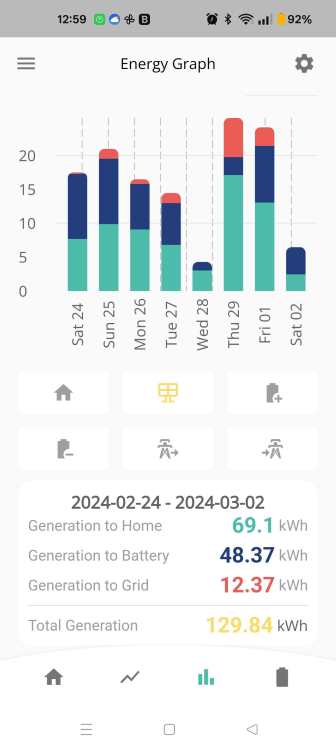
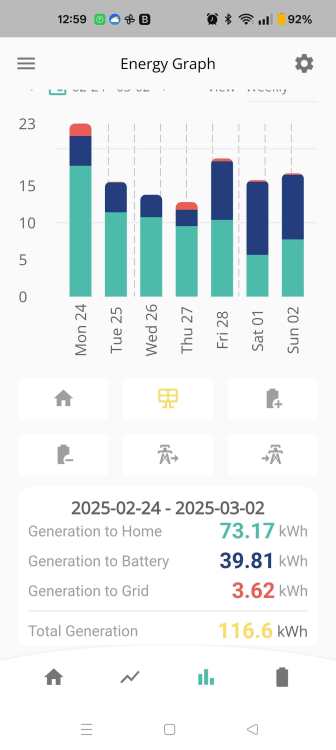
Here are two weeks a year apart. Above 2024 Above last week I thought this year was better, but seems last year wins.