JohnMo
-
Posts
13297 -
Joined
-
Last visited
-
Days Won
200
Everything posted by JohnMo
-
As above yes in England and Wales, think it seems to have disappeared in Scotland unless you are on government assistance. So has to be MCS install. This can be a self installed if you do it via an MCS umbrella scheme. But has to be a "self builder", not a housing estate building company.
-
I was meaning take learning on board about the whole build of the extension and the issues you can have if you don't keep an eye out. Not sure it makes any difference. But if clipping UFH pipes direct to insulation I would do 100mm on top.
-

ICF How much more expensive ?
JohnMo replied to Dave Jones's topic in Insulated Concrete Formwork (ICF)
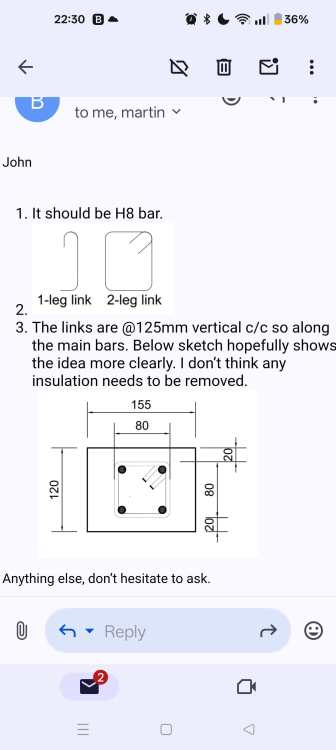
My rebar was limited to lintels at doorways and window plus vertically at doorways and a wind post rebar midway along back and end walls. So not much at all. Lintel detail The wind post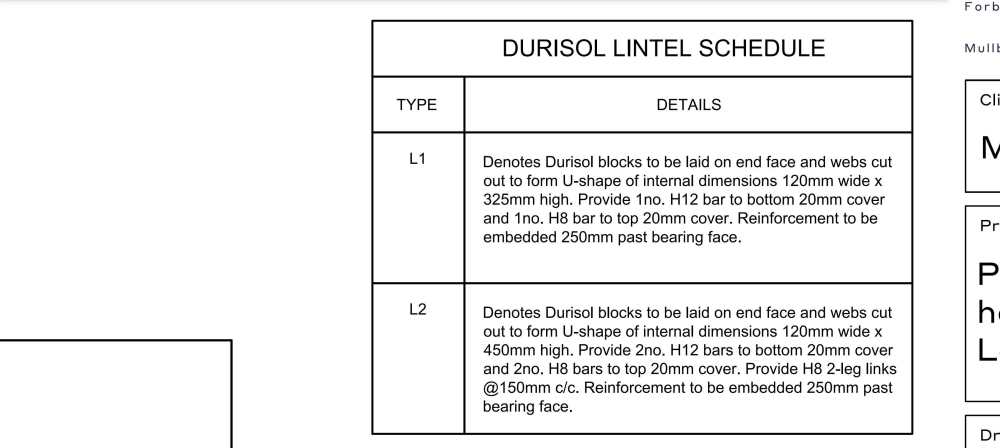
-
I would call your local college that does plumbing.
-
No sure if you have the manual but I've attached it. If you have a multi meter check for a change in continuity on the potential free contracts when it's calling or not calling for heat. User_Manual_Roth_Touchline_SL_Controller_8ch__Master__L12__20240402_UK.pdf
-
Also notice you have a slab, insulation and then screed. Could that be changed to have the slab above the insulation? So no screed? UFH pipes in slab?
-
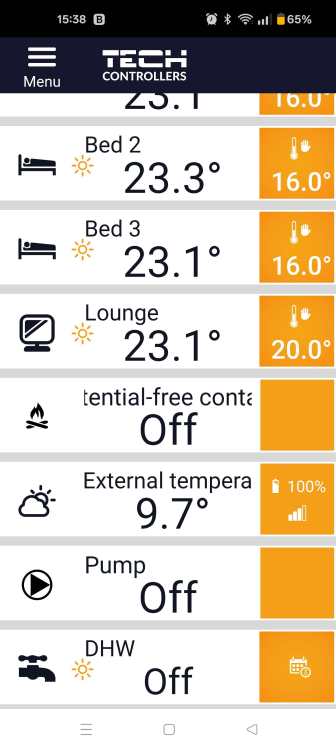
Is the signal for the boiler coming from the wiring centre or is the wiring centre signal making a 2 port actuator open, then the 2 port actuator sending a signal to the boiler? If direct from wiring centre to boiler the potential free contracts should go from open to closed circuit. That should occur at the same time as the pump starts. If not 1. On controller go to fitters menu 2. Go pot free contact 3. Check the Global Control is ticked 4. Check the delay time is something like 2 minutes. I see you have a WiFi connection for the wiring centre, have you logged in to that, to see what it is reporting that should show the status of all the contacts. This is mine, same thing with a different manufacturer label. Pot free contracts are off as there is no call for heat, but shows on when a call for heat. Have you changed any settings?
-
You could make the low point as deep as you want, then pump up on the main sewage pipe. Think they just run on level control once it gets to a given level the ball cock switches on pump and moves it forward.
-
Reducing window opening size...
JohnMo replied to Mulberry View's topic in Insulated Concrete Formwork (ICF)
Use compacfoam. Attach compacfoam to opening adhesive and screw, into concrete. Then attach window to compacfoam. -
Very much doubt it from what I've seen. Think they just cut and paste the last job into your floorplan. Go to boffins corner, there is a heat loss calculation spreadsheet in there. Use that it's pretty good. If an MCS (grant) install the install company does the heat loss calculation. But you should always do your own calculations anyway. You will need an as built SAP anyway. Not for the grant but for building sign off, assuming new build. Couple of different factors for heat pump size. Obviously heat loss, cylinder heating. If a low energy loss house with a decent depth of screed, you can run the heat pump in batch charge mode during cheap electric price periods or run weather compensation. Cheap rate batch charge is ideal for a bigger heat pump, because you need to cram in 24 hrs of heat in a shorter time period. So works like a storage heater.
- 1 reply
-
- 1
-

-
I used primer on parge coat and airtight mastic/sealant https://passivehousesystems.co.uk/product/gerband-6300-primer/ https://passivehousesystems.co.uk/product/gerband-fortax-6400-airtight-sealant/ Once set almost impossible to remove, and forms better to the irregular surface.
-
Read this post take learning from everything. https://forum.buildhub.org.uk/topic/42827-cold-extension-insulation-issues/
-
Floor insulation for UFH for new extension- Urgent advice required please.
JohnMo replied to ab12's topic in Heat Insulation
Double post- 1 reply
-
- 1
-

-
UFH more insulation is way better, stick in as much as you can.
-
Difficult to tell is there holes in it? If not, get a scraper to remove the worst. The hand wire brush. Then use a rust stabiliser, such as https://www.toolstation.com/painting-decorating/paint/c705?type=Rust+Converter Then prime and to coat. Rust often looks way worse, than in reality. It expands about 6x the volume of the base material.
-
Well done photos?
-
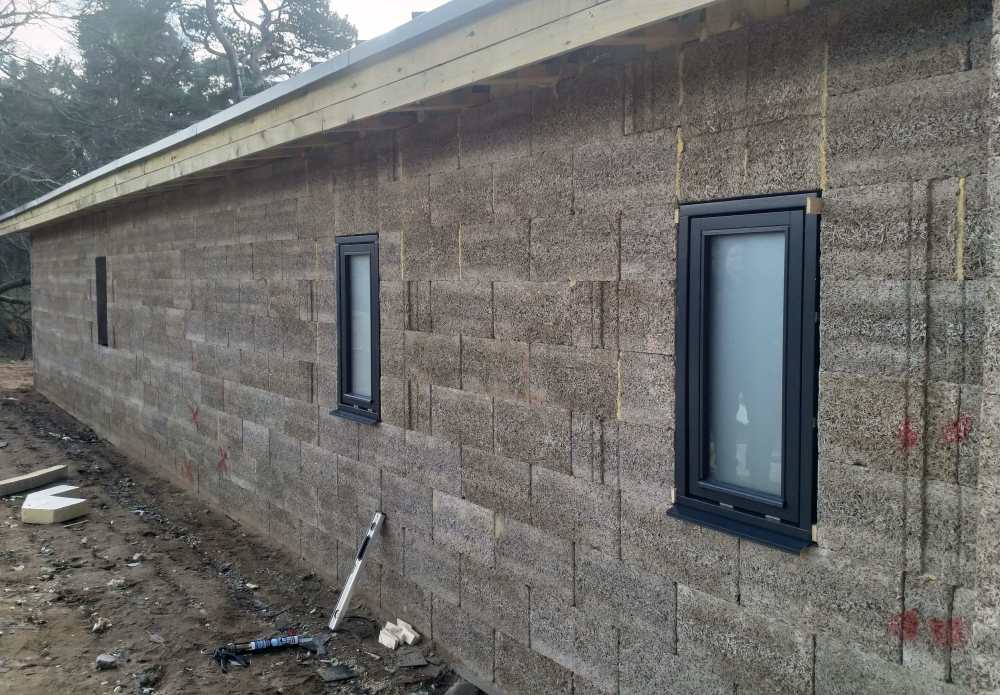
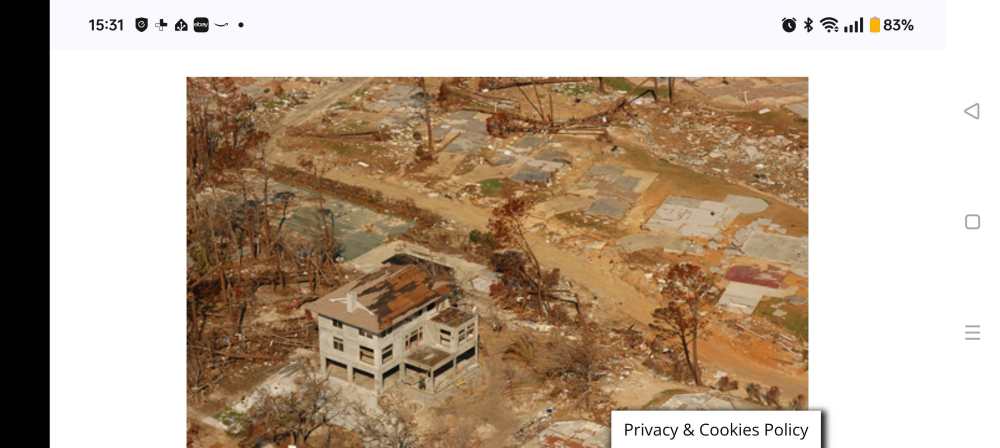
Following a hurricane - one house left, the Durisol house being constructed. Doesn't rot Doesn't burn Doesn't seem to blow down (once concrete filled.
-
If you going that direction, you will need a vapour and airtight membrane inside. Then the wall airtight layer makes sense internally, not external. Then bond the ceiling/roof membrane to the block work inside.
-
Nuaire MVHR high energy consumption?
JohnMo replied to NewbieJ's topic in Mechanical Ventilation with Heat Recovery (MVHR)
The unit may have a cooling module. Which I assume is a small heat pump. You can adjust the set point at which this operates, factory set point is 23. But if altered from this say to 20, and the extract air is 21, then cooling mode will run continuously. Worth a look. hybrid_cooling_brochure_1_.pdf -
Not saying don't go that route, just the amount of holes in the blocks, may make the process less cost effective and difficult. Seal the blocks first, then fill boots.
-
If you know the rules, do it correctly, or don't, up to you. You know the answer to your questions!
-
Nuaire MVHR high energy consumption?
JohnMo replied to NewbieJ's topic in Mechanical Ventilation with Heat Recovery (MVHR)
Looks pretty similar to Titon units, but they only have 4 potentiometers. Setback speed is just a calculation. So speed one (assume a setback speed) one pot for extract and one for supply fan. Then same for normal and boost. So just two fans and adjustable flow rates for each speed of the fans. I would leave these settings well alone. Look for a duct heater upstream or downstream of MVHR unit. Switch it off does it fix the issue? -
I wouldn't go that route with Durisol without first sealing every block.
-
I come from an engineer background at one point in my career I was working to 0.0005" or 0.0127mm. Walls were done to less than millimetre where this was possible.
-
Just found the long external wall - about 15m long and 2.5m tall.