


JohnMo
-
Posts
13296 -
Joined
-
Last visited
-
Days Won
200
Everything posted by JohnMo
-

MVHR and cooling
JohnMo replied to flanagaj's topic in Mechanical Ventilation with Heat Recovery (MVHR)
Gee, I would need to increase my MVHR airflow rate by 4 to get 3kW cooling! No wonder it doesn't really do much. -
MVHR and cooling
JohnMo replied to flanagaj's topic in Mechanical Ventilation with Heat Recovery (MVHR)
Why, when they are cheaper to run, no £100 a year standing charge to pay for having gas. They can cool, gas/oil boilers can't. -
Around 7kW but with lots of shading morning and evening. Yesterday was mostly sunny so do 28kWh, should do 30 or so today. Looking at the battery data without trying 935kWh has slipped into the grid since I got the battery, so £140. If I stopped diverging power to heat pump and immersion that export would be 2 to 3 times, without any effort.
-
MVHR and cooling
JohnMo replied to flanagaj's topic in Mechanical Ventilation with Heat Recovery (MVHR)
People you really need to start looking at datasheets and cooling output data. Adding humidity to air when the airs RH is low will cool the air. HOWEVER, we are can island nation, RH is generally high, so effectively you are giving money to share holders and get almost nothing that helps in return. If you want to try, first buy a cheap humidifier, switch on, if that has no effect, your research is done. You lost £30, or buy a unit install in the MVHR if it doesn't work you lost £1k plus -
Hope your house is a behemoth of a house he hates them.
-
Firstly now have a 4G smart meter, commissioning time was about 10 mins. Spoke with Octopus just after commissioning to change tariff (16:00 on Friday) and am now on a smart tariff (Saturday 08:30). Octopus mini hub is also being delivered today. Decided to go Octopus Cosy. Super easy battery scheduling, should never run out of cheap rate electric, not super cheap but 12.65p per kWh, 2p cheaper than my E7 tariff. Have used Wonder Watt to schedule times. First cheap slot is setup as a smart schedule so it charges based on forecast generation of PV, second slot set to 90% SoC fixed target. 90% chosen so it does not interfere with immersion or heat pump diversion, and by this time, if the smart charge is ok the battery should already be above this level, so will only come in to play if forecast is wildly out etc. Final charge is set for a fixed 100% SoC. May need to tweak over the coming days, but will see how it pans out.
- 70 replies
-
- 3
-

-
- utilities
- electric bill
- (and 3 more)
-
Heat geek have and have a video out there somewhere. To get best CoP you need the biggest coil you can get in the cylinder. Then your flow rate through coil has to be slow, the idea is the return temperature needs to be as close to the bottom of the cylinder temperature as possible. You then prolong the heat pump increasing flow temperature for as long as possible. Heating time extends but so does CoP. Talking high 4s early 5s for DHW CoP. My ASHP is factory set for DHW and there are no settings to change. So cannot replicate the above.
-
Have looked at them, seems a good range of modulation, very good price. Is it worth bothering with MCS rubbish to save a couple of grand. ASHP for the heating, then a small direct cylinder for your space available? Optimise the UFH to make the most of the heat pump?
-
It's one of those things you need to do your own leg work. I ordered all mine from company A, a week later priced had changed and company B was way cheaper. Prices are in constant flux
-
Fair point Computherm Q20RF is selectable between heat and cool. Adjustable hysterisis down to 0.1 degs. I used when I was batch charging, very good with very little overshoot.
-
The other option is to do away with thermostats altogether? Just let the ASHP look after itself. No idea of the connection sorry
-
A video of a similar setup here https://youtu.be/34slE6b6V_4?si=E3g0r9JgsCUmVTdf
-
Something like this h the bigger the plate pack the better. https://beetbg.com/products/copy-of-dhw-plate-loading-30xplate-kit?utm_source=copyToPasteBoard&utm_medium=product-links&utm_content=web
-
Understand that side, but I am interested in the cylinder side how water is moved about. Do you have link to make of cylinder?
-
That's interesting, how does the cylinder water get heated? So ASHP on one side of PHE that's using the circulation pump from ASHP, but happens on the cylinder side?
-
We have recirculation hob extractor. But we placed the kitchen MVHR extract as far away from the hob as we could. We have a white foam filter sock on the terminal, it only ever has dust in it, never greasy. Ventilation extract position it as important anything else. This is the inside and outside of the sock after 6 to 8 months

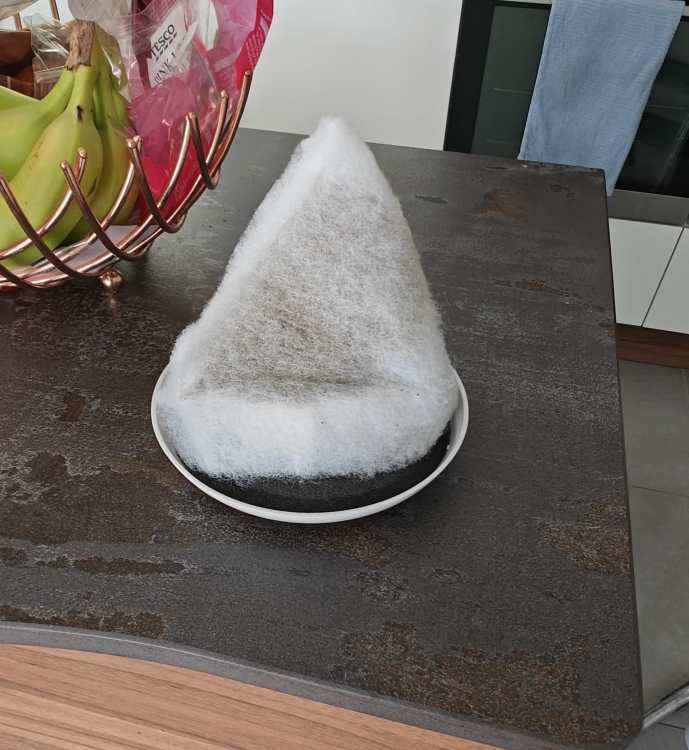
-
But you need to run an additional pump as well. Not sure it's that much better CoP in reality. This morning at 16 degs outside I got a cop of 3.68 doing DHW heating and yesterday afternoon at 22 degs outside, I got 4.11. Ideal 210L slimline HP cylinder, which has a 3m² coil.
-
Is it worth having a gas connection for self build house?
JohnMo replied to Wadrian's topic in Central Heating (Radiators)
True, I just use what my ASHP seems to be using, churning around 1m³/HR. -
Do your research on modulation on any model you choose. Our 6kW gets down to about 4 kW only. Ours it turns out, is really just a derated larger unit. Looking at it's outside temp kW output is a clue. Ours puts out an almost flat 6kW at 30 degs OAT and -10. A suitable sized compressor would loose kW output as it gets colder outside.
-
Is it worth having a gas connection for self build house?
JohnMo replied to Wadrian's topic in Central Heating (Radiators)
You can be on almost any tariff. I am not saying don't install a gas boiler and gas hob, if that's what you want go for it. My reply last night was in direct response to your challenge on the report. What does stand irrespective of heat source is Run weather compensation, (alternatively batch charge floor if you have thick screed run via a 0.1 hysterisis thermostat) run a single heating zone. Run system on priority domestic hot water (PDHW). Get a heat pump cylinder (for gas or ASHP), store water at 50 degs or lower. So run an oversized cylinder (2 to 3 bed min 200L, 3 to 4 bed 300L) Do not do on off timings on the heating. Do not do S or Y plan. -
There are two of us in the house we have 210L and even having guest stay over there is no issues. We just heat to 50, degs, sometimes once mostly twice a day if thermostat says yes. Never run out of hot water. 6kW will take about 45 mins to an hour to heat 210L. 6kW and small heat demand, thick screed I assume and batch charge floor. I would get a cheap tariff and charge cylinder with immersion. Or you could run out of time in cheap tariff time. But at 1.2kW coldest day demand, is a heat pump worth the effort, why not a Willis heater or two. 3kW x2 for 4.8 hrs, and the slab is heated. Then put a small cylinder in the space you have and heat to 70 degs. 2x Willis heaters £90 add a third for a hot swop £135. 140L direct cylinder £600. Add a 0.1 Deg hysterisis thermostat to control UFH charge.
-
Is it worth having a gas connection for self build house?
JohnMo replied to Wadrian's topic in Central Heating (Radiators)
Gas costs you circa £100 for standing charge, just to have it connected. Not mention the report. No idea where they get a CoP of 2.8 (well I do, see below). A typical well thought out simple system will get to a CoP of 4.0 and beyond. A simple heat pump install is, no thermostats, single zone, run 24/7 on weather compensation. A 3 port diverter to switch between heating and DHW. Nothing else is needed. This will get you a cop of at least 4. Add into the mix the circulation pump switching off between compressor cycles gets closer to 5 on mild days. Running a heating circulation pump for a 180 days a year is around 70W x 24 x 180 = 302kWh or £75. This figure is never mentioned in the gas calculation, nor is any electrical running costs, associated with boiler. But is always included in ASHP CoP figure (or should be). So you now have a fixed cost of £175 to have gas (standing charge and circulation pump), not included in the gas costs comparison. So if you use 6000kWh of gas at 6p it will cost £360, plus £175 so £535. Your good boiler install is getting 95% efficiency, so of the 6000kWh consumption only 5700kWh energy delivery. So on a standard rate tariff you pay say £0.25 per kWh for electricity. Let's use the 2.8 CoP figure and see the cost. 5700kWh/2.8 is 2035 kWh electric. 2035 x 0.25 is £509. So even with a cr@p install you are beating an gas boiler on running cost. Now for a CoP of 4 1425kWh of electric needed 1425 x 0.25 is £356. A system designed with hydraulic separation, buffers, low loss headers, the additional pump(s) needed, mixer valves, not having a low temperature heating system, on/off heating timing could get you at 2.8 or worse. To get a decent efficiency from a gas boiler you need a low temperature heating system run on weather compensation, ideally a high gain cylinder run on priority demand. So one flow temp for heating and another to heat DHW. (Which is pretty much the same as a heat pump install). A boiler will yield 95% efficiency an ASHP around 400%. So heating system install is the same cost. Such a system will yield a gas efficiency of 95% and ASHP around 400 to 500%, not 280% mentioned. Then the cost of heat source A good boiler is more than a £1000. A high gain gas boiler cylinder and ASHP cylinder are basically the same cost. Now ignoring grants an ASHP could cost £4-5k, but you really don't have to pay that. I paid £1300, you could get a really good Panasonic for around £2k. So a heat pump is a little more expensive without any grants, but you do have a payback of 5 or less years which is a little different from the report which said never. Time of use tariff, even E7 will give you electricity at 6p to 14p. Add some PV, a battery changes the cost profile again. My cost for electric average this year is about 7p, so are now down to £100, compared £509. Can a boiler give you cooling if you need or want it - no. I voted with my feet today and had my gas disconnected. To summarize, reports like the one linked to, are uneducated drivel, biased against heat pumps, no proper analysis completed. Rubbish in rubbish out. A typical gas boiler installed on S or Y plan will getting closer to 85% efficiency, so now quite a bit more expensive than an ASHP. A new build, a simple ASHP install is a winner. -
Two shower rooms, one (downstairs) could be argued is for a tick in the box for accessibility, so really only one shower room, so would go with 2 bedroom and ensuite. So 180L, but would install a 200L or 210L slimline. Is this a really big 2 bed house? Can't believe you need 6kW ASHP.
-
What is your overall strategy for ventilation for the whole house. Doing bits here and there isn't the way to do it Ventilation duct by hob isn't correct, you will just fill the whole system with grease, then dust, then grease etc.
-
Top of the class for me .
JohnMo replied to Pocster's topic in Energy Efficient & Sustainable Design Concepts
It all nonsense really. ASHP should lower CO2 by a factor of 3 to 4, but MVHR is sort of accounted for by reduced heating demand.


