


MortarThePoint
-
Posts
2294 -
Joined
-
Last visited
Everything posted by MortarThePoint
-
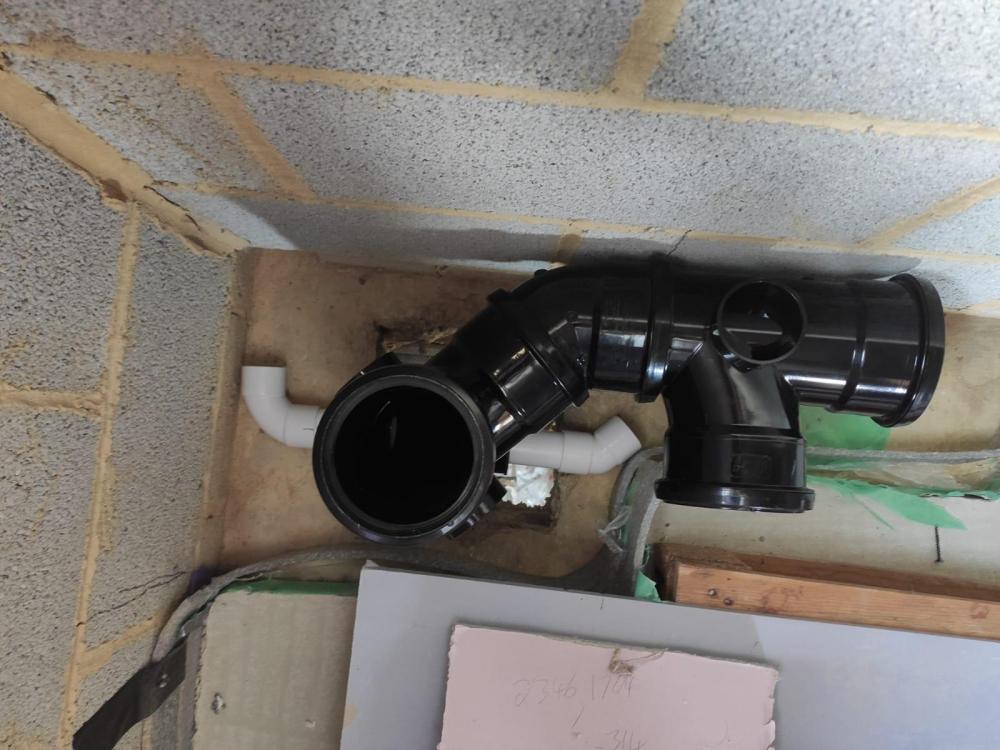
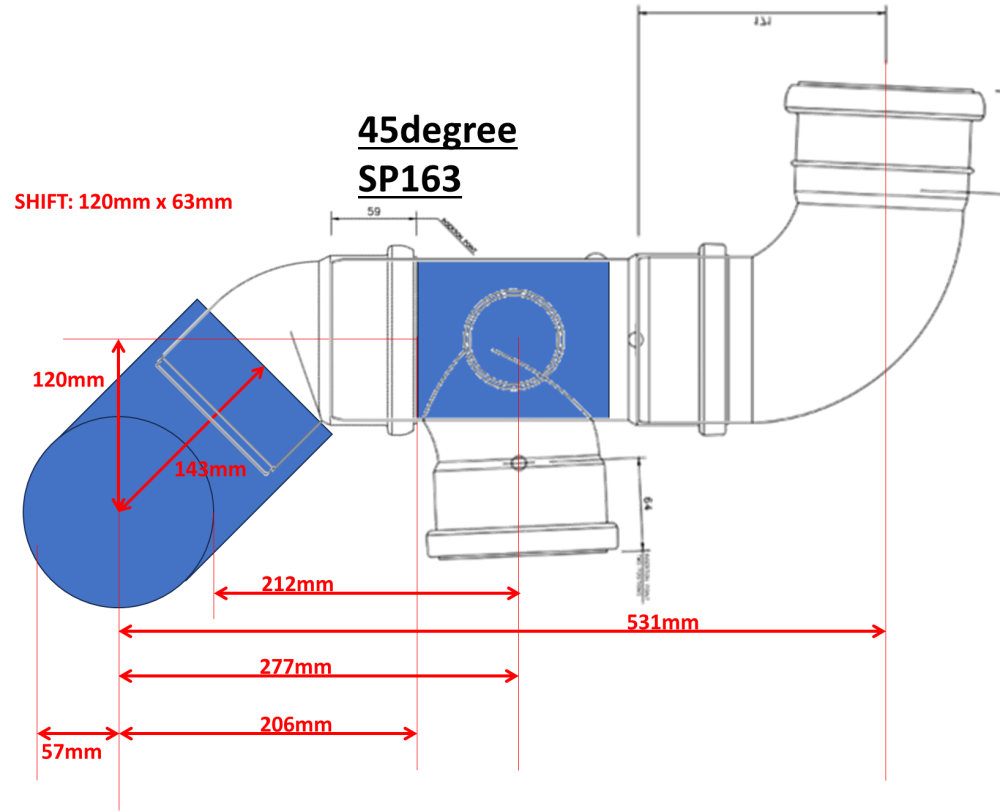
An adaptation to move it closer to the wall. 210mm + 36mm for a 20mm or 40mm Offset Rigid WC connector (or MACFIT 20mm / 40mm) and minus ~16mm for plaster and tile give >=230mm for back of cistern to wc connector distance. That may allow some close coupled, but certainly plenty of traditional style options. (a straight option is unlikely to work but is MAC-1 . About 200mm between the centre line of the loo in this room and the higher part of the box-in. That allows the pan to be up to 400mm wide at that point which is unusual (most narrower than that at their widest). Still another boss to use for a 32mm pipe. Also a second new boss to use below the floor for a 50mm shower waste.
-
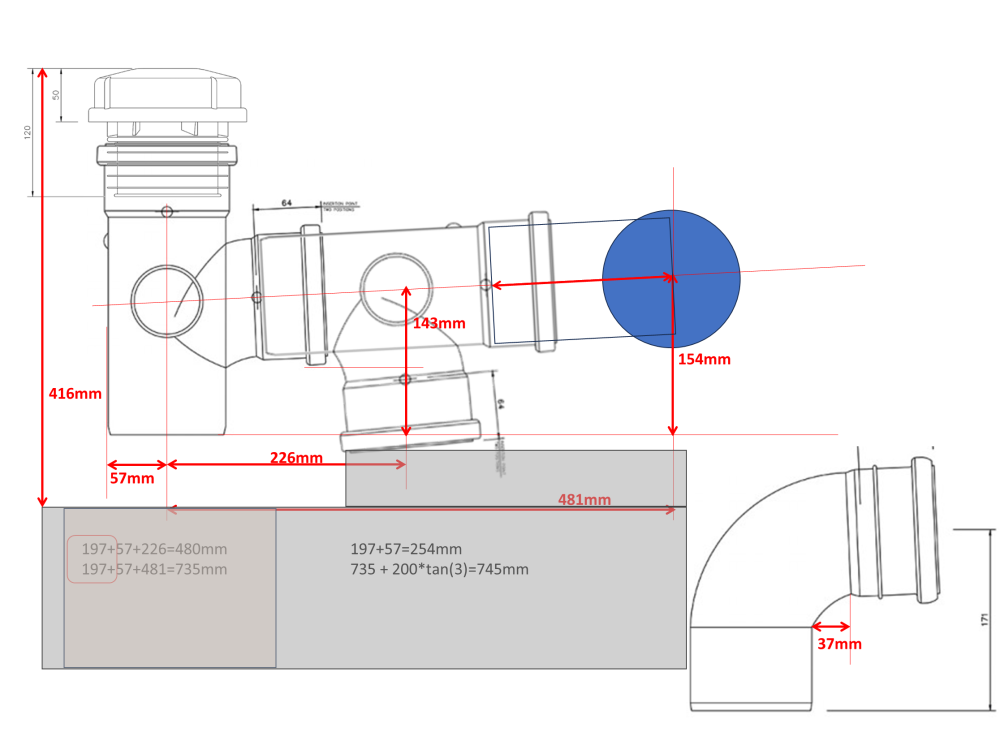
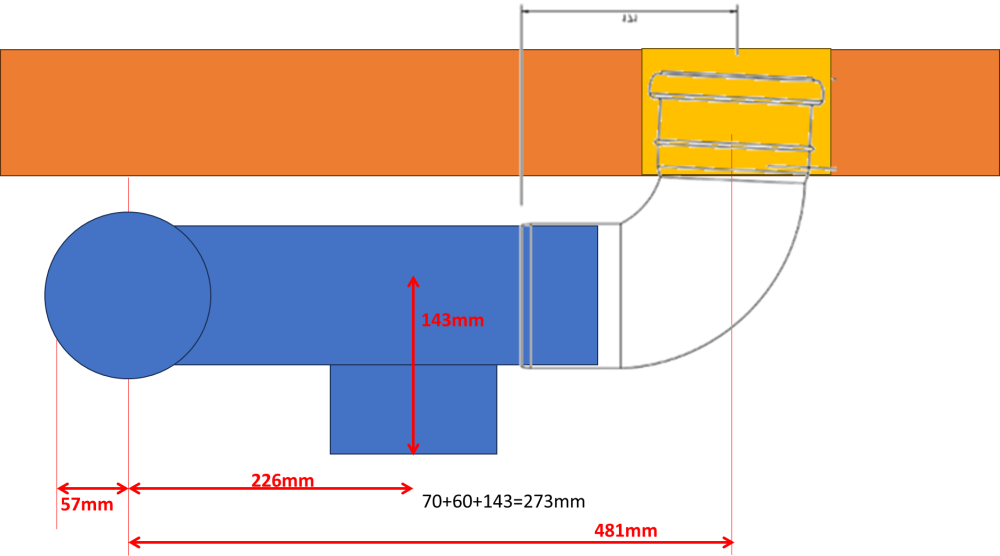
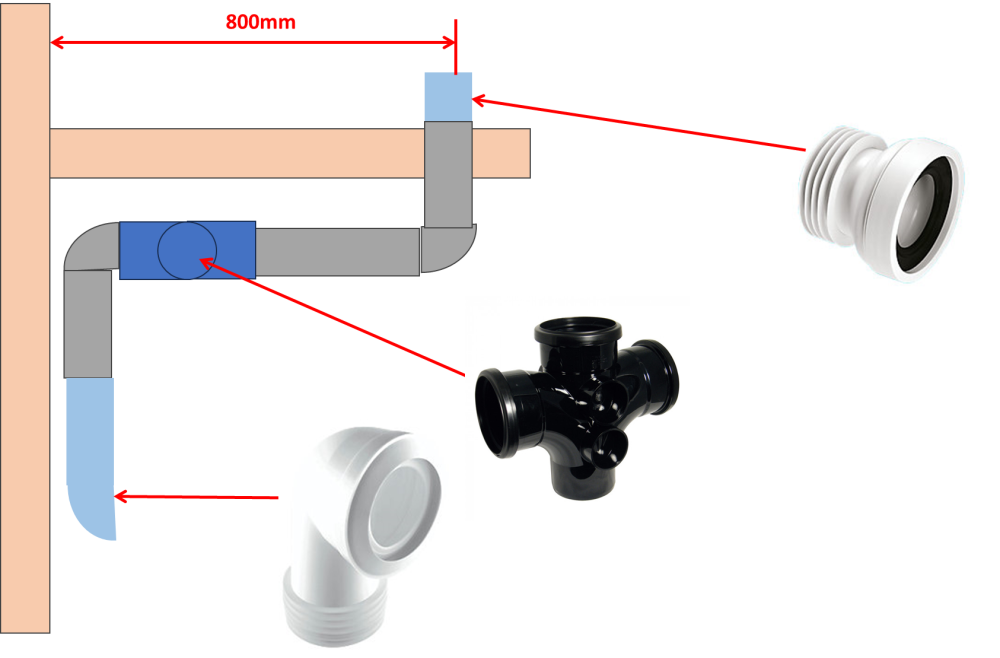
This is where I am ending up I think. Not using the 45 degree double branch but a couple of single branches (SP190) instead. The one facing the floor is to be rotated 90 degrees to face sideways. This does increase the size of the box-in, will need to extend 820mm along the wall behind one of the toilets, 820(l) x 200(w) x 240(h) / 360(h) . If I need to I can attach a smaller AAV to the boss on the horizontal branch. It leaves the socket for the first toilet about 205mm plus the distance between the first branch edge which if I don't use a soil pipe offset or widen the hole is 70mm from the wall. If I then use a compact offset pan connector the toilet's spigot needs to be 205+70+31=306mm from the wall. That won't work with a Close Coupled toilet (unless a box-in behind toilet all the way up) so will have to be a more tradition style like the one below. If I don't use a soil pipe offset, there is possibly room for a 3-way boss to connect the other en-suite's shower/basin (40mm) to. If not it will mean I have to have an ungodly 3no. bend snaking to get it to a boss below the HCF. The side boss (facing the wall) of the first branch could have the macerator connected to it. I wondered about using an access 90 (SP169) but fear it would create turbulence in the flow from the second toilet which wouldn't be good. Hopefully a blockage there is unlikely(?) Plan View: Cove Low Level Toilet incl. Lever Cistern + Seat
-
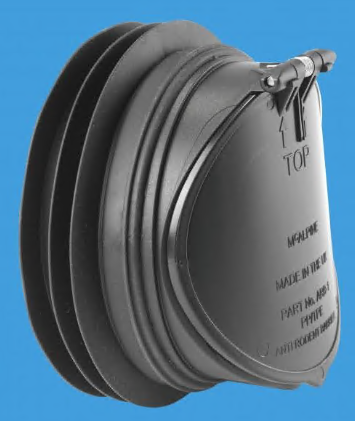
I guess this is a possible solution to cross flow. Rodents shouldn't be problem as we are having a sewage treatment plant so a closed system as far as a rate is concerned. Anti Back-Flow and Rodent Barrier Valve https://mcalpineplumbing.com/wc-connectors/wc-connector-accessories/arb-1-anti-back-flow-and-rodent-barrier-valve
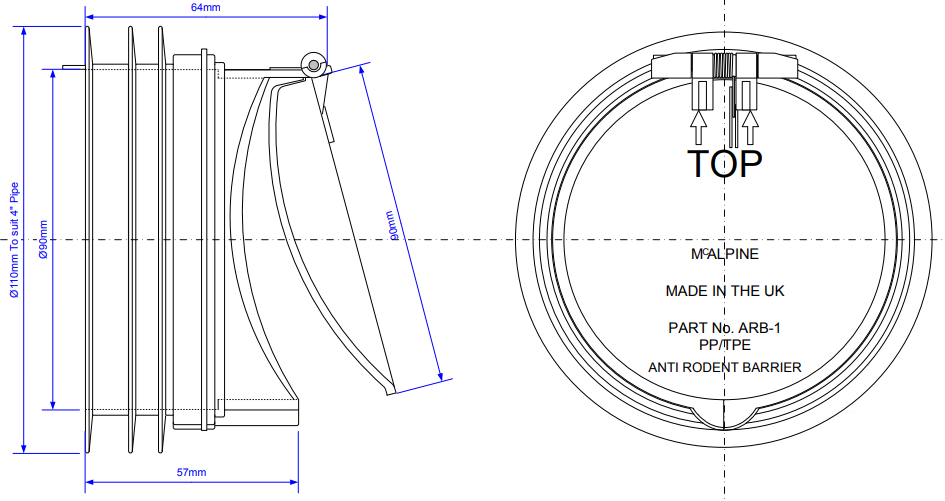
-
The toilet the other side of the wall would be after a couple of 90 degrees so I think unlikely to receive any gifts from the ne in this room. It's the other way that I'm more concerned about as the pan would be directly connected to the branch. It could have a small vertical offset though to help
-
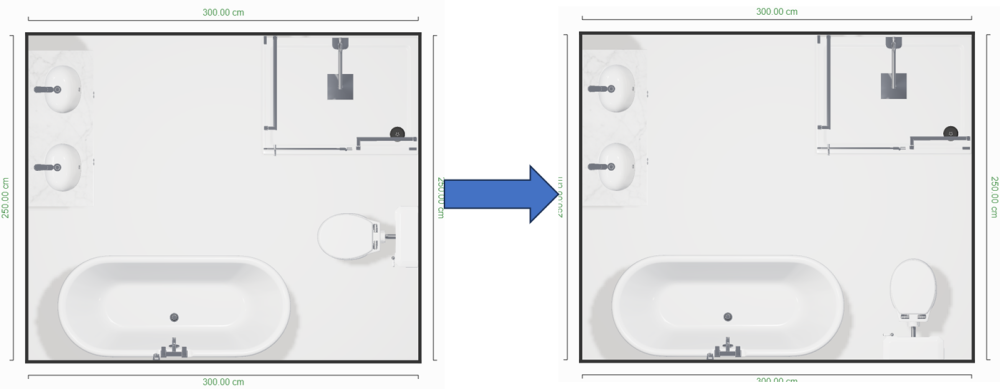
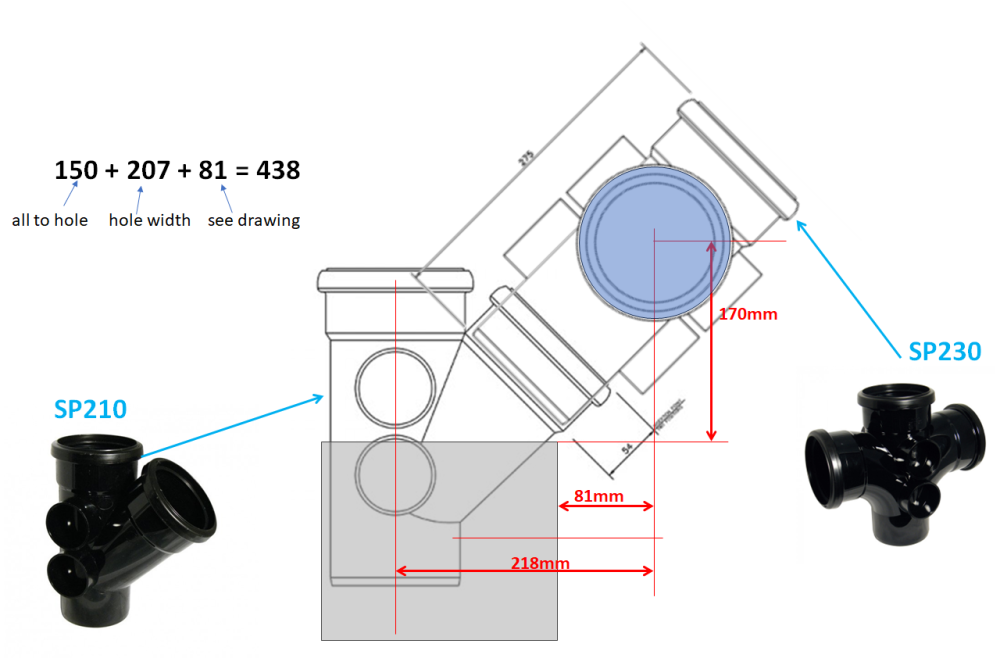
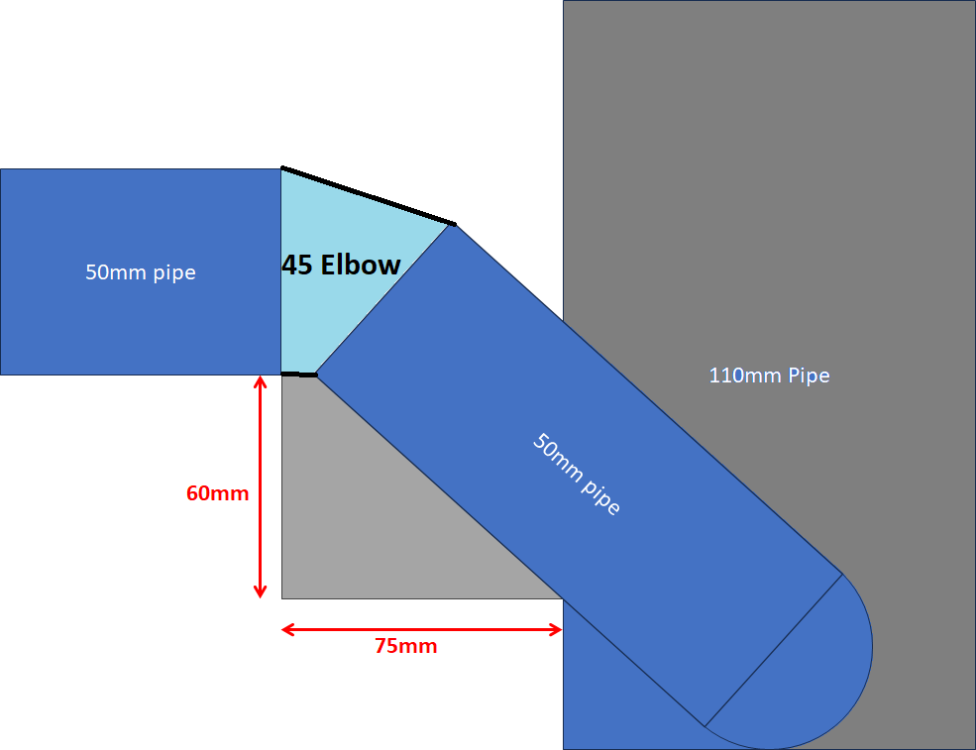
We're changing the layout of the bathroom (see images below) to move the toilet. There is a hole in the concrete floor that is poorly placed but needs to work. I originally planned to use a Double Branch (SP230) to route the pipes to the two toilets that need to be served by this stack. That was a bad plan due to the resulting size of the box-in, but we're looking to move one of the toilets now anyway. A Corner Branch (SP232) would work a treat, one socket heading to the wall and one along the wall, but the are fabricated to order. Even with the corner branch, the socket pointing at the wall would be a bit too long so need a large hole in the wall to work. What I have arrived at is in the diagram below. It's a bit weird in that it involves mounting a double branch at 45 degrees. The concern is around cross flow. Is this a crazy idea of something that happens? Room Layout Change: Original Plan:
-
Short length of 110mm soil stack above screed
MortarThePoint replied to MortarThePoint's topic in Waste & Sewerage
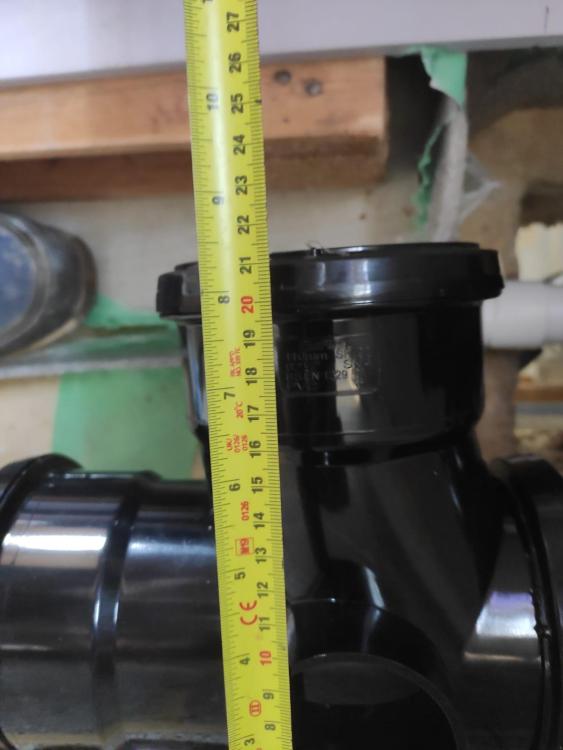
Hmm, screed is actually 52mm and pan connector is 180mm. Also A and B are the wrong way round in targets -
Is Solvent weld pipe into pushfit boss adaptor OK?
MortarThePoint replied to MortarThePoint's topic in General Plumbing
I have spoke to both Floplast and Wavin (OSMA) and they both say that all their pushfit boss adapters (e.g. SP11 or 2S399) are designed to be used with either pushfit pipe or solvent weld pipe. I shared the same concern as @markc, but it seems to be fine. Floplast and Wavin (OSMA) also both said that it is OK to solvent weld ABS pipe into their PVC-U bosses (in the case of OSMA that may require an ABS solvent weld coupler as the boss is the same ID as the pipe). I queried that the materials are different, but both said it was fine. I was surprised. I think I feel more comfortable using the pushfit boss adaptors onto the stack as I am a bit of a commitment-phobe. -
Is Solvent weld pipe into pushfit boss adaptor OK?
MortarThePoint posted a topic in General Plumbing
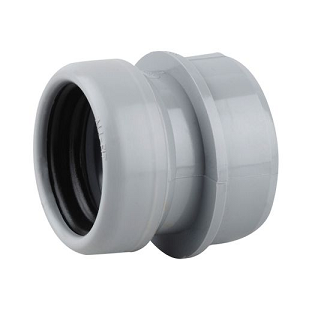
Can you use a solvent weld (SW) pipes in the pushfit (PF) boss adaptors used on the soil stack? The adaptors come in 32mm, 40mm and 50mm sizes so is it the same answer for all? As SW outer diameter (OD) is larger for each I guess there is an element of if you can get it in its OK as long as the BCO is then not going to have a problem. Second question is to if making a solvent weld joint between the boss adaptor (PVC-U) and pipe (ABS) it is a mix of materials. Does that work OK for the weld and is standard? Basic stuff, but if you don't know you don't know. I do know you mustn't mix SW and PF pipe and fittings normally and you have to use an adaptor if you want to. Pipe SW OD PF OD 32mm 36mm 35mm 40mm 41mm 40mm 32mm 56mm 53.5mm Numbers from Floplast website drawings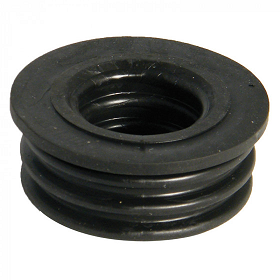
-
Short length of 110mm soil stack above screed
MortarThePoint replied to MortarThePoint's topic in Waste & Sewerage
Another wildcard option is to use a ring-seal 3-boss below the offset, but that lowers the shower's connection point by about 100mm. That could be OK by using two 90 bends. That might be a bit brutal for the shower flow. An alternative would be a 90 elbow out of the boss to a 45 elbow, but that increases the box-in locally Maybe 3no. 45 elbows?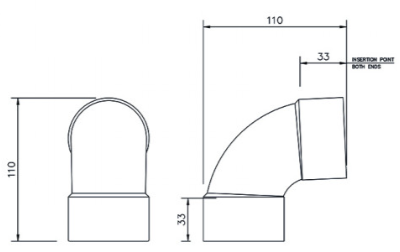
-
Short length of 110mm soil stack above screed
MortarThePoint replied to MortarThePoint's topic in Waste & Sewerage
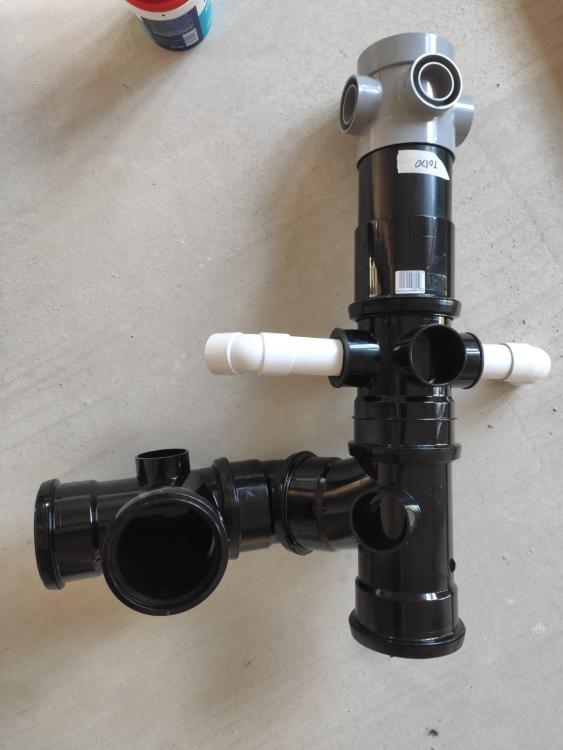
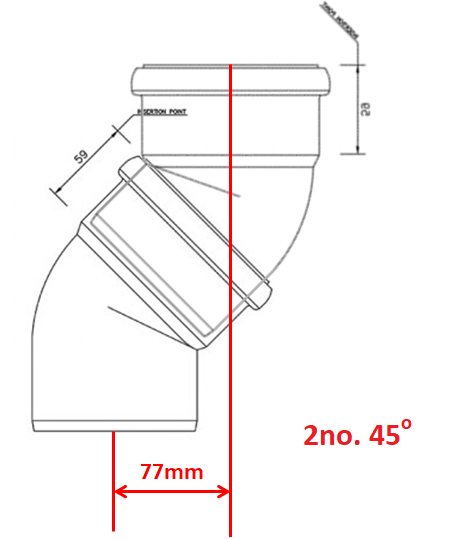
This is ending up as a pretty busy stack: OSMA 3-boss as shown in photo at floor level OSMA 3-boss at ~500mm as an emergency connection point for the utility sink if there is a problem with its independent underfloor drainage OSMA 3-boss at near ceiling level (GF) for shower(50mm) Floplast 45 solvent bend for offset Floplast 45 solvent bend for offset OSMA 3-boss at screed level (FF) for bath&basin(40mm), shower&basin(40mm) Floplast Double Branch for connection to two toilets and one toilet_macerator_pipe(32mm) AAV in top port of double branch All the 110mm up to the Double Branch is ending up as solvent weld since the OSMA 3-boss is solvent weld and I need the offset done in solvent weld to accommodate the necessary verticals. The horizontal offset is only about 80mm, but moves the stack further from the corner allowing an OSMA Tight Bend (4S160) to fit in one side of the Double Branch. Rodding should be possible by removing the AAV and will hopefully pass easily through the offset. I'm a bit nervous having solvent weld all the way up to and including the bottom joint of the the Double Branch. I could move the offset below the ceiling boss and do it in pushfit, but that would increase the size of the box-in in GF (300mm x 220mm -> 380mm x 220mm). Alternatively, I could add an otherwise unnecessary pushfit joint just below the ceiling OSMA 3-boss. What would you do. Not worry about it, add an extra pushfit joint below the ceiling OSMA 3-boss of add a pushfit joint between the offset and the floor level 3-boss? The code in the table is (lower 3-boss) - (bend) - (upper 3-boss) and Ring(F) is a Floplast ring seal 3-boss and Solvent(F) is a Floplast solvent weld one.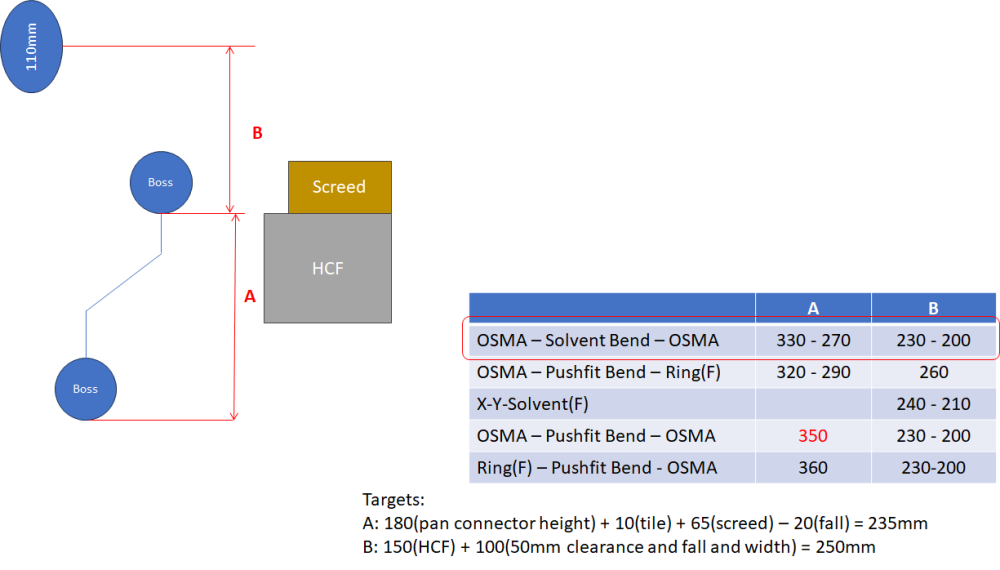
-
I am having a 'back to wall' toilet which is going up against a box-in that contains the concealed cistern (~100mm deep). Behind the cistern is a blockwork wall through which I will be passing the 110mm soil pipe. I think this will leave about 125mm between the back of the pan (and its spigot) and the blockwork. A flexible connector like the one below feels like a good option to connect the pan to the soil pipe if the soil pipe extends only a little way past the surface of the blockwork.. As I haven't tiled the floor yet, I can't be sure of the exact height, but should be able to get the soil pipe to within about 10mm of where it should be. How much vertical offset could a flexible pan connector like this afford me? I'm wondering if I should drill the hole in the blockwork oversized (127mm instead of 117mm) just in case. https://www.screwfix.com/p/mcalpine-flexible-straight-wc-pan-connector-white-100-160mm/6458P https://mcalpineplumbing.com/wc-connectors/flexible-wc-connectors/wc-f26rc-straight-flexible-wc-connector
-
https://condell-ltd.com/lintels/catnic-lintels/catnic-cavity-wall-lintels/catnic-cg90100-cavity-wall-lintels Minimal price difference for 1800 to 1950. 3300mm lintel looks more than I expected so perhaps I'm out of touch with prices.
-
The 1400 over 1210 isn't great but less of a worry. Get the 1800 lintel for 1610 opening swapped as not yet installed. 1800 is the top end of a CG90/100 profile before a price bump which may help explain. A 1950 should still be cheap though.
-
Interesting, I guess you're having a vaulted ceiling hence the ridge steel. That helps lighten the load in the lintel. On plan, the lintel needs to support 0.8m2 of roof per m plus eave overhang. That might be 1.2m2 per m. I think slate is about 35kg/m2, so that's about 50kg/m2 on plan. Perhaps total roof load on lintel is 90kg/m then add snow etc -> conservative 180kg/m (TBC). Blockwork already on there is around 100kg/m. The bearing loads are therefore (180+100)*3 / 2 = 420kgf = 4.2kN per bearing. I think the standard Catnic at 3m has a SWL of 26kN so 8.4kN is well under that, but check. Catnic CG90/100 I'm surprised by your 8mm sag. That's span over 375. It only has 3kN on at the moment which is 10% of max SWL which is likely deflection limited at span over 300 or 0.003*span which is around 10mm. So you should only be seeing about 1mm at this point. Are you sure the floor you are measuring to is flat? What does a 1.8m level look like held under it. I think that if you have 8mm of centre deflection, you'd have about 3mm at each end of a 1.8mm level. That assumes a rotating bearing, otherwise it would be more I guess. Actually, would be good to get a laser level across it and then easier to tell. That bearing would always bug me, but I'm a ruminator by nature. At this point, it's half a day's work to rectify. You don't want to be an open cheque book, but it might smooth it if you cover the cost of the replacement lintel (about £130 I'd guess) if he takes the extra work on the chin. The blocks can be cleaned and relaid. That feels pragmatic to me as you'd be within your rights to just say fix it to him and he pays all. These things can turn ugly, but it can 'keep them honest'. You'll have to gauge the relationship for yourself.
-
A rough dimension would be useful. I wanted to get a feeling for the load on the door lintel. Sliders can be pretty unforgiving of lintel sag I think I've heard.
-
Angle Grinder - Wattage, Button/Trigger, and Recommendations?
MortarThePoint replied to Oxbow16's topic in Tools & Equipment
Arnie rates Parkside it would seem: I rate their corded angle grinder, mine has seen a lot of action now including the job you mention.
-
Sometimes the BCO plays a convenient role of bad cop and allows the client to play good cop and not strain the relationship between the client and builder with the client still getting what they want. What type of doors are to go in the 2810 opening?
-
Are you going with a duo pitch roof with the gable furthest from the existing house? What is the distance from the door to the back wall, with the barrow by it? Did you happen to see a code on the Catnic as to which type it is?
-
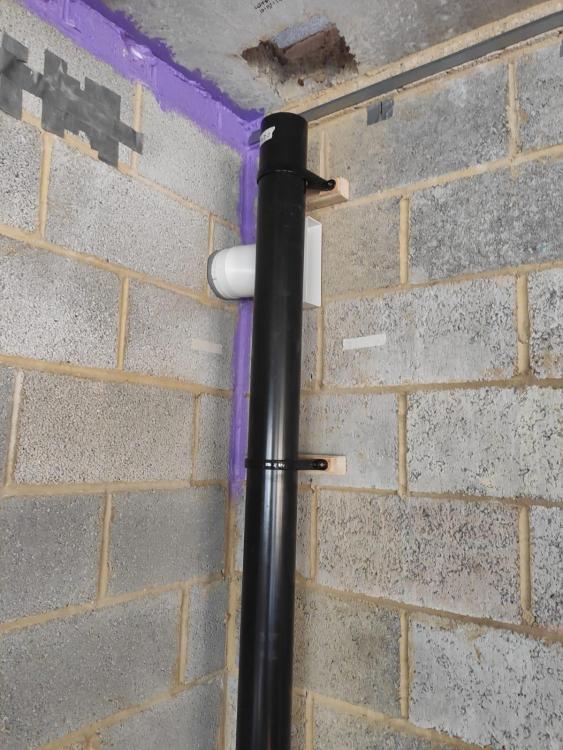
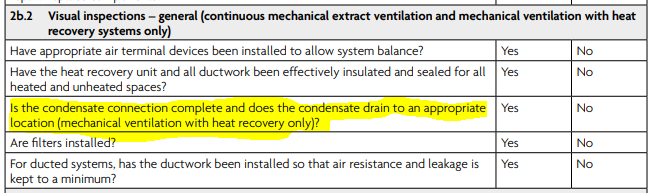
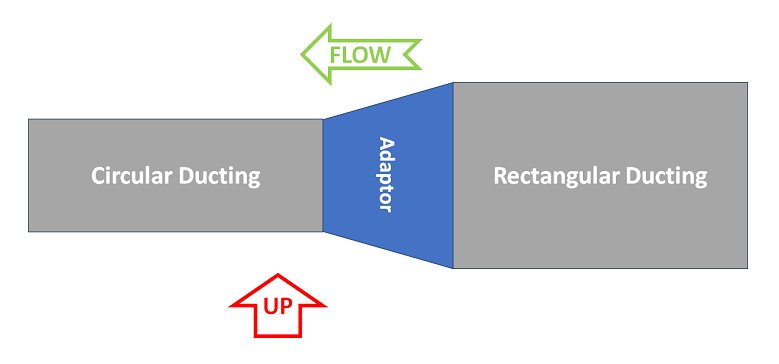
As I understand it, it is good practice to have a slight slope on ducting as it passes through a final wall to an exterior vent in case of rain getting in. If the ducting passes through an unheated area then it makes a lot of sense to have a slope and possibly a condensation trap if case of water condensing in the ducting. It may all be more relevant to a bathroom than a kitchen, but is it normal to set the ducting level or sloped in a particular direction? I haven't found any results in Part F (Ventilation) for slope, gradient or fall and there is one mention of the word drain, but associated with MVHR: The main reason I ask is because I am connecting from rectangular to circular ducting in what I think is an unconventional way. In order to fit behind a soil pipe, I am mounting the rectangular ducting with its long axis vertical. This means that when it connects to the circular ducting, there is an uphill slope in the direction the air is extracting. If water was to condense in the ducting it would pool at the adaptor. There is so much air flow that I'd imagine any condensation would re-evaporate pretty soon, but I wanted to check if I should be doing something about this.
-
It's Manrose PVC ducting, a mixture of 125mm circular and 204x60 rectangular. I'm not wanting it all to be set solid and unmaintainable. Fear of commitment perhaps. Aluminium tape sounds good and I could use Everflex 195 which has been my go to for other sealing jobs. Its datasheet mentions PVCu, so hopefully OK.
-
To use the TD 800/200 with 6" ducting you must be using reducers. I was wondering about doing the same with a Manrose MF150T which can achieve a more modest 855 m3/h = 238 L/s. Really, I'd like a blower that has more flow settings that can ideally be remotely controlled. Is that what the TD 800/200 allows?
-
What, if anything, is needed a ducting connections? For example where a 90 degree bend pushes into the end of a straight pipe. Is any pressure testing required?
-
I've been trying to sort 150mm but think it's too tricky so am going with 125mm
-
Sounds good, how often do you turn it up that high?
-
It feels wrong that there was no upper limit to the flow rate. If you had a cooker hood in a warehouse you'd need a tornado of flow rate. I expected then to have a more appropriate formula for open plan living.







