


MortarThePoint
-
Posts
2294 -
Joined
-
Last visited
Everything posted by MortarThePoint
-
Do the wires need ferrules or are they OK going straight in? Some terminals are more fussy than others
-
Laying wires for smoke alarms and wondered if the terminals support 2no 1.5mm2 cable. I want to daisy chain. Thinking of AICO EI146E alarms. Using 3core and earth provides the interlink.
-
Beam helper on stair stringer
MortarThePoint replied to MortarThePoint's topic in General Construction Issues
Yes, seems like sistering the additional timber is over the top. -
Beam helper on stair stringer
MortarThePoint replied to MortarThePoint's topic in General Construction Issues
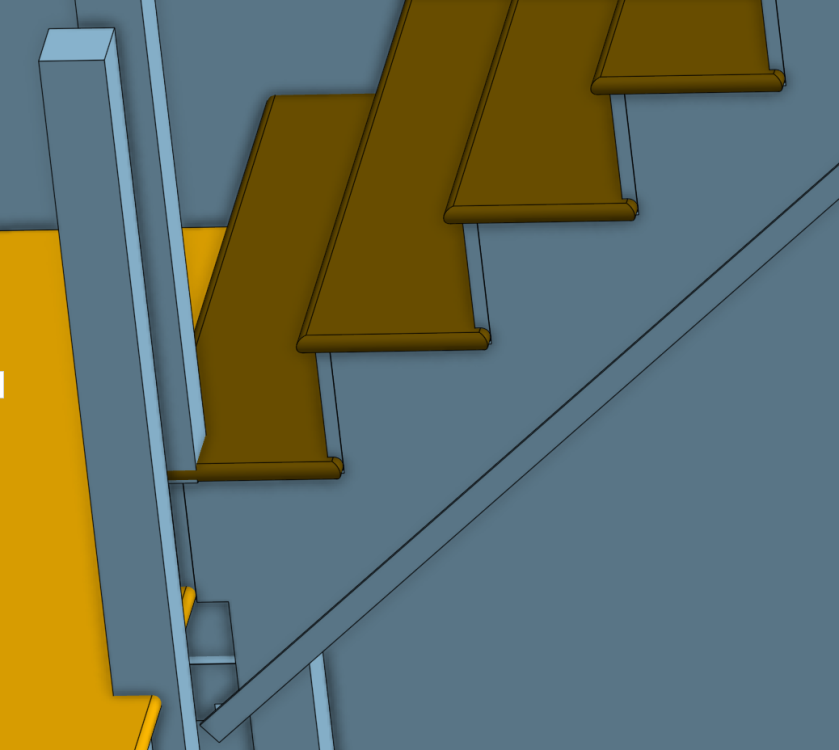
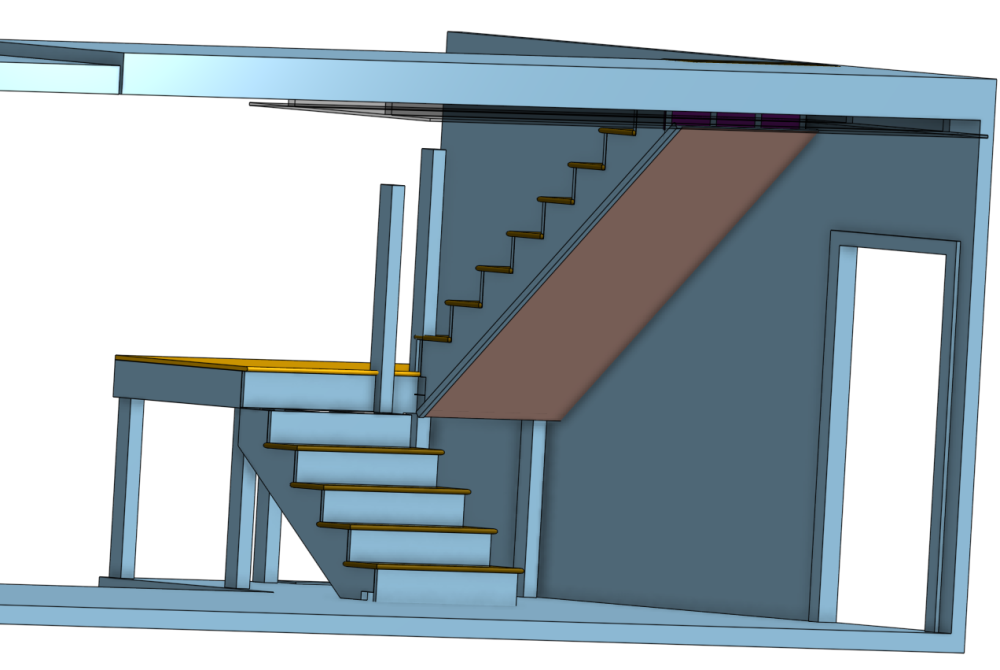
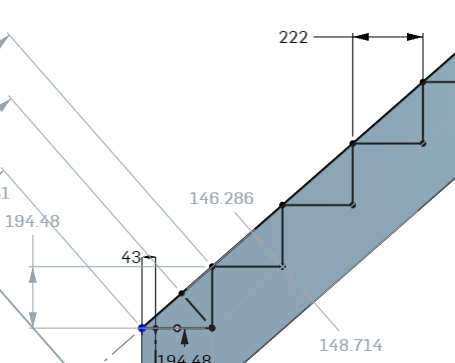
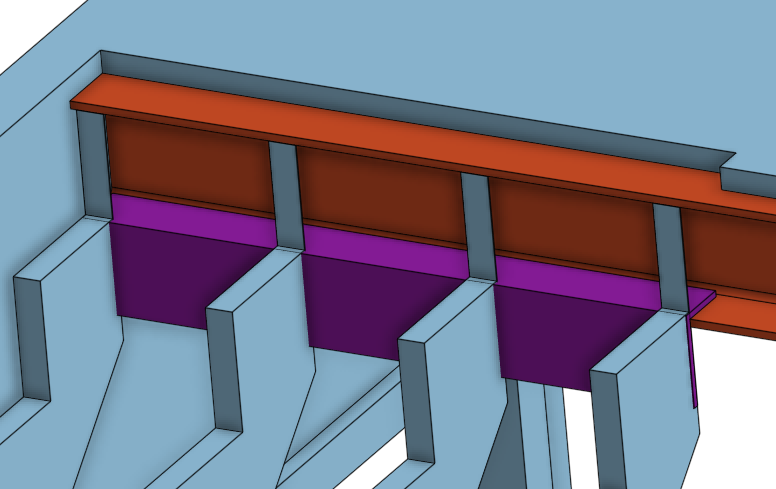
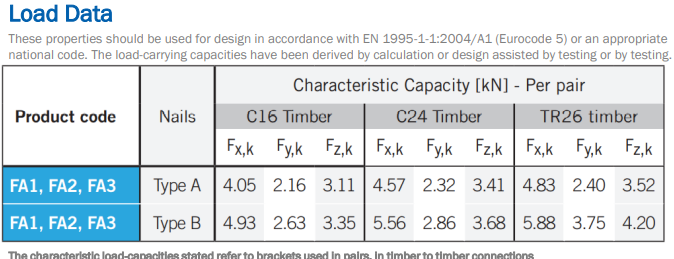
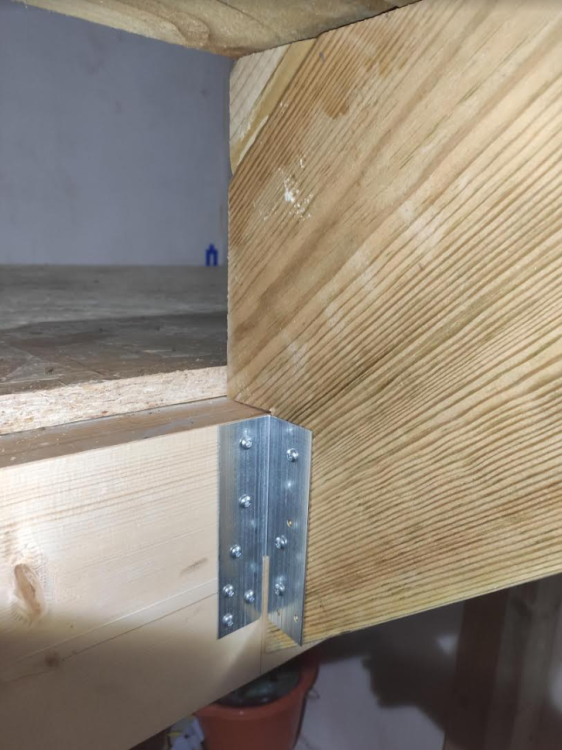
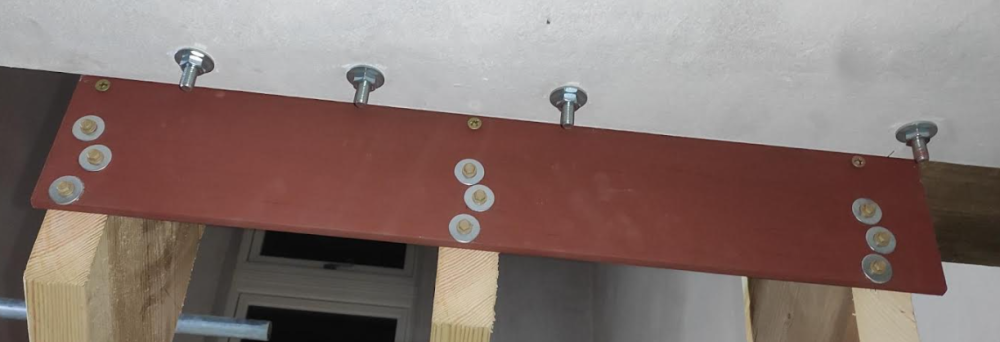
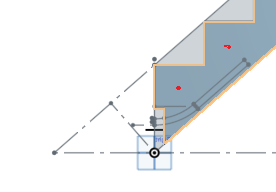
Yes, I'm building it as the Americans do so will be clad with nice timber or have better painting surface on the side. There will then be plasterboard under the sloped section. I like the proportions as they are so am not keen to make the stringer bulkier by adding timber underneath. I know it's less effective at adding stiffness, but alongside is hidden so doesn't affect aesthetics. There are 4 stringers in the structural skeleton each made out of 2by material (45mm) and the distance between notch and edge leaves 148mm of continuous timber which felt like enough. That makes sense. The stairs as they are feel very stiff and I can't notice any life in then so perhaps I have missed a trick there. Being less experienced I always lean towards adding strength and I guess that's the downside. The mountings of the three stringers not against the wall: Bottom: Bird's mouth plus a framing anchor each side. I have upgraded the framing anchors since the photo below to more substantial ones (BPC) which had stated load data which looked plenty strong enough. Top: 150mm x 90mm x 10mm steel Angle Section bolted to the UC 203x203x52 with 4no. M10 bolts. There are then 3no 6.3mm structural timber screws (TimberFix) into each stringer, plus a 6.0 x 100 woodscrew. The natural action of the forces serve to tighten this area as the Angle Section is on top of the bottom flange of the UC beam. The stringer against the wall is bolted to the blockwork (M10 Masonry) plus 50x50 washer at every tread in the position shown by the red dots below, so outside just outside the 148mm continuous section and where the timber widens to its thickest. Here are some more views of the overall look, minus spindles and handrails which will be added. Two spindles per tread. There will also be a newel post at the top and bottom of the stair. The treads will be varnished sapele and the riser, stringer trim, newels and spindles will be painted. There will then be a carpet stair runner up the middle of the stairs and carpet covering the half landing. 7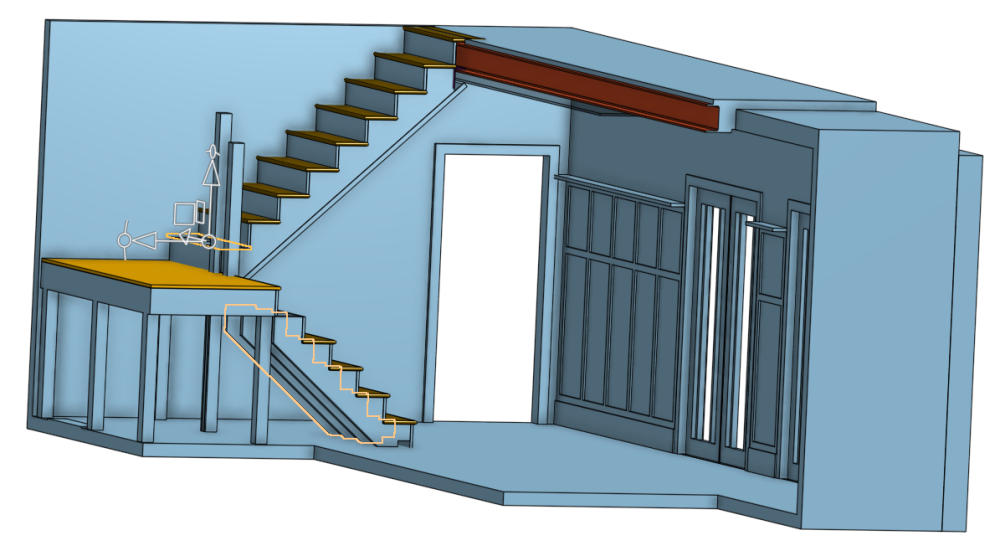
-
Beam helper on stair stringer
MortarThePoint replied to MortarThePoint's topic in General Construction Issues
That would strengthen and stiffen it, but affect aesthetics so keen to avoid -
Beam helper on stair stringer
MortarThePoint replied to MortarThePoint's topic in General Construction Issues
That would strengthen and stiffen it, but affect aesthetics so keen to avoid -
Beam helper on stair stringer
MortarThePoint replied to MortarThePoint's topic in General Construction Issues
There is no noticeable bounce at the moment, but whilst I have the structure open it is tempting to add more timber 🙂 I just want to be sure I'm not creating a problem by doing so. -
Beam helper on stair stringer
MortarThePoint replied to MortarThePoint's topic in General Construction Issues
Deflection would definitely be improved, but I wondered if it increased the risk of failure. If it were to fail it would be where the beam assembly narrows to being just the main timber width. -
Beam helper on stair stringer
MortarThePoint replied to MortarThePoint's topic in General Construction Issues
Sorry, I am pinching the term from my truss designer and it may be wrong. It's just adding timber along side to strengthen the beam/joist/truss/stringer. This is effectively the system I am considering as viewed from above with a load acting down onto it. Additional timber is screwed on either side of the main timber. (note: angled white gap is to avoid image being too long and isn't actually a gap)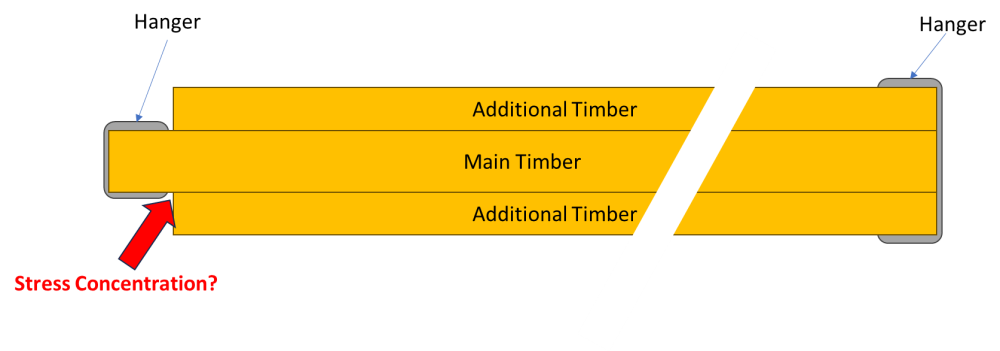
-
Beam helper on stair stringer
MortarThePoint replied to MortarThePoint's topic in General Construction Issues
@Gus Potter Is this a simple Structural Engineering question? -
Sounds reasonable. I'd have to mastic seal the box at its edge to the blockwork I guess
-
2x1 CLS timber for simple framing (cloakroom)
MortarThePoint replied to johnhenstock83's topic in General Joinery
63mm x 38mm is 3x2. It starts 3" x 2" rough stock and is machined to the finished 63mm x 38mm. It's pretty solid for your suggested use. I'd be happy to make a table or chair out of it. I'd expect 50x25 batten to be strong enough for boxing in and that is essentially 2" x 1". I wouldn't go that route myself though unless space was tight. -
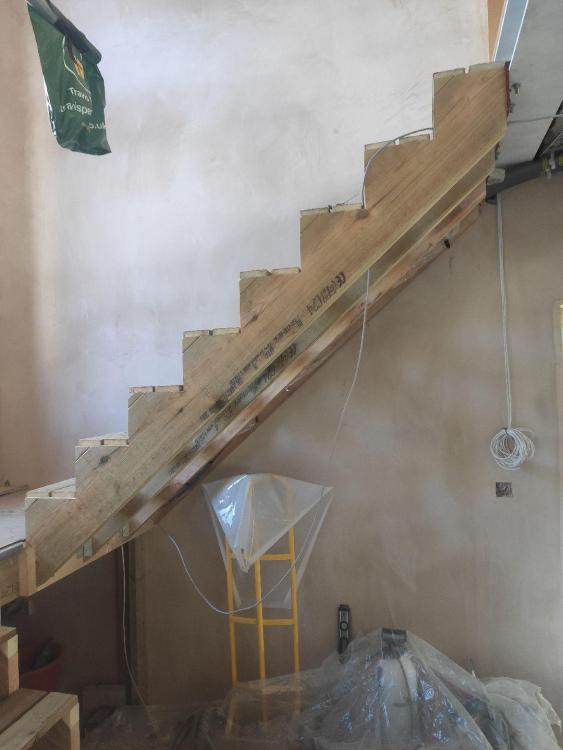
I've been thinking of scabbing timber onto the side of my stair stringers, but fear it could stress concentrate. The scabbed on timber wouldn't quite be full length of the stringer due to brackets at the bottom. It would be 145x33 mm timber each side of the middle two stringers and on the nonvisible side of the outside stringer. The forth stringer is bolted to the blockwork wall. It's essentially a beam thickened up for most but not all of its span. It will reduce deflection, but am I introducing a problem by creating a stress contraction when the reinforcement ends. As it stands the stringers are good and stiff already, but it's tempting to belt and braces.
-
In the house I've fixed the windows with window straps subsequently covered by plasterboard during plastering. In the garage I have paint grade blocks and don't intend to plaster the walls. What's the best way to fit and finish around a window when not plastering? I could buzz screws through the frame into the blocks. I can fit a window board I guess. I'd like to cover the underside of the lintel with something.
-
Screws to fix upvc windows to timber.
MortarThePoint replied to saveasteading's topic in Windows & Glazing
Baypole screws may have a more discreet finish (smaller head). They have a finer thread so you'd need to check they're OK into timber I think lots of windows go in with Frame Anchor screws (7.5mm) so they're still an option. -
Sounds like a practical solution to a tricky problem. How did the stringer attach to the steel? These screws may be of interest: https://youtu.be/63m5CL5G9Cg?si=ct5yEGvgZwwO34ZX
-
Do you add some mesh or something? Does that just rely on the jagged edge of the hole to grip the concrete? Wouldn't want it to fall through the hole 🤣
-
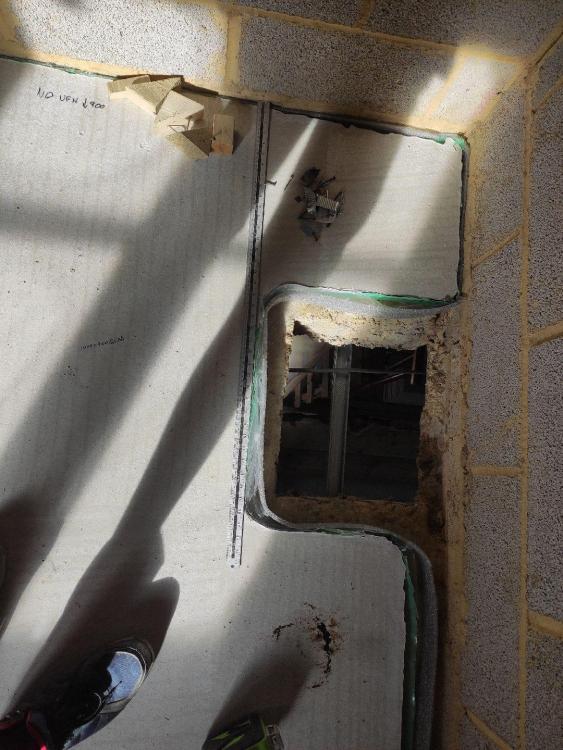
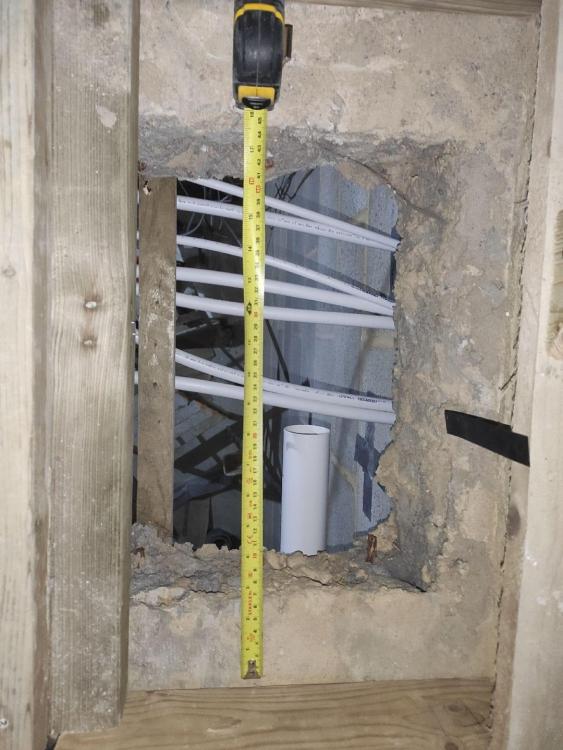
All the holes are 'from factory' so sanctioned by the HCF designer. The holes are quite large because of their minimum sized hole (200mm X 200mm) and in one case uncertainty as to final shower tray size. Annoyingly, for that larger one, I'm not even using the hole anymore. Sounds like you described sealing the hole accoustically, but I'm more worried about structural support of the shower tray
-
Another larger hole
-
I have some holes in the HCF for the shower waste pipe to pass through. I held back the screed a bit around the holes for obvious but potentially comedy reasons. This leaves me with a challenge supporting the shower tray corner as the HCF holes are large (min. 200mm per side). Bridging over the hole with a lintel would be nice, but the screed is only about 55-60mm deep. What have other HCFers done here? Where there is just a gap due to no screed, I figure I can just build up level with cut blocks and mortar.
-
Sorry, I do very much appreciate your help and am naturally inquisitive.
-
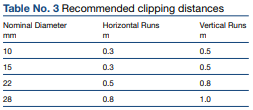
Hep2O Clipping Distances
-
@WWilts How did you sort this in the end? I have a similar challenge needing a balustrade along the top of a steel beam
-
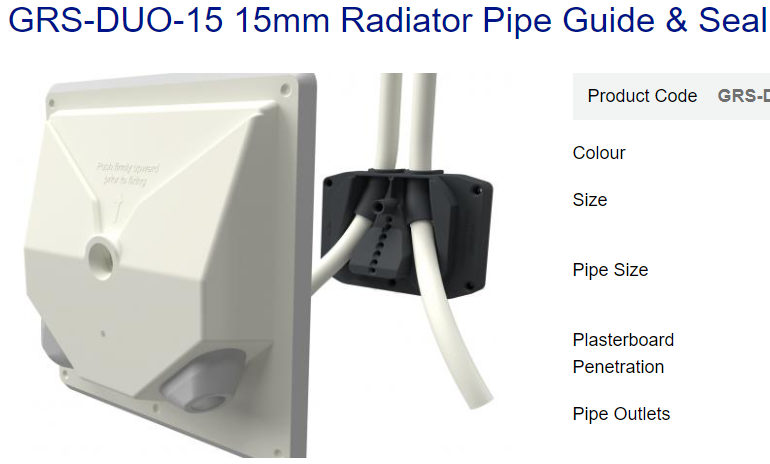
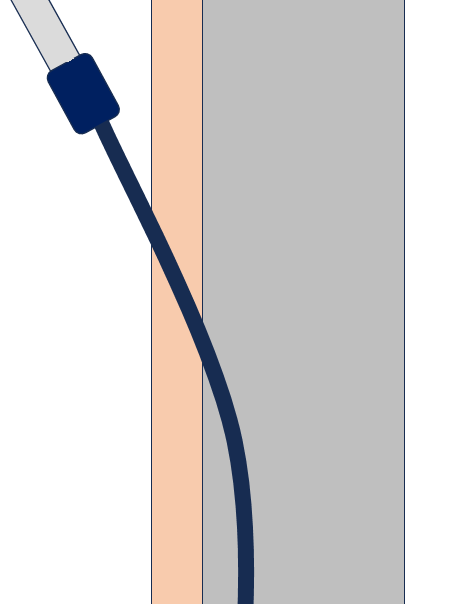
It's a more general question of when you have a Hep2O pipe that leads to a basin and is coming up from floor level. Do you: make the Hep2O visible out of the floor and do the vertical all on the wall surface keep the Hep2O in the wall and then exit at a shallow angle part way up and then connect to a flexi adapter swap to copper in the wall and exit the wall in copper Here is a rough diagram of option 2 with the blockwork in grey and plaster in pink. The Hep2O is dark blue and then it's connected to the flexi. Just plastering round the pipe would make it hard to have a nice finish and also risk damaging the pipe. It's a common thing to do with radiator pipe and I have seen a number of products for 10mm pipe but also found this: https://www.manthorpebp.co.uk/air-leakage/radiator-pipe-guides-and-seals-–-increased-thermal-efficiency/grs-duo-15-15mm-radiator
-
@Nickfromwales You like to keep things tidy. What do you do when you have Hep2O in the plaster leading to a basin?



