Onoff
-
Posts
21154 -
Joined
-
Last visited
-
Days Won
206
Everything posted by Onoff
-
Try here for obsolete / reconditioned circuit breakers etc: https://www.reconelectrical.co.uk/distribution-and-circuit-protection/reconditioned-circuit-breakers
-
Thought I'd seen you under Amateur in Categories... ?
-
A useful, generic "concrete" is nominally 3:2:1 - 3 of sharp (aka coarse) sand, 2 of aggregate that is "stones" up to 20mm and 1 of cement. Alternatively you can mix cement and "all in one" ballast which is a mix of aggregate and sharp sand. Never use builders sand for concrete. Builders sand is for bricklaying mortar and render.
-
As I understand it a mix containing ordinary cement mix can shrink away from the impermeable flints causing them to go "loose". Water gets into these pockets, freezes and blows the wall. Others here have said the hydrated lime is OK to use I think. Washing up liquid should never, ever be used as an admix.
-
Something you don't hear very often!
-
-
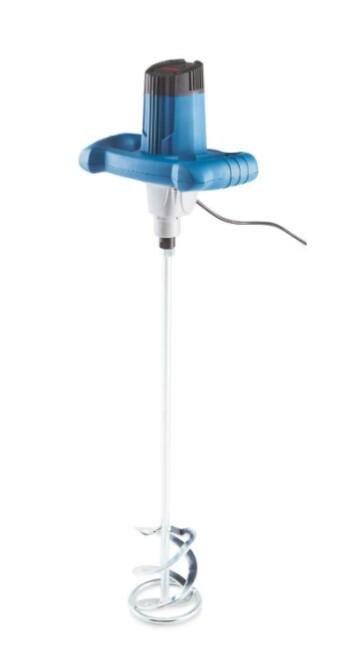
I was hoping to use this Ferrex paddle mixer I bought from Aldi a while back to mix my mortar up. Used it only once since I bought it but it's been hanging in the garage ever since. Plugged it in and it just hums! The paddle / shaft turn freely enough by hand. Out with the screwdrivers! ?
-
& you just can't hide it. Can't get The Pointer Sisters out if my head now...
-
I'll have UFH in the bathroom before they sell!
-
We've been down this road before when I mused displaying these under it! Force fields will have replaced glass by the time I get round to doing it so I'll wait and pick the walk on glazing up dirt cheap!
-
What do you mean new shed, it's an old shed as evidenced by the black and red T&E! ?
-
I could buy flint panels off the shelf, trim them down and fit those. However.....all of these flints going in were collected by SWMBO's late cousin, a keen amateur geologist. He saw something in each be it a fossil, quartz etc. They're thus being used for sentimental reasons. To be referred to as "Martin's Flints". The fact I've never played with lime mortar is just a bonus!
-
Debating sticking at 2:1 and adding some buff coloured, lime resistant mortar tone.
-
Taking you a bit off track here @zoothorn but in the States they're quite big on using "expanding foam" for their fence posts. Available here too now, this is just one make, Sika do similar. Lots of YouTube vids on it. Interesting if nothing else though I'd never use it on a gate post that's subect to probably higher loads than a fence post. https://www.newventureproducts.co.uk/osmo-natural-finishes/424-osmo-post-fix
-
The: 1 lime 1.5 sharp 0.5 soft builders ...mix isn't bad colour wise but weaker seemingly than just 2 sharp. If I add 0.5 white cement to this won't it just look "whiter" (albeit it'll be stronger I guess)? I might just stick with the 1 lime:2 sharp sand and accept the contrast. Oddly it seems to have promise. You can see/feel how it will flex and self heal. All new to me this no cement lark! I think as long as I have neatly defined edges between brickwork and flint panels it might look ok. That brings me back to considering having stainless angle trim around the flint panels... ?
-
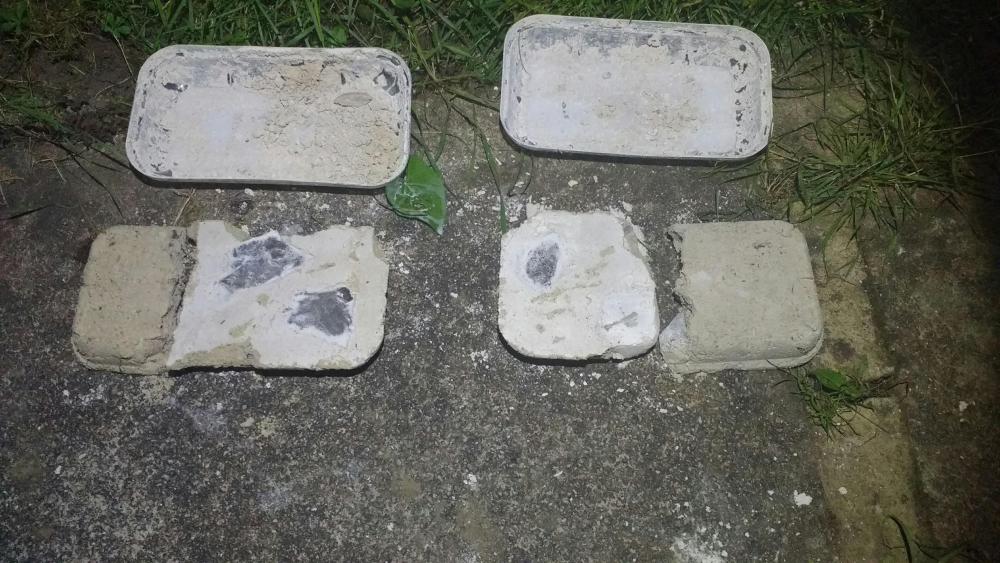
I tipped out the two test trays yesterday afternoon. Both still very damp of course and the mixture in both, "crumbly" between the fingers. The mixes are such that I could break the samples in half by hand easy enough. So tipped out they've been able to dry out a bit more overnight. For each sample there's half with the topside facing up and half with the damp bottom facing up. Doing the "fingernail" test and the one on the right, that was just 1 lime :2 sharp sand seems harder to dig into. More like what you'd expect on a church, old flint building etc. The one on the left, the 1 lime : 1.5 sharp : 0.5 soft (for colour), although more of a mortar colour, well it seems softer and you can gouge it with your nail easier. I'm wondering if there's an option to up the lime content (if that's what increases strength) but still make it less white? Hope that makes sense! Or should I just give the samples a few more days to dry out as in will everything just get harder with time? Cheers
-
That's handy, I've got miles of red sleeving!
-
@scottishjohn has plenty of experience of ST.
-
So can we go back to red and black now?
-
I used Icantaffordthosesoi Castmyown Stone Ltd...
-
Does sound like you've made it a bit too wet in that case. If it's that watery it won't set that quick so sling more in I would.
-
As Frankie said... Relax! Nowt you can do about it now.
-
Also worth trying to ensure that your eventual 2 posts will be parallel to each other and not twisted. Just put a string on the one you're doing now and drag across to roughly where your other post will be:

-
I usually bang the loose stones in the bottom of the hole down a bit with a length of timber to compact them.