Onoff
-
Posts
21173 -
Joined
-
Last visited
-
Days Won
206
Everything posted by Onoff
-
From real timber to veneered wood and £36 down to £7. All mouth and no trousers...nothing new there! How does veneered MDF do underwater then?
-
Come on then, show.
-
Plenty of bits of walnut in various forms around Bristol: https://www.gumtree.com/search?search_category=all&q=Walnut&search_location=Bristol
-
-
Have you not thought about getting a stud detector? ? Lucky you took all those photos and wrote measurements on the wall before boarding ?
-
It's 1.732 X 16 X 400 X 0.001 isn't it? Equals 11 as you say.
-

Planning rejected "Your proposal is proper whack"
Onoff replied to Temp's topic in General Self Build & DIY Discussion
According to the Urban Dictionary: 1. adj; something in bad taste or is otherwise unappealing. You need to get wiv da yoof! -
Champagne budget / Babysham taste! ? Robbins do veneered sheet: https://www.robbins.co.uk/products-prices/sheet-material/
-
Didn't think you would be up for that with it not being reassuringly expensive.
-
How about this place? https://www.robbins.co.uk/products-prices/hardwood/ Available in 300mm wide. Guess you would need to biscuit joint it to make a bigger board. They'll likely know somebody able to pander to your whims.
-
I'm just here to part a fool with his money!
-
Just make a simple jig up (to suit your particular router) that you clamp to your timber and route out with a 3mm bit: Practice run first on scrap.
-
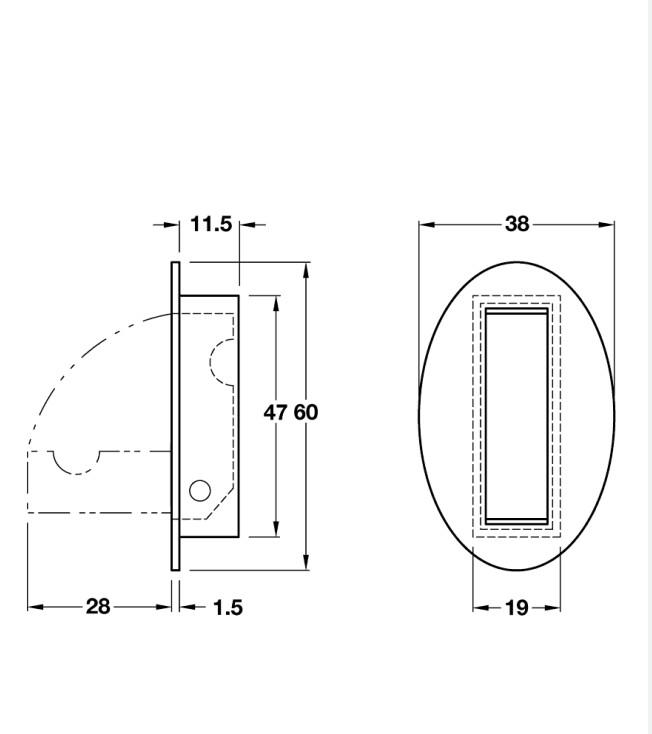
Given that budget then: https://www.doorhandlecompany.co.uk/hafele-oval-folding-coat-hook-brushed-matt-stainless-steel-f-15927/?
-
Packet of 3: https://www.ikea.com/gb/en/p/klyket-folding-hook-aluminium-beige-50503598/ Also IKEA Bjärnum. Check out "Umbra" hooks too.
-
Pallet or possibly Fablon.
-
I'll dunk this Tower 3 port in a bucket of citric acid to de-rust the bolts. I'll strip it apart when done. A few thoughts if you DIY it: I fitted like for like originally, replacing Tower valves with the same. I dicked around replacing micro switches and other components here and there. I used PTFE tape as was on them when I took them off. All the valves leaked over time. I replaced the x2 2 ports and x1 3 port with Honeywell. This time, no PTFE tape just Jet Blue Plus thread sealing compound. Getting the old olives off; a multi tool with bi-metal blade (like hacksaw teeth) is good. The nuts on the Tower valve aren't the same thread as on the Honeywell. I was going to see if I could get away with reusing the Tower nuts/olives on the Honeywell valve...I couldn't even though both valves are for 28mm pipe.
-
Might assist: https://www.freeheatingadvice.com/articles/honeywell-motorised-valve-faults/
-
I think this was a Tower 3-port I took out VAL328MP mid position valve: Only moves this much:
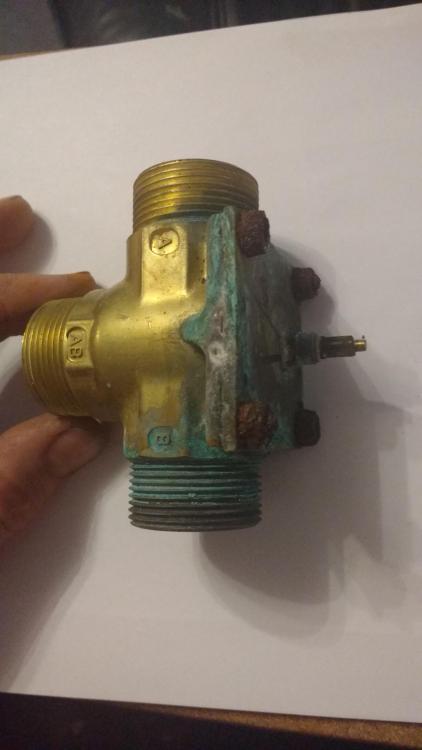
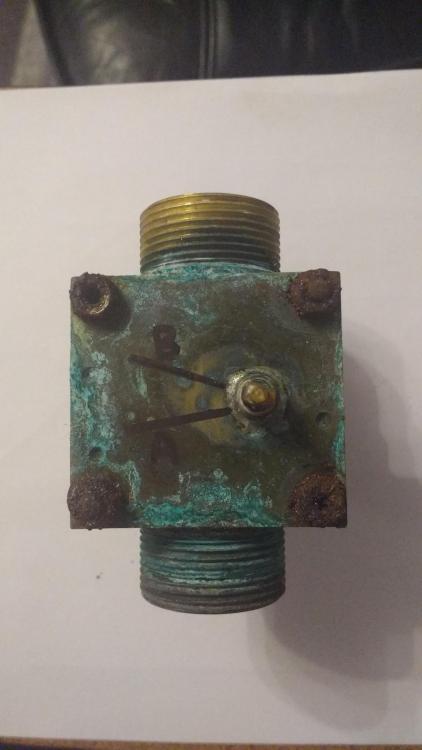
-
You can't beat graphite lock lubricant. Often in a powder puffer. Saying that I have had a decent one in an aerosol from Lidl/Aldi.
-
That's a few quid for a 3P one...
-
Keep the 8bar pressure for your outside tap(s) or onward feed to outbuildings etc. Go stopcock, outside tap then reduce afterwards. It's only what our very own Welsh Wizard @Nickfromwales told me. I too have 8bar coming in. Does mean you have to check/tighten your garden hose connections now and then and as required clean your prv mesh filter.
-
I don't blame you moving. Dartford wasn't too bad once but it's becoming an extension of inner city London imo.
-
Born and schooled in Dartford. First job there.....first house.....
-
I was at the Orchard Friday night for The Rocky Horror Show...didn't recognise Lowfield Street!
-
In the next scene O'Neil and Jackson use the teleporter to transport the bomb to Ra's ship and the ensuing blast destroys the ship in space, along with Ra.