
dnb
-
Posts
581 -
Joined
-
Last visited
-
Days Won
10
Everything posted by dnb
-
Collecting the materials for finishing my roof
dnb replied to dnb's topic in Roofing, Tiling & Slating
Thanks. I knew it had to be screwed but I had no clue what the best type of screws were. Looking at those you suggest I don't use indicates course parallel threads are the thing. I assume the 20mm penetration is to guarantee to get to the parallel (non tapered) section. Screwfix do seem to have a few suitable alternatives. It looks like the centres need to be 100mm which sounds a little extreme but no doubt the maths has been done. -
How does your garden grow?
dnb replied to recoveringbuilder's topic in Landscaping, Decking & Patios
I'm no gardener so I assumed because it was small and there are loads of the same in the hedgerows here. It certainly rambles well. -
How does your garden grow?
dnb replied to recoveringbuilder's topic in Landscaping, Decking & Patios
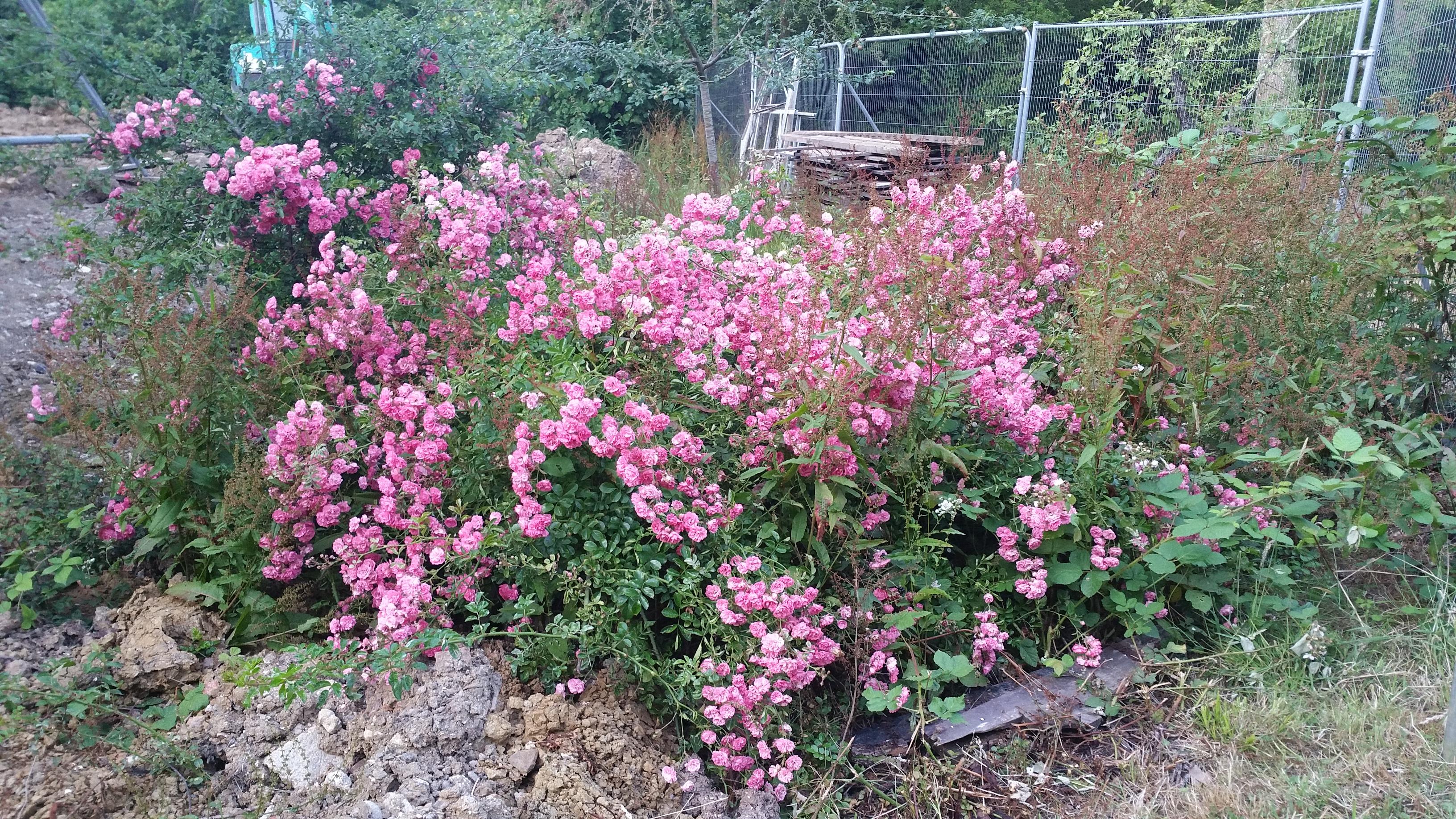
I lost a load of apples over the last week or so from high winds. It was the first year the orchard has been even vaguely accessible in a long time. Should still get a good crop come September. The dog roses seem to be doing well. Shame they're so close to the new house and will be in the way of some of the drains. The bramble patch is looking good too, so lots of blackberry and apple crumbles this autumn.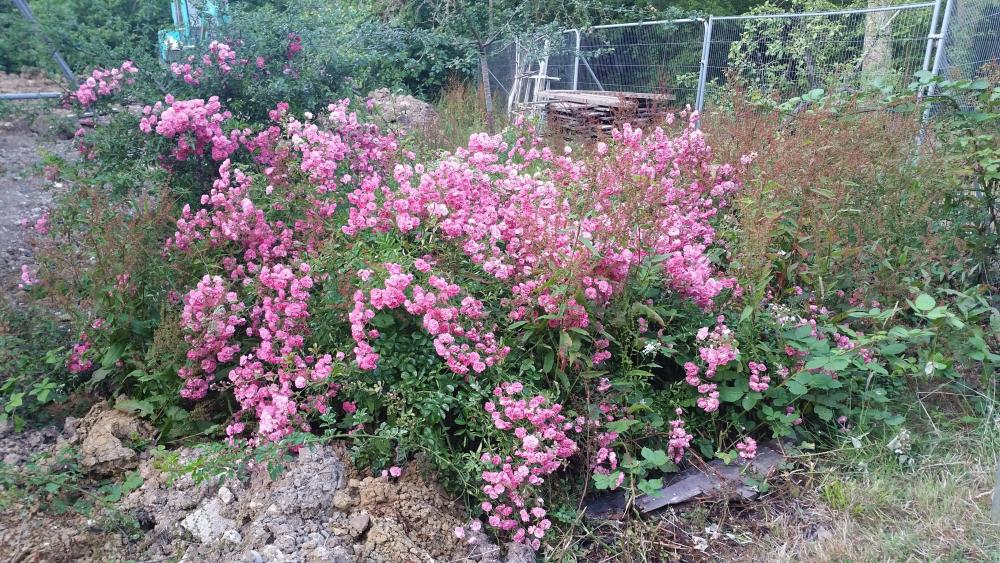
-
Collecting the materials for finishing my roof
dnb replied to dnb's topic in Roofing, Tiling & Slating
Thinking about it, the BS5534 document for roofing seems to demand 65mm round headed nails. These are supposed to penetrate 40mm into the rafters I don't have - the counterbattens take their place. So I expect my architect has asked for 38mm because it is as close as possible to 40mm so that the nails are all in wood and don't penetrate the SIPS OSB top by more than 2mm. Otherwise if I use 25mm counterbattens the roof batten nails will penetrate the totality of the OSB plus 2mm of the insulation which I suspect he would have considered to be less than optimal. Now wondering what the best fastening technique for the counterbatten is going to be, and what centres to use for the fixings. -
Collecting the materials for finishing my roof
dnb replied to dnb's topic in Roofing, Tiling & Slating
Yes, but the cost increases faster than the coverage. Hence it's more expensive overall. Good to know. Thank you! Thanks. I suspect I will be doing similar with whatever the local Jewsons will sell me. I will redraft the drawing slightly to work out some new measurements for positioning the facia and all should be good. Not a clue why I have the 38mm counterbatten specified but it seems it isn't particularly important. Might save a few £ and be able to afford to eat next week... -
I am aware of the requirements of BS5534 for roof battens. As it turns out these battens are produced in huge numbers so seem to be really cheap, so happy days. But I am concerned that I can't find a similar requirement for the counterbattens that hold the roof battens and are required for ventillation on my SIPS roof, and I am struggling to find wood of the right size at a price and quality I like. Surely there must be some requirement on these counter battens to catch out the unwary? The build up is: SIPS membrane counter battens (architect says 38x38mm at 600mm ctrs on the approved plans) slate battens (25x50mm spaced for 80mm headlap - since it's a 40 degree roof pitch in SE England) slates (250x500 because I can't justify the expense of 300x600 slates) I am wondering if I should replace the 38x38 battens with more 25x50 roofing battens since these are at least a defined grade and I can get them locally, but it reduces the ventillation space by about 20%. I am not sure if this is a problem or not - I suspect not because the over facia vents are only 25mm high, and air isn't getting in from anywhere else. I am about to ask my building inspector the question by email, but although he's very helpful, he is very busy so will take a while to answer a detailed question, but asking a yes/no type question is usually quick.
-
Machine Mart always used to sell cheap but adequate air pressure gauges.
-
Welcome to the asylum. We (probably) all started out sane but self building does have its moments. Good luck with the planning application - I hope it goes your way and you aren't saddled with loads of conditions. The learning curve is steep but the information and advice here has saved me no end of grief and problems and led to a better overall design. That's not to say it's been stress free of course!!
-
I think we are done with going up, so it's time to put a roof on the house. It's fully made from SIPS panels, approximately a foot thick so very little internal structure is needed. We had a little bit of argument on site today unfortunately between the SIPS people and scaffolders, but it was resolved and progress was made. It comes down to differing cultures and a lack of experience of the speed of this sort of build locally. The front as seen from the driveway approach. It has become quite an imposing building now. The green membrane is somewhat spoiling views out of the windows for the moment. We've decided we will need to acquire a small MEWP like in the foreground for fitting out, as later photos will show! The rear elevation Arty shot of the garden from the attic window. Lots of work to be seen out there! Daddy, I've changed my mind. Please can I have this room? The "This room" from the question above. The space works better than I imagined. Trying to show the interesing ceiling shape of the vaulted ceiling in the master bedroom. It gives plenty of scope for hiding discrete lighting HVAC and MVHR without damaging the effect. We have a bit of scaffolding to complete tomorrow so that roof access is possible for application of the membrane, then it is time to look at my small snagging list. I can hardly believe you can go from foundation to a near water tight roof in seven days!
-
6 days in. So far, so good.
dnb commented on dnb's blog entry in Building in a woodland on the Isle of Wight
An admission of being wrong? From the boss? The best I will get is "Well, I suppose it will do..." ? To be fair, the kitchen isn't huge at 4.5m x 4m. -
We have seen huge changes on site in the last couple of days. The SIPS team have worked very hard to keep things on track. I can't fault anything they have done. All the walls are in place now and we're waiting for the scaffolding to have the last lift built so the roof lift can happen, planned for early afternoon on Monday. Craning the roof panels into the assembly area. The small part of the L shape roof that goes over the master bedroom sitting waiting to be lifted. The front gable end is nearly completed. The rear elevation as seen from the lower part of the tiered garden. This is the veiw we'll get when driving in to the driveway. It gives a good view of the lounge and front door. Steico joists, a few steels and glulam beams for the ceiling of the first floor. The racking walls are waiting for covering. This leaves me with one or two sections of stud wall to install myself to complete the first floor layout. The master bedroom. We now have a view on what the vaulted ceiling is going to be like in here. The other side of the bedroom half round window, looking at the racking wall to support the far end of the purlin. Here's hoping the scaffolders will show up promptly on Monday morning having been allowed to go to the pub for the first time in an age!
-
Probably put on half a stone. I wouldn't really know because the only time I bother with scales is for my work medical checks. 33" waist trousers are a little tighter than they should be right now. Should lose it again fairly quickly now I'm building the house again and working on the grounds - plenty of tree work to do and the gravel driveway is going to take a lot of time after 10 days of shunting a Manitou over it.
-
What a difference a day makes...
dnb commented on dnb's blog entry in Building in a woodland on the Isle of Wight
I only had myself to blame if the frame and base were different sizes! I laid out the site and built a large part of the blockwork. They are Steico joists. Yes, penetrations are cut in the joist centres where needed. I have been given a set of rules to follow as to spacings and sizes etc. Very much looking forward to getting to that stage now! -
What a difference a day makes...
dnb commented on dnb's blog entry in Building in a woodland on the Isle of Wight
Thanks! It would be fair to say I am both relieved my bits of the job were to a good enough standard and extremely happy that finally it is all coming together. The weather will probably slow them down a bit - might loose a day or so - but we've been pretty lucky with the weather so far having seen rain on the other side of the Solent with it still fine on site so I am hoping this continues for at least a couple more days. -
What a difference a day makes...
dnb posted a blog entry in Building in a woodland on the Isle of Wight
There have been a few delays along the way, but now the largest work package is well and truly under way. The last 24 hours has seen the house go from 300mm out of the ground to 2.7 metres. The front door and stairwell on the left and family room doors on the right. Unloading the second trailer load of parts. Running out of space on site now! First floor joists going in. With another view of the stairwell window Inside the lounge Proof that the SIPS team and I had the same plan. Or were very lucky! And tomorrow the team are going to install these parts... # It really is impressive how fast the house is going up now. -
We're back at work. The SIPS team are on the Island and have satisfactory accomodation, and the first load of house is unloaded on site. But before the photos of this, there are the last stages of getting out of the ground and interfacing with the SIPS superstructure. The site foreman early last week doing the final checks of plinth flatness. To the best of our measurement ability all is good - within 3mm in height and 5mm laterally. First to arrive: A new toy! I used to drive one of these in a previous job a long time ago so it would be rude not to test the equipment on hire by moving some bulk bags out of the way. The controls have changed a lot over the years so I had to resort to the instructions for a minute or two. It's a splendid piece of equipment for the job but the boss tells me I am not allowed one of my own. A risk was flagged by the SIPS structural engineer surrounding the choice of light weight blocks for the plinth. He was concerned about blocks splitting when the Expressnail fastnenings were used. (I have seen much discussion on the forum about this sort of problem.) We mitigated this by careful choice of blocks by analysing the specification - only 7N ratings were considered, talking to the manufacturers helplines and practical testing of samples. The winning block is shown below. I put in another three nails without incident getting ever closer to the edges with no incidents so concluded that the blocks would be adequate. The team on site testing levels and beginning to install the leveling plate. All is good - the plinth is suffiicently flat and the blocks are taking the fastenings without incident. We should see some walls up tomorrow assuming the weather is supportive of lifting. We can now consider the build "out of the ground" and my homework marked and deemed good enough to proceed. I now need to fully apply myself to solve the puzzle of getting windows and slates on to the Island in the hopefully final weeks of the national lockdown.
-
"Not liking it" is not a valid criterion for objection. I believe that all letters of objection (or support - these do happen sometimes) are published by the council for all to see - so see what reasons were given and if you can work in some mitigation so that the objection is unwarranted. I do agree with PeterW that a pitch to the roof would be better for performance reasons. I was considering a flat roof on my garage, but my architect talked me out of it on the grounds the local planners don't like large flat roofs.
-
Small steps and changes of scale
dnb posted a blog entry in Building in a woodland on the Isle of Wight
I've not been on site for much of the week because I had plenty of paid work to do, so I left my scaffolders alone. They're getting there. One more morning and we should be good for the first stages of the SIPS installation. Finally the boss has acknowledged the house might not be tiny. This side stays open for the first few days of SIPS installation to allow acccess for the panels. Hoping for some reasonable weather for the weekend to get the last few bits of tidying up done. Fingers are crossed for everything going well on Monday! -
Thinking ahead for when I have a roof to slate...
dnb replied to dnb's topic in Roofing, Tiling & Slating
Was that aimed at me or @SuperJohnG? If it was me then I am already planning 20 320W panels on the south facing roof. I don't think more will fit and it makes the inverter choice more tricky (will attempt to link to my solar panel thread) we are just about to complete the formal microgeneration application with SSEN. -
Almost a month in . . .
dnb commented on canalsiderenovation's blog entry in Canalside Bungalow Renovation
Looking good. I'm pleased your plants are doing well too. -
We had skirting board radiators (that sound similar to what you are asking about now, but is over 20 years ago) in our first flat in London. They worked well enough for us and gave good freedom for arranging the rooms, but put out a lot less heat than the equivilent area of conventional radiator. Not really a problem with the solar gain of that flat and urban heat island effect in central London... These days in a well insulated new build it would more than likely be fine again, but I would be a little cautious on a retrofit to an older house. Is there a handy datasheet showing heat output per metre for a given water temperature?
-
Thinking ahead for when I have a roof to slate...
dnb replied to dnb's topic in Roofing, Tiling & Slating
Your roof looks good! For a saving of around £1000 in materials alone it may well be worth asking about an amemndment if I can find a good reason. I assume interlocking tiles are easier and therefore faster to install than slates, so there's a labour saving too - I'm not too keen on heights so will avoid these jobs where I can and therefore won't be doing much on the roof myself. I have my doubts that I will get away with it though - they'll mention the usual ANOB issues, followed by SSSI and say I'm lucky to be building anything! ? -
Thinking ahead for when I have a roof to slate...
dnb replied to dnb's topic in Roofing, Tiling & Slating
Yes. Planning is passed and we're well on the way with the build. The planning department were more than a little odd with me. They insisted on natural slate and painted wooden cladding so that the house retained the look of the bungalow we demolished (that felt roof). No other house on the road is like mine will be. We have a little of everything - thatch, wooden shingles, concrete tiles, slates... My architect coined a wonderful phrase to describe the road: "No common vernacular." I am happy with natural slate. Less so with the cladding, but it's not worth rocking the boat over it. -
I know nothing about slates yet other than the very obvious bits of roofing I've picked up so I'm hoping for a little advice so I can make informed decisions. My planning permission specifies a natural slate roof, but doesn't constrain me further. I have seen slates in several sizes, from several countries at a range of prices from affordable, through "owch!" to "is it edged in gold leaf?". I am wondering where to set my sights in the pricing structure to get something of reasonable quality and durability? I am currently considering Brazil and Spain as likely countries of origin and think 250x500 is a sensible (i.e. common) size and the price is at the affordable end of the spectrum. I would like to stretch to 300x600 because with a 40 degree pitch roof I think the larger size will look a bit better, but I am most likely going to not do this because I can see no performance gain for the cost increase and we've had a couple of goes at the contingency fund due to weather and virus. Using the back of a convenient envelope and assuming an 80mm headlap I need just under 6000 slates for the house and garage based on the 500x250 slates and 20 reasonable size solar panels set in the roof using GSE products (I will do a more detailed calculation nearer the time.) so I am hoping for a little bit of bargaining power for sensible delivieries - a necessary consideration given where I live. Thanks in advance for any wise words.
-
Sounds like one of those problems where seeking forgiveness might be best thing because there could be nobody who can give permission... (but please don't blame me when this strategy goes wrong. 9 times out of 10 it's OK, and the last 9 times were good for me!) Make sure the drains are done properly though. I have had a horrible time over the winter when one of my neighbours "reworked" (read as "filled in") the drains on his property causing a lot more surface water to flow on to my driveway. We had a telehandler sink nearly 18" into the driveway at one point because the clay had turned in to some kind of horrible soup under the gravel and cellweb in one spot causing several days of rework to put in a drain in an area where I shouldn't really have been digging.