
dnb
-
Posts
581 -
Joined
-
Last visited
-
Days Won
10
Everything posted by dnb
-
Not yet. They are on order but there is a long wait for windows like that. ?
-
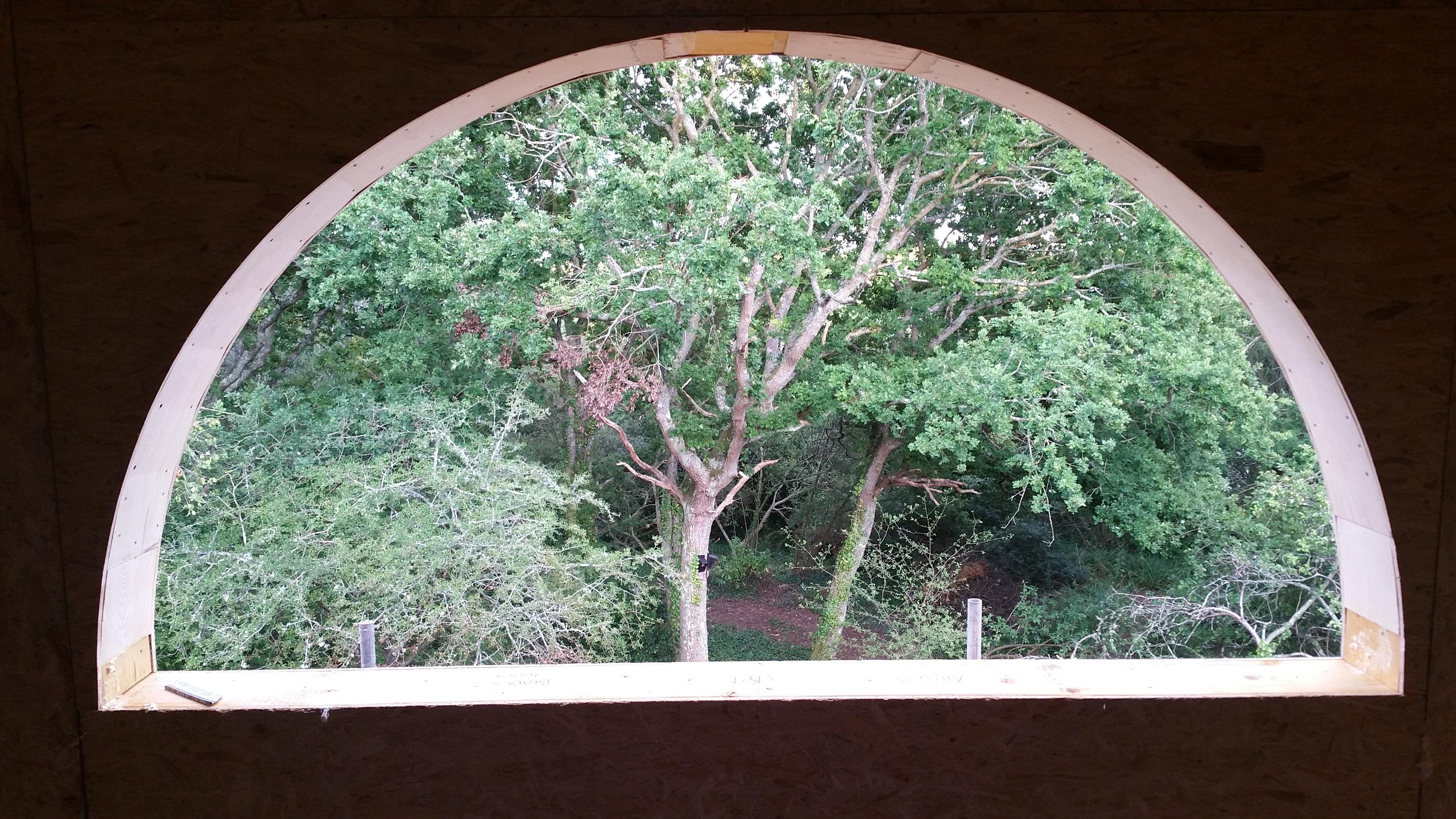
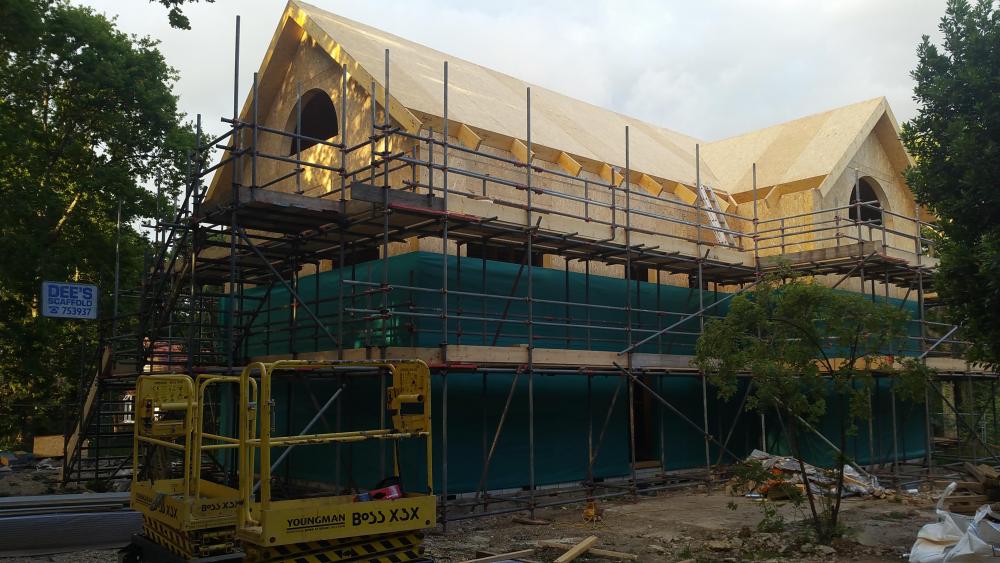
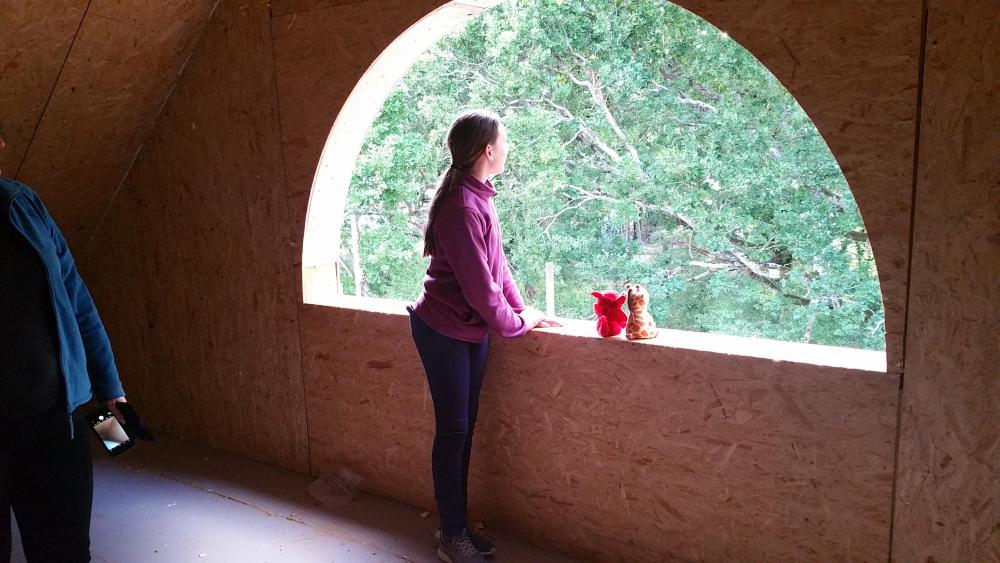
I have 3 of them. One on each gable. All will be a single fixed pane with radial bars. I don't have a good outside photo because the scaffolding for the roof now gets in the way.
-
I am very pleased by the arch windows. Not all of them have exceptional views but they make the house look right.
-
Dry Hip and Dry Ridge problem on new build
dnb replied to Tomfromsurrey's topic in Roofing, Tiling & Slating
Welcome. It looks the same as the dry ridge I am about to use. I think it was called Wonder Ridge or something like that. I will check this afternoon when I am on site. You've got me worried now! -
Yes. It's grinding away slowly. There are still good moments, but right now it's dragging. Last weekend I picked up a pack of roof battens in the roof shop (with one of the staff - socially distanced by 4.8m!) and put it on the roof rack of the Range Rover. I only wanted two packs, so didn't see the need to drag the big trailer out there. Big mistake. I must have twisted somehow and ended up getting SWMBO to drive me home to have a lie down with a bad back and plenty of ibuprofen. One fine weekend lost. It rained heavily the previous weekend so I did nothing particularly productive on site. I've used all bar 2 days of my annual leave from work and it gets dark really early. Opportunities for decent progress are limited. I am staying sat firmly at my desk all week at work - avoiding any threat of having to run trials or move equipment so I am fit for the next weekend. This is before I start mentioning all the supply chain woes! Not helped by being on an island during a pandemic and building something out of the ordinary for the IOW by using "modern materials". But I will be happy again by Sunday evening when I can cross a couple of things off the list and advance the progress bar on the Gantt chart. (Proper project management here! ) My only real deadline is getting the cladding and windows done before I have to pay for additional scaffolding time. After that, I'm planning on a break to play with some things with engines. It will all be worth it in the end.
-
Heating design, calcs and process - ASHP/UFH
dnb replied to SuperJohnG's topic in Underfloor Heating
@SuperJohnG I must confess to not reading all the maths in great detail, but it looks to me like the heat loss numbers aren't too far out. The house ground floor area isn't too different to mine and the construction is comparible, and so is the heat loss. I too agree with @SteamyTea that the infitration losses dominate at least in the model. This is why the inside of my house is beginning to look like a very untidy satellite factory. The model is of heat loss. If you aim to just service this loss, then there's no scope in the system to change the temperature of the house at anything other than a snails pace. Imagine the house at say 18 degrees, and you want it at 20 when it is at your worst case design temperature, then the heat input will mostly be offsetting the losses and not acting to change the temperature. My rule of thumb was to double the energy required to hold a steady temperature in the worst expected case, so in your case something of the order of 8kW. I should point out that my "as designed" SAP calculation says will boil everyone in the house unless it's like Siberia outside. I remain unconvinced of this. -
There wasn't anything formal involving Building Control that I had to manage for the form I submitted. Planning and building control are in adjoining offices over here so I am sure they talk to each other sometimes! As always, it's best to check with your local council because they are all a bit different.
-
More or less all I needed was a spade stuck in the ground and a form sent to Planning saying I had started. (Naturally, this is different for different councils) Of course be midful of CIL if it exists in your area, and be thoroughly sure all the pre-start conditions are met. I took over 2 years to get properly started for various reasons too. I am sure it will all come together for you.
-
Why does Sunamp appear to be the only PCM based heating system?
dnb replied to dnb's topic in Boffin's Corner
@Ferdinand The phase change freezer was essentially the answer to "How do I eat steak followed by ice cream in the middle of the Atlantic, while transiting in a 34" wooden yacht?". My father on law was a very clever chap who had the knack of seeing the very simple and obvious solution to a problem that everyone else had missed. When I tell you how it worked, it will be so simple and obvious that it won't seem impressive. It would be fair to say a sizable number of his ideas have been incorporated into my house design. It's a real shame he never got to see the house other than in drawings. The problem with sailing is getting power for use in "hotel services" as the RN call it. It was even worse in the early 90s when solar panels were expensive and pretty awful things. So you're limited to power sources like running an engine, towing an altenator etc to charge batteries (again, in the early 90s these weren't anything like we have now), so efficiency is key for long range sailing. He built a massively insulated top opening box with the best volume to surface area he could fit in the space, and pieced together a reverse carnot cycle freezer using parts such as an airconditioning compressor - because taking mechanical power from the engine was more efficient than driving an inverter. To minimise engine run time, he used a pair of aluminium plates with a "bag" filled with strong brine. The freezer oviously froze this in the cooling cycle, taking the box temperature to -20c or so, and it acted as a cold store for many days at a time provided the box wasn't opened much (and there's plenty of spare PCM sloshing around should the bag leak...). Thus engine runtime was minimised and used relatively efficiently (5 to 10 minutes every 3 days), there was no battery load imposed and he and the crew (a younger SWMBO) ate well. Simple solutions tend to work well. -
Or are there others I've missed? I would prefer not to discuss the issues of the Sunamp specifically - there are enough threads for this already. It looks to me like there are any number of businesses around the place that make and sell PCMs of a whole range of temperatures. But there's only one product I've seen that makes use of them at temperatures high enough for DHW. Is it particularly difficult? Or a very small niche market? It has always (since my father-in-law showed me the PCM based freezer he built for his yacht many years ago) seemed to me that they could be a good idea if implemented wisely.
-
Ebico bites the dust and British Gas bites my ...
dnb replied to ToughButterCup's topic in Electrics - Other
I believe so. It was most convenient for a self-build site. Oh well, we did OK while it lasted. -
Multi Pro Fireboard Kingspan insulation - Testing Required
dnb replied to NewToAllOfThis's topic in Building Regulations
Am working through the same sorts of issues now. My house is much further away from the boundaries so I don't have the same requirement but my reading of the regs indicated that wood cladding very near the boundary was very difficult to do. My BCO has been very helpful throughout. I can understand the concern with PIR insulation since it is flagged as contributing to the Grenfell fire. -
Fireproofing around penetrations.
dnb replied to Russell griffiths's topic in General Self Build & DIY Discussion
Thank you @Russell griffiths I am banking on my requirements being the opposite of yours. -
Fireproofing around penetrations.
dnb replied to Russell griffiths's topic in General Self Build & DIY Discussion
I have no idea on the answer but I am very interested to know since I have a similar problem to solve in the (hopefully) near future. -
Not in the right place and it is going to be tight for space in there. Want to avoid taking cables round 2 sides of the house outside ideally. A picture would help so I will do something tonight. I do like the 110mm pipe idea though because the black stuff is always awkward. I intend to do similar. Robust signalling is important to not visiting the local aquarium! Shouldn't be too much of a worry to me with a sips build. I would not be cutting in to the panels themselves. The only hole would be the cables exiting and they have to go through somewhere... I can't use the garage because it won't be there for ages yet.
-
I need to make provision for external garden lighting etc before too much longer. The snag is that the garden is nowhere near designed so I have no hope of guessing what SWMBO will want in 18 months time. Being wrong is not a good option here. It might involve swimming with sharks. My guess for outside electricity is as follows (goes from "definitely required" at the top to "requirement TBD" at the bottom: SWA to treatment plant SWA to rainwater capture tank pump (assuming I use a submersible pump) some cat5 to each of these for sensors/condition monitoring etc - in separate ducting of course! Outside lights on walls at doors and corners (connected to house DMX lighting) Double socket on north wall of house at driveway end for car hoovering, pressure washer etc. Double socket on wall near rear decked area Bollard lighting in driveway, activated by sensors of some kind (advantage if this is in the DMX system) Deck lighting. (advantage if this is in the DMX system) Garden lighting. (advantage if this is in the DMX system) My first crackpot idea to avoid the sharks is to fit a recessed meter box (or similar - but meter boxes are common and cheap!) on the back and side walls and use these to install appropriate circuits from the consumer unit such that I can put in a DMX demux unit (or two) and then not worry about the lighting design further until the house can be occupied, accepting that I would need to put in appropriate cables from the lights to the "external" demux unit and tell the house software it has a new light to play with. The idea also provides a place to terminate the SWA for the treatment plant so I don't have to fight SWA into the house because in a fit of stupidity I didn't put in enough ducting under the ring beam last year. I can't find anything in the blue book immediately preventing this idea. I would also hope to use one of these boxes as somewhere to put the submain that will eventually go to my garage - I am told SSEN won't be happy with me terminating an SWA cable to a switched fuse inside "their" meter box, but they will tolerate Henley blocks to get a second set of tails out. This is a little annoying because it would be the simpler solution. (Connecting the garage through the house consumer unit would make holes in the house that just don't need to be there.) I would like the plan to be simpler, but not involve more sharks. If I don't plan for it now it all gets much more difficult for anyone to implement later when there is much reduced access to the insides of things. I'm open to suggestions. (I did say the idea was crackpot, and I may have had a bit of sloe gin...)
-
I think I understand how to do the wire penetrations (eg for outside lights and outdoor sockets) but hoped someone had a diagram showing the details of best practice - mostly interested in getting the fire protection right (I need to meet regs in England. Exceeding the regs is not a concern). I am assuming it is an advantage at least in tidiness to ensure that all penetrations are designed to be located in areas like the ceiling voids so they are outside of the living "compartments" giving little chance of them being disturbed by accident. I need to get all of this sketched out so I can complete the cladding battening and fire break plan.
-
Griff, ary you sure these biscuits are in date?
-
I will be going for the U shape for the insect/rodent mesh too at the bottom of the cladding. I am drawing the details to put in a building control submission now (mainly to show position of fire breaks etc). I will be doing something like this for the soffit and cladding ventilation: https://www.flyscreen.com/media/pdf/Mesh for Soffit Ventilation and Cladding - V22.pdf I too have found that only an intumescent barrier will work for the horizontal fire stop if ventilation is normally required.
-
They will indeed watch closely. I have the same burden but am a little further through. Well done on winning the appeal and good luck with the conditions. Hope they aren't too onerous!
-
Testing my understanding of AD B1 section 4 for my build
dnb replied to dnb's topic in Building Regulations
Excellent. Thank you! Looks like my understanding is fine but this leaves me with fewer options to get where I would like to go. -
Testing my understanding of AD B1 section 4 for my build
dnb replied to dnb's topic in Building Regulations
I understand this. I am trying to find out what the minimum standard is for a given property "a long way" from any boundary. It seems due to the distances involved there aren't many rules in this context. Section 2 (means of escape for houses) doesn't look like it adds requirements to external cladding, and for the purposes of this discussion we can assume this is covered unless I have missed something that materially affects the exterior. I might be misunderstanding the document so want to be sure of my story before I do anything "official". Sounds like I might have interpreted it correctly then. For this discussion we can assume all other relevant requirements to the house are met and the thing I am worried about is what the external cladding and to a lesser extent battening and cavity closers need to achieve. To provide a bit more context, the wall build up can be assumed to be (inside to outside): skimmed plasterboard, to the requirements set out in B2 section 4 25mm timber battens membrane SIPS panel membrane 47mm battens, cavity closers etc as appropriate interlocking timber/other cladding as the requirements dictate. (Figuring out the requirement here is the key thing.) Not looked at barn conversions, but I guess so, except the cladding here is horizontal and interlocking, not a rain screen type with gaps. Is any further context necessary? Remember this is about the minimum required standards, not "can I get away with doing..." -
I am working out what I need to do to comply to the letter with part B volume 1 Req. B4 for external walls on my build. The question is deliberately specific so that I can be informed when I approach the experts I may need to enlist. (I would prefer not to discuss the reasons here and now.) Sorry - it's a very dry discussion involving much quoting of regs! The introduction (para 10.2) reminds us that there are other requirements (i.e. not just B4) that impact external walls. In my case of a single house, the only appropriate one is section 11 - fire spreading from one building to another. Para 10.3 indicates I either follow the provisions in 10.5 to 10.8 or have full scale test data from particular BS documents (this is unlikely, so let's stick with the regs) because my house is not a building from regulation 7(4) as I understand it. Para 10.5 - comply with table 10.1. My house is "Any other building" in this context. It is less than 18m in height and more than 1000mm from any boundary. This means I DO NOT need to make provision against spread of fire as far as the letter of the regs is concerned. I think this is a bit silly, so let's assume the house is really tall. I therefore need something of class C rating. But there is a subscript note - as long as I use timber that is more than 9mm thick I don't need a specific C rating for fire. So we are back to no particular provision. It's not until anything gets really near the boundary that I need make special provision, and this to all intents and purposes inhibits the use of timber for cladding. But none of this applies to my situation. Para 10.6 doesn't apply. My house is shorter than 18m height. Para 10.7 doesn't apply. I am using green paint but I don't think that's what they are getting at. Para 10.8 is more interesting. It tells me to put wooden battens (47mm in my case) around all the windows and doors, and something around the top of the cladding cavity. This will will probably need to be intumescent material since I need this to ventillate in normal situations. With a SIPS roof as well as SIPS walls, I am not sure if I can to do anything different because the fire can't easily get into the roof structure, but it can get into the void over the soffit - the overhang is quite large to act as a summer solar gain limiter for the bedrooms - and the void itself is compartmentalised by the SIPS splines. (My BCO didn't want to give an immediate answer on this either because I am doing one of the first fully SIPS builds in the local area so the experience base isn't established yet.) I also need to close the top of the cavity where the brick plinth at the base of the house stops and gives way to the cladding. All of this is described in section 5. Section 11 is concerned with fire resistance and should be considered for situation. Para 11.5 is concerned with distance from boundaries. My house is a long way from all my plot boundaries, but would be 3m or so from a proposed detached garage. So I should assume a "notinal boundary" for this wall as per 10.5.c.i. Measurements in my case from the plot boundary are all over 14 metres, and the distance from house to garage will be 3 metres. Para 11.6 sets the protection requirement, in my case 30 minutes. Para 11.7 is a definition, but is important because we've established my cladding can be much worse than class B and will be more than 1mm thick. So all walls must be considered as having unprotected areas, but at half size. Para 11.8 does not therefore apply. All distances are greater than 1000mm. Para 11.9 indicates that the unprotected area should be less than a particular size, but importantly the protected area only needs to resist fire from the INSIDE of the building. Para 11.16 covers calculation of acceptable amounts of unprotected area. I will use method 1 and the site boundary in the first instance. Wall 1 - 15 metres from boundary, area 50m2, unprotected area 60%. Meets requirement of unlimited unprotected area. Wall 2 - 20 metres from boundary, area 80m2, unprotected area 60%. Meets requirement of unlimited unprotected area. Wall 3 - 100 metres from boundary, area 65m2, unprotected area 55%. Meets requirement of unlimited unprotected area. Wall 4 - 13 metres from boundary, area 80m2, unprotected area 50%. Meets requirement of unlimited unprotected area. Now, if I include the proposed detached garage, wall 4 now doesn't comply because the unprotected area should be no more than approx 20% so this wall would require different (i.e. class B or better) cladding if/when the garage is built. Para 11.21 allows for some wiggle room with sprinkers, but this doesn't make enough difference to bring wall 4 into compliance with the garage in consideration. So all in all, it seems I could still build a flamable house within the rules. Provided it's sufficiently far away from anything else.
-
Is anyone here planning on using an interior designer?
dnb replied to H Kaur's topic in General Self Build & DIY Discussion
1. Yes, but not on my current build. I have some fixed plans for this one and a lot of things are now set in stone (well, wood in this case) or are things that I am going to be strongly against changing so there isn't much flexibility! SWMBO, the architect and I sorted much of the details out prior to planning. If I do another build, or a renovation in a few years then it makes sense to consider including interior design as another service at the early stage since it's one of those things that may prove to be close to cost neutral. 2. "Common" parts - kitchen, bathrooms, lounge etc. to ensure good use of space, compliance with regs and ensuring the spaces fit our needs. 3. I would expect good knowledge of appropriate regulations/best practice etc and currently available materials/products/processes to enable everything from lighting design to laying out kitchens and achieving a good fit and finish to budget as appropriate to the client's brief. If it were "full service" I would expect project management and either recomendations for trades or fully organising subcontractors. Probably lots of nice 3D rendered pictures too! 4. No idea. Would assume it starts from a few hundred for a basic package to provide a plan to several thousand for sorting out all the work from beginning to end. 5. If my muse lets me down while looking at a space with constraints that makes it difficult to achieve my desires. (Blank slates are rather easier to deal with.) 6. Internet searches and probably asking for advice here, noting the no advertising rules. 7. It depends on how hard the problem is. Smaller than a single room is probably not worthwhile, all things considered. 8a. It depends on the ceiling sale price of the street or house to a large extent. I would be motivated to pay more for maximising value (from a good interior design of course) on a £700k+ house than a £200k house. This would obviously be reflected in the scope of work - details matter a lot more when the buyers are more limited. Sadly even in self build land, house prices are important because situations change and we need to plan for this. 8b. In the low hundreds, depending on the brief. Finally, what's with everything being battleship grey in houses these days? I see enough of this at work! -
I have a very similar chart... Labeled axes and everything. height_profile.xlsx