Dan F
-
Posts
1431 -
Joined
-
Last visited
-
Days Won
2
Everything posted by Dan F
-
@Moonshine Is this one that you can help with?
-
If they had a better controller and cost less then I would revisit Sunamp for sure. They still beat UVC on size, heat-loss and load-shifting, if any/all of these are important to you.
-
Hi, I have a good understanding of the different way to mitigate noise transmission through walls usiing soundbloc, mineral wool and resilient bars, but I'm unclear on how to best use acoustic flanking strips and where they are really advantagous vs. not really needed. Our architect has specified these under amost all internal stud walls, but when I speak to the product supplier they recommended using them both below and above internal stud walls and also where stud walls butt up to external walls. Obvisouly we want to use these where it makes sense, but don't want to go overboard as it may drive our frame designer crazy and there is also obvisouly also an additional cost invovled. My understanding is that these strips are mostly about avoiding the structure transmitting noise, but if you have well detailed walls, resilient bars on the ceiling, screedboard above the decking and you are as using the correct asositc sealant/strips at PB/skirting juntions, how important is it to use these strips between i) slab and studs ii) external wall and studs iii) studs and joists? This is the product I'm referring to: http://www.cmsdanskin.co.uk/general-construction/acoustic-wall-solutions/regupol-acoustic-isolating-strips/ Thanks, EDIT: I should add that this is a MBC twin-wall build with 89mm internal studs and 253mm metal-web joists at 400mm centers.
-
Isn't using a PHE a preffered alternative that avoids oversizing UVC? That's what I've been told anyway...
-
There are muliutple different controlers depending on how it will be used which seems a bit old-school to me. If you plan to use it with a heat-pump there are even 2 different controllers for Daikin and Samsung ASHP's. The fact this is a hardware and not software dependency is something that put me off. I hadn't realised that charging was also as limited as @PeterW says..
-
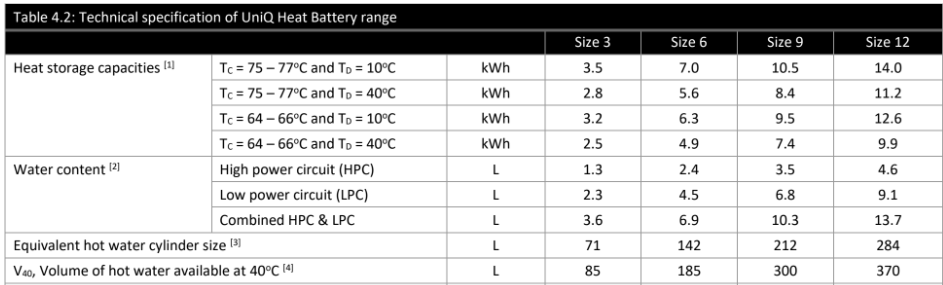
It's more about how many you want to use concurrently than how many showers you have. Also depends on i) how you like your showers ii) which sunamp unit you are looking at. UniQ12 could probably just about do 3 concurrent showers at a good flow rate, as a 12l/min shower requires approx 9l/min hot water so 27l/min in total. So if the capacity of a single UniqQ12 is enough for you, then it's not a bad option (other than price potentially).
-
Looks great. Is this Aksent Grey Basalt? We have the standard rock panels specified, but these looks good.. Did you order direct, or via a supplier?
-
Finishing the block garden room with an overall height of under 2500mm
Dan F replied to Ttw's topic in Building Materials
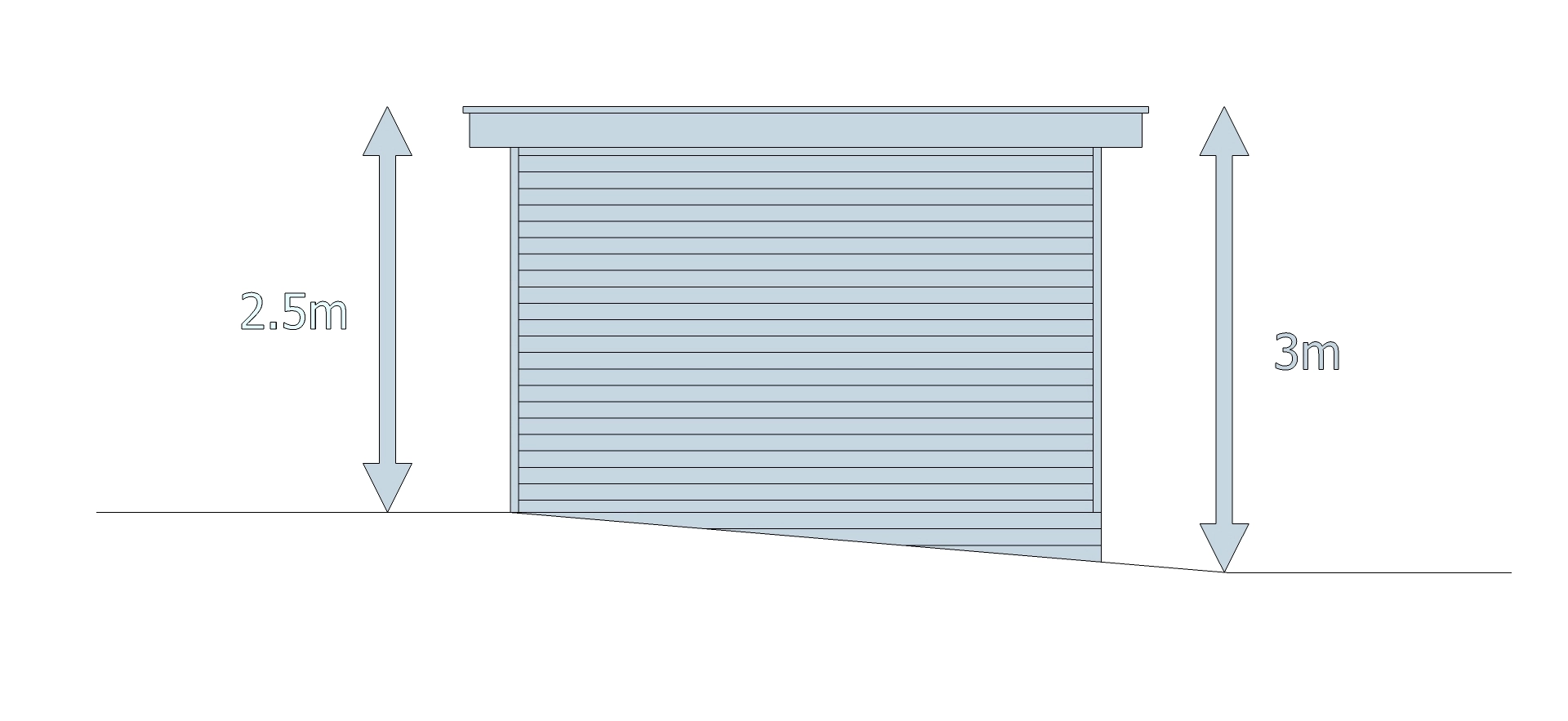
Also the 2.5m is from the highest ground level next to the building. So in theory you can sink it into the ground on one side to achieve more height. This is what we plan to do. Another way of maximising height is by using a level-threshold.
-
Yes, that too. Same for us.
-
Assuming your mortgage is using your land as collateral then someone needs to register a legal charge (in favor of the lender) on your title with the land registry. This needs to be done by a licensed conceyencer or solicitor acting on your behalf. We were charged £880 + £130 costs for this.
-
Take a look at Mixergy too which also supports load-shifting. The heat-loss isn't as good obvisouly, it's UVC-sized and not good for multi-day load-shifting, but if you want plenty of hot water wihout spending £5K, the 500L version costs £1,500. You have a bath requirement, and not just showers. But if bathing is mostly showers, you can get 30% extra effective capacity (and more SAP points and reduced energy usage) by using WWHRS without the need to oversize UVC/Sunamp quite as much.
-
2 x Uniq12 = 568L@60C, 740L@40C. (unless I'm misreading). Need to take 10% off these numbers if you only charge to 65C.
-
568L (if you charge using 75C or with PV). 511L (if you charge using 65C) equivilant, assuming UVC temp of 60C. I wanted 400L initially to ensure good capacity, but decided that by using WWHRS i'd get 400L equivilant with a 300L UVC while also having less heat-loss and using less electricity (which PV won't cover in the winter)! Why wouldn't you size your DHW system for you needs, rather than install an electric water heater? Also, isn't a centralized backup solution better than one that will only serve as backup for a single shower? I looked at Sunamp recently but ruled it out baed on price, ASHP compatability and the fact there are other alernatives for short-term load-shiting. Sunamp still wins on size, heat-loss and longer-term (24hr+) load-shifting though.
-
What tool did you put this together with?
-
Welcome. We are also replacing a bungalow in Berkshire (Wokingam), just kicking off on site this week. There are other build-hubbers with completed builds close to you in Henley/Maidenhead on the forum... Decided how you are going to build it yet? - Construction method. - DIY vs. main contractor (or something in between)
- 5 replies
-
- 1
-

-
- newbuild selfbuild
- ashp
- (and 1 more)
-
Building inspector told me 30min fire rating is needed on both sides of the wall next to the boundary. Didn't say anything about "not made mainly of non-combustible materials". I didn't tell him we were planning timber-frame, but he didn't ask either.
-
We are also working out how to buiid a garden room. We haven't started on the house yet, but the plan is that by doing it in parrelel we'll be able to leverage better rates for materials than trying to do it seperatly later as a small project. Was thinking about using isoquick slab + 240mm ibeam supply-only kit frame, but I'm going to have to Aly Dymock's videos now and see is a more DIY approach makes sense... Will yours need building regs? (ours does ? )
-
(wired) Home automation market is a bit cr*p
Dan F replied to gc100's topic in Networks, AV, Security & Automation
What would you use? z-wave powered LED drivers or z-wave dimmers? -
I found Zurich (via selfbuild.uk.com) the chepest by good margin just a couple of months ago. (vs. selfbuildzone and protek)
-
(wired) Home automation market is a bit cr*p
Dan F replied to gc100's topic in Networks, AV, Security & Automation
Agree Loxone is less open now than it used to be but if you are decided on i) automation ii) wired and want to avoid the complexity of KNX i would still personally consider Loxone: - Not impossible to get components as their partner program is based on how much equipment they buy, so there is a mutual benefit in partners reselling to self-builders. - Still a lot of information on forums/wiki's (lot is in German, but google translate helps) - You can wire Loxone to not be tied into Loxone. Only other wired altneratives I can think of are doing doing raspberry pi based. Maybe look at https://www.unipi.technology/ which uses node-red for designing automation. At a lower level there is MQTT, CAN-bus, TCP/IP, but I don't see a wide range of sensors/actuators based on these protocols. -
Sketch design for comments/feedback please
Dan F replied to Omnibuswoman's topic in New House & Self Build Design
Have a look at https://www.homestyler.com/ too. It's really good to knock things up quickly, has a good range of furniture and has basic but very useful 3D views. And it's free! -
One PM we spoke to wanted 7% of the whole build. A main contractor we spoke to wanted 10%, but happy to start post-frame and exclude groundworks, foundations, timber-frame and also the kitchen. On that basis PM would be both more expensive, less present and not have their own employees or regaular subbies. Just something to thnk about, as we initially assumed we'd save money with a project manager..
-
Be careful because some project managers can cost you more than you save using a main contractor. It might be worth trying to find a main contractor that is flexible, allows you to bring your own contractor. Some will even work open-book..
-
TBH, if you don't have dishwasher/fridge behind the island, 1000mm wouldn't be bad at all either. We found this site really good for standard/recommended dimensions: https://www.houseplanshelper.com/kitchen-dimensions.html, same with bedroom cupboards, bathroom counter-top sizes etc.
-
It's hard to get the right balance between what you do i) pre-planning ii) pre construction drawings iii) work out within the walls you then build. If you watch the TV programs, there are still working out where the shower/island etc. goes when the shell is already up. We tried decide on everything that could possibily impact external form/dimensions and windows pre-planning, and have then tweaked things (include one external dimension and window sizes/positions) as well as reworking bathroom layouts better etc. prior to signing off on the timber frame. So, I guess I'm saying, you don't need to get everything perfect before planning, just things that might have a knock on effect on other rooms/spaces and in turn impact building shape/size/windows.