Dan F
-
Posts
1431 -
Joined
-
Last visited
-
Days Won
2
Everything posted by Dan F
-
Standard on their heat-pump variant. All tanks now have these ports though, so it can be added later if needed. Maybe, but they have a pretty strong recommendation regarding the need for 60C primary flow for use of the top coil. You might get away with 55C if you don't plan to heat tank to more than 48/50C, but Mixergy won't recommend that. Do you mean the WWHRS? Directly into the mixer. It's not the most efficient setup, but it's by far the easiest as showers don't need to be near the UVC.
-
Mixergy doesn't have a built-in bottom coil as they recommended a different approach for using ASHP with an external PHE See: https://www.mixergy.co.uk/mixergy-heat-pumps-faqs/ This however, is not the approach I'm using, as aroTherm means the limitations mentioned here do not apply. This two-pager does a good job at summarizing the different approachs: https://www.dropbox.com/s/9091d4a0ut7i5am/Heat pump leaflet V1_compressed.pdf?dl=0 Yes, but you need to look at the operating range too. The ones I looked at could only supply 60C between 0-25C which I felt was a bit too tight given the approach I was planning to take. ROI from a pure energy usage perspective doesn't add up, unless you have very loong showers. But if you consider it's "greener" to recover rather than waste heat and it means you can get by with a smaller UVC, it did start to make sense from our perspective. (we didn't care about SAP, as house should score very high anyway).
-
First Self Build - Paragraph 79 Home in AONB
Dan F replied to thefoxesmaltings's topic in Introduce Yourself
We used roughly the same detail. The timber frame company then supplied the frame with the recess made to measure. We actually made the recess slightly deeper and had the Roma blinds supplied with pre-fitted insulation on the rear of the blinds boxes (to make up for the loss of insulation in the window head). With the insulation in place the blinds are sat slightly further off the font of the windows, not that they would ever touch the window anyway. Our (Roma) blinds came pre-attached to the windows which made things so much easier and ensured that the blind head and length and everything was all supplied to work together ouf of the box. We also used a type of slat called CDL which i) is more stable in the wind ii) does a fairly good job of blacking out internally which is good for bedrooms. I found Roma fantastic: - They have a very comprehensive Kompendium with all technical details, max wind loads and options all explained in detail. - They have ton of options to customize things - They have an online CAD tool to design blinds, visualize in 3D, and then download in AutoCAD format to incorporate in your drawings. Only caveat with Roma is that they don't supply direct to U.K. I don't thnk. Ours were supplied with Gaulhoffer windows, after @Bitpipe did a stellar job of recommeding and demoing them to us ?- 55 replies
-
- 1
-

-
- paragraph 79
- paragraph 55
- (and 6 more)
-
It's not quite a simple as that because you ideally need to consider: i) loss through foundation is less. ii) internal heat gains iii) windows have lower u-values iv) losses through ventiliation and/or leakiness. There is a speadsheet available in the forum that @Jeremy Harris put together that gets you really quite close, without having to pay a consultant to model it. If you are hiring someone to install an ASHP though, it's part of their job to run heat-loss calculations, before specifiying or installing anything.
-
Seems Vaillant may be bit better than. It's also worth comparing operating ranges too. @SteamyTea Is making the point that before you specify an ASHP you need a clear understand of you heat demand, to ensure you spec the right size, to get best COP, avoid short-cycling and ensure your house is warm. Our heating load is 3kW, so easily covered by 7kW ASHP while running in eco mode with low compressor speed and high COP. 7kW doesn't give you a very fast UVC reheat time though, so that's another reason we used mixergy with a top indirect coil as it means you can fairly quickily heat the top 30% of the tank and take a nice shower without waiting as long as you'd typically need to wait if you had a heat-pump tank with a large coil lower down. The view I took on this was to calculate tank size for the family based on 50C, knowing that if extra capacity was required I could increase temperature to, say 65C, confidently with the aroTherm. Assuming you aren't using something like Mixergy, this has the advantage of avoiding heating (and associated losses) a larger tank all year round. The other way we have increased effective capacity (showers you get from a tank of hot water) is via the use of WWHRS units which gives you an extra 30%+ shower time for same hot water usage. You could use a PCM43 Sunamp for this. But the simplest and very effective approach that many people on the forum use is to have UFH pipes in your slab and use it as a massive storage heater. This way you can dump heat into it at night quite easily and not get any real peaks in temperature. @TerryE has some great posts on this.
-
Heating the Slab – an overview
Dan F commented on TerryE's blog entry in The House at the Bottom of the Garden
That'd be fantastic. If you can include some detail on flow temps and if you keep these fixed or adjust them (and based on what), I'm sure that will answer all my questions! Look forward to it. Thanks! -
I'm not sure if COP and sound were necesarily the best, but certainly amoung the best. But one of the things that pushed me towards this model was the fact it's R290-based which is: 1) Better for the environment (lower GWP) 2) Has really good operating range (can still do 60C DHW down to -10C for example, not many can) 3) Ability to easily reach 70C DHW temps in UK climate at almost any time of year (-5 -> 25C external) Why was I interested in high DHW temps: - Firstly, while the plan was to run UVC at low temps, I was concerned about capacity (e.g. when having guests). One way to solve this capacity issue (temporarily) is to use a hgher temperatures, and you can do this with aroTherm without needing to use immersion. - Secondly, I was really keen to be able to load-shift (i.e. heat tank at night, use water during the day). The two approach to load shifting I looked at (Sunamp, Mixergy) both required higher flow temperatures. Yes, higher flow temperatures have lower COP but; in my first scenario this is better than i) immersion of ii) running out of hot water, and in my second scenario heating 30% of the UVC/Sunamp with 60/65C water, is still better than heating a full tank to 50/55C if you might not use the full 300L for a few days. That was my thought process anyway. Ended up going with a Mixergy tank (so no Unitower) and we are heating it via top/indirect coil rather than low-temp heat-pump assembly to achieve what they call "partial charging" . It does actually work really well, just it doesn't keep partial charge state over multiple days as well like a Sunamp would. It's a bit more short-term (given losses and I assume heat transfer through thermocline etc.)
-
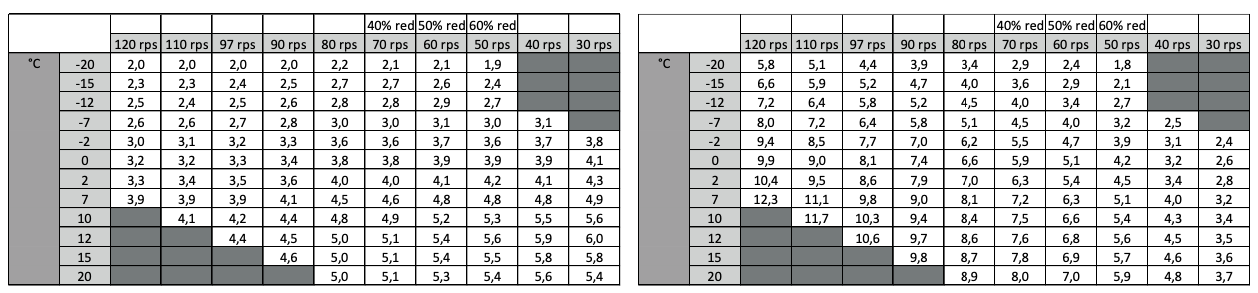
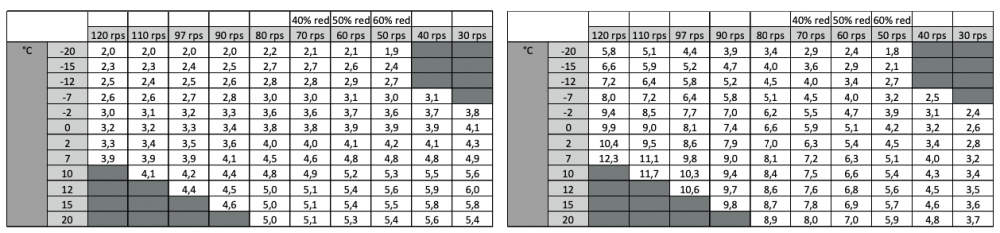
We have this one, also 7kW. Next size up is 10kW. We have it set up with the Vailant Hydraulic Unit (3-port valve, controller, diverter, backup heater) and a 25L non-vaillant buffer tank. They do also quote some COP figures in manual/literature, but I agree it is limited compared to other manufactuers. I have all the very detailed COP and power ouput data I found if you need it. The 7kW aroTherm gives you - A7/W35: COP 3.9 at 100% compressor providing 12.3kW output, COP 4.8 at 50% compressor providing 6.3kW output. - A2/W35: COP 3.3 at 100% compressor providing 10.4kW output, COP 4.1 at 50% compressor providing 5.4kW output. (No manufacturs quote COP at max compressor though, as the idea is that ASHP is sized to not need to run at full-filt.) Various other great manufactuers out there, but R290 does have some advantages in terms of range of operating temperatures and max flow temp.
-
Heating the Slab – an overview
Dan F commented on TerryE's blog entry in The House at the Bottom of the Garden
Four years on do you have any additinal findings worth reporting? Are you still using a model-driven "chunk" approach based on calculated demand, rather than any kind of slab/room thermostatic approach? Have you had to adjust the model to reflect actual losses and internal heat gains, or is there an implicit feedback mechanism in your approach due to testing UFH circulation temperature each night? I've added a heat meter to UFH circuit, so (once i've hooked it up via m-bus) I should be able to dump x kWh into the slab on demand by triggering heating and then turning it off again once the desired kW has been delivered. While this approach isn't neceaarily any more effective than getting the heat curve right and leaving things running all the time the advantage is of course the ability to use cheaper tarrifs. What I'm unclear on, and I'm unsure if you have touched on in your posts, is flow temperature. Clearly, if you need to dump x kWh in a certain time frame (and cheap tarrif means that lower COP is not consequential) then this will drive required flow temperatures, but there is also going to be a minumum flow temperature required based on i) output required ii) pipe spacing. What is your approach to flow temperature? -
Did you look at Tesla Model Y? There are arriving next month.. That is my understandng yes. Any charger pre-meter will use PV, but they'll be on/off, vs zappi which adjusts charge based on excess PV I beleive. EDIT: Oops, I thought we were in 2021 and e-Tron was still 1yr out, in which case MY wasn't available when you ordered.
-
Bean to Cup Espresso machine recomendations please
Dan F replied to dnb's topic in Kitchen & Household Appliances
I have a Prima Donna which worked flawlessly until until it packed up. I'm pretty sure it was because I didn't always use the descaler went it told me to though! The courier fixed-price repair service is interesting though, I'll have to give them a call on Monday. I've had it in a box the garage for a couple of years and have been drinking Bodum coffee instead, it's not the same though! -
If you are geting one installer to do UFH, fancoils and MVHR then have them calculate heating/cooling power available from each system and compare this to your heating/cooling demand. You can then, based on data, decide if the dual ASHP's and UFH + fancoils on both floors are really justified. Remember, with fewer systems, not only do you save on capital costs, but also avoid issues with: - Different bits of the system competing/conflcting (or would UFH only do heating and fancoils only do cooling?) - The need for, ideally, an uber-controller that controls all heating/cooling systems. - Additional potential maintance costs. - How easy will it be for anyone else to understand/operatre the system if for some reason you aren't around. Don't get by wrong, your proposal is fantastic and very comprehensive and I can already imagine how much fun it would be be to implement the uber-controller portion of this using Loxone! It's just that there are some downsides to putting so much kit in, and given the spec of your build, you are almost certainly going to find you only ever use a small percentage of installed capacity.
-
Yes. Only just moved in though, all heating is working fanastically, but haven't tested cooling yet. Anything specific you are interested in? Why not run some calcs (or get someone to run them for you) and get some real confidence on what you can/can't do without doubling up systems and spending 30k? You are right it's cheaper than retrofitting, but still lot more expensive that installing systems you don't need! You have already made a number of design choices (fabric/shading) that really limit how much heating/cooling you'll need, which is great, so do you really need a 30K insurance policy? People with overheating problems typically haven't considered shading/overheating at the design phase or haven't allowed for any active cooling. Others have allowed for active cooling on the ground floor, but find the first floor gets a bit to warm as they have minimal shading and/or no active cooling on the first floor. But if you design to avoid overheating (idealy calculate your cooling load based on design) and have one form of active cooling on each floor, then I think you can be confident you aren't going to have issues. If in doubt get someone else to run calcs too. If you still want an insurance policy, then run some pipes in ceiling voids for potential future water-based fancoils, and remember where they are, but don't put anything else in until you find you need it.
-
Your house is therefore very similair to ours, which also has 10W/m2 heating load, blinds on the majority of windows/sliders and a very low cooling load (given insulation + blinds). It all seems a bit overkill to be honest given the specification of the house. With such high levels of insulation and comprehensive shading, you should only need minimal heating/cooling, not UFH and fancoils on all floors. We have: - 305m2 (two floors) - Single 7kW ASHP - UFH on ground floor. - MVHR heat-battery for supplementary heatng/cooling on the first floor (fancoils not justified given all first-floor windows have blinds). This was based on PHPP and an M&E consultant who calculated UFH cooling power (considering dew-point) as well as heating/cooling output of heat-battery vs. required based on PHPP which gave me confidence this was enough. As an example: our cooling load was just 335W. Given UFH is able to supply 3.6kW of cooling (considering dew point) and heat-battery able to supply 1.1kW cooling to first floor I was happy no additional cooling was required. Also, given minimal heating/cooling it was clear that a single A2W ASHP was enough for everything.
-
Heat Pump decided not to come on last night
Dan F replied to AdyHoggs's topic in Air Source Heat Pumps (ASHP)
I was hoping they would have Modbus interface by now, for interfacing with Loxone with no internet or Vaillant server dependencies. They marketed one 18mths ago when they launched the new range of controllers, but nothing.. -
Certainaly very belts and braces! Unless the house is not particuarly well insulated and no shading? Any summary info on the build relating to heating/cooling load, insulation, shading etc.
-
Heat Pump decided not to come on last night
Dan F replied to AdyHoggs's topic in Air Source Heat Pumps (ASHP)
Agree, very useful. But the server must be hosted on a x486 somewhere far away, from the responsiveness of the app. -
You don't need to use it (unless you want to know what flow-rate is for some reason). These are typically used for manual balancing, but this isn't required with these.
-
Yes. You could use them constantly on if you aren't using zones (we aren't), or they can be used instead of standard zone actuators and will balance when on. "The actuator has two remote sensors which are clipped onto the flow and return floor heating pipes from the manifold (16mm pipe only). These sensors are constantly monitored and the actuator will adjust the flow rate to maintain a Delta T of 7°C for the UFH circuit." https://salus-controls.com/uk/product/thb23030/ https://www.wundatrade.co.uk/shop/home/quick-shop/wundatherm-quick-shop/controls-quickshop/actuator-auto-balancing/#
-
You are correct, and it's also true that the energy transferred to UFH (as a system) is a function of delta-t and flow rate, not the temperature in itself. What I said that was erronous was regarding "less time for energy to transfer to the slab". That said, high flow rates do impact the energy transfer to the slab, but this isn't due to time, but rather due to reduced temperature difference between water in pipe and the slab (assuming constant ASHP output).
-
Is a cooker extractor necessary with MVHR
Dan F replied to SBMS's topic in Mechanical Ventilation with Heat Recovery (MVHR)
We have the same one, it actually also has a seconday (carbon?) filter too which can be changed. Do you have a recirculating kit and/or vent in plinth or does it just extract into void behind cupboards or island? Ours has been set up to extract into the void in the middle of the island.. -
Assuming higher pump speed implies higher flow rate, then there is more energy in flow to UFH, yes BUT a higher flow rate also means less time for energy to transfer to the slab and a higher return temperature. Energy transfer to the slab is a function of delta-t (between flow and return) and flow rate, not the temperature in itself. A high return temperature and low delta-t can be indicative of a flow rate that is too high, preventing sufficient energy transfer to the slab. This is where the Salus actuators various people on the forum use come in handy, as well as acommodating runs of different lengths without requiring manual balancing. Our recent install had this issue as the installer did the bulk of the work before Christmas, but didn't install the Salus actuators and left all UFH ciruiits fully open and 2 pumps on maximum so eveything was working like crazy, but slab wouldn't heat up. Playing around with things over the new year, I reduced pumps to minumum and manually adjusted the UFH loops down to 1L/min each and now works great with approx 7C delta-t.
-
We have had one of these supplied and installed along with our UVC (Mixergy). Couple of issues I'm seeing though: - The hot static pressure is restricted to just under 3 bar, but the cold is 2.4 bar (aren't they suppoed to be balanced?) - The dynamic pressure through the PRV is signficiantly below the static pressure. The cold, for example, drops from 2.4bar (static) to 1.6bar (dynamic) at just 6.5L/min when flushing a loo. (Our mains supply is a new 32mm connection specificed for 1L/s with static pressure of 5bar and a dynamic pressure, at 12-15L/min, of 4.5+ bar) Is there an alternative approach or product(s) that would allows us to get closer to 3 bar dynamic pressure at shower flow rates (12L/min)? I read somewhere that a PRV that limits dynamic pressure to 3 bar is not suitable, as the static presure can creep up and this is an issue, is that correct? The reason this is aa concern is that we are only getting 1bar at first floor shower mixers and therefore flow rates are approx 7L/min rather than closer to 12L/min I'd assumed we'd get based on calculated losses and shower PQ chart.
-
Some HA bits to give away for freeee (KNX/Dali/modbus)
Dan F replied to joth's topic in Networks, AV, Security & Automation
It was really quite easy to get working with simple dimming and everything you need code-wise to do it is available online, I just haven't hooked it up to our install yet as we only recently moved and so ground floor lighting is all on a relay for now It was tunable white, which uses the more complex DT8, that needs more coding to get to work and expose via an API from Pi. Expensive as it is, the Loxone DALI extension achas an issue with DT8 anyway, with some devices at least (including the EldoLED drivers we are using for LED's); if a device supports both DT6 and DT8, rthen ather than use DT8 or let you choose, Loxone fails to recognise the device type at all! -
Some HA bits to give away for freeee (KNX/Dali/modbus)
Dan F replied to joth's topic in Networks, AV, Security & Automation
Maybe there are others trying to the same, but those two questions are me! ?