Dan F
-
Posts
1431 -
Joined
-
Last visited
-
Days Won
2
Everything posted by Dan F
-
Ecodan taking 30min to switch over from DHW to heating
Dan F replied to joth's topic in Air Source Heat Pumps (ASHP)
I really doubt there would be support for running DHW/UFH at the same time, but may be wrong. The change over times seems like a question for Ecodan technical support, I can see why it's fustrating though. How are you triggering UFH? -
Attempting a straw bale, off-grid passive house in Somerset
Dan F replied to Smallholder's topic in Introduce Yourself
PV*SOL is very comprenshive and includes all specs for panels, batteries etc, it even takes into account historic temperature to adjust panel ouput using temperatuer coefficient as well as the difference that balanced/unbalanced strings have on inverter efficiency based on specific inverter spec. I didn't use it for an off-grid set-up, but looking online it does support this as well as load-shedding and configuring of backup generators etc. https://help.valentin-software.com/pvsol/en/calculation/offgrid-systems/ Your guys software may be fantastic, but I'd personally validate with PV*SOL too before you go out and build the system. Ouch! -
Attempting a straw bale, off-grid passive house in Somerset
Dan F replied to Smallholder's topic in Introduce Yourself
Compeltly understand if the connection cost if prohibitive, I'd get a quote to make sure though myself. What doesn't make sense for me is going off-grid solely due to the idea of it.. What is the modelling software you are using by the way? PV*SOL is fantastic and will be able to model this minute-by-minute, the only caveat is that for it to be accurate you'll need to set up your own load profiles manually as using a static x kW/day isn't realistic. Creating a load profile before you live in the house is also a challenge. -
Attempting a straw bale, off-grid passive house in Somerset
Dan F replied to Smallholder's topic in Introduce Yourself
It's not restrictive at all in terms of appliances. The spreadsheet does include consumption values for household appliances which it takes into account in the PER calculation, but unless you are aiming for PH Plus or Premium this is complelty non-consequential. MVHR needs to be PH certified I believe, but no other items need to be PH-certified, just your total heating demand and airtighness need to be within certain limits. That said, using certified components can make the paperwork a bit easier. I'm not sure what the concern with appliances is? BTW, why is off-grid important? Do you have a not have, or can't get, a grid connection? If you think about it, if you don't have a grid connection then you'll want a large PV arrary to cover as much as possible of winter electicity demand. Even if you have a large array it'll be very hard to cover all winter electricity demand and you'll probably need to need to generate electicity in some way in the winter (wind turbine or burning fuel or some sort etc.). The other issue is that in the summer you'll have a huge amount of excess generation that you won't be able to use of export!! In my view off-grid makes sense if a grid connection isn't possible or if you are building yourself an interseasonal store, but otherwise best to have the grid connection and think that in the summer you are exporting green energy to it, and in the winter you are importing a lot less (ideally green) electicity, than you exported in the summer making you a net exporter, helping greenify the gird and making a small amount of money too. -
We had our 3-phase supply moved an additonal 15m or so and paid £490+VAT a couple of months ago. Ask them to provide a breakdown. They publish standard fees on their website of £230-£410. 3-phase is probably more based on what we paid, but not much more.
-
In our case we had a bit of a mix: M&E Spec: We used a consultant (same people we are using for passive house) for mechanical spec based on requirements. This included heating/cooling demand calculations and recommended heating/cooling strategies as well as ventilation approach etc. This also covered gas vs. GSHP vs. ASHP etc. UFH Design: Timber frame supplier designed layout this but I validated this, and proposed increased 200mm spacing, using the heat loss figures in M&E spec and a LoopCAD model. MVHR Design: Supplier (same comapny as M&E Consultant). ASHP/UVC: Supplier (same comapny as M&E Consultant). I specified ASHP/UVC brands and have pushed for certain things like mixed heating circuits and monitoring. Hot/Cold Water: M&E Spec included indicative drawings for plumber, but I redesigned this myself to avoid recirculation loop using manifold approach discussed on forum and to the plumbers annoyance specificed manifolds and pipe sizing for each run etc. PV/Battery: Supplier. I specified 3-phase and chose panel/inverter manufactuer. Electrical: Have just left this to electricians, but have double-checked voltage drop on LED runs and had them replace things.
-
SolarEdge are about to launch there own new DC-coupled battery, there is already information available online. AFAIU, DC-coupled batteries won't give you any grid backup, I might be wrong though. In terms of Storedge, I haven't lokoed into this but windandsun sell kits which might give you a better idea of whats needed: http://www.windandsun.co.uk/products/Inverters/SolarEdge/StorEdge-Battery-System#.YYLp6dbP1T4 I have full access to our inverter, just need to flick the switch on the front on the inverter and connect via the mySolarEdge app. What issues/errors do you see?
-
Confused on electricity supply needs and ASHP
Dan F replied to pstunt's topic in Air Source Heat Pumps (ASHP)
I agree with @Conor that you should make sure you definitely need 16kW. Get some more quotes if required from reputable suppliers who'll do the heat loos calculations if possible. If you do need to use 16kW, it looks like that that Panasonic model is rated 26A and is available in a in single-phase version. Is the proosed supply 100A? If it is then 16kW ASHP will be fine, just as long as you 74A is enough for everything else you need. -
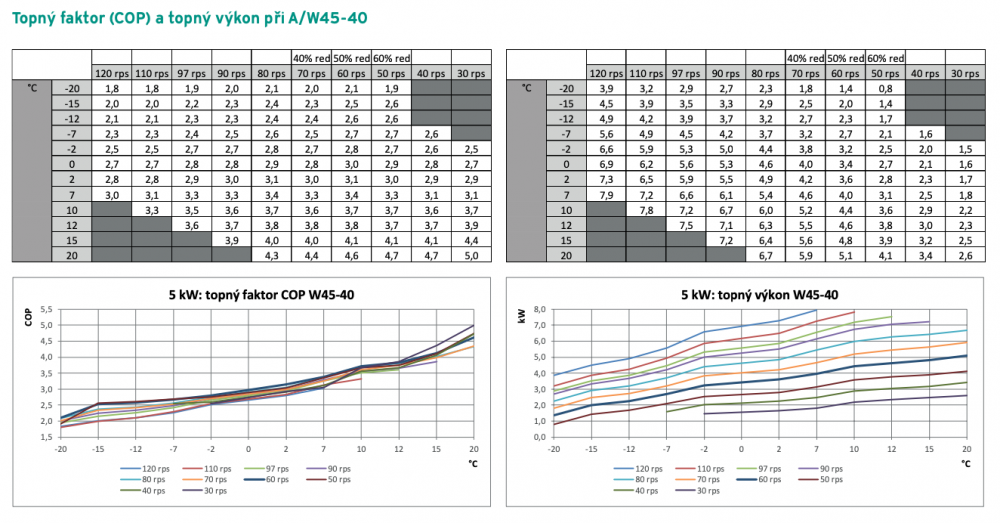
No, as COP (coefficient of performance) is 3->4. See the table on the left). I think you're safe to assume around 3kW in the winter and closer to 2.25kW in the summer. (Assuming arotherm plus monobloc)
-
The one caveat here is that the ASHP power also depends on i) outside temperature ii) what mode the heat-pump is in, and iii) the flow temperature (which increases as the tank heats up). The 5kW specified is just nomimal. We are also having a Vaillant ASHP installed (7kW aroTHERM Plus) and I had exactly the same query so I have the datasheets and found the following: - The Vaillant aroTherm Plus's comes, from factory, configured to run in "eco" mode for DHW which means 50% compressor speed. This can be disabled. - The power output of the 5kW model (eco mode) at 2C external temp is 3.6kW. - The power output of the 5kW model (max mode) at 2C external temp is 7.3kW. The same datasheets quote a time for heating a Vaillant 188L tank from 10-40C as 57 minutes. That would imply approx 1hr 12min for 48C. (they don't specify external temperature or DHW mode, but it seems fairly obvious that this is not eco mode.)
-
CAT7 is recommended, but there is no reason why you can't use CAT6. Screened CAT cable is ideal for 1-wire bus, but not needed for anything else. The special cable you mention is "tree cable" which has 6-cores and including 2x1.5mm2 for 24v supply. You only really need this is you are using Loxone's own 24v lighting, and even then you have to be careful with voltage drop. I haven't used tree cable anywhere; i) not using loxone lighting ii) it's more expensive iii) CAT6/7 has more cores for more sensors. If you wanted to keep costs down, but still want great designer and great app you could look at using a Miniserver Go and have that do HTTP calls to sonoff/shelly relays and/or talk to LOGO modules via HTTP too. I know I'm already sold on Loxone, but there is fair amount of value IMO of having a very good central controller/designer/app.
-
You can limit the cost by not buying the Loxone-branded light switches and motion sesnors and sticking to basic push switches and cheaper motion sensors. What Loxone does give you is a lot of breadth of functiinality (albeit some with costly extensions), a great design tool and a nice app that is easy for anyone to use. I wouldn't say Loxone wiring is complex, depends what you want to do with Loxone. Another alternative is to do something Raspberry Pi based and/or use Shelly's for relays.
-
Have a look at https://www.unipi.technology/ too. Is Siemens LOGO cheaper than Loxone or does it have advantages?
-
We are using this one, comes in various colours and 4 finnishes: honed, natural and two others designed for outdoors. Most tiles typically have multiple finnishes. https://www.cottodeste.com/collection/limestone
-
In our case SSEN quite happily installed a 3-phase supply onto the ply backing, but when it came to the supplier installing the meter they point blank refused to install it without a fire-board behind it. They returned the following week with a small board which they put behind their meter.
-
Is Air Source taking over from Ground Source?
Dan F replied to GLPinxit's topic in Ground Source Heat Pumps (GSHP)
There are a couple of situations where I'd consider a GSHP: - If I lived somewhere a lot colder than the U.K. (the improvement in efficiency between ASHP and GSHP is greater the colder the climate) - If I has a large property that isn't particularty well insulated. (higher usage in this case means the improvement in efficiency will give a shorter ROI) But otherise, ASHP. -
Well, I think we'll put a tank and controls in anyway, the idea being garden looks after itself a bit more. So I was only looking at the additional cost of larger tank (7,000l) and additonal associated excavation/muck-away vs. 3000l accumulator + additional filters etc. But the large tank, if I've modelled it correctly, would only save £50/yr mains water as when you need to irrigate it typically hasn't rained, and a 7000l tank only lasts a few days in the middle of summer. Will look into this, thanks!
-
Has anyone done modelling of any kind using past rainfall and evapotranspiration data to determine the ROI for differing sizes of rainwater havesting tank vs. a small mains accumulator. I've found some fairly local past data for 2020 [1] and some interesting theory [2] that details a method that can be applied to model this. For now I'm using a basic approach with a fixed number of mm irrigation per day, depending on the month (rather than simulating a control system that irrigates based on soil moisture/rain) but initial results show water usage of 360m3/yr with a small mains accumulator and 330m3/yr with a large 6800l tank. If this is correct, the ROI is something like a couple of hundred years and that's ignoring additional maintaince to cleare/replace filters. [1] https://crondallweather.co.uk/daily-monthly-and-seasonal-evapotranspiration-statistics-for-crondall/ [2] https://agriculture.vic.gov.au/__data/assets/pdf_file/0008/577025/What-is-evapotranspiration-and-how-do-I-use-it-to-schedule-irrigations-Tech-Note.pdf
-
Why not use a limestone-effect porcelain? We are using this on most of the ground floor inside, outside and in one bathroom.
-
Did you attempt to calculate ROI and how? Was this for house or just the garden?
-
Yeah. Although if you know you have automated blinds in any rooms likely to have any significant solar gain then this limitation is less of an issue in my opinion. That said, I would have done the same and not got PHPP if I'd already paid someone to do thermal modelling and wasnt certifying.
-
Ask them if you should get 30kW heat pump based on this, see what they say. Enhabit couldn't do this? Not sure how much you paid, but might have been worth getting PHPP.
-
UFH controls - conventional or home automation?
Dan F replied to Hilldes's topic in Underfloor Heating
We've already insulated our first-floor MVHR manifold and pipework so will be running two circuits with different temperatures. We have overhangs and loxone-automated blinds, but MVHR cooling is our only active first-floor cooling (no fancoils) so we wanted to ensure we could, if really required, run it at 7C. Yes, that was all a given, although it would be interesting to understand a bit more about your approach, before I start programming our setup. Have you shared this anywhere? What I was trying to work out was what, if anything, you were doing with you heating system aside from callling for heating/cooling and letting Nibe do it's thing. It seems you are: - Doing the no-heat UFH recirculation when required. - Manually controlling the circulation pumps, rather than letting Nibe fire these up automatically when you call for heat, to enable you to accumulate heat in the buffer without heating the house and then heat/cool the house from the buffer later. Both great ideas! I might try to twist our ASHP installers arm to enable the UFH recirculation, but in my case the buffer we are using is only 25L so it makes sense to juat call for heat and let Vaillant do everything including manage the buffer temp, run circulation pump(s) and adjust heating circuit temps based on configured min/max temperatures and heating curve. -
Wow! Agree, that doesn't seem to make much sense! Did they tell you what method they used for this or what their assumptions and inputs were? Are they considering MVHR (on summer bypass), opening of doors/window? What heat inputs are being used (people, cooking, UVC/recirculation losses)? Our PHPP calculation gave 1.1W/m2 (4.2W/m2 without blinds). We do have 750mm overhangs and a large canopy on south elevation though.
-
UFH controls - conventional or home automation?
Dan F replied to Hilldes's topic in Underfloor Heating
Don't you run your MVHR HEX below dew point, or do you have a single circuit running both at 14C? That makes sense. So really, while you have the relays in place for the different pumps/valves, the only thing you are currently doing from Loxone (aside from determining heating/cooling demand) that adds value on top of what the ASHP controls already does is the UFH circulation thing?