


Conor
-
Posts
4165 -
Joined
-
Last visited
-
Days Won
12
Everything posted by Conor
-

Posts for raised decking: timber or plastic?
Conor replied to Lift span's topic in Landscaping, Decking & Patios
I did my brother's deck of similar size with 100mm posts. Spaced them at 1200mm. No issues. -
I'd sooner keep the larger diameter and forgo the insulation on any tight sections rather than drop the diameter down.
-
Anybody? Maybe @dpmiller
-
Block and beam for timber frame aiming for passivhaus
Conor replied to Barny's topic in Timber Frame
There are various options, structural insulation, lightweight blocks, insulation upstands etc. Should be something your architect / PH designer can specify and update drawings accordingly. -
How should I finish my flat roof against a neighbouring property? Help please!
Conor replied to WillH83's topic in Flat Roofs
You 100% want to remove the facia etc and run the GRP / trims up and under their roof felt. -
Buying a house without a new build warranty
Conor replied to oksleator's topic in New House & Structural Warranties
Ask your broker to search for lenders on a 3 year new build with now warranty. Ours searched to find lenders that didn't require a warranty. Weren't that many, but from memory Virgin didn't require one. We went with Bank of Ireland. -
Hi. Electrics is not my forte. I've a mate coming round on Thursday to help me wire it all up. I've a Deimos AC 600 unit that came with the gates (Czech brand). I've all the ducting in place, ready to pull cables. First question, what type of cables do I need? I have Screwfix, B&Q and CEF locally. 1.5mm 3 core? 0.75mm 2 core? Coax? Or 5 core 0.75mm for everything but the AC supply/Coax? the 3core 1.5mm is the 240v AC supply. Everything else is 24v. I assume for the 2x1.5mm on the drawing I just use a three core and leave one wire off? The section of 5x0.75mm doesn't make sense to me. Second. Where do I get Black/Blue/Brown/Red cable from? Is Blue/Brown/Earth OK instead?
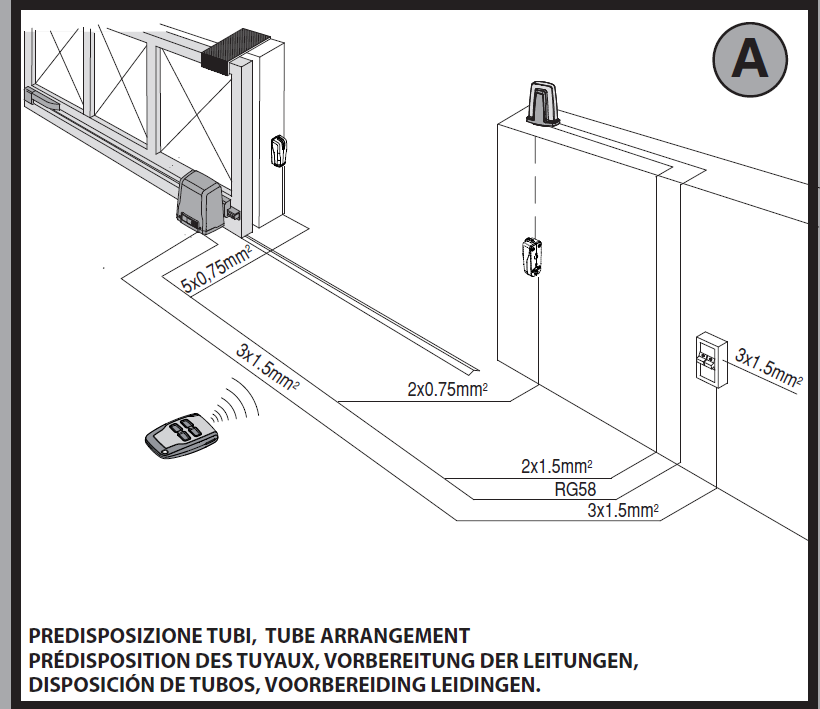
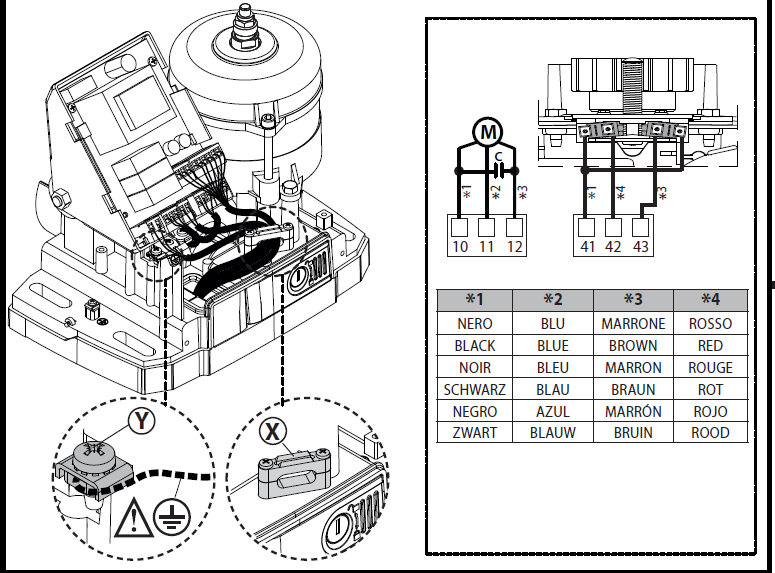
-
yes, really worth it. Don't suppose if you know if they left a benchmark anywhere? Should be noted on the drawing. Usually a nail in a hard surface or a peg in soft. Handy for future setting out and a handy reference point.
-
ASHP pipework in floor below the insulation - any guidance?
Conor replied to AAA's topic in Air Source Heat Pumps (ASHP)
It should be relatively easy to unclip the pipes, put 50mm insulation down, clip them down again, then lay the remaining insulation. It's minutes of work. They just want to get the job done and be gone. -
Drilling through a brick pier
Conor replied to Steve1309's topic in General Self Build & DIY Discussion
No way you're getting this done with a normal hammer drill. What diameter is the pipe? If it's 32mm, you'll want a bigger hole. Hire a core drill and appropriate sized bit for the weekend. -
Doubt it. Just pull through a couple more cables through your duct when installing the EV charger and install an external socket where needed.
-
Neighbour roofers changed our tiles and moved bonding on our roof
Conor replied to alman's topic in Roofing, Tiling & Slating
Don't be speaking to the roofers. It's the responsibility of your neighbour to ensure work is done correctly. There is no way re-slating with composite slates falls under permitted development. Say this to your neighbour that not only is the work not good enough, but that they are likely not compliant with planning or building control. Give them the opportunity to set it right. High chance the roof will need to be completely redone with natural slates... Gonna cost them a lot so tread gently -
Neighbour roofers changed our tiles and moved bonding on our roof
Conor replied to alman's topic in Roofing, Tiling & Slating
Don't suppose you are in a conservation area or other historic protection area? I'd say local planning authority might have something to say about ripping off 150year old slates and replacing with composite. What happened to the slates they removed? -
Pay the deposit when they show on site.
-
Self funding a new build. Should I have a warrantie?
Conor replied to Norbert's topic in New House & Structural Warranties
We didn't get a warranty, tho the basement tanking, flat roof and actual roof structure have their own manufacturers warranties. And we were able to get a mortgage OK with and no warranty or other documentation. Just very few lenders on the market have lax criteria like that. Three in fact. -
I had this issue on our balcony but our SE said no way to trimming. Had to double batten under the rafters to hide the offending bolts.
-
Could stuff the void above the tank with a bit of mineral wool insualtion.
-
Couple coats of whitewash. It's what my brother in law uses for his glasshouses and tunnels during the summer in his horticultural business. Rain eventually washes it off.
-
We have the same blinds. Have the slight issue where they sit out a few mm. It's all because modern PVC windows have a thinner profile than old school ones, which is what they seem to have designed their products around.
-
Sorting drainage between patio and house
Conor replied to Sparrowhawk's topic in Landscaping, Decking & Patios
Good call ditching the membrane, it's basically a silt trap and causing the mud to build up. -
Finishing basement (screed + UFH) - advice needed.
Conor replied to Paene Finitur's topic in General Flooring
It's fine. It's not as good as direct fitted or 2mm foam, but we've certainly not had any issues heating or cooling any spaces. Yes, cut back the excess insulation. -
Finishing basement (screed + UFH) - advice needed.
Conor replied to Paene Finitur's topic in General Flooring
Laminate on 5mm wood fibre underlay would be your best best. Toughness of laminate and the wood fibre is very forgiving on an uneven floor and adds a bit of softness. We have it thought out our ground floor and it's great. -
Stick the cable in now regardless, very little cost, and means when you need a charger in the future, it'll be an easy install.
-
Worcester Bosch Combi GSHP PV Eddie integration.
Conor replied to gustyturbine's topic in Ground Source Heat Pumps (GSHP)
Do the calculations on this. What tariff are you on? How much hot water do you use? Can you get paid for exporting? How much money will you actually save Vs heating off peak using the heat pump? In my case, does not make economic sense to use a diverter. -
Chinese Slates or Reclaimed Welsh Slates or Clay Tiles?
Conor replied to JamieK's topic in Roofing, Tiling & Slating
Pretty much all you need to know. Welsh will be 5x more expensive than good quality Spanish. Either will outlive you.

