
Radian
-
Posts
2586 -
Joined
-
Last visited
-
Days Won
15
Everything posted by Radian
-

Thermal bridge of vertical metalwork
Radian replied to MattMiller's topic in House Extensions & Conservatories
Obviously that's your call. Seeing as how you're not so confident perhaps you should bring in a builder and discuss the idea. It always looks simpler from afar, but it's quite a modest alteration IMO. If you plan to live here for the long term you need to sort this nightmare extension out and do it in a way that gives the charm back to the house (it's still quite charming from most angles!). -
Using a PV energy diverter to heat a hot water tank.
Radian replied to Marvin's topic in Electrics - Other
@billt @NSS I get all the wise words of caution and I agree wholeheartedly. I do design commercial products so do have a grasp of the costs involved. The key factor, as ever, is the volume of production. The solar market is relatively small but there are still over one million homes in the UK with installations and almost all could benefit if the upfront cost was low enough. With a stable design, 10% of that market would still yield sufficient economy of scale to align the margins with many other low-volume products. If it were my product, it would be the biggest selling line by a long stretch. One fact that may not be so obvious is that a product's profitability is massively dependent on its reliability. The friction of handling customer returns and warranty claims can soon erode the financial viability of a line. Companies can easily fail through the snowballing results of poorly considered engineering. The origins can usually be traced back to the decision to put too much investment in advertising to the detriment of design and testing. As for a DIY step-by-step guide that could democratise the ownership of PV diverters, to save going off topic, I've started a new topic to discuss the prospects here. -
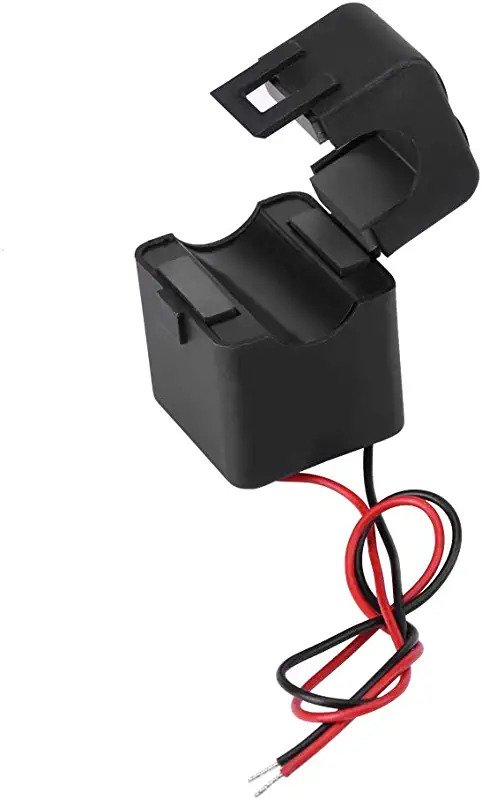
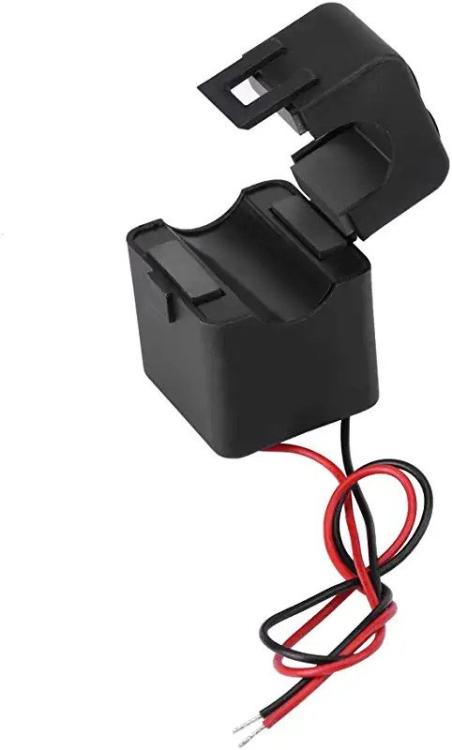
@billt @NSS I have started this new topic In response to a discussion going off-topic about the prospects for there being a step-by-step guide to constructing a DIY solar PV diverter suitable for almost any skill level, using off-the-shelf modules. In trying to think up a design I concluded that if there was a plug-in Tuya style SSR with low-latency, zero-crossing switching packaged with a 13A three-pin outlet (yes I know the 13A problem here but hold on...*) then anyone who can put a 13A plug on the immersion lead could do the heavy electrical installation work without calling on a sparks. The rest of the device could almost be achieved with a few more plug-and-play parts and a software download. A Raspberry Pi Zero W with an Audio Bonnet is very close to providing the remaining hardware along with a CT clamp and AC transformer. These sources would be sampled by the audio interface to measure current and voltage at the meter tails. Galvanic isolation is provided by the CT and transformer and WiFi connectivity provides the remote switch. The almost caveat is entered around how to get the signals from the CT and AC transformer into the line level audio inputs without relying on soldering skills and external components. If these obstacles could be overcome, what we would end up with is a two-part unit with remote switching (so the export measuring can be separated from the immersion location) which is at the more premium end of the commercial offerings costing around £500 - for something more in the region of £50. All firmware could be baked into an ISO image and written to the SD card for turn-key operation using the Raspberry Pi foundation's application. All comments welcome. *As for how a full 3kW load could be safely plugged in to a 13A socket, the load switching would deliberately not be continuous - so in the same way we can plug in a 3kW kettle which only boils for a couple of minutes (try repeatedly re-filling and boiling a full kettle and see how hot the plug gets) the load can be de-rated to an arbitrary degree. 2kW being common for domestic appliances and secured with a 10A fuse.

.jpg.c7966d4fd84f74aefda1f984b1476d43.jpg)
-
The mould spores penetrate the plaster surface to the extent that even bleach cleaning may not eradicate it entirely. It then regrows when fed with damp. Which is why it comes back if just painted over with ordinary emulsion which remains vapour permeable. Vinyl emulsion is better at sealing the surface but the Zinsser products are far better. There's two applicable products: Zinsser 123 which is what @Temp has used as a base coat, or Zinsser BIN which is has a shellac base. This one is the harder to apply but gives an impenetrable coat if the mould has really got a hold. You're probably going to find Zinsser 123 base coat and Perma-White the best option if the mould isn't too bad. A wipe down with a mild bleach mould removing cleaning agent to begin with followed by base then top coat.
-
Using a PV energy diverter to heat a hot water tank.
Radian replied to Marvin's topic in Electrics - Other
It sickens me how much the commercial offerings cost when you and I can knock something like this up for a few quid. I've been wracking my brains for a way to guide anyone how to safely assemble a diverter using "near" off-the-shelf parts but the main stumbling block seems to be a plug & play 16A (or better) ZC SSR module packaged like a shelley or tasmota. -
If it's to paint over an affected surface Zinsser BIN is supposed to be good as it's shellac based. I've only used it on timber as a knotting barrier. Not particularly easy to work with but the results are tough. I've read it's good for going over mould.
-
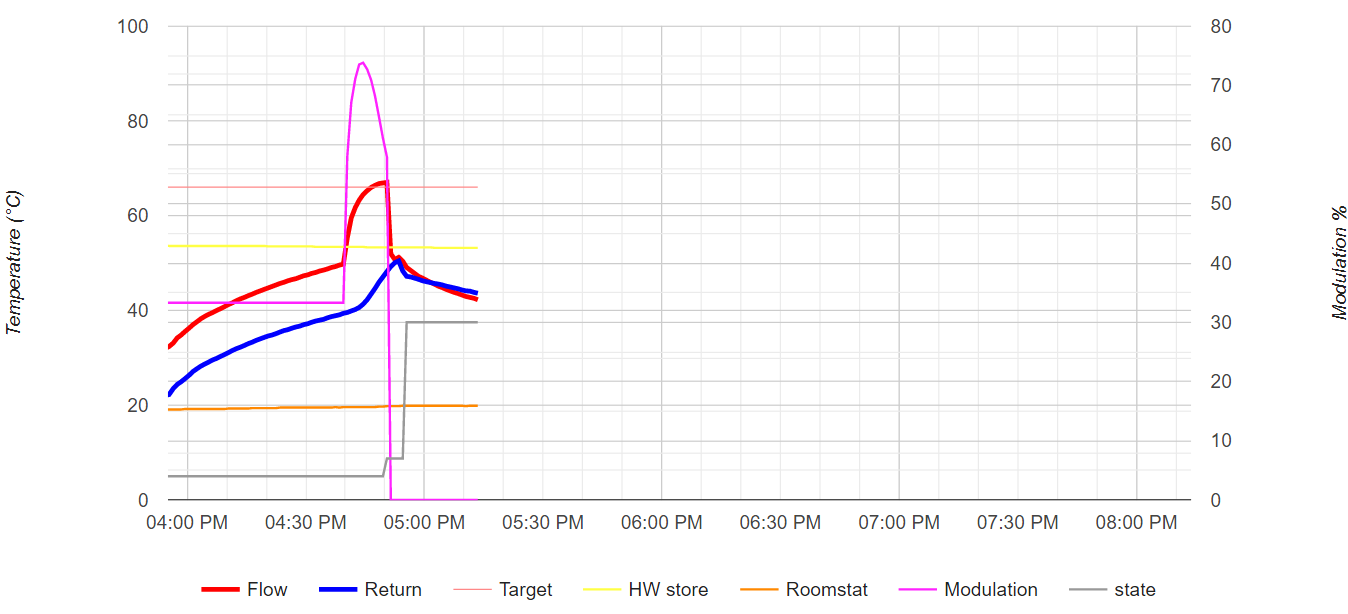
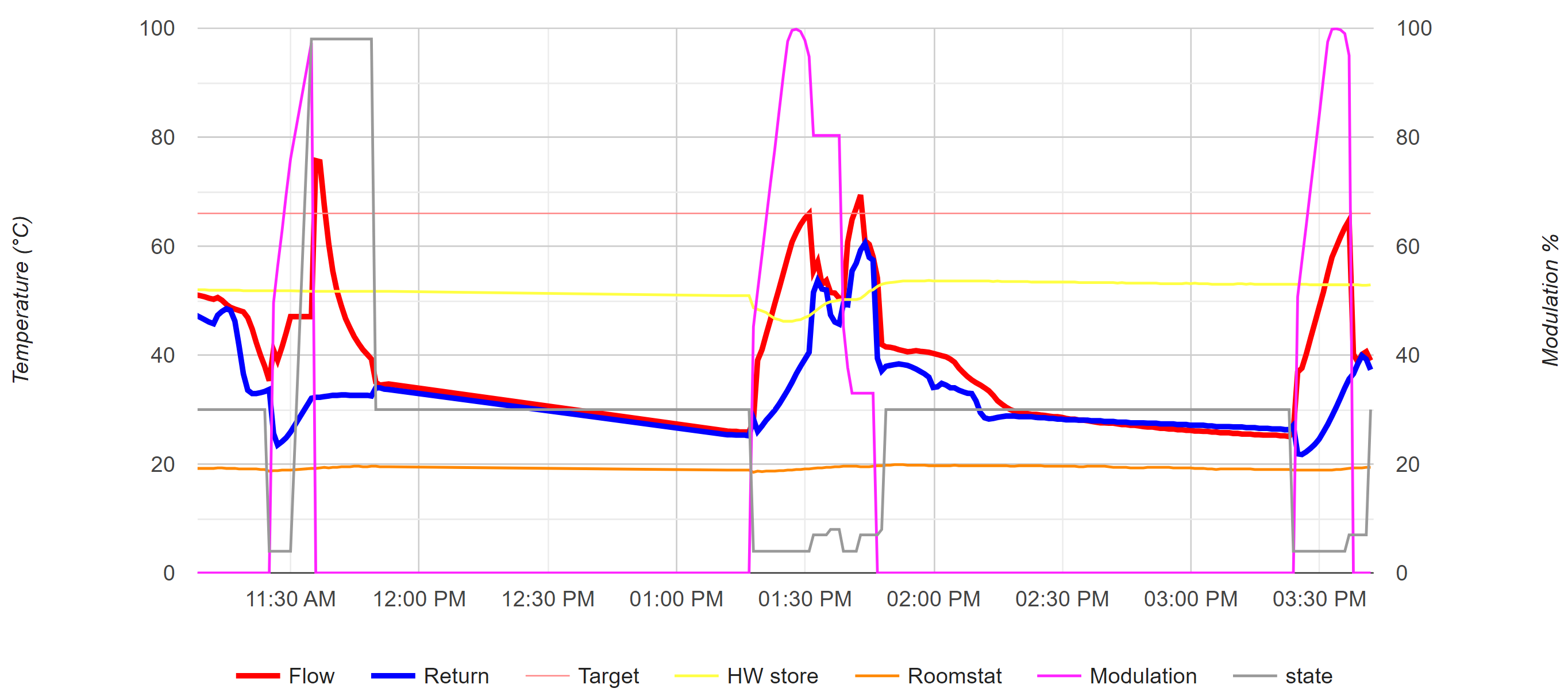
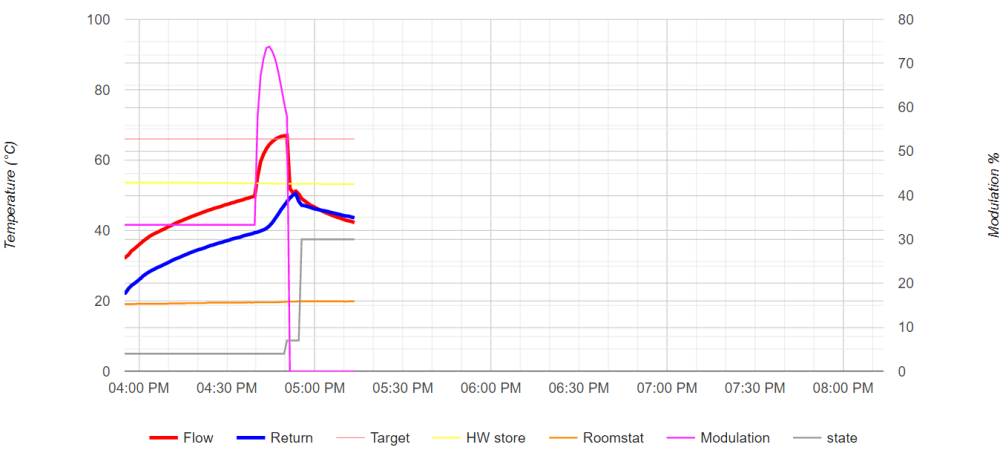
So yesterday I tried writing the PartloadHCKW parameter over ebus and despite it being listed in the installer menu as one of the few writable parameters (range rating d.00), it was having no effect (something I've seen repeated although not for the reason given ) other than being read back as if it had changed. Going into the physical menu proved it hadn't. However, today I tried again and this time I'd set the range rating in the physical menu to the 10kW minimum to see what effect it would have and, for no good reason other than to prove it didn't work, I used ebus to write it back as 30kW (expecting it to be ignored). Also I set another parameter FlowsetHcMax to 50oC which was suggested as being another way to control the flow temperature (the boiler flow temperature was set to 66oC on the boiler front panel). This gave me a very unexpected result: Modulation starts out and stays at the value I set it to in the physical boiler interface and the temps steadily increase while I wait with baited breath to see what happens when the flow temperature hits 50oC. I expected the boiler to shut off. I did not expect the modulation to jump up to 90% and carry on past the FlowsetHcMax value! It's as if the boiler double-checked the range rating setting when flow got to the max and found the 30kW I had written over ebus and carried on to the 66oC set on the boiler panel. I know this stuff will be very uninteresting to most but I'm logging this partly for my own reference.
-
Took the kick boards off - how am I going to seal this up?
Radian replied to Sparrowhawk's topic in Heat Insulation
There should be some insulation down there, the max U-Value for floors in 2001 was 0.51W/(m²K). Ours was built 1997 when the requirement was 1.2W/(m²K) yet the builder laid 50mm XPS over the block & beam. Wish it was PIR. And 100mm thicker. -
Took the kick boards off - how am I going to seal this up?
Radian replied to Sparrowhawk's topic in Heat Insulation
Is that a hard plastered wall that stops short of the floor or dry-lining? -
You can get condensate pumps that will allow you to route the drain along with the refrigerant and power lines.
-
Building Regs for bedroom gallery balustrade
Radian replied to Andeh's topic in General Self Build & DIY Discussion
Yes, BCO wanted to see those but didn't comment on the securing method. Probably not acceptable in an earthquake zone but if the building accelerates fast enough to jump these out it's going to be the least of your worries. -
Insulating under block and beam floor with perlite
Radian replied to Patrick's topic in Heat Insulation
Level ground and build up external wall. With Superbead there’s no need for vents. That's very interesting. The gut feeling I had might be right after all. Desperate times... 😅 -
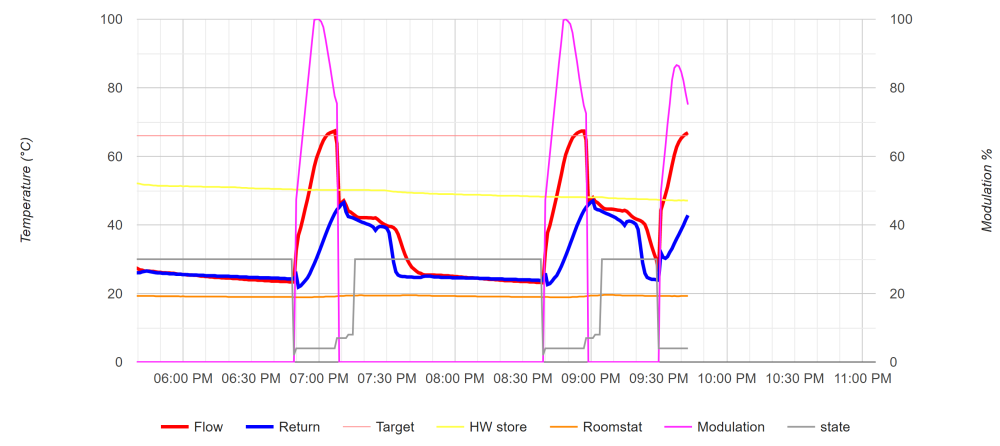
I appear to have read/write authority over all the parameters. How the boiler responds to the ones that are read-only in the installer interface is yet to be determined. But range rating can be changed from the panel. I'll have a go at range rating it to 15kW over ebus: pi@ebusd:~ $ ebusctl read -f -V -c bai PartloadHcKW bai PartloadHcKW power=30 kW [Heating part load] pi@ebusd:~ $ ebusctl write -c bai PartloadHcKW 15 done pi@ebusd:~ $ ebusctl read -f -V -c bai PartloadHcKW bai PartloadHcKW power=15 kW [Heating part load] Hmm, while the ebus interface reads it back as 15kW, the physical interface still shows 30 and the results are not convincing either way: It certainly exceeded 50% when I got it to fire up just a short while ago, so not very promising. I shall leave it collecting more data. I hope I have better luck with emulating a controller that adjusts the flow temperature.
-
Building Regs for bedroom gallery balustrade
Radian replied to Andeh's topic in General Self Build & DIY Discussion
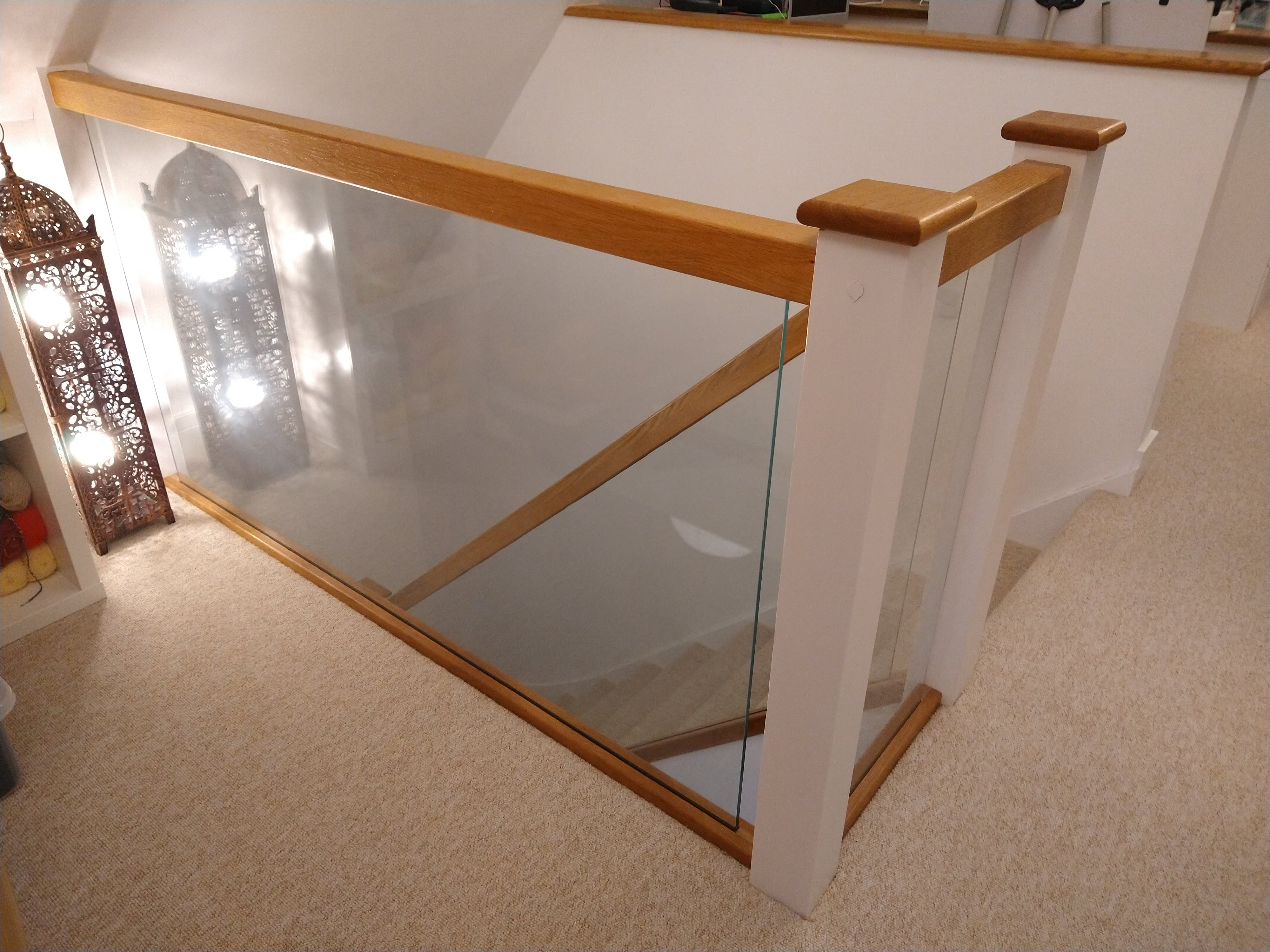
Ah, it's only a crawl space! Storage with a view I guess? I wanted an unfussy glass balustrade so got channels routed into some Oak for the base and handrails. The glass was slid up into the handrail then dropped down into the base rail. Gravity and a rubber gap filer does the rest.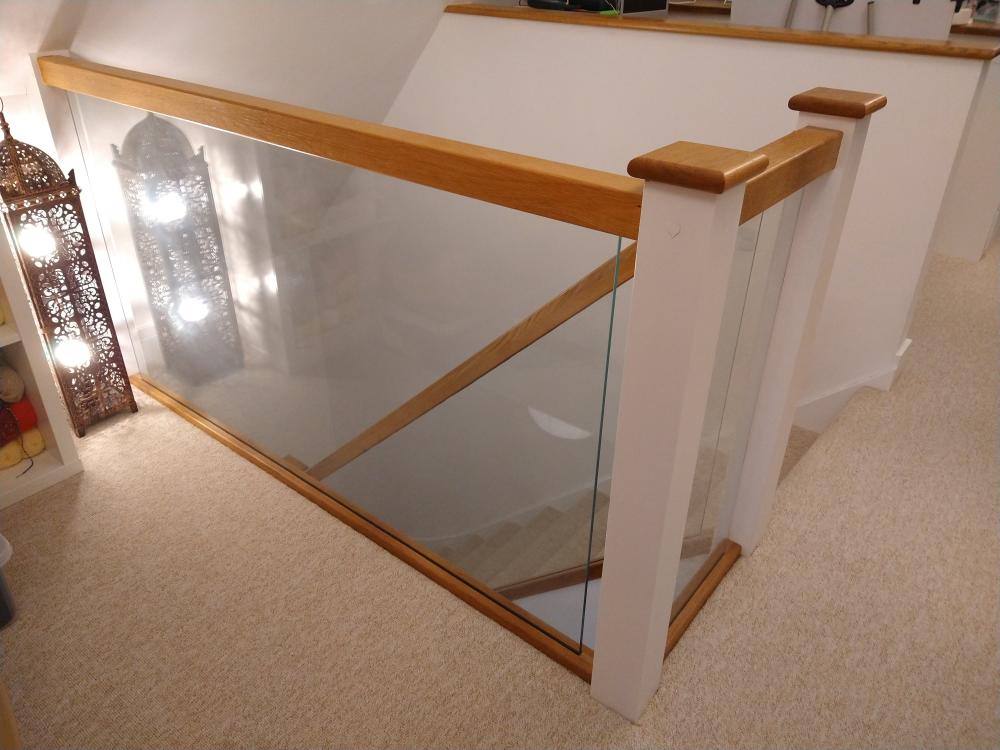
-
I hope that's the case! I don't have enough of a feel for the likely range of ASHP water heating COP, I do know it's quite a big 'ask' to get water up to 55oC when it's some 60oC lower than that outdoors. Fortunately these products are getting better all the time. We might all have to use them one day!
-
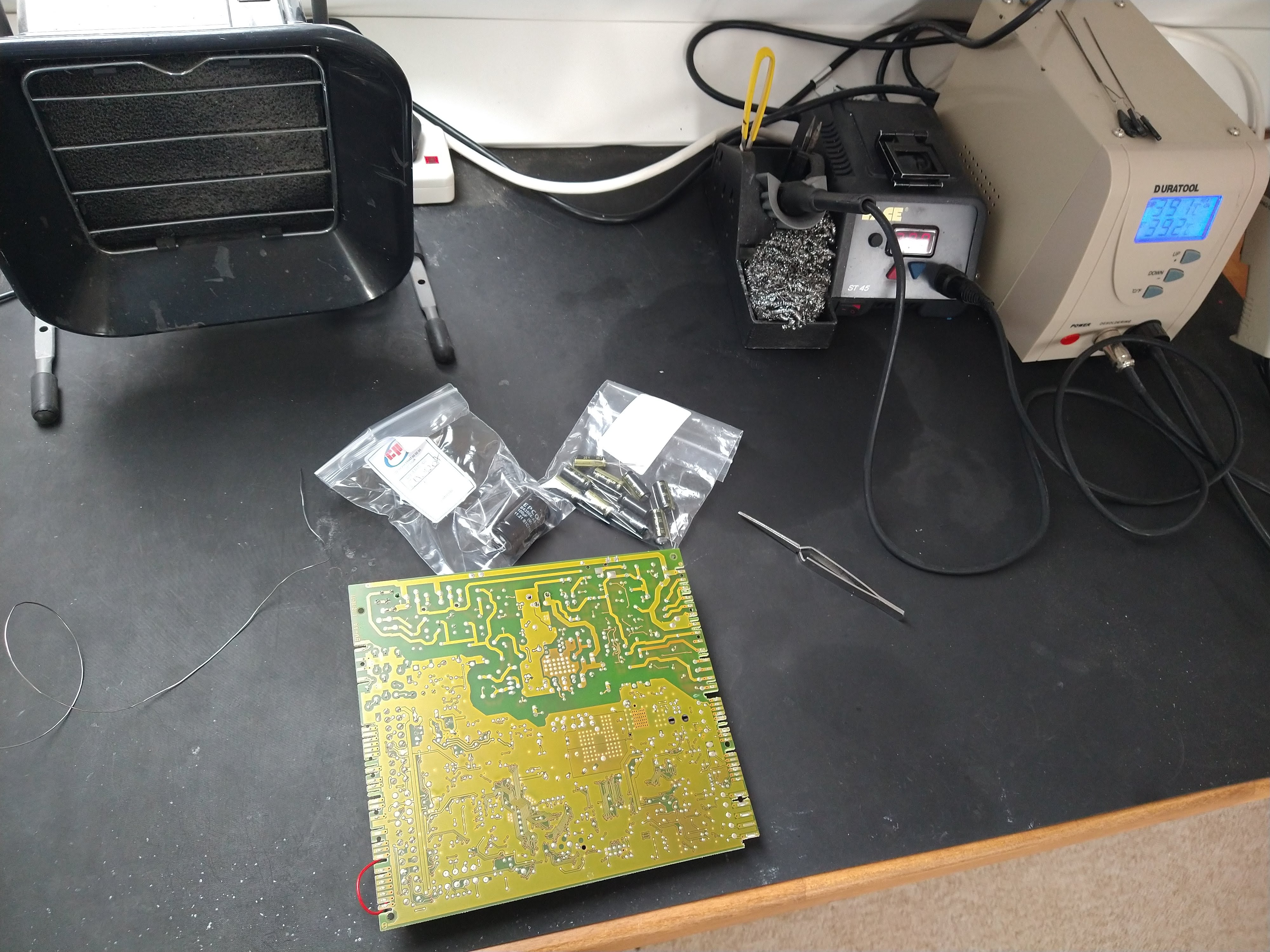
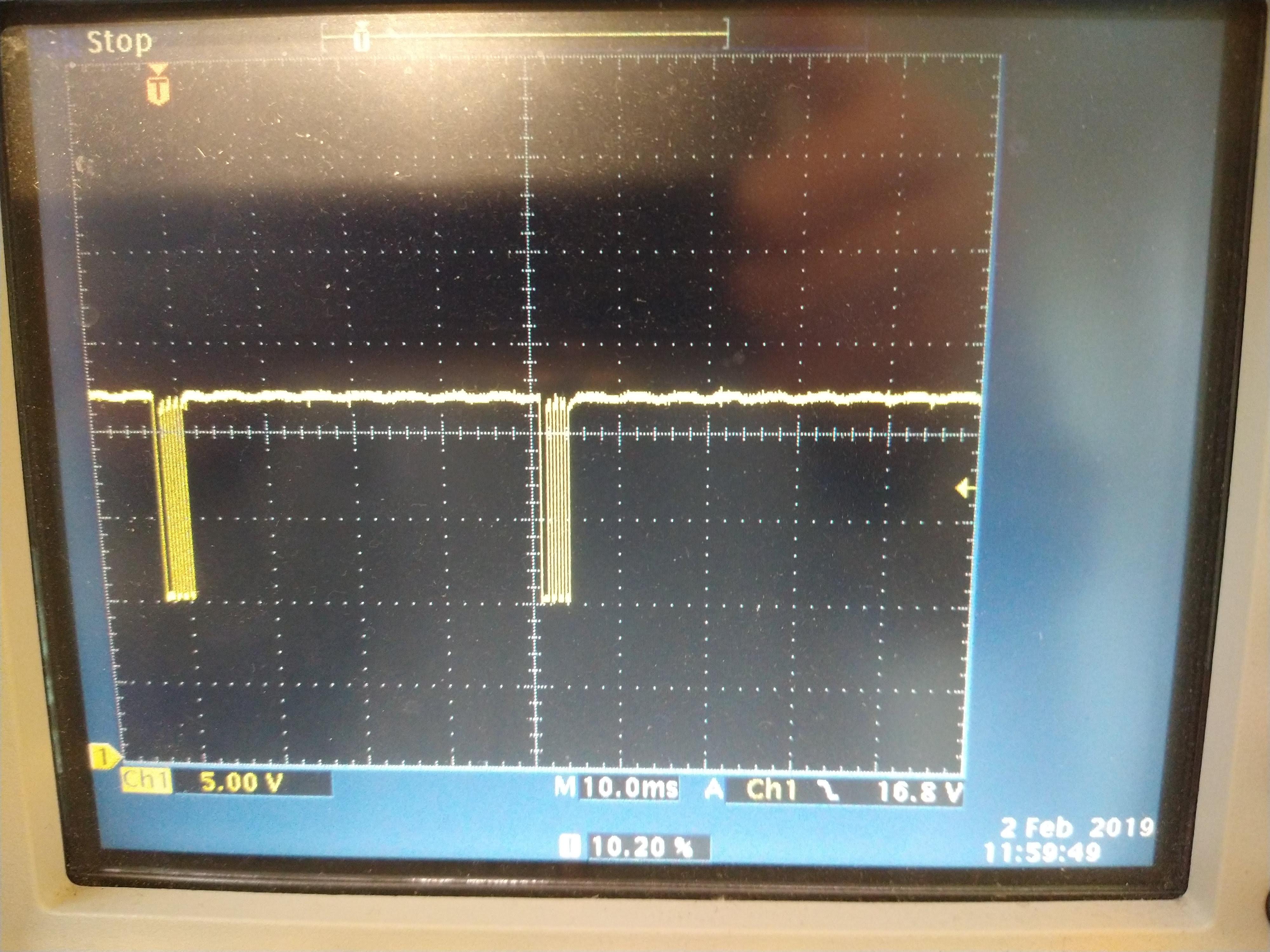
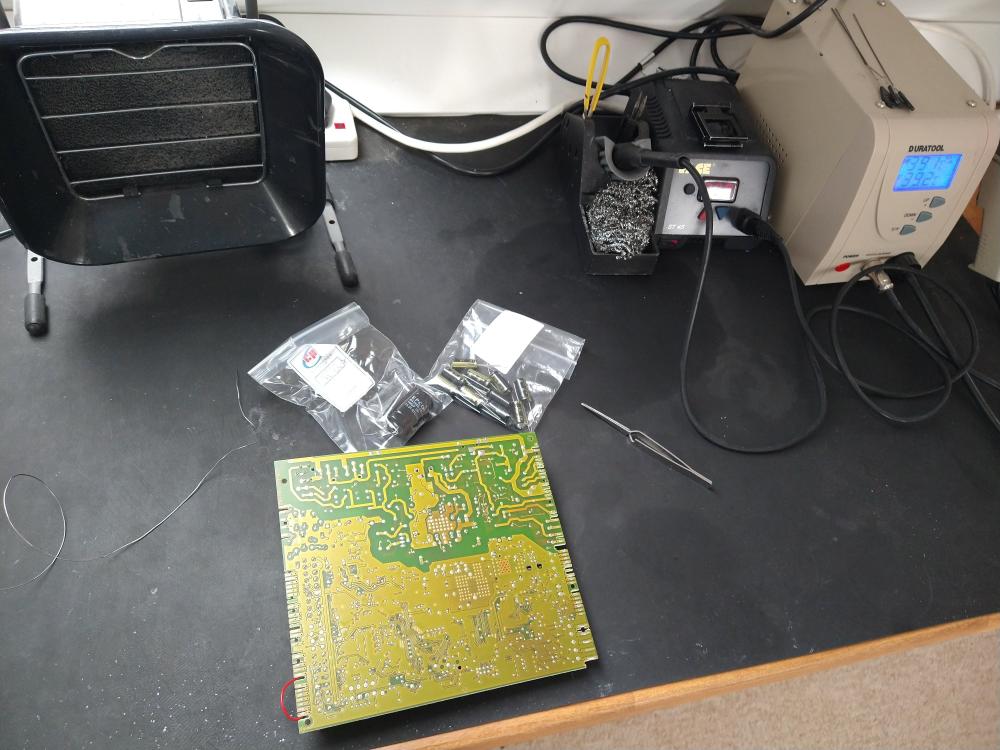
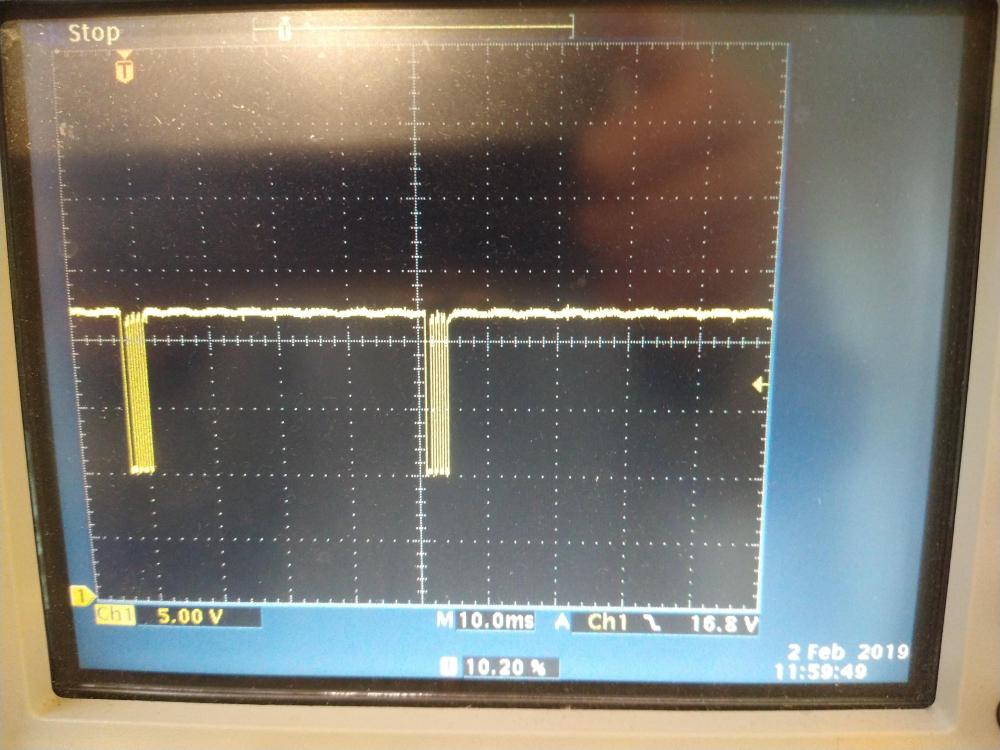
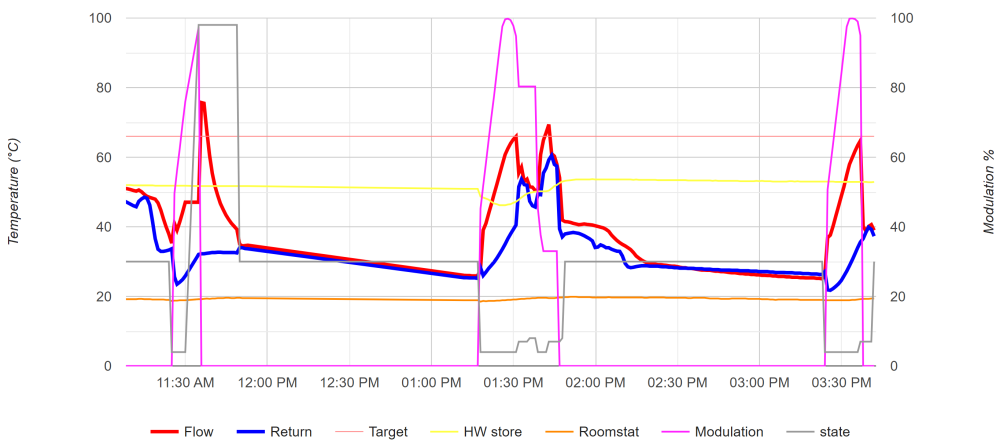
Done! Curiously enough, the 400V input cap on our boiler was a Vishay part whereas the zombie was TDK (Epcos). The LV caps were all TDK on both boards. I've replaced them all with TDK anyway. One of the 470uF I swapped out read 0uF! That's cleaned up the rail quite a bit. There's a bit of 50Hz ripple though nothing serious. Now I can try and have a proper play with flow temperature and see what improvements I can make. Funny you posted about the re-capping today as today I finally got fed up with Fault 13 cropping up as it did just after 11:30 this morning when the boiler went into S.98 (the grey trace below). It has been throwing Fault 13 when modulation is near 100%. This is when the fan is at max RPM and loading the 24V rail the most. This was also when the ebus data got flakey because of the voltage spikes. That's why the graphing has been a bit intermittent. So after changing the capacitors, by 1PM it was back in use and logging again. This time with smooth data. Almost straight away one of the issues I'm trying to solve shows up when, simultaneously, demand for both radiators and hot water cylinder come on. Everything's fine until the Roomstat goes off at 1:30 and the zone valve for the radiators closes. Suddenly, the temperature of the water in the return form the primary loop shoots up and the boiler switches off when it can't modulate down quickly enough. First it goes to S.7 (pump overrun) then S.8 (Anti cycling period) before coming back on (S.4) and finishing off the job with the hot water. I'm currently puzzling over how to prevent this from happening as I'm sure it's unnecessary wear-and-tear.
-
You could say the same for gas-fired hot water heating. Except for the shortfall in efficiency in converting 1kWh of gas into hot water. Whether by luck or judgment, the utilities seem to have accounted for this on average. Similarly your argument depends on the COP you're getting at the time excess PV is on hand. Some cold, bright, clear days in winter might favour divert to immersion over ASHP if it's struggling to get up to the required temperature.
-
I don't think any commercial offerings are as dumb as that. I'm sure there will be some DIY'ers who use the natural poll time of their clamp-on power meters in order to switch on a load when they see above a certain threshold of power being exported. Then there will be an error of variable degree. Worse case might see them needlessly paying to import the dump load for most of the poll period. Commercial diverters (I hope) do what I do and measure the magnitude of power flow (and direction) for every mains cycle. This is accumulated over time to establish a certain number of Joules that are also be being measured by the utility meter. Knowing that all utility meters only bill when a certain number of Joules have passed through them, we can step-in and switch-on our diverted load before we know an export unit will be counted and effectively drag the Joules we just put in - back out from the grid - without incurring any tariff at all.
-
The single brick wall between you and the great outdoors is a severe cold bridge. I expect there are others (like the top and sides of the window reveal). Insulating the obvious bit beneath the window will only get you so far as, at the moment, this is the area most attracting the water vapour in the air to condense. You might like to think of this area as a large dehumidifier with no running costs but also no water management. 'turn it off' by insulating the wall and the next coldest area will suddenly develop a damp problem. You need a more holistic solution. Does the rest of the wall have a cavity and if so is it insulated? What about the roof at the top of the bay - it's not visible in the photo.
-
Are you on an earthquake fault zone??? I'm looking at the roof tiles.😆
-
cutting 210mm hole in timber frame?
Radian replied to markharro's topic in General Self Build & DIY Discussion
Er, does a 210mm hole saw even exist? -
Very likely just to be condensation. It's only to be expected on such a cold surface indoors. If you wanted to be sure you could tape a polythene sheet over the whole area (tape it very well so inside air can't get between the sheet and the wall). If water is coming in from outside it will be apparent on the wall side of the plastic, conversley if the wall stays dry but condensation appears on the room side of the sheet then it's coming from the atmosphere indoors.
- 6 replies
-
- 2
-

-

-
- condensation
- wall
- (and 6 more)
-
Thermal bridge of vertical metalwork
Radian replied to MattMiller's topic in House Extensions & Conservatories
In the big scheme of things, re-doing the hip edge slope might be a relatively small modification - depending on the method of construction originally used - but would be far more aesthetically pleasing. Next time you're up in the loft, snap some photos of that end. Roof work on occupied houses is a bit scary but you can sequence the works to minimise exposure and time it with good weather forecasting. What I meant by 'language' was just my flowery way of referring to the variety of different shallow slopes already used for your roofs. By way of contrast my own house has a number of pitched roof components and they're all set to the same strict 49o angle - even a small dormer and lean-to bay. I would call this a strict language vs. a loose language. In other words you have licence to set an arbitrary pitch to achieve a specific ridge height (the current one for the main house) over an arbitrary span. -
Tell me about it. On second thoughts don't. I'll only forget.
-