mvincentd
-
Posts
495 -
Joined
-
Last visited
-
Days Won
1
Everything posted by mvincentd
-
Plasterboarding/insulation questions
mvincentd replied to mvincentd's topic in General Construction Issues
Yep, sounds easier , thanks. -
Garage door fit before plasterboard ceiling
mvincentd replied to mvincentd's topic in Garages & Workshops
Ah...probably still applies to me though, my garage is mostly in-situ concrete which I wasn't going to bother boarding unless condensation issues compelled me. -
Garage door fit before plasterboard ceiling
mvincentd replied to mvincentd's topic in Garages & Workshops
Well.....can't forget what I didnt know in the first place. Thank you Nick, i'd definitely have failed there had you not piped up. What a faff adjoining garages are. -
Can you say which manufacturer....it might lead to a succinct and definitive answer from someone who's already used them. I have Danish windows...Ideal Combi.
-
Plasterboarding/insulation questions
mvincentd replied to mvincentd's topic in General Construction Issues
It was gonna be me...but perhaps i'll get a bit of help with the detail bits. I can't pretend to fully understand what the 14mm nails will achieve, sorry? -
Garage door fit before plasterboard ceiling
mvincentd replied to mvincentd's topic in Garages & Workshops
That's comprehensive...i think I know what to do(and more) now! Brilliant set of answers cheers. -
How to make 'open -ended' stud work rigid.
mvincentd replied to mvincentd's topic in General Construction Issues
That's broadly what I was thinking (..or all that I could think of), but was unsure it would be enough. My SE said not to build these in blockwork as they'd be weak so i've been paranoid. Thanks. -
Garage door fit before plasterboard ceiling
mvincentd replied to mvincentd's topic in Garages & Workshops
Thanks, it's good to know there's a way back if I don't get it pb'd in time but sounds like the least grief is to pb first. Building inspector wanted to next see after 1st fix but still exposed...dont suppose he'll care about this bit being pb'd. -
wrangling acoustic insulation with 1st fix
mvincentd replied to mvincentd's topic in Sound Insulation
Thanks for the useful pictures....think I was looking for problems where there aren't any. I saw someone else just run string where you used pallet board Dave. -
Plasterboarding/insulation questions
mvincentd replied to mvincentd's topic in General Construction Issues
Interesting thanks....so if the steels were 'mid-wall' its easy. Mine are making the ends of a section of wall between floor to ceiling windows/doors, so a pb joint in the form of a 90 degree turn into the reveal is unavoidable on the steels. ...so is this a deal breaker? -
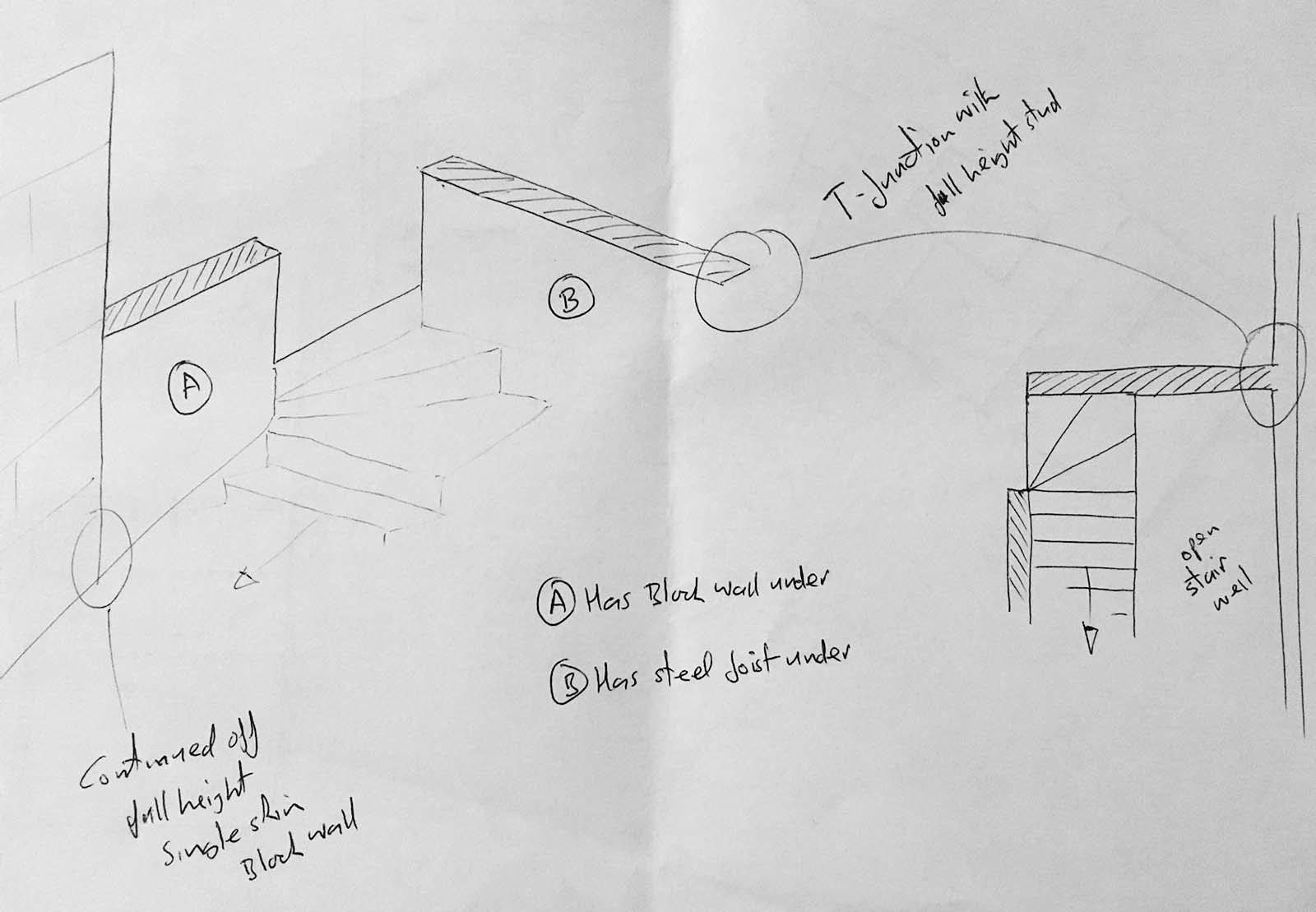
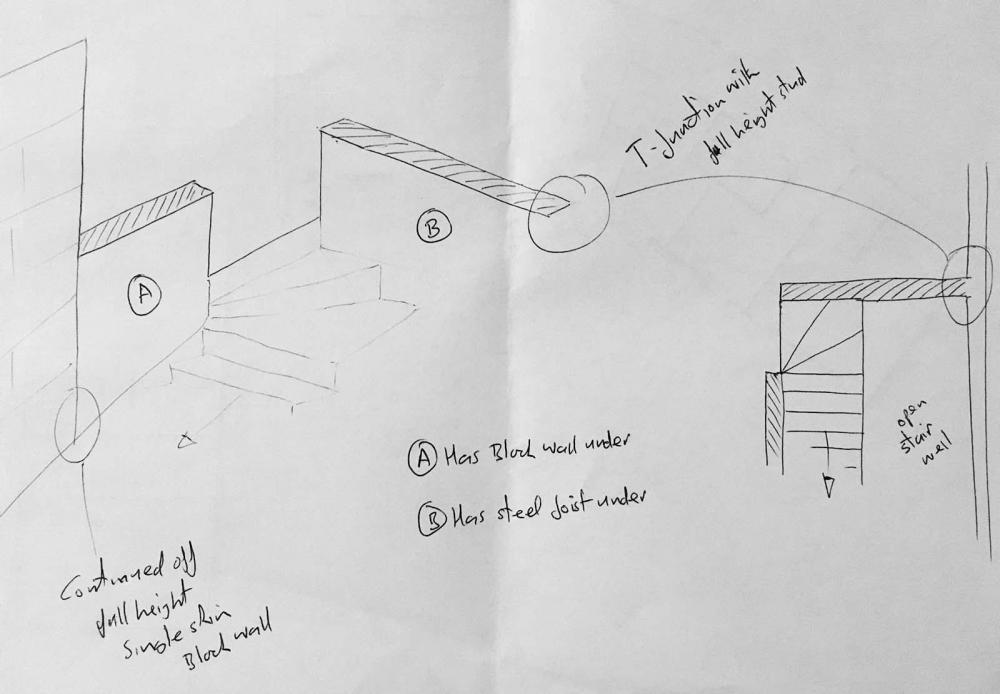
Forgive the cryptic title....'open-ended' is perhaps not the best description. I have 2 sections of stud work which are both only balustrade height and at one end are not captive by another wall. I'm concerned for how to give them sufficient resistance against overturning. Any ideas? I'm realising as I type this a sketch might help;
-
Bit of a Sunday panic as my garage door is imminent. I'd been thinking plasterboarding the garage ceiling was a very low priority but maybe not. It's an adjoining garage so I think must have 2 x fireboard layers? I'm wondering if these become a total pig to fit if the door and its accompanying tracks are on 1st? Its a Hormann sectional Door.
-
Hey, when your very nice garage door went on did you already have the ceiling plasterboard? My door is imminent and i've just realised as an adjoining garage like yours it must have 2 x layers of fireboard. I'm wondering what order to fit pb & door in.
-
My 1st floor metal web joists are boarded but open below, currently only with mvhr ducting running through. Should I add acoustic insulation before 1st fix....it would surely be far easier than after. Most images/illustrations i've seen show the acoustic sitting on the ceiling board with an air gap above to the floorboards. I'd have thought it would be easier to maintain comprehensive acoustic insulation if its set high where it doesn't interfere with spotlights etc. All internal partition walls are stud work for pb'd and skim. After 1st fix electric and plumbing is in I expect to pb one side then add acoustic insulation. How do I account for electrical wires and the risk of insulation leading to them being de-rated.....or have I been reading too much and understanding too little??
-
The plan was to dot and dab plasterboard onto my thermalite inner leaf of my external cavity walls, then skim. Some vertical steels project into my living room a further 50mm than the thermalite line. I'd prefer not to have the visual fuss of boxing these out so am happy to lose the necessary space to get a single smooth wall line equating to the steels rather than the thermalites. I presumably can't dot and dab a cavity of that size (50mm + 20mm of dab on the steel) so expect to add virtually a stud type framework of 70mm. It would then seem logical to insulate it....are there any ramifications i'm overlooking. These steels flank a large sliding door and illbruk air tape me500 is fixed from door frame onto the steelwork, the tape covering the whole depth of the reveal. If I d&d onto the tape i'm relying on the tape to stay stuck to the steels. Do I baton this and take care to seal the holes in the tape created by screws..or is there another approach?
-
@Dudda they have a consumer oriented website saying “Our windows and entrance doors are exclusively available via our Internorm distribution partners. They are complete professionals and can guarantee you all-round service: excellent advice, clear quotes, clean installation and there for you long after your purchase if you have any questions.” ...under a heading saying “all round service instead of anonymous online purchase”. they advertise heavily in selfbuild mags. So I’d assume it’s reasonable to contact a supplier and ask him to get and fit some windows....according to internorm the supplier can only obtain the windows if internorm approved. so why isn’t it reasonable to expect internorm to take responsibility for their suppliers when they cock up?
-
Stick it in, you won’t be the only one who has done so ?
-
Irrelevant...they'll invent a catastrophe regardless. As a photographer i've used several GD houses that are now available as shoot locations and every owner i've spoken with has said this.
-
so make sure the design ensures the water bar is fully encased....ie doesn't terminate at top of wall to 'free air' or a detail that doesn't keep it in compression.
-
Welcome, muck in...i'm sure you have wisdom we can benefit from. Quite a few of us are our own main contractors so we know of the struggle! Where in the country are you?
-
"Hi-ho, hi-ho, it's off to work we go"
mvincentd commented on Nelliekins's blog entry in Clancutt Lodge
I'm transported by your photos..... In Uganda you wouldn't all be allowed to bugger off on a tea break together though.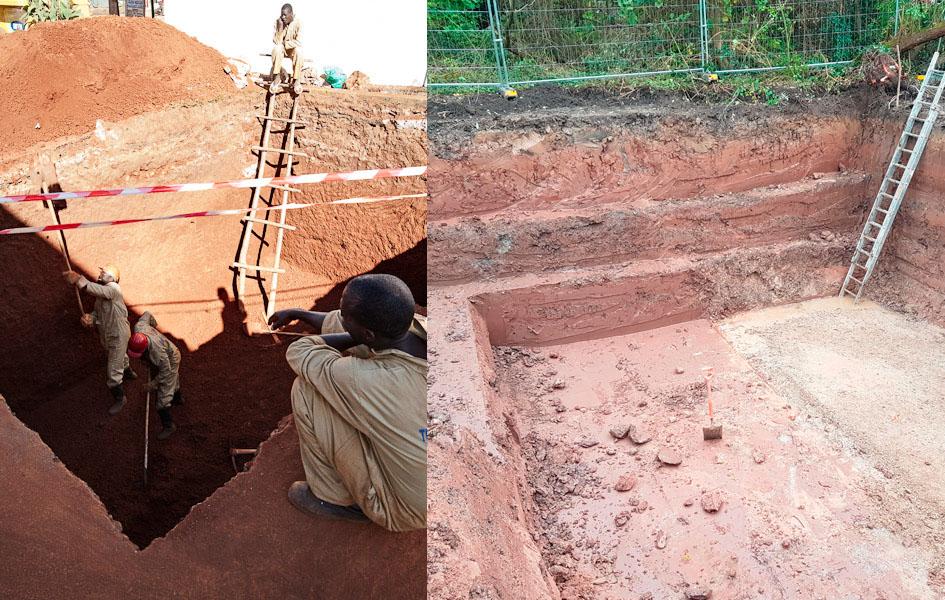
-
I want fairy dust to settle on all of my plot and turn all remaining jobs into standard procedure with no hidden twists...so that June might be a viable time to give Jo the keys to her new house.
-
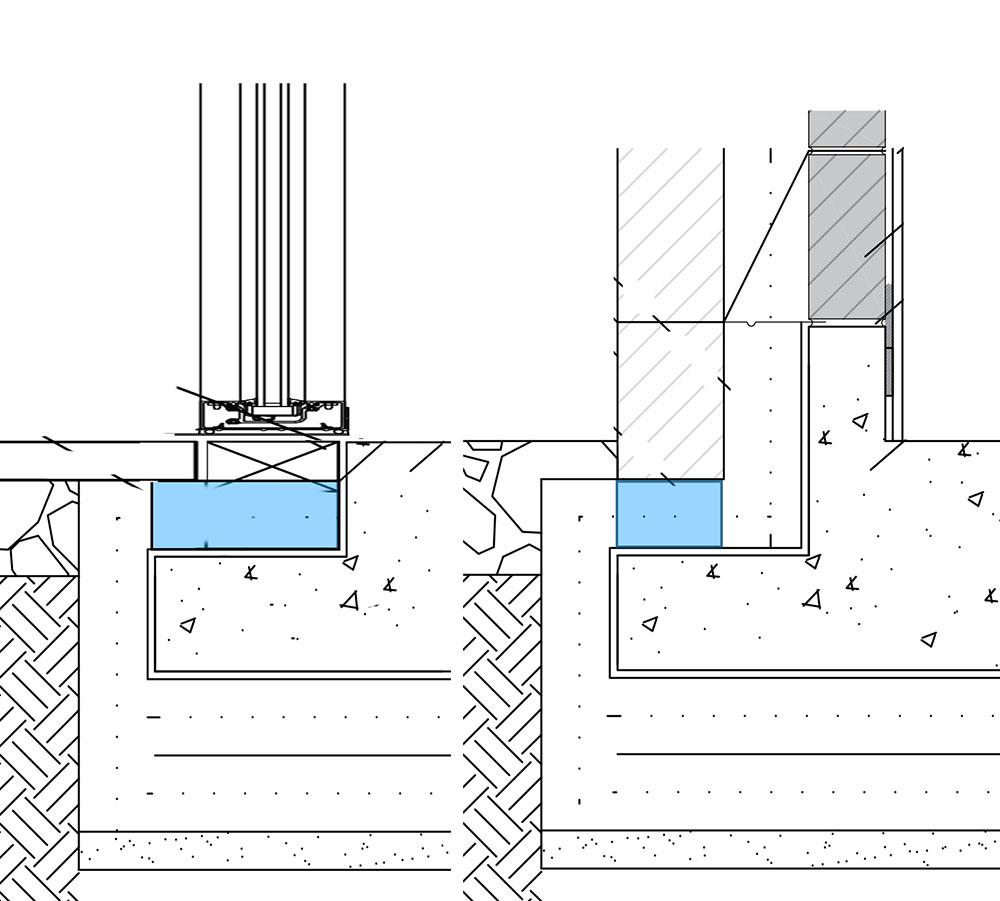
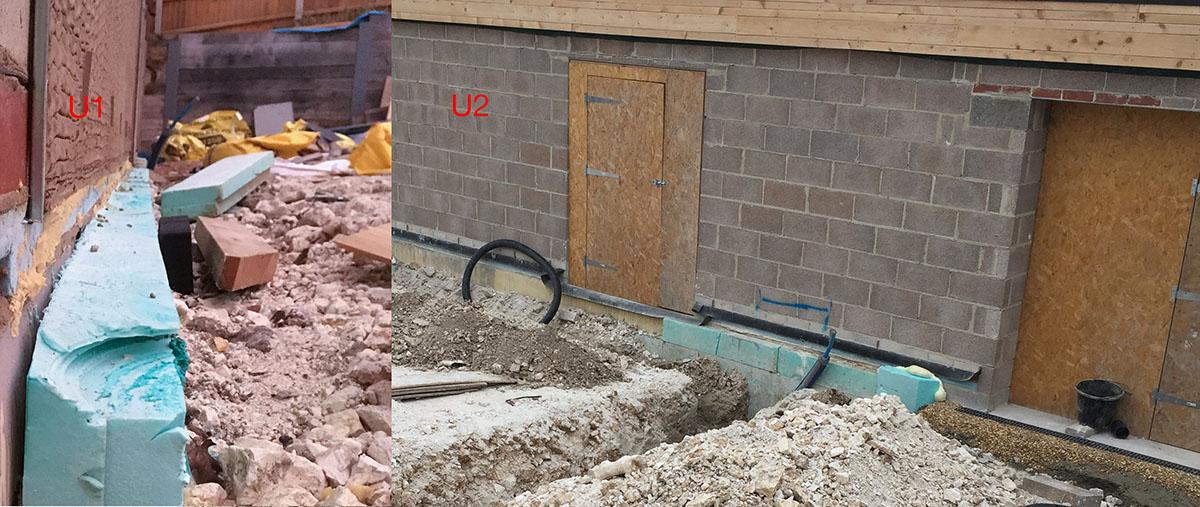
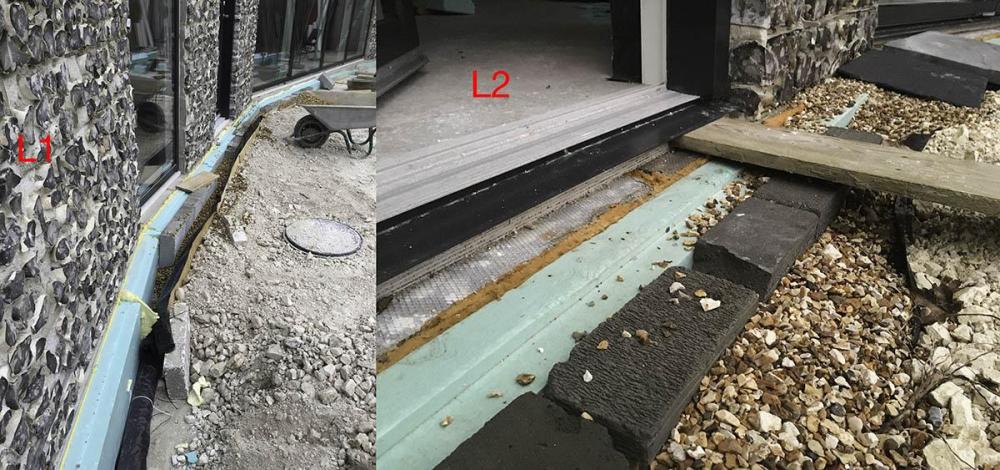
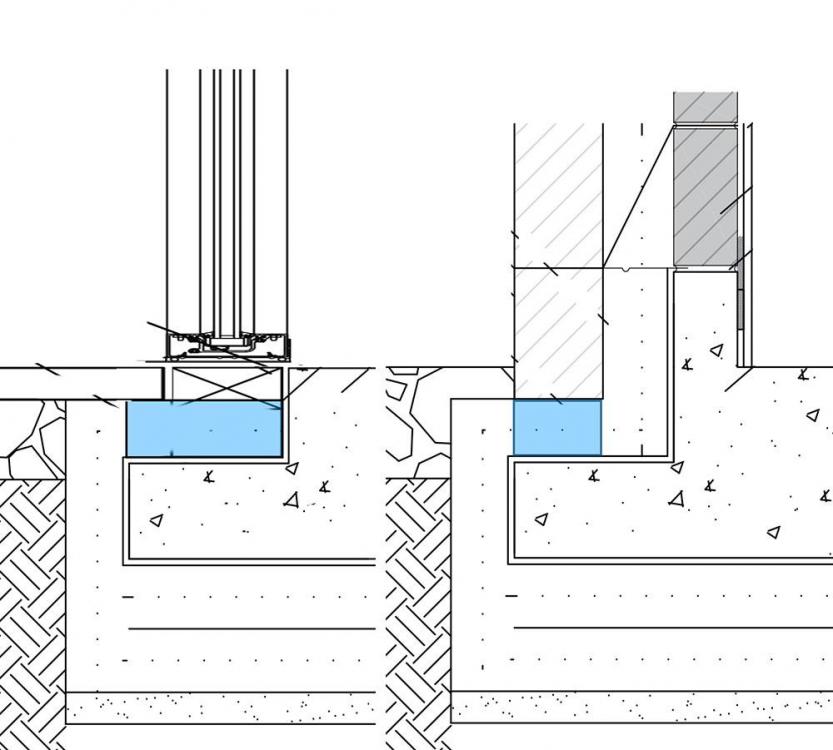
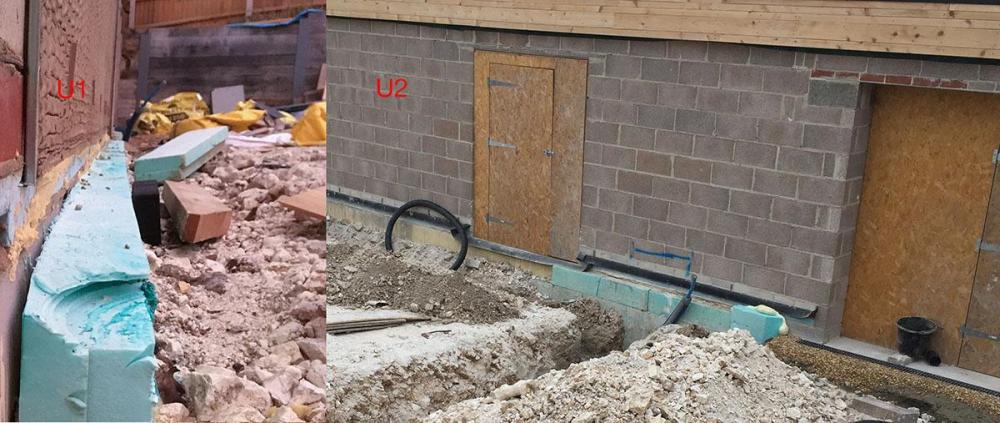
Every opening in the pic I posted earlier is in fact a door style of window....some flush threshold, some with an amount of frame to step over....but always terminating with the same cill and relationship to the structure they're built on. I've 2 issues, but just to first remind where I came into this as I seem to have hijacked @weebles issue/question.......weebles is faced with removing insulation to accommodate something like a paving slab at the door threshold, which to my eye introduced a possible cold bridge. The first of my issues is much the same....for me it's not a total cold bridge (cant tell with weebles from his pic) and only a minor issue of finding a slim paver to bed into limited height. Attached pics L1&L2 shows the scene and the attached sketches show what those thresholds are sitting on (ignore pics U1&U2 for now). My 2nd issue lies not at the thresholds but along the remaining walls where they meet external ground level. On the sketches I've coloured Marmox blocks blue. These are bedded on mortar. You'll see external ground due to exceed the marmox height so i have the porosity of some flintblock & 2 mortar lines in the ground(marmox is watertight)...QUESTION 1: would you put weeps in so that cavity can drain...below ground level?? QUESTION 2; would you continue the threshold pavers along the whole wall? When we go to the upper floor (pic U1&U2) it's a similar issue in so far as I have to bring xps up to meet the Marmox but the bottom of Marmox is at door threshold level...ie higher.
-
Yes, broadly the sort of solution i'm reluctantly looking at around my walls but not doors/windows because as @Weebles says.. As shown in pics here I have floor to ceiling windows that open like doors and sit on ffl inside. Meanwhile outside my xps rises to a point where it comes alongside the Marmox block on which the flint outer leaf is built (in turn the marmox is alongside the cavity insulation and so the 65mm height of the Marmox is what gives thermal continuity from internal to external insulation). The top of Marmox is circa 22mm lower than the underside of the minimal ali cills that protrude from windows to the outside edge of the flint. On the upper floor (to be rendered) I only half lapped the xps onto the Marmox and used a bit of foam to affix it and fill the odd void, trimmed foam and scratch coated......heavy rain resulted in this combination harbouring a fair bit of water on top of the xps which trickled and soaked through what i presume must have been the mortar joint under the Marmox(below this point its waterproof concrete all the way). Don't waste any brain trying to fathom or solve this....it's simply a unique and ridiculous design detail the professionals did for me that I now have to bodge my way through! My original post questioning @Weebles plan was really to direct his attention to an issue I wasn't sure he'd yet realised existed for him (but if he had and solved it perhaps i could learn from him). It's these shitty little details that bring about quite big aesthetic compromises all because designers don't address them.....my build is bugged with dozens of them...and they're spoiling the fun.
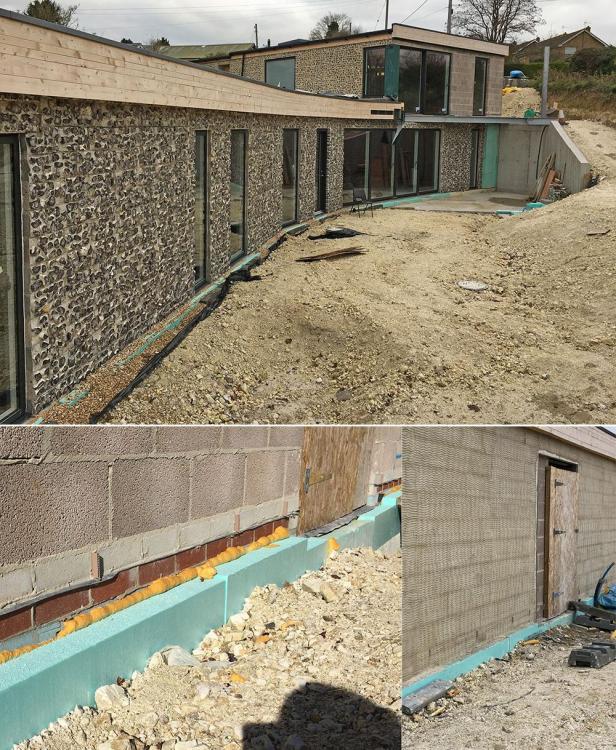
-
@Russell griffiths yes but that still leaves eps very close to the highest possible point of his external ground level where it meets his cill and what i'm asking is how will that eps get concealed. What is a foot going to step onto beyond the cill and how much insulation is compromised to accommodate that material? I have this particular detail in a multitude of positions on my build and am struggling to arrive at anything other than an inelegant compromise.