.jpg.c21f3ac78c9b7efd90cbdcb312744dc5.jpg)
jack
-
Posts
7462 -
Joined
-
Last visited
-
Days Won
41
Everything posted by jack
-
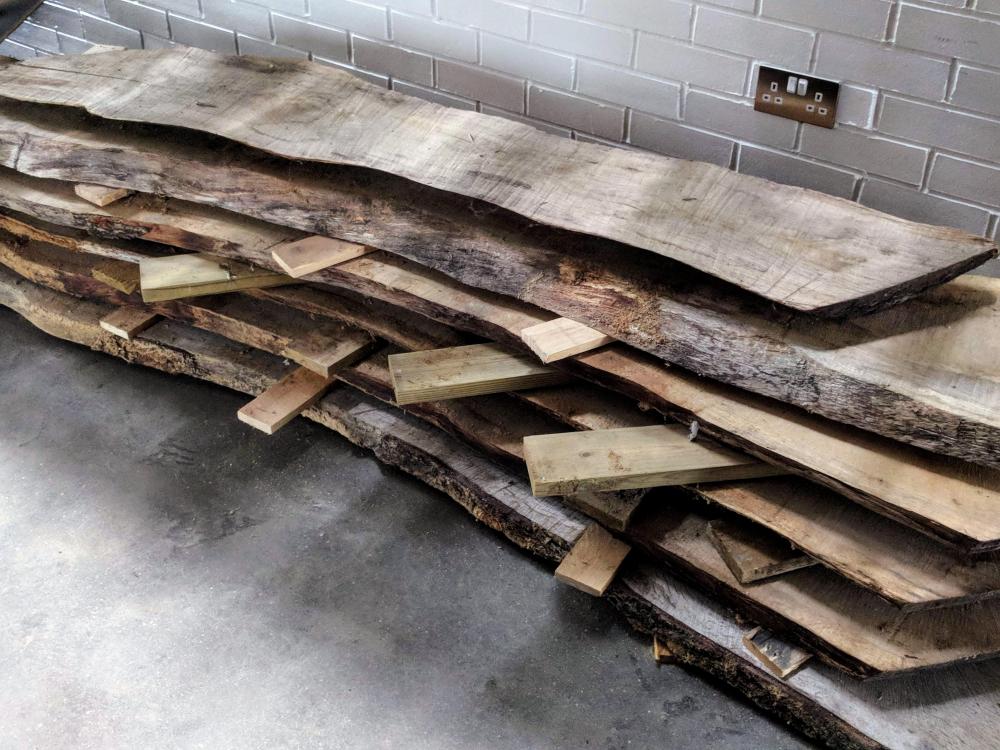
A couple of years ago, we planked part of an oak tree that we took down before we built. The aim is to make a table something like this (but without the live edge): http://livingwood.sk/solid-wood-furniture-tables-table-with-steel-legs-s-8 The three largest planks will give us 2 x 350mm and 1 x 300mm wide planks once squared off, which gives us the ~1m width we're after. The log we planked had already been lying there for a couple of years when we planked it, and it's been stacked drying in our garage since then. Naturally, the planks have warped quite a bit while drying out. This is them in our hall after we brought them inside last week: The planks we're thinking of using are all 50-60mm thick. So the questions are: Given this is seasoned oak, what chance do I realistically have of flattening it out using a hand plane (I have a sharp Record 5 1/2) and cheap electric planer? Failing that, who would you approach about getting the planks flattened? I think I'm after a thicknesser planer, but what sorts of outfits would offer this sort of service to the public? Sawmills? Joiners? Re: the legs, we've had some quotes back from various places and they're pretty eye-watering for what's effectively some bent lengths of steel. Is it realistic to expect to be able to do this myself? If so, ideas on how to approach? I assuming heating the bend points would be helpful, but I really haven't a clue about how to approach something like this! Thanks as always.
-
I believe it depends what you're after in our council (Waverley). If it's to do with extensions or refurbs, you can book a free appointment. As soon you talk about knocking the house down, you're a developer, and they won't say a word without you paying. We avoided the fee by talking about it as if we were significantly refurbing the bungalow we owned, rather than knocking it down.
-
For those not following this exchange - viewer discretion advised:
-
Welcome to Buildhub! Your character (assuming your user name is a Watchmen reference rather than the Rorschach test more generally) has one of the best lines of any superhero film, imo. I assume you know the one I mean...
-
.jpg.c21f3ac78c9b7efd90cbdcb312744dc5.thumb.jpg.7adcad4c0e384f5ecd7d56b0618df6e5.jpg)
House Cooling ideas
jack replied to mike2016's topic in Energy Efficient & Sustainable Design Concepts
What was the weather like in Dublin this year? Certainly in the southeast of England, by the time the hottest weather got here, we'd had many weeks without significant rain, and I would easily have gone through 7,000 litres of water just keeping the gardens alive. -
As Lizzie said, a good one just does an immeasurably better job than 95% of general trades. I wasn't here when ours did his magic, but I understand they run a bead of silicon then follow up with some sort of stick to smooth it out. The result is a sharp, even edge and a relatively flat surface to the bead. It's a very tidy finish, especially in bathrooms with modern, clean lines. When we had our bathrooms re-done following the roof leak, the tilers did the mastic, and it really (really!) shows. We were actually on holiday when this bit was done and my father in law, who was supervising, made them re-do it, so even their re-done, better version is still a long way from the mastic man's quality of work.
-
We had a very similar "mastic man" in to do a lot of our mastic work. The difference between the quality of his work and what's been done by other trades (plumbers and tilers, mostly) is palpable to say the least!
-
I'm so glad to hear it wasn't just me with problems getting old protective films off. The stuff on our cills was a nightmare to get off two years after installation. I have this job coming up and am seriously not looking forward to it. In some places there's nearly zero access, too
-
VAT on concrete pump
jack replied to RichS's topic in Self Build VAT, Community Infrastructure Levy (CIL), S106 & Tax
We missed this one for the crane+operator we engaged to move our windows into place. Didn't realise until about two years later! -
I second the cheap stairs suggestion. We bought a cheap set and had to cobble up a couple of extra steps at the bottom to make up the height difference. So much safer and easier for all concerned. Your tradies will thank you!
-
Based on that definition, then if (if!) there's a precipitate of aragonite, the water will be softer.
-
No matter what the arguments for how this is supposed to work, this statement doesn't seem right to me: Crystals of aragonite are not more easily taken up by plants than dissolved ions. This is exactly what happens inside our boiling water tap's tank. I poured out a whole pile of it a few months ago, leaving a surprising bright element.
-
Interesting link here: http://www1.lsbu.ac.uk/water/water_descaling.html Search for aragonite.
-
If they're relying on the properties of aragonite as suggested above by Polly, then they must either be: - somehow changing the dissolved ions in such a way that if/when they later precipitate, they do so as aragonite (this would be a big claim if made); or - (much more likely) the device causes early precipitation - presumably at the "catalyst" rather than in the boiler or tap - into fine aragonite particles. If so, then testing would be a simple matter of using a fine filter that lets dissolved ions past but captures aragonite particles. So what size are these alleged particles? Doing so was a nice touch.
-
The mods are discussing it, but for the moment there's something of value to our members in allowing the discussion to go on. If nothing else, any potential purchasers will hopefully have some questions to ask before buying (or can judge for themselves the quality and usefulness of the company's replies).
- 199 replies
-
- 4
-

-

-
- hard water
- water softener
- (and 1 more)
-
Short of a chemistry or physics degree with a relevant specialisation, I can't see that you're really in a position to meaningfully argue the science behind this product. Do you have one of those? If not, what sort of "background" are we talking that means we should rely on what you're saying?
-
The phrase "patented" when used by a UK-based company does not mean "there were patents, but they were in other countries, were in the names of another entity, and lapsed over 10 years ago". Patents are by definition public documents, and anyone saying they have a patent while refusing to give details is either lying or woefully ignorant about what having a patent actually means.
- 199 replies
-
- 5
-
-
-
- hard water
- water softener
- (and 1 more)
-
You've mentioned a patent - could you supply details please?
-
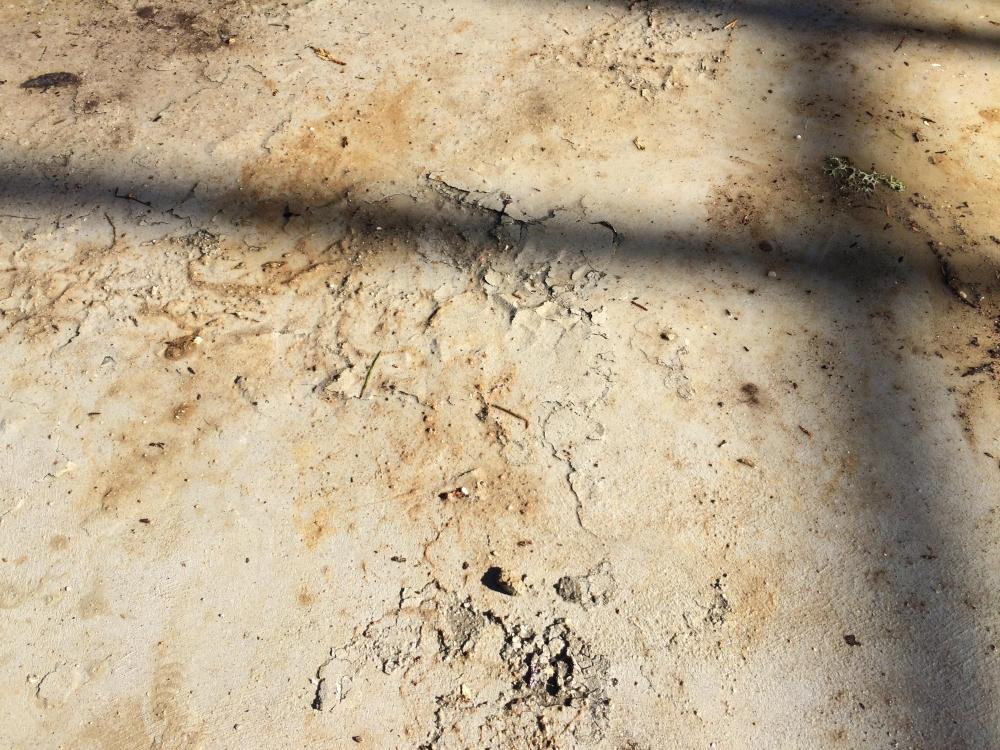
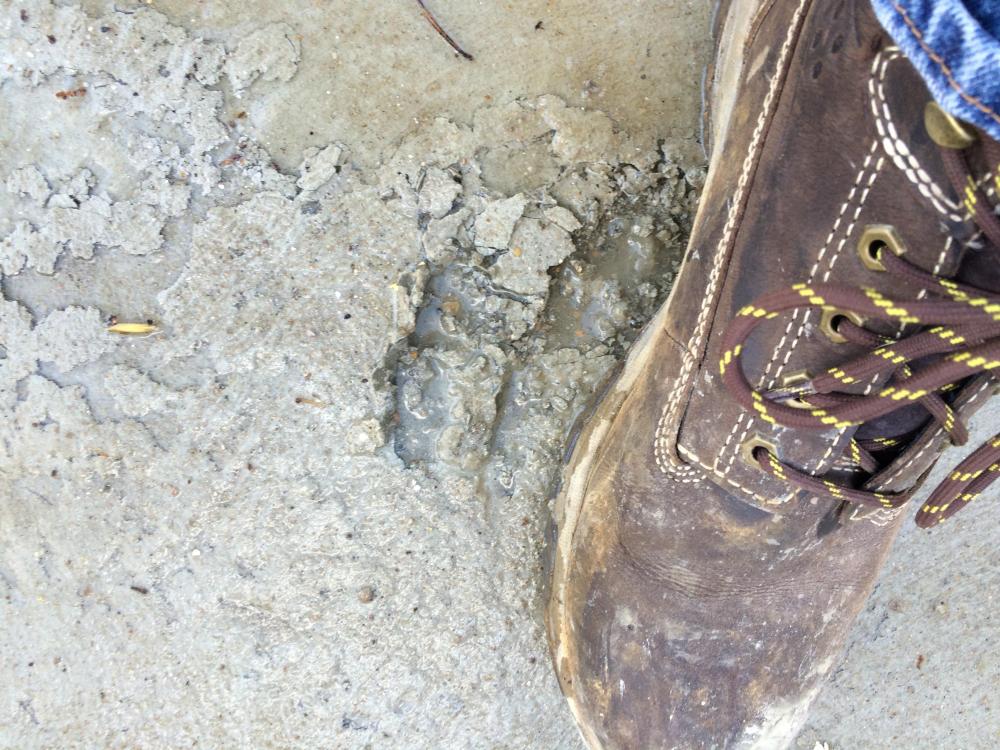
Our concrete arrived on time - literally started at 8 in the morning from memory, but the concrete just didn't want to go off. I have a theory that the concrete in some sections of the slab contained far too much water (the concrete was mixed onsite by a truck then pumped via a boom). There were repeated calls from the MBC guys to the guy on the concrete truck reduce the amount of water being mixed in, especially earlier in the pour, but it kept creeping up. The worst areas seemed to be the earlier parts of the pour where this was happening, but that's completely unscientific speculation on my part. Despite all the efforts, our slab was a mess in the end. This was the worst bit, a week or two after the pour, I think: You can see that the fat has just disintegrated from the top (possibly not helped by frosty nights in the days following the pour). To his credit, Joe (MBC's owner) dropped by when I raised the issue and immediately offered to raise the frame by a small amount and pay for a liquid screed. In the end we decided to go with a concrete floor instead, so offered to hold back some of our final payment to make up the difference, which Joe was happy to do.
-
I delivered a curry to Brendan at about 10:30 on the night ours was done. He was just sitting there in the cold waiting for the concrete to go off so he could power float it. Unfortunately, it was the next morning until that was possible, and we didn't get a decent power float because of it. Cold weather and unexpected rain didn't help.
-
It may be more than just the grinder choice. The surface was power-floated to within an inch of its life before a grinder touched it. It was actually pretty shiny even at this point! They then came back with the grinders a few days later, before full hardening. I vaguely recall them saying they used a very specific mix to make sure it polished well. Overall, I suspect a good result involves a lot of parameters. Perhaps the key is to learn to love the transitions and find a way of living with them. We have three or four spots where it's clear the power float was stopped, leaving four dark lines. There are also some very ropey areas along some edges and corners where the hand polishing with a small grinder really didn't work. We've just accepted that concrete is a variable product and learned to love the rough bits.
-
There was the guy selling the kettle, too.
-
We specced ours like that, and our plumber was used to doing it this way. I can't imagine why you'd do it any other way if you have the room to get the controls away from the spray.
-
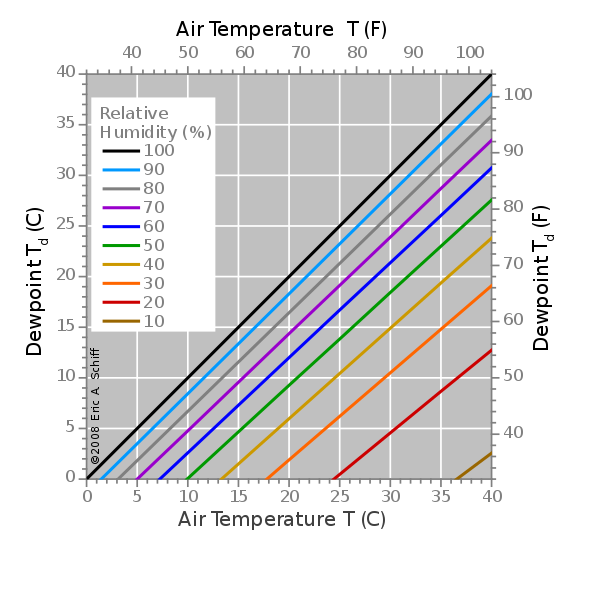
This is from the Wikipedia article on dewpoint - might be of assistance in figuring out what surface and air temperature combos would need to be involved to be causing condensation at your measured humidity levels. Given the condition of the plasterboard, I'd consider taking a couple of sections out so you can get in and have a good look. Having that amount of water sitting around can't be good.
-
Okay, thanks. I think we'd ideally separate out the MVHR issue from the condensation issue, if we're convinced they're not related.
.jpg.c21f3ac78c9b7efd90cbdcb312744dc5.thumb.jpg.7adcad4c0e384f5ecd7d56b0618df6e5.jpg)