
Adam2
-
Posts
793 -
Joined
-
Last visited
-
Days Won
1
Everything posted by Adam2
-
Hmm, thinking we could apply an extra 50mm EPS on the inside - mainly due to exterior window reveal depths becoming pretty chunky for a contemporary design if applied outside. Should get us down to 0.18 or thereabouts. Presumably this wouldn't lead to condensation risks. Alternatively if externally applied extra EPS could mount windows on some form of extended support built off the concrete (think I saw this on another thread where this was reducing reveals but also improving thermal performance).
-
Mostly will be render
-
OK thanks, wouldn't want people thinking they were a min target to hit/improve upon - not saying that's a bad thing of course but with the title it does imply the are. Not wanting to detract from the spreadsheet, that + the other one you provided are great resources for many.
-
Thanks @JSHarris, in L1A I thought the min values were different and the ones in the spreadsheet are the model house values. Or did I misunderstand? which won't be a surprise. Am curious as my walls plasterboard/air gap/65mm EPS/150mm concrete/65mm EPS come in at about 0.23 which is > the BR wall value of 0.18. Yet our SAP assessor says, based on the overall design, that our design is a pass.
-
Do you mind explaining what this would entail? Is this like the duct cooler (as per link to BPC) but using an independent distribution duct system and an in-line fan to get a decent airflow?
-
I'm so far impressed with my Z-wave based Fibaro setup. By going with a "standard" like Z Wave you can, to a degree, swap out components like switches and sensors. I'm trialling this in my current house to check for stability etc before the new build and so far so good. Turn off the central component, no problem light switches still do their thing, even light switches that actually wirelessly control a wall socket which has a regular table light plugged into it (simple remote logic is stored locally). It feels like a good balance between a high end lighting control system where you need an external programmer and a custom/hard for future owners to maintain heath robinson affair. Also have some sensors and a simple scene to turn on radio over Sonos in the mornings and all has worked though did have 1 system crash after about 6 months. Bought some different brand (smaller than Fibaro) plug in socket adapters that are great. I'm not going anywhere near automated / remote door or window controls based on proximity etc. Though may consider a top floor roof light opener linked to internal temp and rain sensor! The "programming" for this is largely via a graphic interface + you can get into some basic coding if you want to but I will try and avoid this to ease future maintainability. In case it's not obvious this is a local setup with no requirement for constant internet access - though of course to get updates etc you will want to have this from time to time. Another nice feature of this approach is that for light switches you can choose pretty much anything (best with retractive switches). You can also of course have key areas as part of the "system" but others with simpler requirements just operating on their own as regular light switch controls - BUT still use the same switches on these as well so it all looks the same. I did start another thread on a very similar topic just a few down the list here which may have some additional helpful info. Wiring - this type of approach can either be "regular" where you have the wireless comms/control unit fitted behind the light switch or have 1 or more central wiring points where the switch control units all sit together - that allows easier maintenance of things if needed.
-
 I think you're right. I tried unsuccessfully even with PP. not a huge cost on its own but they will all add up....
 -
Very interesting, the same angle I started from when initiating this thread - thinking of a deck / concrete system but went down the precast + EPS + screed route due to comments relating to downside of not insulating below the UFH. Like you, I figured why use EPS and then have another layer of screed as it involves a lot of cost and makes floors ~90mm thicker. As you say trade-off seems just to be heating reaction times for upper floors - though I notice you mentioned passive house so you'll have less of a requirement than I will I would expect. Will continue to ponder and will discuss with the structural engineer to see how much it may upset his calcs (+architect's detailed design/BR drawings) if we were to change.
-
My neighbour has used similar and was very happy as meant he could do a lot more work himself - though he also used EPS + EFH in a screed so still reasonably thick. What are you considering with this approach then for the floor make up? Tin + concrete (with mesh) + ? If no screed I understand that as meaning your finished floor is going on the concrete so no UFH I guess? Not sure how much thinner than pre-cast - mine is looking like 150mm precast the deck looks like it has min 60mm height + concrete on top which I didn't look into but presumably will be ~60 also depending on what span/mesh etc so not too much less than precast? My design is for pre-cast but I'm still interested in alternatives if there may be advantages.
-
Bi-folds/Slide and Turn Patio Doors in a New Build
Adam2 replied to Tony99's topic in Windows & Glazing
We had 5m or slide and turn doors (some company in Kent curtain wall or something on those lines). Really liked them - 2cm rubber strip between glazing makes for great viewing into the garden. Seemed incredibly good - though was a retro-fit so no air tests done. The handle turn really compressed the glazing. We were really happy with them. Only issue was when ordering the chap with us wrote down the wrong RAL colour for the frame so instead of anthracite they were beige!! Could have been worse. At the time felt like a disaster but like many disasters we realised soon enough that really didn't matter - would have been more of a drama of course with bi-folds. Price was high, I think 40% more than the double glazed bifolds we were getting prices at the same time from Shuco supplier. -
Google Sieger XL doors and you get plenty of info. Like above - 3G at that U level must be perforated ? Clearly not so something is wrong . I'm getting closer to a big order also 3 lots if 6m x 2.5m 3 pane sliders + about 60m2 of windows so very interested in your pricing/suppliers. I was quite excited by prices from some until I used their sliding doors (hated the system). also need really good strength due to wind driven deflection so not so concerned about minimal sight lines - which, when you are over a certain size I don't think really matter too much. Bets of luck + thanks for sharing the details
-
Have you considered VAT aspects of this? I mention this as you may be able to justify 5% VAT due to a change in the number of dwellings. Strangely this seems to apply if you are either increasing or decreasing the number. Good luck
-
Three pours down..none to go - thank goodness
Adam2 commented on Simon R's blog entry in South coast ICF build
Thanks for the post. Was the concrete excess due to not needing the full order in the blocks? Maybe I'll put some shuttering around my garage piles for any excess -
pros and cons of below shading options
Adam2 replied to vk108's topic in Energy Efficient & Sustainable Design Concepts
Agreed it is a bit of a loss. I think regular triple glazing will be in the region of .5 to .6g so not as extreme as it may sound going to .3 + the heating requirement (exc solar gain) seems to be a pretty low requirement so for my situation I think this feels like the right balance. Every situation is so different and so many considerations. -
How to get Howdens prices
Adam2 replied to MikeSharp01's topic in General Self Build & DIY Discussion
Had a kitchen from them 3-4 years ago. My builder had an account - insisted on seeing their invoices, it was worse than double glazing I kid you not - 70% + discounts on kitchen cabinets etc. -
pros and cons of below shading options
Adam2 replied to vk108's topic in Energy Efficient & Sustainable Design Concepts
Can't Trump that ^ I'm in a fairly similar position and am planning on low g glass (0.3) so most of the solar energy is blocked by the glazing. We have ~54m2 facing SW with minimal natural external shading. As contingency, should the combination of glazing choice and use of ASHP with cooling mode + MVHR with duct coolers result in too many over-heating days (we generally are happy at mid 20s) then we will fit external shading (Brise soleil) which we are ensuring we have suitable fixings for should they be required. An alternative we may use on the ground floor is a sail type shade but need to think a bit more about location of exterior support post(s) for that. Although you can model the expected gains, there are a lot of factors to consider and you may not really know the degree of over-heating until you experience it - hence our contingencies. Personally not a fan of exterior shutters though they would probably be the most effective option. Electrochromatic glass I really like but my wife says no - she has a hang-up that she's seen it in office environments so can't get past it being more of a commercial solution. And that's before we think about cost! Interior blinds of course will also provide a small degree of help, not a huge amount, but maybe in combination with other measures that may make things bearable. Good luck - so many options and so many costs ? -
What about cooling ?
Adam2 replied to Tim Alsop's topic in Mechanical Ventilation with Heat Recovery (MVHR)
Yes - interesting, when I spoke with them they did mention the condensate drain but the spec sheet they sent does not match that ? Will see what ends up in the design. The spec sheet has VentMatika as the brand for the duct heater/cooler. Will update when I know more. -
What about cooling ?
Adam2 replied to Tim Alsop's topic in Mechanical Ventilation with Heat Recovery (MVHR)
In my proposal on MVHR a duct cooler has been specified - well it is sold as a heater : https://www.bpcventilation.com/hot-water-duct-heater-range?gclid=CjwKCAjwndvlBRANEiwABrR32AYX25XU3baX6tcuGKne9hKegBRxmoPRO44n3Nje7XIHpUcwrr1PjRoCLCAQAvD_BwE though presumably will heat or cool depending on the liquid temp you run through it. BPC are working on the design at the moment but hopefully I can run this with a circuit from the ASHP but given the low flow rates this probably means insulating most of the out-flows to avoid temp losses en-route. Don't think I'd want this to be used for heating so would need to build that logic in somehow. -
On the website https://www.uvalue-calculator.co.uk/calculator/flat roof/warm flat roofing/single ply/fully adhered/concrete deck with plasterboard ceiling/145/ it looks like size /type of property + number of bedrooms are a big factor as presumably more bedrooms = theoretical higher DHW needs due to more people. My info seemed to reach the cap in payments but maybe the proper EPC will bring that down as the calculator didn't seem to have a way to accurately input insulation
-
I tried to use the rhi calculator and it looked like I would be in line for a decent return of 4690 spread over 7 years. Maybe the benefit has become more generous for ashp. This was for a 4 bed house concrete walls and flat roof. Some suppliers will work with your own installer so you can get rhi maybe with less costs.
-
OK - will see how that could work. Just looked at cut to fall insulation - labour on concrete could even it out maybe? I saw xtratherm provide an off the shelf PIR product falling 20mm over 1200. Sounds like could be better than the architect's thoughts on a custom ordered product. Price on that is £91 for 4 sheets 1.2m x 1.2m and I'd need 5 packs so £450 (+ of course the flat insulation to go under) and I'd of course need the insulation anyway. https://www.insulationsuperstore.co.uk/product/xtratherm-tr-mg-tapered-roof-board-5070mm-5-76m2.html?gclid=Cj0KCQjw19DlBRCSARIsAOnfRei5qlgFFPjo2ZiXTMqUn6tLFq4z-VjRi4ErVccQgzgE51KPplO2iYsaAuqtEALw_wcB Just did some calcs on floor (am sure architect and engineer will be looking at this) looks like above the concrete plank inside will be 50mm insulation + 75 screed + 25 tiles so 150mm and the other side probably 150 insulation (sloping to 100mm) + legs for tiles (20-55mm) + tiles 20mm = ~157mm. I think 50mm PIR is specified under concrete plank in the ground floor ceiling). Feels that having the planks at the same level will simplify the plank install + ICF build/pour but will follow up with the professionals to see what the thinking is there and the orientation of the planks which may only come out after engaging the supplier to get the design done.
-
Thanks, sounds reasonable. Architect is working on levels at the moment, as you mentioned lots to factor in, probably using alwitra and their preformed sloping insulation with adjustable legs supporting tiles above
-
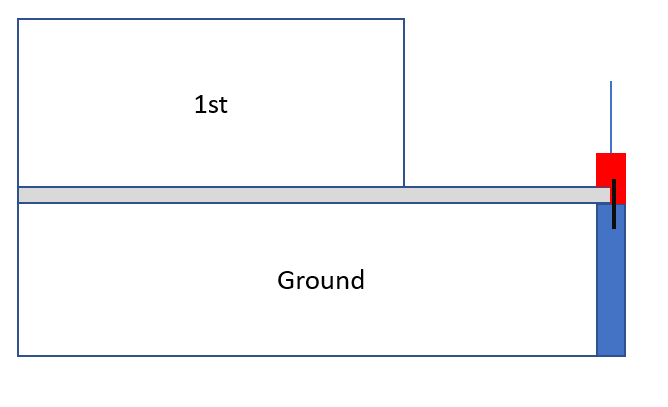
Coping detail from glass to top of rendered ICF. Was wondering if channel could just be pushed into concrete immediately after pour to provide a very secure fixing and would be potentially quicker and with less materials though only found aluminium channel so far. I imagine an issue with setting the channel could also be concrete ingress at joints or ends...
-
Welcome Richard - I'm pretty new to this also. Before you know it you'll be sounding like an expert to your friends but still realising how much there is to learn ? As you've no doubt seen, loads of helpful people on here to provide guidance etc as needed.
-
I'm looking into the design options for some terraces which will have a frameless glass balustrade. Other aspects of the design are hollowcore planks resting on the ICF wall. Simple section view below. The blue is the ground floor ICF wall and grey is the hollow core planks. Red is the extension of the ground floor wall taken up to form the low level wall below glass balustrade poured after the hollowcore is installed. I was thinking how to take advantage of the concrete pour to secure the fixings for the balustrade and considered setting some bolts into the concrete or even setting the channel that the glass will sit in into the concrete. I believe setting aluminium channel in concrete would not be a good option (reaction, hydrogen, general badness) - possibly could use different material - stainless steel possibly for channel. Or just forget the whole idea and drill into the concrete and mount channel above or to the side (after stripping out ICF). Appreciate thoughts/experience from others who may have been through the same process. Thanks