


Bitpipe
-
Posts
4118 -
Joined
-
Last visited
-
Days Won
53
Everything posted by Bitpipe
-
I think their argument is that they 'raise awareness' of energy usage and encourage consumers to use less by turning off the odd light etc. Still greenwash but there you go. Sadly my kiosk no longer has any space for a smart meter...
-
We went down a similar path - bought a tired but sound house with a view to extending and then realised that the economics of demolish and rebuild were more compelling. Also we were able to correct plot positioning, include a basement and achieve a passive standard. Being a trade, you're already way ahead of many of the self builders here, I'd never build much more than an Ikea wardrobe previously Before deciding on build fabric, think on what performance you want to achieve min building regs, decent SAP or passive standard. Some systems need a thicker wall profile to achieve equivalent performance, some are inherently more airtight than others, some lend themselves but fundamentally you can reach any standard with any material if you focus on the detailing. Some systems also lend themselves to DIY (such as ICF) so depends if you're looking to do a lot of work on site yourself, aside from the electrics.
-
For me, I'd start with the light. Morning light from East, evening light from West, constant light from South and 'flat' light from north. The current design does not have much East light, mainly in the porch and some in the dining window, However there is a lot of North glazing. Means your living / kitchen area could be a bit dull in the mornings but brighter in evenings.
-
We couldn't have the sink under the window as they are european style and open inwards, therefore the tap would be cleaved off So we nudged it along about half a metre and it works great. Was at my mates place the other day, he'd just had his kitchen done and had a similar arrangement - looked fine. Agree with many of the comments above. Your utility does not need a window and a door. Suggest flipping the sink to the wall to its right, make the window the external door and moving the kitchen wall to the right. I think it would be nice to walk into the kitchen from the porch door vs having to execute a series of 90 degree turns to drop off shopping etc.
-
Yep - I think you're good also. I started with a generic call to the lender and was then asked to provide the PP, plans etc. It was after a week or two that they were very clear that nothing could happen until I had explicit permission to continue. We were going further, in demolishing the existing vs extending it (which is probably how they're considering yours).
-
We also built our own for the basement, just a simple flat 120m2 slab of EPS 250 blocks (SE specced) with 150mm compacted crush and 50mm sand blinding below and membrane above upon which the 300mm basement slab and walls were cast using standard shuttering a Sika waterproofing rebar and admix. When walls were struck, I glued on 200mm thick sheets of EPS70 and left a profile at the top that dovetailed with the MBC frame (was about 80mm proud of the concrete wall itself. The basement lightwells from MEA came with their own 200m XPS insulation which is bonded to the concrete and to which the lightwell screwed into. I also cut formers for up-stands for the sliding doors, ground level windows and standard doors (about 100x100) in the vertical EPS and the concrete crew cast these seperately, drilling into the walls to resin in rebar. Didn't need to cut any of the EPS250 (thank god), lots of cuts to the EPS70 with an electric chainsaw - turned the basement into a big snowglobe. Pinned 3mm corex to the vertical EPS before backfill to minimise damage from stones etc and job was done. The basement contractor let me get on with those bits, they just wanted a flat solid surface to build the basement on
-

Dispute with Mortgage Lender over project?
Bitpipe replied to John Cain's topic in Self Build Mortgages
We had a similar challenge - had planning in place to knock down and rebuild but only thought to mention it to the lender (High St supermarket brand) a few months before commencing. We had signed a 5 year fixed deal with a hefty repayment penalty the year previously. We'd ruffled a few neighbourhood feathers with our plans (funny how they all love it now it's finished and landscaped) so were worried that someone would dob us in. Anyway, called the lender and said we were undertaking some 'building work', they asked for plans and all went quiet. A few weeks later we get a call & letter saying 'do not do ANY work until you get our explicit approval) and then nothing for a further 12 odd weeks, despite me chasing. Eventually they said no and that to continue, I'd need to redeem the mortgage and take out another with a different lender. Then they changed their mind. Then they said no again as I wasn't using a main contractor but was PMing it myself. Bottom line was that they felt that their asset, against which we had borrowed was at risk should we default - even though the land value alone exceeded the amount we owed them. They did however agree to waive the £15k redemption fee so we redeemed the mge with the majority of the build fund and I was able to get a self build mge with Ecology which paid for the works. When that ran its course we remortgaged to a standard lender. Was stressful but not catastrophic - cost us a bit in fees and higher interest rate but glad that we told them as the alternative could have been ugly - I didn't want to call their bluff. -
We had about 400m2 of our old back garden levelled, covered with topsoil that we'd piled up from earlier in the build and then turfed in October 2017. Quite wet that winter so the turf got well established but after the dry summer last year it's now very patchy. I've been over it twice with the electric rake to pull out the thatch and have just hired a petrol driven hollow spiked garden aerator for next week, the type that pulls plugs of earth out of the ground to let air and water in. Will see if it makes much difference - £85 to hire it for the day inc. delivery and VAT. Not sure if I should also treat with some builders sand (I have a jumbo bag going spare). May also do a scattering of seed in early autumn.
-
I borrowed my sparky's Makita with whatever cutting tool he had on think it was about 50mm wide. The plastic on those plenums is relatively soft and easy to cut, I just plunged the cutter in and out in a circle, took a minute or two for each one. Again, doesn't matter if the cut is perfect as the ceiling fitting covers it up completely.
-
+1 for multitool. TBH, as the cover fits over, doesn't matter if the cut is a touch rough. Only suggestion (too late for you) is to cut before skimming - I also did this after and would have had a smoother finish around them if I'd cut after boarding.
-
I bought a 400w submersible pump from Amazon for £26 this week. I had a 1.5" to hosepipe union so used that and tried it out today with the sprinkler - was not a success, water barely managed a few feet of clearance. So just sent it back to Amazon and I've ordered a 1100W equivalent for £39. Hoping that does a better job. Oh - and sods law says that I got the order of the tanks the wrong way round as the one I was planning to use as my extract tank (nearest door) has a smaller cap so pump won't fit. No changing it now as there's a deck over the top!
-
We did the full footprint basement, as it's a roughly square box it made sense. When originally thinking about it, we got quotes for 1/4 and 1/2 basements - unsurprisingly they were not 1/4 or 1/2 of the price more like 1/3 and 2/3.
-
You can have him for a few months if you like - just make sure the WiFi is good...
-
Now this is proper self build...
-
My requirements were very low tech, mainly to use up a few jumbo bags of sand on site (as they're in the way) and to backfill the driveway pillars with something vaguely solid inbetween teh steel core and the block outer. Sand was damp but not wet, had sat out in all weathers for a year. Cement was obv. bone dry from new bags. 6:1 ratio on advice from the landscaper we used, mixed on a sheet of 12x8 ply using child labour - £5 / hour - he wanted a set of AirPods so I made him sweat for them We managed 3 1.2 of the pillars over Easter - will knock the rest out now it's dry again. it did need a bit of compacting - i just used a broom handle to pack it down a bit. After the rain of the last few weeks it's now hard as rock so job done from my pov.
-
Now has a deck built above it.
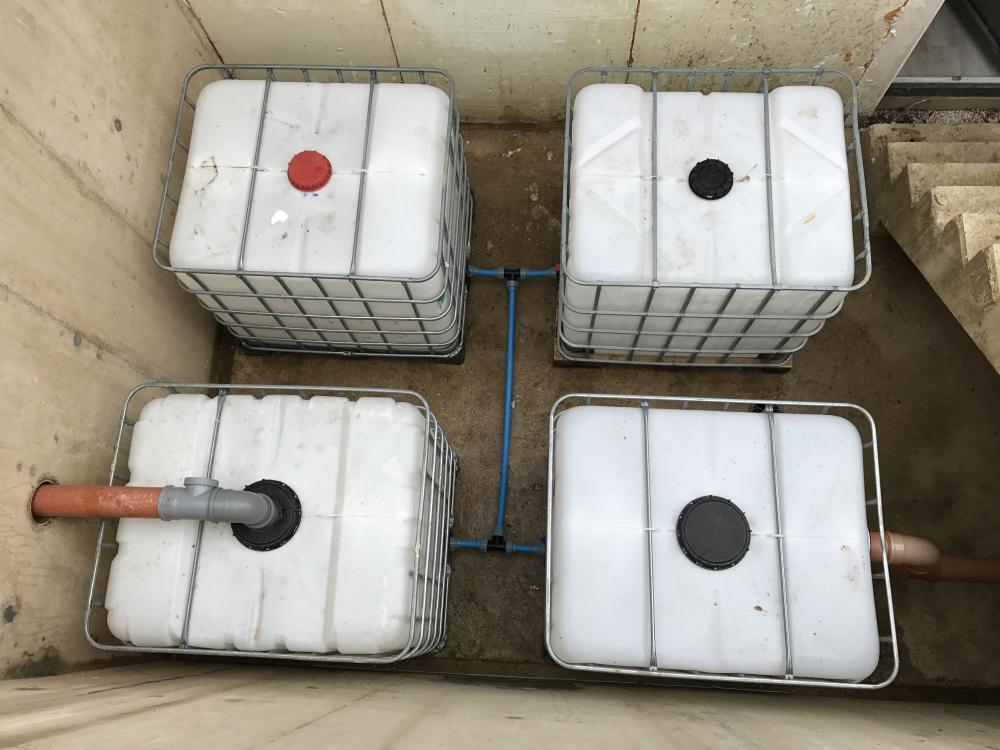
-
I looked at, but did not bother with rainwater for toilets as the additional plumbing complexity alone (separate cold feed circuit for every loo), plus the kit and provisions to meet water regs and run dry scenarios just did not make economic sense - was coming in at several thousand for a 3000l system I recall. My IBCs cost £60 each and the other gubbins about £40. Will spend about £50 on a submersible pump when I get a chance - finally have power under the deck where the IBCs are. Ok - I have a large concrete box but that was being constructed anyway as part of the basement additional means for escape and it was not that much more expensive to build a full depth box vs a half height. Regards drainage plan, nothing special here apart from ensuring that all the roof drainage (front and back) collects to a single 110mm feed into your system and that you have an overflow to a soak away. If you have ground level drainage (e.g. ACOs) these must drain separately to the soak away. No real extra cost doing this TBH, was just specified as part of the rain drainage system. Essential that you have hedgehogs and good gully screens to prevent too much cr@p going into the system, but you'll still need a good filter and clean it regularly.
-
I've not put a pump in yet so it's sitting in the dark being constantly replenished Will be for garden only. Not worried about bugs, it's quite cool down there and tanks are cool to the touch.
-
We had block piers built around the steels for our gates - contractor was wary of backfilling with concrete as he was worried that the weight of it as it went in could yank out cables for the sensors & lights. We had loads of sand & cement left over from the render so made a dry mix and backfilled it with that. Easy to go in and will go off over time, giving the pillars some additional mass.
-
We specced external blinds (Roma) with our Gaulhofer windows and had MBC leave a pocket in the frame for the cassette. They came factory-fitted to the windows and sat flush to the external wall when fitted - just as Craig says. We have them on every east window and they are very effective at reducing solar gain, there's one adjacent ground floor south facing window that I wish we had covered also - I still ponder on how we could do that
-
A Home Cinema Living Room
Bitpipe replied to puntloos's topic in Networks, AV, Security & Automation
Obviously because all his volume knobs will go up to eleven, needs the extra power to go one louder. -
A Home Cinema Living Room
Bitpipe replied to puntloos's topic in Networks, AV, Security & Automation
We specced a basement room as home cinema - it's not windowless, has generous lightwells front and back (2m wide). Ran the necessary power & cat 6 cables in roof for projector feed, control and screen and corner speakers also but have never got round to fitting out. Teenage son uses as his den, xbox, tv, guitars & drum kit. We watch TV in living room with a decent 55" tv and budget home cinema speakers in corners - works fine. Can't really see ever building a proper cinema - if I want a decent movie experience I'll go to the local cinema deluxe with the big flat bed style seats and cracking sound. -
Or a series of very small holes. We had to spend £5-6k on ground investigation to be confident of what was under our feet and to allow the SE to design the basement. We were prepared to walk away from the idea if it fell outside of our budget - which it almost did when there was a fear of made ground (requiring piling) On upside Our basement was roughly 11x10m (so excavation about 1m wider all round) and we did not fall foul of party wall as neighbours were >6m away. Clay/gravel/chalk strata with no water until 6m down. Large open site with plenty of vehicle access so we could accommodate 3x20t trucks at a time during excavation which sped things up. Most of excavate was gravel so easy to dig and it did not bulk up (clay bulks up 2x and chalk 3x when out of ground). Did basement works in fine August / September weather also. Did not require any sheet piling for the hole, was able to batter back sides. Warrantied waterproof concrete was sufficient, no membranes or sumps & pumps. On downside potential for chalk solution features (i.e. holes) meant that slab was 300mm thick and had lots of rebar. Walls also 300mm thick as they were cantilevered from slab - our choice to have an 'open top' box vs closed box (which would have been more structurally rigid and potentially needed thinner walls off setting extra concrete on lid. Spent £120k to get a 108m2 open box which included demolition of original house and all services or ducts aid (drainage, water & power/gas from existing). So you could say that £100k was basement itself. Saved whatever traditional foundations / raft would have cost. I don't think you could have had better variables than this and we had some good economies of scale.
-
Welcome - basements are not cheap but on a space constrained site can add a lot of valuable space. I built mine for around £1000/sqm. They can also act as the foundations of your house, especially if you are in clay and need to go 2-3m deep with trenches etc. Planners can to look upon them favourably vs above ground footprint - our basement is 30% of our internal footprint and was added after initial planning was achieved (new planning app) - no issues. The main challenge with basements is understanding what you're building into, some some spend is required on surveys (known as ground investigation) to understand the underlying strata, water table etc. Only then can the basement be properly designed (by a Structural engineer) and then costed. Avoid 'basement experts' as they charge a massive premium for what is a standard construction job for a decent groundwork firm. You can built a basement from poured concrete in formwork/shuttering and put a timber frame building on top (as I did) . Others do them in ICF and carry that up for the whole house structure.
-
We didn't get PP for a caravan (which we lived in for 18 months, was on site for 9 months prior to that and 6 months after). Paid council tax once it was occupied and the existing was demolished and had to keep paying until it was off site. Was to rear of house so that may have helped .


