Bitpipe
-
Posts
4118 -
Joined
-
Last visited
-
Days Won
53
Everything posted by Bitpipe
-
 It's not all bad news - all the costa del sol pensioners can come home and settle on the south coast, enjoy the same sunshine, egg & chips diet and speaking english at the locals.
 -
Exactly, I am a self confessed climate refugee (in this case 20 years of NI Atlantic coast weather) so find the SE balmy in comparison. So we'll colonise from the midlands up and abandon the SE to the tourism industry (will be too hot to go abroad). You northerners will need to move in with the Scots - plenty of room for you all in the highlands.
-
Ah I see. Well if the SE becomes climatically unpleasant to live in (wrt to the existing housing stock) and the midlands / north becomes the target zone then you may well see a migration over time
-
Not sure where you're going with that but let's keep the conversation focused on quality of housing stock and preparedness for an increase in temperature.
-
https://www.theguardian.com/environment/2019/jul/10/global-heating-london-similar-climate-barcelona-2050 Many of us recent builders have realised that the most challenging issue is not keeping the house warm in winter but keeping it cool year round. The accompanying water shortage is also going to be a real challenge - my limited experience with RWH (3500l) shows that we just don't get enough rainfall in the SE to make it sustainable.
-
Do you install window in the passive house bathroom?
Bitpipe replied to romario's topic in New House & Self Build Design
All our upstairs bathrooms have non opening windows. The front bathrooms each have a 2m horizontal high level window, just below roof level and a vertical narrow window (with privacy film). Our ensuite has a smaller window by the sink and the downstairs WC has no window at all. MVHR in all - while the unit has a humidity detector built in, we wired the MVHR boost trigger to PIR detectors and light switches in each bathroom (same circuit triggers the DHW return pump) so just walking into the bathroom ensures that the MVHR is in boost and there is hot water at the tap. Non opening windows (we have a few) are cheaper and let in more light as they have less frame. Friend has light pipes in some of their bathrooms and they are surprisingly bright. -
Plates from UFH Superstore, pipe from Boulder. DIY.
-
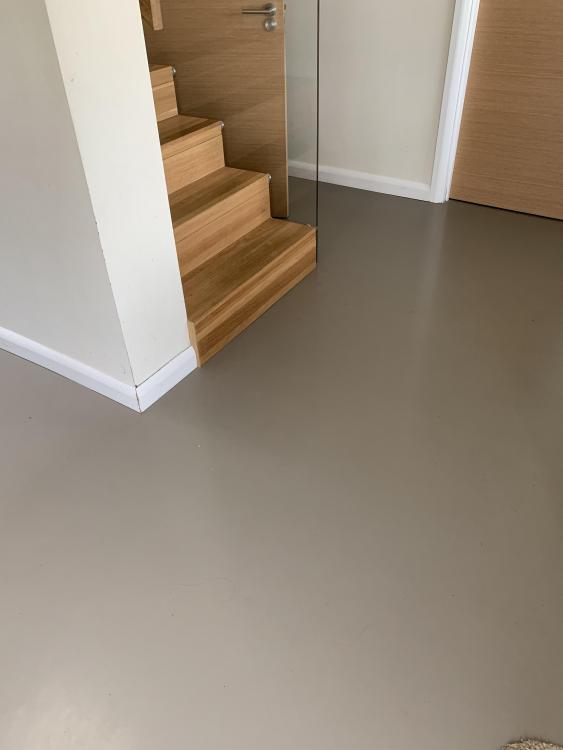
Worth saying that it’s been down 3 years now and is wearing very well - quick mop and it’s back to new. Was about £100/m2 so not much more than a large format tile when you include the labour
-
Sure - this is a continuous surface through the whole 110m2 ground floor, inc WC.
-
Yup - I stapled mine to the joists then, when pipe and deck were laid, stapled from underneath to the deck above to ensure a snug fit. Rockwool insulation underneath and then PB (as the basement is under this floor. As our floor deck is about 50mm of OSB, ply & resin, it heats up quickly but does hold the heat a little.
-
Please comment on prelim.budget
Bitpipe replied to Bored Shopper's topic in New House & Self Build Design
Our 110m2 basement was £1000/m2 before fit out (plastering, flooring, electrics, doors etc) and that included demolition of existing and water, power, telco, drainage to the plot. They key is to avoid any contractor with basement in their title. it's just a RC box in the ground and any competent groundworker can build one (they usually sub out the concrete works to a specialised crew). These crews are building underground car parks, etc all day long for developers so you're nothing special. SE will spec the necessary waterproofing requirements, if ground water is below the basement then a land drain to the perimeter and warrantied waterproof concrete (e.g. Sika) will suffice - no need for membranes or sumps & pumps. Site access and space will also impact cost as will the muckaway depending on whats in the ground ) clay, gravel, chalk etc. It's a great use of space on site and the best rooms you will have in your house - cool in summer and warm in winter. No heating required if you build off an EPS slab and clad external walls in EPS. Ours have 2m wide high level windows in GRP lightwells and are as bright and sunny as any room in the house. -
Please comment on prelim.budget
Bitpipe replied to Bored Shopper's topic in New House & Self Build Design
Basement cost looks high - we built a 110m2 basement (inc demolition & all drainage & services for house) for £120k in 2015 in Berkshire. Have you had ground investigation to spec the basement design (loading, water/gas monitoring / substrate analysis)? SE can only design basement (inc waterproofing strategy) when you have that and you can only get it costed when the SE has designed it. -
I put UFH in my suspended floor but had it underneath the floor deck on alu spreader plates. We put a resin floor on top (ply subfloor to minimise flexing). Is your UFH constrained to that area?
-
Do I need the Party Wall Act
Bitpipe replied to Willow's topic in Party Wall & Property Legal Issues
Per @PeterW's post, the key distance is that between your structures (which may be less than the distance between the actual walls when foundation widths are taken into consideration. The depth is relevant if you're going lower than their foundation depth which you'll need to guesstimate to some degree, when was their house built?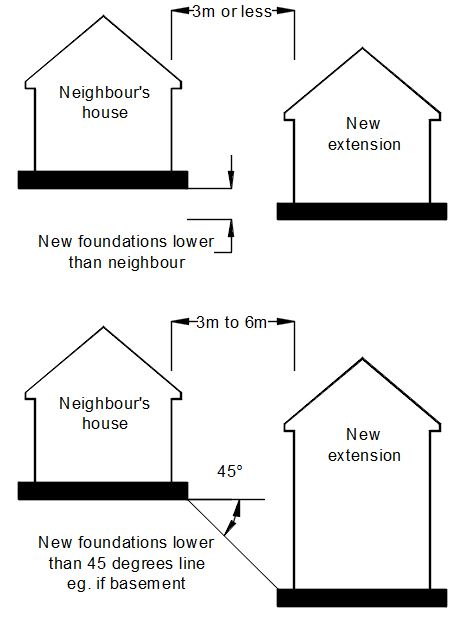
-
In a twist to this, when you do your personal self build VAT reclaim, they do ask you if you're a director of a VAT registered company and to provide that number, guess it's to catch some VAT scam or other...
-
Handle-less Remote Controlled Door Latch
Bitpipe replied to iSelfBuild's topic in Doors & Door Frames
But I reassure myself that I saved at least £50 by shopping around on hinges for the internal doors. -
Handle-less Remote Controlled Door Latch
Bitpipe replied to iSelfBuild's topic in Doors & Door Frames
No, the door was not cheap, not much change from £5k. However it is a very nice door. I keep reminding myself of that. -
Handle-less Remote Controlled Door Latch
Bitpipe replied to iSelfBuild's topic in Doors & Door Frames
I had the same issue when doing work on the paving. Had to upgrade the iPhone to an XR just for the face ID. That said, the sensor on the door is a lot better than the one on a phone - you need to slowly swipe the finger down across a horizontal sensor vs tap it on a whole finger sensor. Now, a FaceID style IR 3d sensor for the door would be neat... -
+1 on induction and eye level ovens (we have Siemens induction and the Neff hide & slide ones). What I love about induction is if a pan over-boils or splatters while cooking, you can just lift it off, wipe the glass and put it back down to continue cooking.
-
Handle-less Remote Controlled Door Latch
Bitpipe replied to iSelfBuild's topic in Doors & Door Frames
Yup - our front door (RK Passive) is just a slab with a keyhole, fingerprint sensor and a bar for pulling it shut behind you. Kids don't have keys, just their fingers on the door. -
Working for a s/w company, I can tell you that it's always broken so needs continual fixing....:)
-
As the old (new) adage goes - if you're not paying for the product, then you ARE the product.
-
Onv we wary We had a month's rainfall in an hour only a few weeks ago Be wary of wind as much as rain unless you want to go on a PIR treasure hunt...
-
Timber balcony > Extension.
Bitpipe replied to zoothorn's topic in House Extensions & Conservatories
Look more power to your elbow but you'll get an honest appraisal here, warts and all. And yes we can see your pics. My personal experience of NMAs (English LA) is that they need to be drawn to a recognised scale and quality to the original PP drawings - to save money I tweaked my own planning drawings sans architect to submit a NMA for slightly larger front windows and solar PV on the roof, however first pass was rejected as I got the scale wrong. So you many need more than a simple sketch. Also be prepared for the NMA to be rejected (as mine ultimately was) should the planner deem it to be a 'material amendment' and therefore require full PP. -
The house will need some kind of ventilation to meet BR - https://www.planningportal.co.uk/info/200135/approved_documents/68/part_f_-_ventilation Fundamentally, your house needs a minimum supply fresh air (per m2 floor area) and a means to extract damp air from bathrooms & kitchens (min flow rate per type of room). This reduces condensation (and the impact that has on the longevity of the fabric) plus is safe and pleasant for those living there. The min acceptable figures are specified in the BR spec above. So, if you have a leaky house (by virtue of construction method and trickle vents in windows) plus extractors in kitchen and bathroom then you'll probably meet the standard. However your ventilation will not be energy efficient as in winter that ventilation will also take heat that you've paid for out the window /fan with it and bring in cold air that you need to heat from scratch (and the reverse in summer). If the house is inherently airtight (which is much more likely if using ICF vs classic block & brick etc) then you may need to ventilate mechanically to get the necessary airflow, however the heat will still go out with the stale air and cold come in with the fresh (vice versa in summer). The last two letters in MVHR stand for Heat Recovery which means there is a heat exchanger in the fan unit that keeps the internal air at the same temperature by recovering heat on the way out from stale air and using it to warm the fresh air on the way in. Basic systems are not super expensive and can be DIY installed as part of first fix. There are more expensive options that can add supplemental heat / cool to the air but given relatively the low airflow of a ventilation system, they won't make a meaningful difference but can be used for trim. MVHR is only really efficient at heat recovery when the ACH is below 2 but contrary to some perceptions, you can leave doors and windows open in summer to your heart's content (as we do) and keep your MVHR running to keep bathrooms etc ventilated. Other benefits include filtering of incoming air to remove pollen etc.. again only effective while windows are closed.