Bitpipe
-
Posts
4118 -
Joined
-
Last visited
-
Days Won
53
Everything posted by Bitpipe
-
I put mine on 4 sleepers - ground was quite level as it was excavated specifically & covered with Teram to keep the weeds down.
-
Stairs should really be one of the last things you fit once all other messy trades have left. Two reasons - 1) you have the final floor finishes in so no risk of screwing up the measurements, 2) no risk of the stairs getting wrecked by trades We got our TF supplier to fit some temp MDF stairs (with a bit of tweaking, they never quite fit) from the outset and they worked great - I must have taken them off and put back on a dozen times during the build to allow boarding, plastering, painting etc.. - they were pretty knackered at the end but still serviceable. Others here have built temp stair cases themselves or used a scaffolding solution. I used https://max-stairs.co.uk/ who were good and had some very contemporary styles - we have one 'traditional' oak staircase to basement and then two cantilevered stringless staircases to upper floors - very cool. Aftercare was a bit hit and miss, they were meant to come back to rectify a final riser in the loft that was not flush with the floor (the floor is out, not their stairs) but I never chased them and TBH it would have been an extra for me & would not be a big deal for a joiner to fix - its on my eternal to do list. However I'd still recommend them.
-
Most architects will give you a free hour on site to discuss possibilities. Do a birds eye capture, A4 size, of your house & plot inc access (i.e. from google maps) and you'll have a rough site plan that they can doodle on. Depending on where you are in UK you can expect between £1500 and £2000 per m2 for a new build - depends if you are able to manage the project or rely on a main contractor. Also get a local builder to give you a rough estimate for a standard extension (easier than pricing up a new build) and a refurb of existing. Your best insulation option is probably EWI so you could get a quote for that too. Remember to add VAT to all of this and a healthy contingency (30%) for 'unknowns'. New builds will obv. cost more (do take VAT into account) but you get what you want and are pretty straightforward so easier to budget for. Refurbs can throw up 'surprises' and will always be a compromise of old and new, but should cost significantly less.
-
It's worth considering - we were in a similar position having bought a very tired 1950's detached that had little change apart from an 80's double glazing install. Bit the bullet, demolished it (£5k cost) and was able to put a passive standard house in its place, fixing some significant plot positioning issues (it's a rectangular 1/2 acre plot and the original house sat at 30o off centre) plus created a 6m access to the rear for future development option. I've met four or five other self builders over this period, including one set of good friends, who did major alterations and just wished they'd gone the demolition & new build route as they all had issues tying new to old or ended up with one or two walls standing but paid full VAT on the build. Also, our build (timber frame) was about 6 weeks from start of frame erection to fully finished exterior (rendered walls, slated roof, windows & doors) and that was a mid November start. We moved in the following August, living on site in a caravan (very cheap and not that uncomfortable). We built a basement first which took about 8 weeks, a simple passive slab would have been much quicker (few weeks including groundworks). If you're just planning to upgrade the existing and not change the footprint at all then it's probably too extreme an option but if you have bigger plans then sit down and crunch the numbers.
-
If you're planning a major expansion (e.g. removing roof and external walls) then consider demolition & rebuild. Zero rated for VAT (i.e. you have 20% more budget) and you build to one set of standards vs tying in new with old.
-

MVHR is Largely Bogus
Bitpipe replied to DavidHughes's topic in Mechanical Ventilation with Heat Recovery (MVHR)
One downside of the low humidity in our house (as a result of MVHR, passive standard build etc) is the poor old Christmas tree shrivelled up within a few days, as did the sprig of mistletoe. Upside is orchids seem to thrive, usually they die off after the initial flower but we have a few that are still going strong years later. -
What's the benefit of going for certification? I don't believe anyone here has gone that far (I recall for us it was £2000 in specific consultant costs with no obvious benefit) and also restricted choice on MVHR / heating systems etc. That said, we meet or exceed passive standards across insulation, airtightness and heating / cooling requirement so that's good enough for me. Can't imagine it would increase the value of the house, perversely it would probably reduce it ...! To the OT - I agree with the idea to have a decent airtight door between garage and house and then get decent Hormann insulated garage doors or equivalent.
-
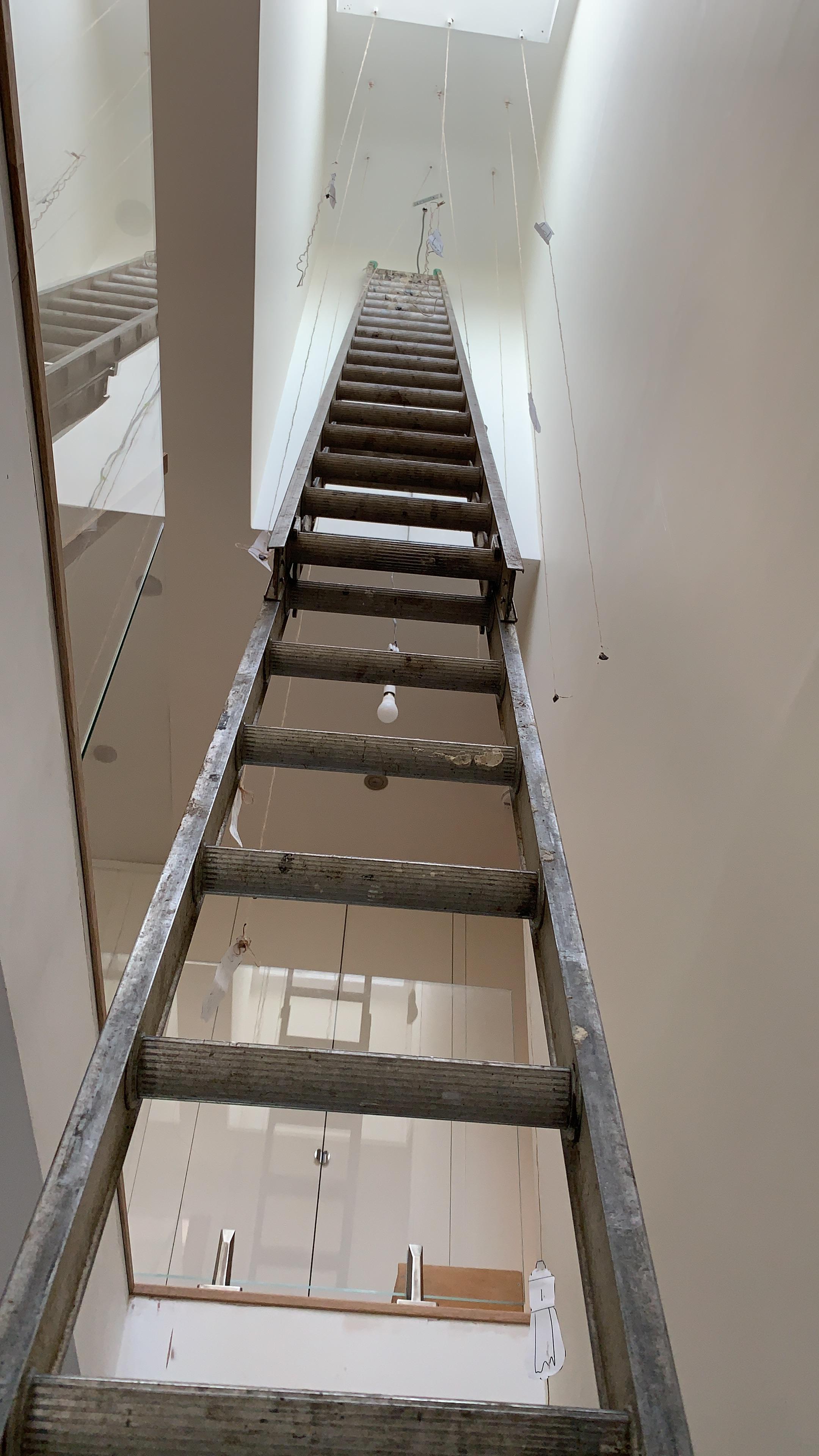
I now know how those astronauts on the ISS feel when they suit up, go outside and realise that they've left the long nose pliers inside. Did I mention that I don't like heights
-
Cheers Declan - nearly broke me :) There were almost tears on two occasions - first when the temp bulb did not work. Quick call to sparky and he reminded me that it had not been connected at the wall switch - how he remembers this 4 years on is beyond me. Second when only one set of the 3 bulbs came on - there's 3 sets of 3 daisy-chained waygos inside the rose (L N & E) - one of the in-between wires had popped out when putting the rose cover on (had tested it first). Of course the ladder had been put away at that stage...
-
We've had a full house at xmas (12) this week so there has been a full washing up rota - can't hang about waiting for the dishwasher. Interesting variation in style - The locals fill sink with hot soapy water and wash cleanest items first, working up to the greasiest. Maybe refresh the water once mid wash. - The continentals think that is disgusting and just run the tap into an open sink and wash each item individually. I suppose it's bath vs shower efficiency...
-
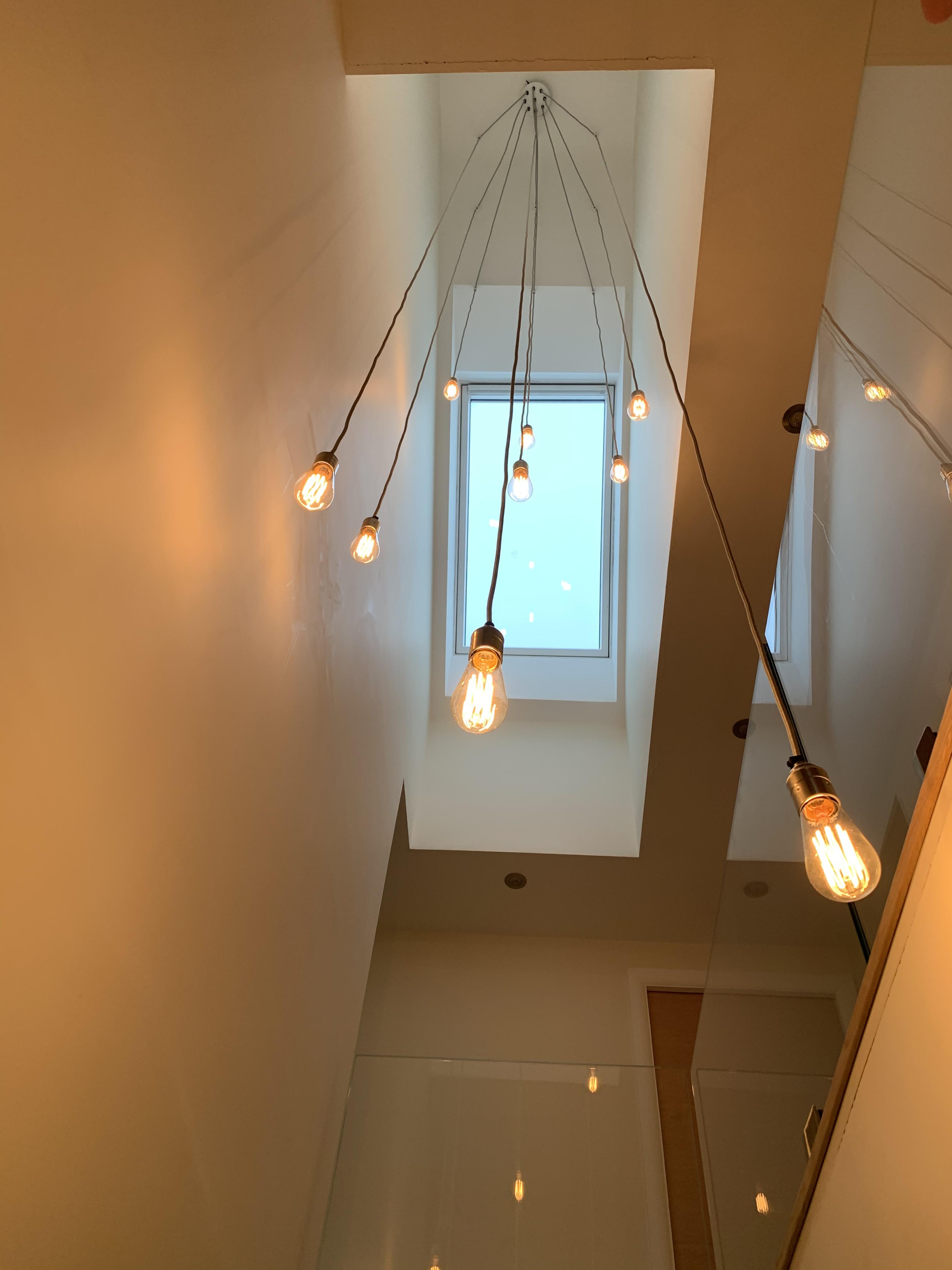
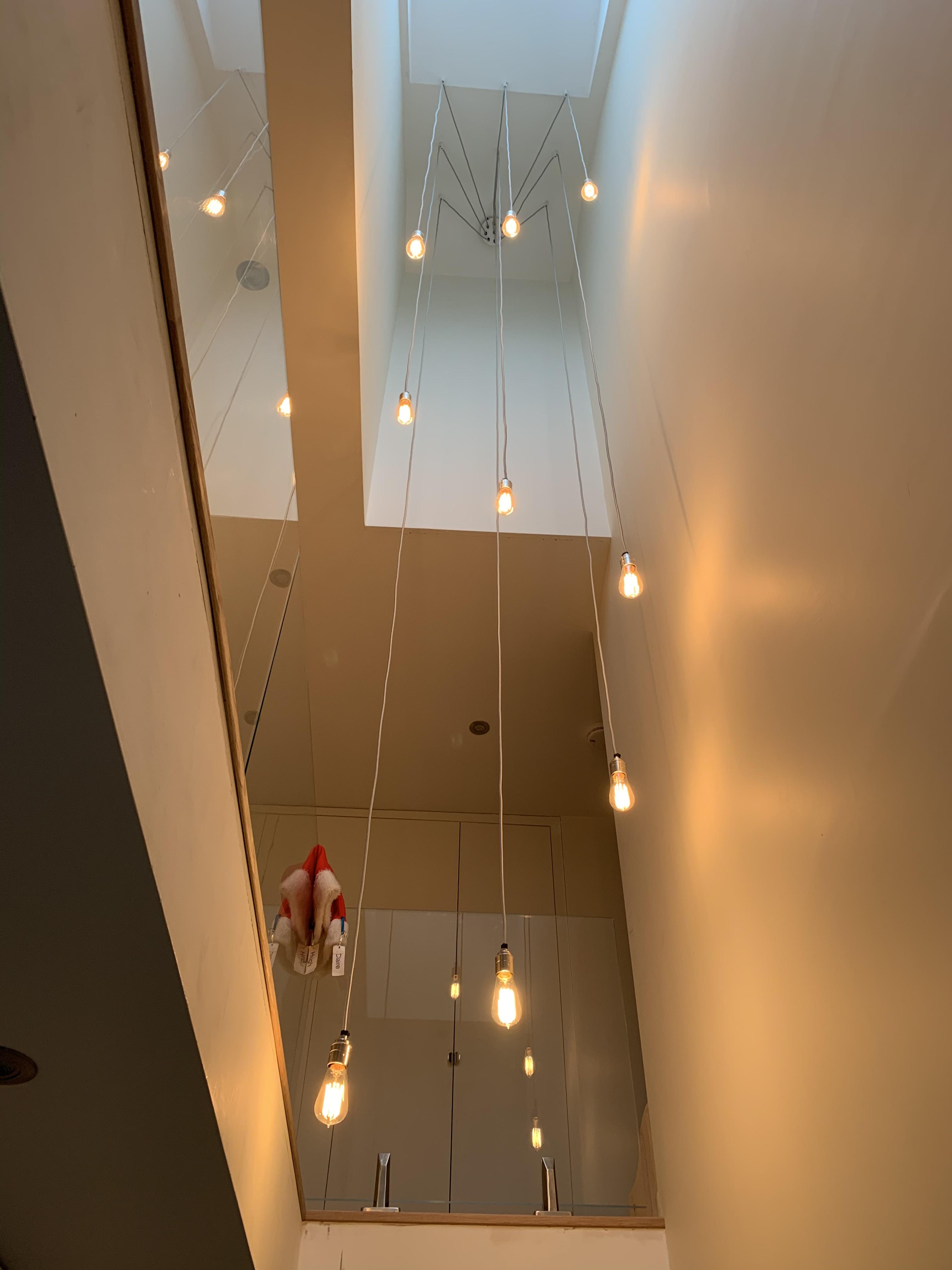
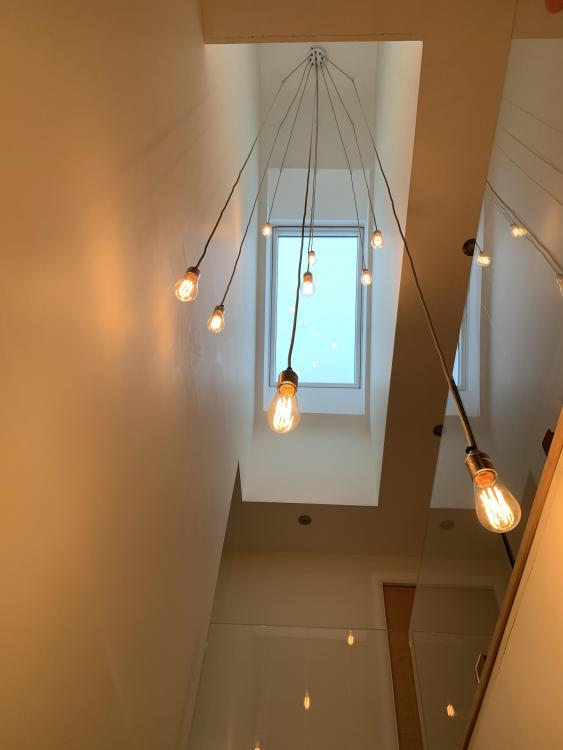
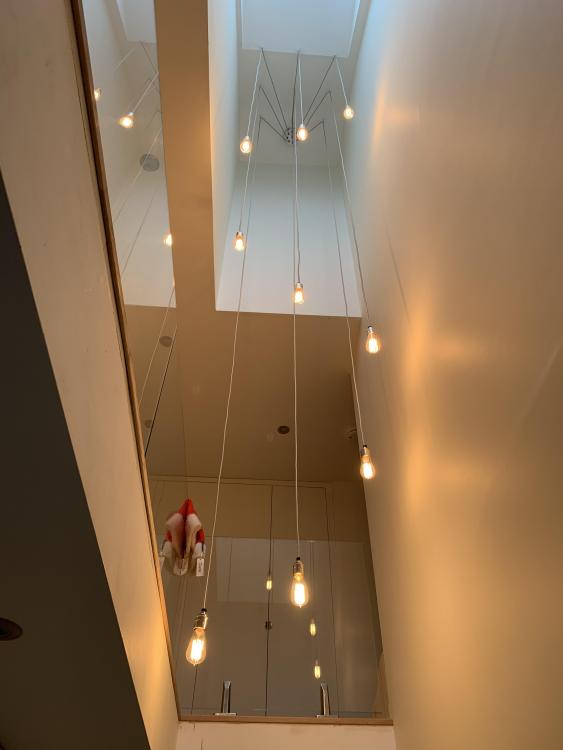
Finally got round to installing our light feature - we bought the 9 hole rose, bulbs, holders and 36m of fabric cable from Dowsing & Reynolds during the build (so saved the VAT) but only pulled the finger out to get it in for Xmas. Can’t say it was a heap of fun as the atrium ceiling is 7.5m up and is only 1m wide so a bit claustrophobic and quite warm. Also very limited safe movement when up that high. Put up paper bulbs on string and pins first to get the spacing right and then installed the ceiling fittings. Quick spreadsheet to calculate the individual lengths (and some trig. to allow for the different heights, horizontal runs etc. Finally measured it out, checked a dozen times and then cut and fit the cable and then installed them 3 at a time - very fiddly but as the rose came with waygo connectors was a bit easier. Only issue was I couldn’t get the screws in on the side of the rose as it needed a firm hold and then getting screw in and turning it which just did not feel safe that high up so o improv wised with zip ties and they worked great. Just need to adjust the middle bulbs as I over estimated the horizontal run so they’re about 10 and 5 cm too long. Will probably never turn it on now ...
-
If VAT is not explicitly called out on the receipt then you use part E of the claim form where you calculate it yourself. Part D is for standard VAT invoices. I had a few that had no VAT number on them, I just wrote it on having found it elsewhere.
-
MVHR is Largely Bogus
Bitpipe replied to DavidHughes's topic in Mechanical Ventilation with Heat Recovery (MVHR)
May be worth paying for an airtightness test before committing to the MVHR investment. Remember that your external doors need to be airtight, as do windows - no letterboxes or cat flaps, bathroom / kitchen extractors etc. I think there is general agreement here that there is air quality improvement with MVHR but the degree of that is somewhat subjective, as is whether it is a worthwhile investment. The heat recovery is more empirical but is highly reliant on very good airtightness (<2ACH). The title of this thread is a bit misleading - would be better phrased as a question or a 'In my renovation experience...' -
MVHR is Largely Bogus
Bitpipe replied to DavidHughes's topic in Mechanical Ventilation with Heat Recovery (MVHR)
I suppose it's a circular argument House is airtight to minimise ventilation heat losses therefore needs a ventilation system that minimises heat losses, or vice versa. -
MVHR is Largely Bogus
Bitpipe replied to DavidHughes's topic in Mechanical Ventilation with Heat Recovery (MVHR)
Good discussion - and really appreciate the original alternative viewpoint / experience. My view - if you're building an airtight, near passive standard house (with ACH under 2, ideally less than 0.6 - BR is 10) then MVHR is a necessity to have a BR compliant healthy environment. The Heat Recovery is a bonus and helps reduce heat energy waste through ventilation. If you have an existing house and retrofitting, then it's more of a crapshoot for all of the reasons given above. I have a friend who refurbed and extended his 1980's developer detatched house and he fitted MVHR but was realistic about the energy efficiency savings. He feels he has much fresher air year round and no condensation in bathrooms or kitchens. -
Same with me - all our glazing is 3G passive standard which means it's doing the job. Remember as a kid chipping ice off the inside of the single glazing at home in winter
-
Our plot is 1/2 acre so just over 2000m2, makes the price we paid £341/m2 and as it had mains sewage, water, electric, gas & BT plus established in / out access (and a habitable 3 bed house to boot) then I guess it was a bargain It's a rectangular ish plot (27m wide at front and 17m at rear, 100m long) when we positioned the house we maintained a 6-7m gap down one side from one of the access splays to enable potential development at the rear (if planning was ever granted). Back half of the garden is a bit of a wildlife wilderness
-
For turnkey, I don't think £2200/m2 is outrageous for SE England. The initial QS / turnkey estimates we got for our near 400m2 build (basement, + 2.5 floors) in Berkshire was about that if not a bit more. We pulled it closer to £1500/m2 but that was by doing PM ourselves and really drilling into costings, doing some work ourselves (MVHR) etc.. Land costs what it costs - our plot was £700k with an existing house on it (which we lived in for 4 years prior to the build starting). Flip side is property prices are much higher here so we more or less came out whole.
-
Mvhr official testing
Bitpipe replied to Simon Brooke's topic in Mechanical Ventilation with Heat Recovery (MVHR)
Maybe we need to start a certification program - BuildHub Ultimate MVHR Expert or BUM Expert for short. -
Decent MVHR install video
Bitpipe replied to JFDIY's topic in Mechanical Ventilation with Heat Recovery (MVHR)
I left my plenums proud of the ceiling for boarding and skimming. Should have trimmed them after boarding as the plasterer found them tricky to navigate round, especially when close to the edge of walls in a few rooms. Doesn't really matter as the cowls have a large lip so hide any roughness at the edges. -
I had a QS draw up a detailed cost plan before starting and it certainly made getting quotes easier as all of the quantities were calculated & itemised. Also was able to use the default costings as a guide and 'price to beat' when finalising quotes.
-
If you've got planning permission already then you're obviously past the thinking stage Show plans etc and we can help.
-
Mvhr official testing
Bitpipe replied to Simon Brooke's topic in Mechanical Ventilation with Heat Recovery (MVHR)
Write back and ask him to confirm the qualifications / professional industry memberships that the 'specialist' must have to satisfy him. Did you use a calibrated bit of kit to do the initial testing & measure room flows against the regs? Most of us here wrote up a formal looking report and send that to our BI which satisfied them. -
I also am a big fan of Quooker - give them a call once a year and a free descaling kit is in the post that day. An hour's job to get it sparkly clean again.
- 3 replies
-
- 1
-

-
- quooker
- boiling water tap
- (and 1 more)
-
What doesn't kill you* makes you stronger. *Nothing like a self build to showcase some novel new ways to accidentally kill yourself. Or at least temporarily rob you of your dignity