


Crofter
-
Posts
3484 -
Joined
-
Last visited
-
Days Won
11
Everything posted by Crofter
-
I've used Siga Corvum tape around the windows, with a 48mm/12mm split. Very easy to use and the plasterboard reveal hides it. You do have to be fairly patient and careful. I ran short by about one metre and got given a few feet of a different (non split)tape by a neighbour. Much, much harder to use!
-
Good old table salt... 520J/kg... you may need a slightly hotter oven to melt it though.
-
Interesting thread. On a related note, I was told that it's good practice to always twist together the wires of an open circuit, say if you're half way through a job and coming back the next day. So if it is accidentally energised, much safer to trip the breaker than to leave open live wires.
-
Missing In Action
Crofter commented on AliMcLeod's blog entry in A house! A house! My kingdom for a house!
Thanks for taking the time to keep us updated. It's the sharing of each others' trials and tribulations that really makes BuildHub such a valuable resource- a problems shared being, hopefully, a problem halved. I know what you mean about choosing a non stressful time to build... self building itself must be one of the most stressful things that anybody can voluntarily go through with their family! We did the apparently obligatory 'have a baby just after you've broken ground' bit. There's never going to be a perfect time to build, so just get on and try to enjoy it -
I had a lovely view out my front window and then some b*gger came along and built a little house there. Fortunately it was me so no point losing sleep over it!
-
So, Armstead contract white is in progress... anybody got anything good or bad to say about Armstead Trade Vinyl Matt as a final finish? Tin says it's suitable for commercial/institutional use, but doesn't mention being washable/scrubbable/wipeable. Unfortunately the next step up that I can get locally seems to be three times the price. I don't think I can get this sort of thing delivered.
-
My innocent little mind can figure out one of those, take a stab about another, and no idea at all what the last one is! [moderator hat on] please don't spell it out [/moderator hat]
-
Whilst I've been luckier than many, I do tend to take the view that, if possible, confrontation is best avoided. These people are going to be your neighbours for potentially a long, long time, and being on good terms with them simply makes life far more pleasant. In my experience it's very difficult to undo a falling out. And you might be left crawling back asking someone to feed your cat for the weekend, when previously you've told them to eff off.
-
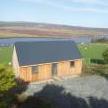
I suppose I'm quite fortunate in that my very small build, using simple materials, has received nothing but positive comments from neighbours and passers by. We received no objections at the planning stage either, and almost every person who lives on the road has in some way helped with the build, whether that be by helping lift the frame, or lending me a scaffold tower, or spending a day on the roof helping me install the membrane (not a one man job). I've actually got to know some of my neighbours much better thanks to the project. It's been great to have everybody on-side. I did speak to the nearest neighbour when drawing up the plans, and the house is sited so as to preserve his view of the Outer Hebrides from his studio.
-
Well, one of my three 10mm samples did just fine. The only difference was that it was matte finish and the other two were glossy. I'm going to order some more samples just to make sure, but as I prefer the look of the matte anyway I hopefully have a winner.
-
I would really need a much larger collection of samples to be more scientific about this, but SWMBO is already complaining that I've stolen all her best pots and pans, filled them with water and bits of bamboo, and left them lying all over the house. Thickness may be one factor, but I can't do a like for like comparison there. However the 10mm strand woven matte has faired better than some of the thicker samples, albeit those were of different construction and finish. I am very tempted to stick with strand woven, since it is supposed to be the hardest wearing, and the ability to sand it back would be a bonus. At the moment the cheapest SW option from the Bamboo Flooring Co is a Uniclic system which is a big jump up in price.
-
Discount Offers of the Week
Crofter replied to Ferdinand's topic in General Self Build & DIY Discussion
If they're the same as the one I got a year or two ago, then yes nice little gennies. Look similar to the sub £100 ones you can get but proper inverter output and I think a wee bit quieter. -
I've done another batch of immersion tests and found something quite interesting. Out of the simply bamboo 10mm strand woven, the results are: Natural finish glossy- fail Coffee finish glossy- fail Coffee finish matte- pass I did have a natural finish matte sample but it's gone walkies. By 'pass' I mean that the surface remains intact, even if there is some swelling or distortion. 'Fail' means that the surface has begun to break up. I wasn't expecting the finish to affect the reaction to immersion, but the test suggests that it does. @JSHarris IIRC your sample was also matte, yes?
-
Interesting, and slightly worrying. Cable is not especially complex stuff... what can go wrong with it? Wrong material used for insulator? Wires thinner than stated? Poor quality copper leading to breaks and potential for arcing?
-
I went for some products from Barretine, a timber preserver and a top coat of log cabin oil. Can't give a full report as I have yet to actually finish! I've given the cladding a single coat of the preserver prior to installation, then plan to do a second coat and the top coat in situ. I've decided to switch from cladding to more urgent internal work so will let you know how it goes in a few weeks time.
-
Thanks for that Jeremy, interesting. My sample of strand-woven was the cheapest one from 'simply bamboo', and is only 10mm thick. I think I'll have to continue the hunt as I'd be reluctant to use it given how poorly it fared when it got wet. I might have to employ some of Ferdinand's tricks to get discounts from the likes of Wickes/TP. I can spend another £2/m2 there because of the money I'm saving on delivery!
-
Thanks @JSHarris for that very thorough and persuasive analysis. You put the media to shame!
-
'Nother newbie thinking of developing garden plot
Crofter replied to Dinosaur's topic in Introduce Yourself
Welcome aboard, sounds like a good project.Feel free to ask as many questions as you like- if you stick them in the relevant forum sections and add tags, that'll help people find them. Good luck -
I've got one (actually two, but I won't go into that) of the Lidl ones. Not particularly impressed, to be honest. What did I expect for £50? Seems just sloppy enough to ruin accuracy, and the casting on the table clamp broke the first time I used it. Without a working table it's next to useless, as there is only 50mm of travel.
-
Given that there are no point loads involved, a piece of PIR/PUR may well be perfectly fine underneath the window. In my case there are a couple of wooden packers that gave me the ability to level up the window during fitting. As I said earlier in the thread, don't try to get carried away with making everything a tight fit. I left a 15mm gap all round and that was just about perfect for getting the nozzle of the expanding foam gun into. Anything less would have been a right PITA.
-
Greetings - Thinking of first self build
Crofter replied to paul1979uk's topic in Introduce Yourself
Welcome to the forum! How much a self build costs is a bit of a 'how long is a piece of string' question, but there are some lower limits beyond which it is very hard to go. Most people opt to improve the spec in key areas and this inevitably pushes the price up. The general rule of thumb seems to be about £1000/m2 is as cheap as it gets (you can go lower with lots and lots of DIY labour, secondhand goods, and careful design). Some pretty desirable houses have been built for not much above that basic figure, and it's not at all hard to spend £2-3000/m2 if you really push the spec and offload more of the work to a main contractor. -
It's much easier to seal up a 15mm gap than a 3mm one.
-
What about an engineered joist? Probably overkill but it would be nice and straight/level. You can get a 47x300 but not down to as narrow as 38mm.
-
Discount Offers of the Week
Crofter replied to Ferdinand's topic in General Self Build & DIY Discussion
I'm not sure if they would take the gennie back- you have to fill the sump with oil so it wouldn't be possible to just shove it in the box and have it put back on the shelf. -
Discount Offers of the Week
Crofter replied to Ferdinand's topic in General Self Build & DIY Discussion
I've got the generator. It's not as noisy as some of that type, but noisier than a Honda suitcase gennie, obviously. I've not used it much but so far have been quite impressed- starts easily, very portable. I use it to drive a 1400w pressure washer which it does much better than even my limited arithmetic suggests is possible.
