Crofter
-
Posts
3451 -
Joined
-
Last visited
-
Days Won
10
Everything posted by Crofter
-
New diesel and petrol vehicles to be banned from 2040
Crofter replied to Triassic's topic in Environmental Building Politics
If you're worried about the 10%, buy a hybrid. Nobody's banning them. -
New diesel and petrol vehicles to be banned from 2040
Crofter replied to Triassic's topic in Environmental Building Politics
I doubt many people are scrapping cars for the same reasons that they discard personal electronics or clothing. It simply comes down to economics rather than fasion/greed/laziness. Last year I had to scrap my 11yr old Kia with 100k on it. I really, really wanted to keep it but the figures didn't add up. It was costing an average of over £500 a year in repairs/MOT work and a rusty subframe was an outright death sentence. Perhaps nine years in the Hebrides was to blame? -
New diesel and petrol vehicles to be banned from 2040
Crofter replied to Triassic's topic in Environmental Building Politics
You must have more stamina that I do! if I've just driven 200 miles, I'm going to need to stop for more than three minutes. Twenty would be a minimum, I would say. -
You could, of course, argue that a hole saw that is fractionally too shallow to do all the way through is actually perfect, because it forces you to finish the hole from the other side which will make a much neater job without breakout. Assuming, of course, that you can access both sides! And assuming that you care about the appearance of something that will be boxed away and never seen again...
-
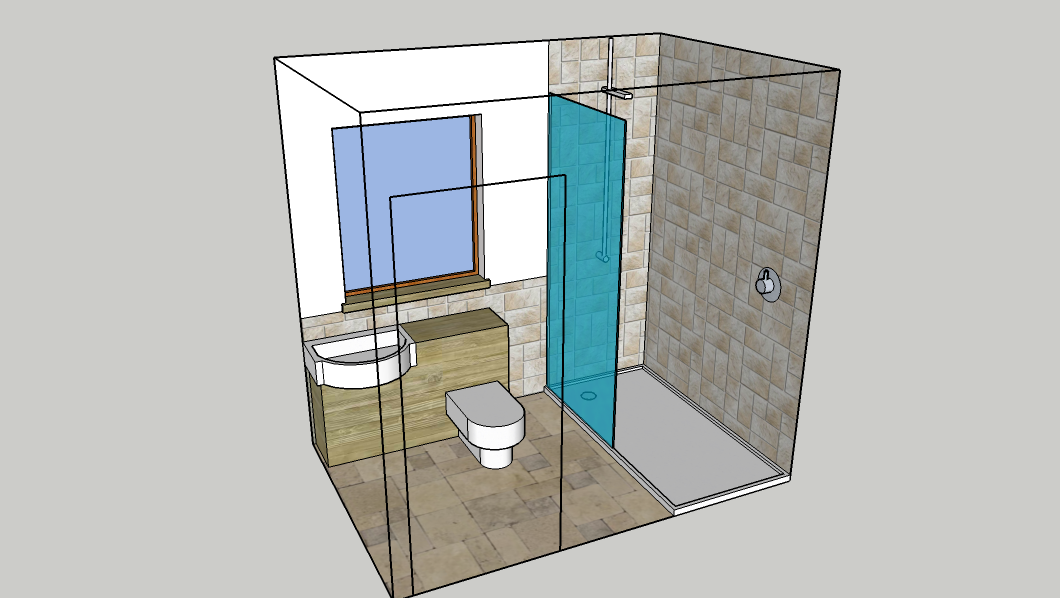
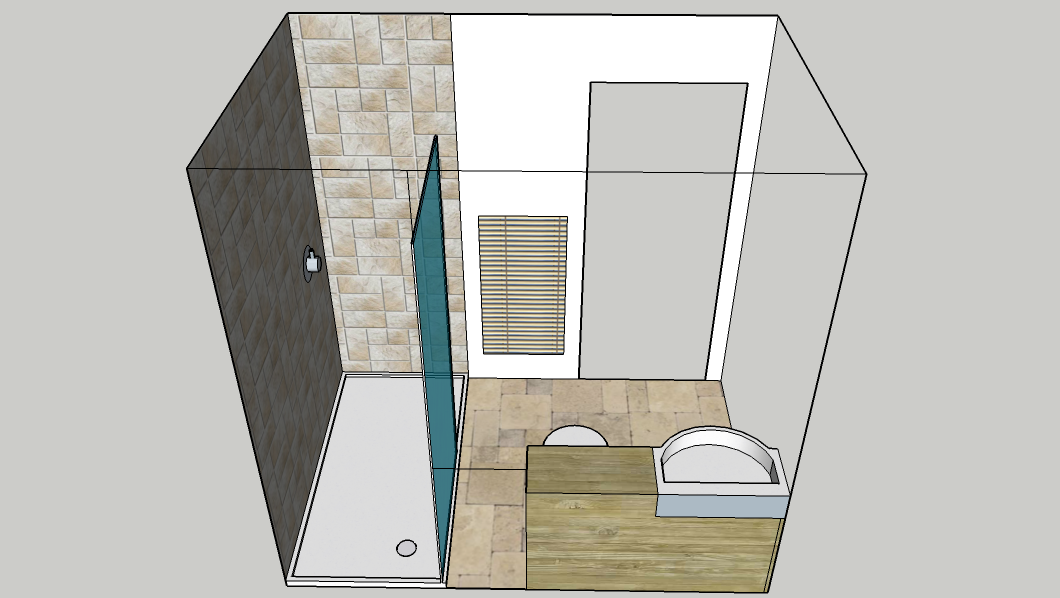
Shower, tray, tiles, and all the rest...
Crofter replied to Crofter's topic in Bathrooms, Ensuites & Wetrooms
One of my concerns was that my towel rail was too close to the shower- but that picture puts my mind at ease -
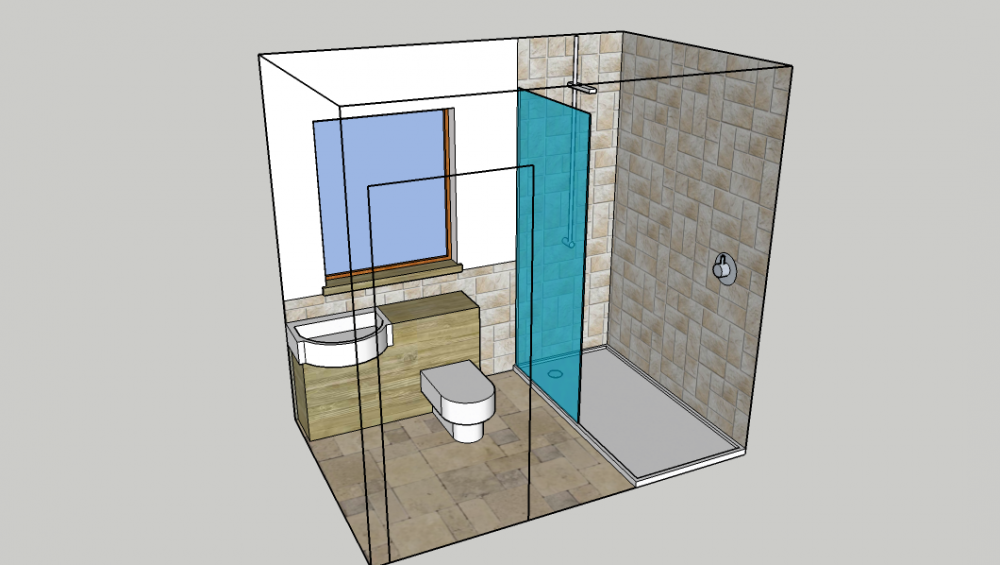
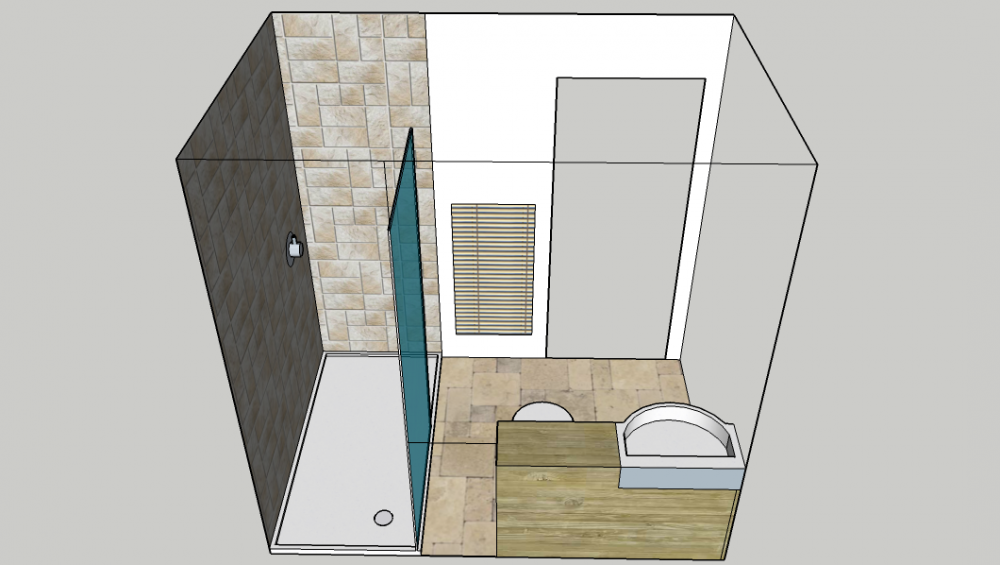
I'm on the final stretch now with this little house. The last room to need significant decisions made is the en suite so I figured I would stick all my questions in the same place on this thread. The room is 1600x2400 and has a basin/wc unit (already in place, although the install is temporary for now). The shower will run along one full wall and have a fixed glass screen and full length tray. Flooring is just going to be vinyl, and I'm planning on a part tiled, part paint finish on the walls. An electric heated towel rail will fit on the wall beside the door- a tight space but I can get a 500mm wide one in, just. So.. first question. When looking at the tray and screen, is it best to get these as a package? If sourced separately, am I running the risk of incompatibility where the screen seals to the tray?
-
Ther are some calculators available online that give a rough estimate of required stove size, but they have to make assumptions about how well insulated your house is so are very rough guesses, really. Stoves work best when they are running near flat out, so you want to size it for the expected heating requirement and not go for something too large. I've installed three different woodburners and none has been more than 5kw output; all have done a fantastic job of heating the rooms they were in. I installed a 5kw stove in a 18m2 living room and usually kept the double doors open to the equally large kitchen, as the heat was plenty for both rooms. This was in a house with pretty minimal insulation. In terms of make/model, there is a surprisingly large range of variation. Key thing is the efficiency. Each stove I have installed has been of a higher efficiency, and you can tell from the design that more thought has been put into it. So my first one was from Aarow, and was pretty basic: sliding air controls, airwash taken from the front. Next was a Charnwood, which uses rotary air control which gives a far better seal, and which draws airwash air from the back of the stove, heating it in two tubes hidden within the stove. The result is preheated air blasting down the glass and keeping it spotless. Newest one is anothe step up again, a Burley which at 89% claims to be the most efficient available. Double glazed window, fully lined/insulated firebox, all air fed from an external source via preheating chambers within the stove. And it works- I have never had a stove that burns so hot, keeps so clean, and leaves so little ash. In fact I have yet to take any ash of out it at all. The only downside of a high efficiency stove is that, because all of the heat is directed into the room, there isn't very much left to waste up the chimney. If your chimney struggles to draw, this can cause a problem.
- 14 replies
-
- 1
-

-
- log burner
- wood
- (and 1 more)
-
New diesel and petrol vehicles to be banned from 2040
Crofter replied to Triassic's topic in Environmental Building Politics
Population growth is only a taboo in as much as it is a massive economic driver. It is also not a given. As countries transition towards better living standards and healthcare, birthrates fall. In the West we now see populations begining to stagnate, and there is little reason to presume that this trend cannot continue to spread across the world. My own granny was one of ten children, perfectly normal two generations ago. Now anything over two kids is unusual. Don't make the mistake of saying that certain countries or cultures will never change. But back to cars. Grid connection can be the key here. Peak vehicle use is around rush hour, with the majority of vehicles sat parked up during the day. So long as they are parked somewhere that they can be charging up, then there is no problem with using them as a dump for PV output. But this has to be done on a national scale. Another factor which we haven't yet discussed is changes in working patterns. We ought to all work out of our (paperless) home offices by now, but it hasn't quite got there yet. That is the general direction, though, and automation might accelerate it, along with other changes at which we can only guess. -
New diesel and petrol vehicles to be banned from 2040
Crofter replied to Triassic's topic in Environmental Building Politics
There's also the concept of vehicles becoming integrated with the grid, as storage. Quite a complex one to get right, but compelling nonetheless. -
New diesel and petrol vehicles to be banned from 2040
Crofter replied to Triassic's topic in Environmental Building Politics
My guess is that ownership and useage habits will have a bigger impact than the way we power our vehicles. Driverless cars that are in near constant use, and simply rented out like a taxi when needed, make quite a compelling case. For the vast majority of the population it will make more sense to hail the nearest vehicle via your phone, and simply pay a relatively low fee per mile, than to actually own a car with all of its attendant costs and hassle. If ridesharing continues to grow, we might see buses gradually replaced by multi-seat driverless vehicles all taking a few people on a point to point journey. For people like me, out in the sticks, it makes far less sense. But people like me are too small a proportion of the population to really matter. Also someone is going to have to come up with a clever way of integrating child seats into cars, because people are not going to walk around carrying them. -
New diesel and petrol vehicles to be banned from 2040
Crofter replied to Triassic's topic in Environmental Building Politics
Where did you hear 2050? I heard that there was no date for taking existing ICE vehicles off the road. It would be nice to think that a solution can be found whereby the small numbers of classic/older vehicles, doing very small annual mileages, can be kept on the road. Perhaps a mileage based system? -
New diesel and petrol vehicles to be banned from 2040
Crofter replied to Triassic's topic in Environmental Building Politics
Do we allow ageism on this forum? The problem with generalisations- whether they are based on race, gender, age, income, whatever- is that they are wrong. Not just morally wrong, but factually wrong as well. No group of people is entirely homogenous, so as soon as you start using terms like "they are all lazy/greedy/etc" then you are onto a loser. Can we get this thread back on topic, please? -
Water carries much more energy than air can. This is why central heating uses pipes filled with water, not air. To heat a house using air, it really works best if the house has low heating requirements. However the big advantage is the easier and cheaper installation of a warm air system, compared to a full wet central heating system. In other countries, e.g. the US, warm air heating is very common. It's still quite unusual over here, probably because ot's only relatively recently that houses have become efficient enough to have sufficiently low heating requirements in our climate.
-
That would be a real shame if you can't get a readymix or volumetric lorry on site- it's quicker, easier, cheaper, and the concrete may well end up higher quality. Or at least more consistent. I know that when I did my founds, I couldn't beat the price of the volumetric lorry by site batching. But to answer your actual question... 5:1 ought to be OK. A lot depends on the quality of the aggregate. Ideally you want nice sharp angular crushed material, from say 20mm down to fines. Poor quality ballast will instead have some fairly rounded pebbles in amongst sand, and not much in between. That will need a stronger mix to compensate. If you can't get a truck on site, how are you planning on getting the aggregate delivered?
-
Hi and welcome MVHR is a ventilation system, and does not replace a heating system. There are essentially two ways to ventilate a house: the traditional 'accidental' way, using trickle vents and various random leaks around windows and within the fabric of the build, and the 'controlled' way, where you seal up the house as much as possible and then use a fan and ducting to blow fresh air into the house, and to extract stale air. It's fairly obvious that accidental ventilation leads to a lot of random variation. Some corners of the house are too drafty, others are stuffy. The amount of ventilation will depend entirely on wind speed and direction. If you choose to control the ventilation, you can have a constant supply of fresh air directed exactly where it's needed. And as a bonus, if you control ventilation using a MVHR system, there is a heat exchanger which recovers the warmth from the stale, moist air that you are getting rid of. A good system will recover 90% of this heat. Compare that to simply opening a trickle vent where you recover 0% of the heat. There is a running cost for the fan, but it is likely to be less than £50 a year. In a new build, it can actually be easier to aim for an airtight house and then use MVHR, rather than try to build a leaky but not too leaky house that gets by without. If it's too leaky, it fails building control altogether. A MVHR system should cost around 2% of your build budget, give or take. Yes it is an expense, but the rewards are better indoor air quality and lower heat loss. It also helps your SAP score, which means you can pass building regs more easily and might not need such expensive windows or insulation.
-
I might need to put up some friends in the unfinished house (hope no Council Tax assesors catch me!) and the hot water system isn't bought yet, let alone installed. I'd like to have a working basin though. I'm planning on fitting a pillar mixer tap. If I plumb in the cold feed only, what will happen? Will water come out the unplumbed hot side??
-
If it only lasts five years, then it isn't larch! Quality and prices vary hugely, depending on species, origin, grading (all heartwood?) and treatment (if any). If you really want to go for zero maintenance, would your planners allow you to use wood-effect cement fibre board? E.g. marley Cedral.
-
Sometimes nightmares are real.
Crofter replied to ToughButterCup's topic in General Self Build & DIY Discussion
Ouch. Really sorry to hear about this. You will soldier on. In a couple of years time that wall will become the talking point as you show your friends around the build "and this is one that blew down, let me tell you about that...". -
Is this condensation risk a particular problem in flat roofs, where you have an impermeable outer membrane? Just asking because both my wall and roof buildups have got insulation between frame studs/rafters as well as inside, but none outside. However I have a vapour barrier on the inside, and a breather membrane on the outside, so presumably any condensation on the outside is free to leave?
-
Mine is just the el cheapo Clarke jobbie, RRP well under £100, and it's clad my entire house without complaint. Oh and it did all of the sarking and much of the sheathing too. Total spend was around £140 including the (brand new) compressor and hoses.
-
You're right to steer clear of the Paslode- clipped head nails won't look right, and the striking pin will mark the wood. Ideally you want a coil nailer using full head nails. I got mine for £50 off eBay, so they don't have to be expensive, but I already had the compressor and hose. For a small job like a couple of dormers, I would probably just Estwing it...
-
Or if you are a mere mortal you go get a Jeldwen pre-hung door set at a fraction of the cost? I think @Tennentslager fitted such a thing recently.
-
Yes you're right. Late 80s was a pretty bad time... glad I was too young to really understand it at the time.
-
Sorry for the macabre twist, but is Grenfell the biggest loss of life in a single UK incident since Lockerbie?
-
I suppose I'm lucky to be spared this one. The wee house isn't going to be 'ours' and I almost have the opposite problem in that it's hard to get SWMBO interested in helping with making decisions. And seeing as I possibly one of the most indecisive people I know, that's a bit frustrating...